How to Choose Walking Sneakers for Women With Flat Feet
Start with fit, then support. Look for a roomy toe box, a secure heel, and a sole that feels stable as you walk. If your ankles roll inward, try a stability or motion-control shoe. If you wear custom orthotics, choose a sneaker with a removable insole and enough room for the insert.
Flat feet do not all need the same shoe. The best choice is one that holds your foot comfortably without squeezing your toes or letting your heel slip. This guide compares supportive options and shows you how to check the fit before you buy.
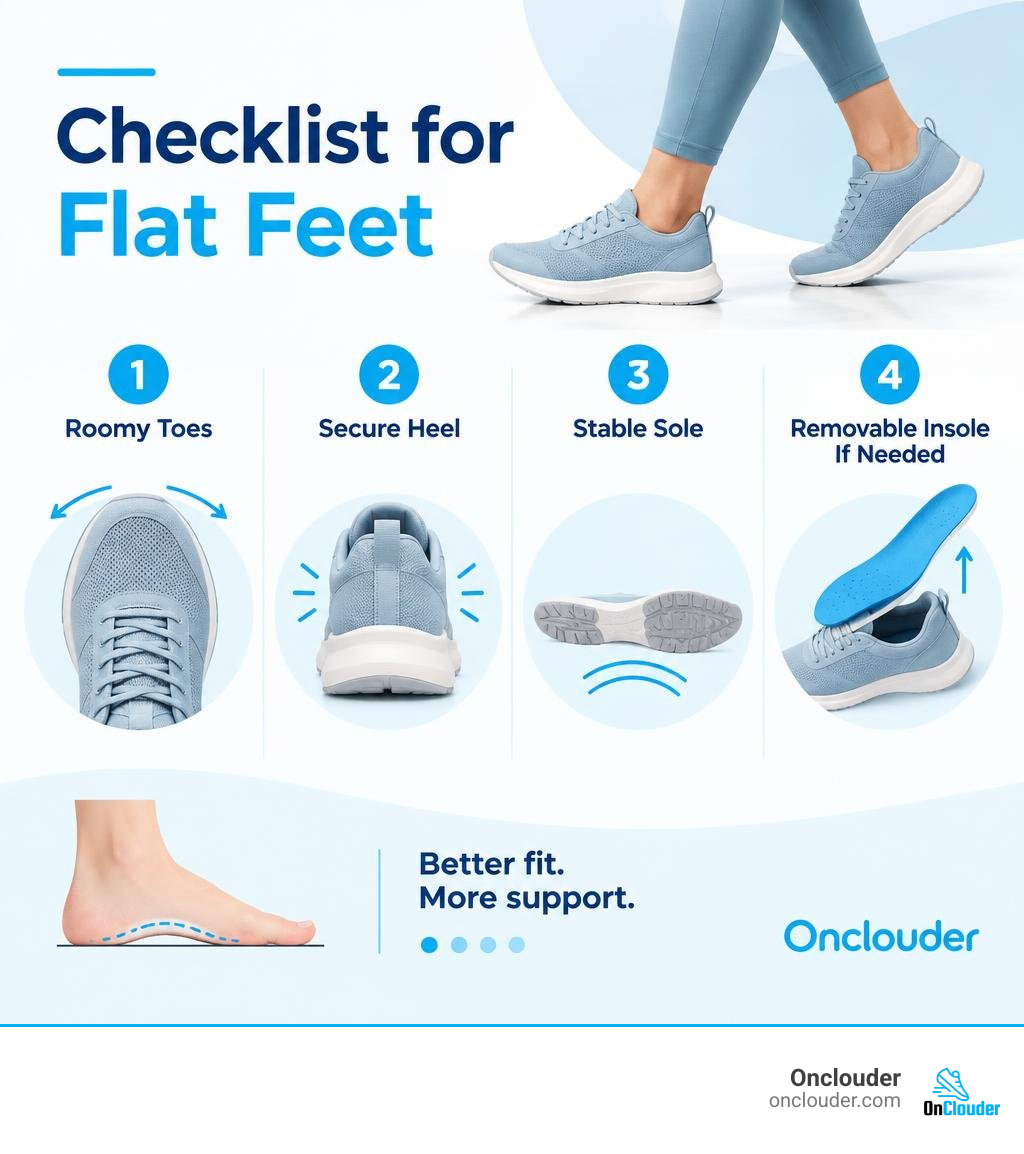
Key Biomechanical Features for Fallen Arches and Overpronation
When the natural medial longitudinal arch is low or completely collapsed, your foot interacts differently with the ground during every phase of gait. Instead of acting like a rigid lever during push-off, a flat foot tends to stay supple and flexible for too long. This causes the ankle and subtalar joint to roll inward excessively—a condition known as overpronation.
Over time, overpronation pulls the plantar fascia taut, twists the tibia (shin bone), and places undue stress on the knees, hips, and lower back. Choosing proper footwear counteracts this cascading biomechanical chain reaction.
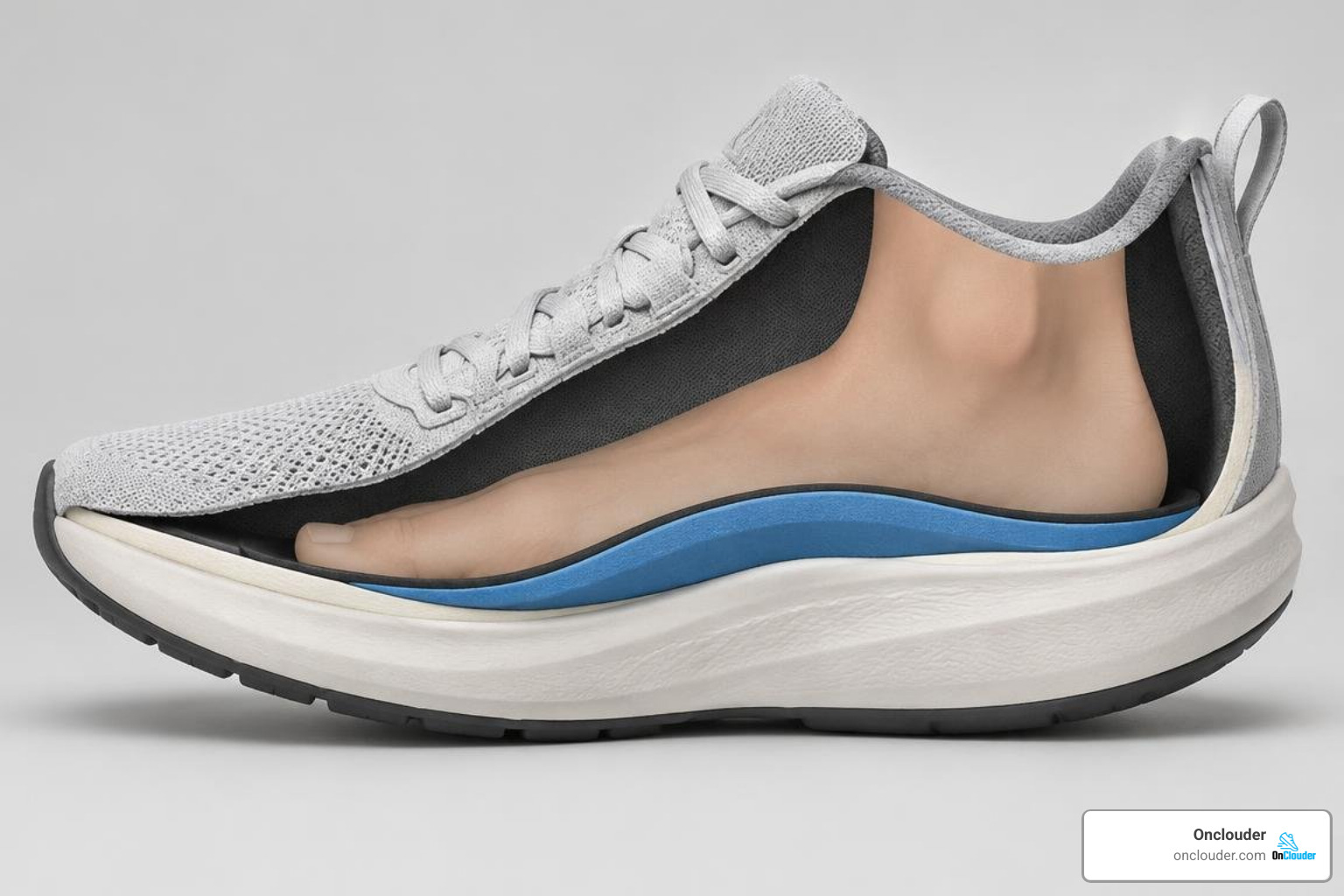
To maintain balance and protect your joints, a supportive sneaker relies on several distinct design elements:
- Medial Arch Posting: Denser foam, structural shanks, or firm posting placed along the inner edge of the midsole prevent the shoe from collapsing under the weight of a flattened arch.
- Firm Heel Counter: The rigid cup enclosing the back of your heel locks your calcaneus in a neutral position, preventing rearfoot wobble before it travels up the ankle.
- Structured Arch Contouring: An anatomically molded footbed distributes plantar pressure evenly across the entire surface of the foot rather than concentrating weight on the heel and ball of the foot. Exploring The Ultimate Guide to Arch Pads for Flat Feet and Pronation highlights how targeted midfoot reinforcement stabilizes severe pronation.
- Torsional Rigidity: A shoe that twists easily like a wet towel offers virtually no support. A supportive walking sneaker resists midfoot twisting when held at both ends.
Essential Support Features in Walking Sneakers for Women with Flat Feet
Walking mechanics differ substantially from running mechanics. When walking, you spend approximately 60% of the gait cycle in the stance phase, generating prolonged ground contact. Because your heel absorbs direct downward impact with every step, specialized engineering is necessary.
A moderate-to-high heel-to-toe drop—often between 10mm and 14mm—elevates the heel relative to the forefoot. This pitch shortens the Achilles tendon slightly during ground contact, significantly reducing tension on the calf muscles and plantar fascia. For example, specialized options like the Pace: supportive women’s walking shoe – she wear, an independently recognized Good Design Award winner in Australia, integrate a 14mm heel-to-toe drop at an efficient weight of 325g (size 7/38) to ease strain during long shifts.
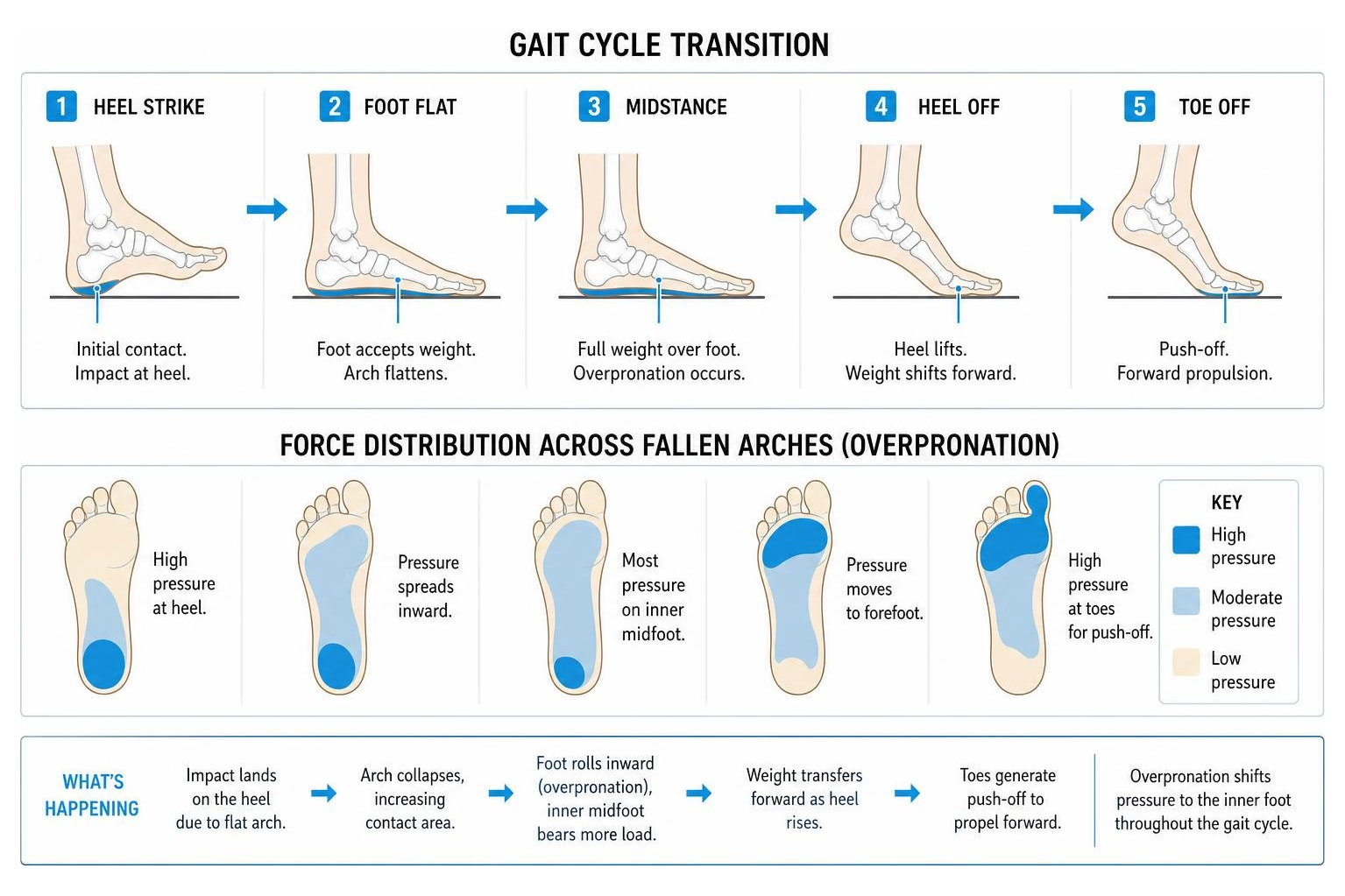
In addition to drop, rocker sole geometry plays an indispensable role. A gentle upward curve at the heel and forefoot creates a rolling motion through the stride. Rather than forcing your flat arch and stiff big toe joint to bend forcefully, the rocker sole smoothly transitions you from heel strike to toe-off. If you are just starting to evaluate footwear adjustments, reading a Beginners Guide to Foot Arch Support for Flat Feet can help clarify how arch profiles influence everyday comfort.
Motion Control vs Stability Shoes for Flat Foot Walking
Not every woman with flat feet needs maximum rigidity. Footwear for low arches generally falls into two distinct categories: stability and motion control. Understanding the differences ensures you do not buy more—or less—structure than your gait requires.
| Feature | Stability Sneakers | Motion Control Sneakers |
|---|---|---|
| Primary Goal | Mild-to-moderate overpronation correction | Severe overpronation and heavy inward roll correction |
| Midsole Construction | Dual-density foam, subtle guide rails, balanced cushion | Rigid medial posting, reinforced composite rollbars, wide solid base |
| Outsole Shape | Semi-curved to straight last | Completely straight last with full ground contact |
| Torsional Stiffness | Moderate flexibility at the ball of the foot | Maximum rigidity across midfoot and rearfoot |
| Best For | Flexible flat feet, daily fitness walking, mild fatigue | Rigid flat feet, severe ankle collapse, standing for long shifts |
Stability models gently nudge the foot back toward center using modern guide rail systems or progressive medial foam densities. In contrast, motion-control walkers use heavy-duty mechanical posting—such as New Balance’s ROLLBAR technology—to physically block the subtalar joint from rolling inward.
Top-Rated Walking Sneakers for Women with Flat Feet in 2026
We routinely evaluate supportive footwear through hands-on testing, laboratory biomechanics data, and long-term wear patterns. As of 2026, walking sneakers engineered for low arches combine medical-grade structural support with advanced, responsive cushioning foams.

Motion Control and Maximum Cushion Workhorses
When you spend long hours on concrete or suffer from severe inward rolling, structured workhorses provide uncompromising durability and stability.
1. New Balance 928v3
Widely recognized as a gold standard in motion control walking footwear, the 928v3 incorporates reinforced ROLLBAR technology along the medial and lateral rearfoot. It features a completely flat, straight-lasted base that keeps fallen arches from sagging over the midsole edge. Available from standard B through ultra-wide 4E widths, it accommodates prescription orthotics effortlessly.
2. Brooks Addiction Walker 2
Consistently ranking as the top-selling motion-control walking shoe in the United States, the Addiction Walker 2 pairs full-grain leather with Brooks’ Extended Progressive Diagonal Rollbar (PDRB). This internal support system guides the body back into its natural walking path, making it a reliable pick for healthcare workers and retail professionals who stand all day. Discovering No Arch No Problem The Best Walking and Running Shoes for Flat Feet offers further insight into how supportive bases minimize joint strain.
3. New Balance 990v6 Made in USA
For walkers seeking high-end performance, the 990v6 delivers premium multi-density FuelCell and ENCAP midsole cushioning. Built on a stable platform available in B through 4E widths, it offers reported durability of 18+ months of daily wear while maintaining excellent rearfoot stability. Checking out The Best Flat Foot Shoes to Keep You on Your Toes provides additional recommendations for long-lasting, supportive shoes.
4. Hoka Bondi 8
If high-impact heel pain is your primary challenge, the Bondi 8 provides an oversized EVA midsole paired with an early-stage Meta-Rocker. Its wide inherent footprint cradles the flat foot naturally without forcing rigid plastic arches into sensitive connective tissues.
Supportive Slip-On and Everyday Active Options
Convenience does not have to come at the expense of arch integrity. Several modern slip-ons and lifestyle active shoes provide substantial internal stability.
1. She Wear Pace Walking Shoe
Boasting a 4.9 out of 5-star rating across 174 customer reviews, this shoe was crafted specifically for women needing all-day biomechanical support. It features a jacquard knit upper, a slip-resistant outsole, a 14mm heel-to-toe drop, and an anti-fatigue footbed engineered to relieve plantar fasciitis and overpronation without bulky aesthetics.
2. Skechers Go Walk Original Slip-On
Holding a 4.5 out of 5-star rating from over 22,418 reviews, the Skechers Women’s Go Walk Original Slip-On Walking Shoes are an ultra-lightweight choice for casual errands and light neighborhood strolls. While they feature a flexible comfort outsole and responsive cushioning, they lack the rigid medial posting of motion-control shoes, making them best suited for mild flat feet rather than severe overpronation.
3. FitVille BriskWalk Wide-Width Slip-On
Rated 3.9 out of 5 stars from 132 reviews, the FitVille Women’s Wide Width Slip-On Walking Shoes Casual Loafers for Flat Feet – BriskWalk are explicitly tailored for women with low arches and wide forefeet. With a hands-free elastic entry, generous toe box, cloud-like shock-absorbing sole, and removable arch-support memory foam insoles, they offer exceptional relief at an accessible price point. Browsing Top Sneakers with Arch Support Designed Specifically for Flat Feet reveals more slip-on and lace-up styles built for low arch profiles.
Sizing, Width, and Orthotic Compatibility Guide
A supportive shoe cannot function correctly if the sizing is off. Because flat feet spread out and elongate under load, women with low arches frequently buy shoes that are too narrow or too short.
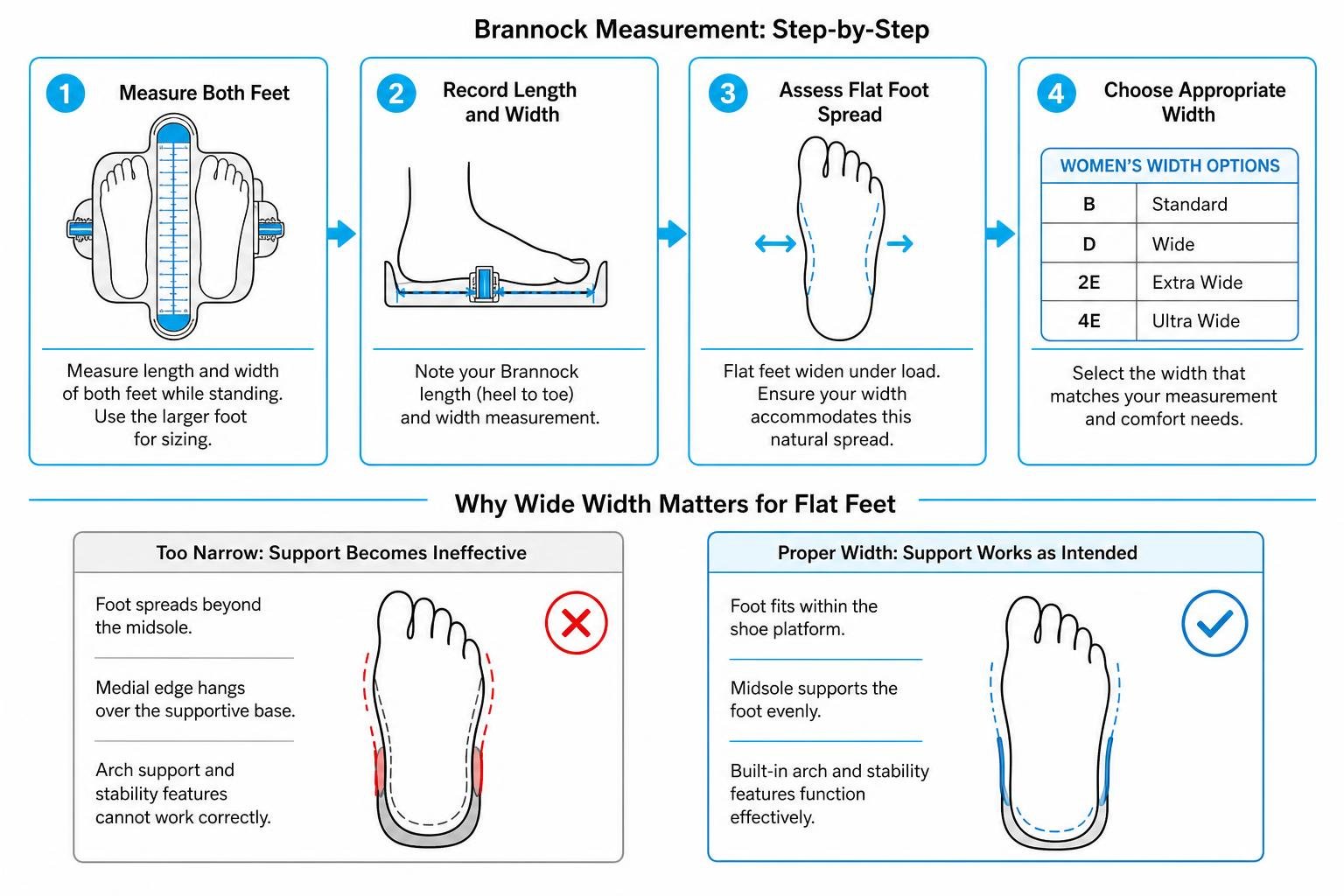
When an arch collapses during weight-bearing, the midfoot and forefoot widen naturally. If you squeeze that widened foot into a narrow shoe, the medial edge of your foot will hang over the supportive midsole, rendering built-in arch posts completely ineffective. For tips on balancing roomy dimensions with a streamlined look, check out our guide on Finding the Best Supportive Sneakers for Flat Feet Without the Bulk.
Proper Fit and Wide Width Selection in Walking Sneakers for Women with Flat Feet
Clinical footwear data reveals that up to 1 in 4 women has feet wider than the standard B width that mass-market fashion footwear is built around. For detailed sizing diagnostics, refer to the Best Women’s Wide Width Shoes 2026 | Podiatrist Guide to evaluate professional width standards.
Signs you need wide-width (D or 2E) walking sneakers:
- The material of the shoe bulges noticeably over the outer or inner edge of the sole.
- You experience rubbing, redness, or blisters on your pinky toe or along the first metatarsal head (bunion area).
- Your toes feel squeezed together, or you experience numbness across the ball of your foot.
- Your shoes wear out prematurely along the outer side seams of the mesh upper.
When sizing, measure your feet in the afternoon or evening when they are naturally swollen from daily activity. Always ensure there is roughly a half-inch (a thumb’s width) of space between your longest toe and the end of the shoe. When you establish a stable foundation, learning How to Stand Your Ground With Flat Feet All Day Long becomes effortless.
Accommodating Custom Orthotics and Removable Insoles
Many women with structural flat feet rely on over-the-counter or prescription orthotics to maintain proper alignment. However, dropping an orthotic insert on top of a standard factory insole crowds the shoe, crushes your instep, and causes painful heel slippage.
Always choose walking sneakers that feature fully removable insoles. When you remove the factory liner, check that the internal footbed is deep and flat. A deep heel cup inside the shoe ensures your custom device sits securely without lifting your rearfoot out of the collar. If you are comparing inserts, The Ultimate Guide to Buying Orthotic Insoles for Flat Feet covers the structural differences between rigid carbon fiber and flexible supportive foams.
Frequently Asked Questions About Walking Footwear
Are slip-on walking sneakers supportive enough for flat feet?
It depends on their internal architecture. Traditional, unstructured slip-on canvas shoes offer minimal support and can worsen foot pain. However, purpose-built orthopedic slip-ons featuring reinforced heel counters, deep footbeds, and molded arch inserts provide sufficient lateral and medial stability for daily casual walking. For high-mileage fitness walking or severe overpronation, lace-up models remain superior because they allow you to customize instep tension.
What is the best shoe design for flat feet and plantar fasciitis?
The ideal design combines firm medial arch cradling, a rigid heel counter, and a cushioned, shock-absorbing heel zone paired with a 10mm to 14mm heel drop. This elevation offloads tension from the plantar fascia band where it inserts into the heel bone. Rocker sole geometries also help by decreasing forefoot bending forces during push-off.
How do rocker soles improve walking comfort for low arches?
Rocker soles feature a rounded, curved profile at the bottom of the shoe. Instead of requiring your foot to flex forcefully at the metatarsophalangeal (toe) joints—which flattens the arch under heavy tension—the curved sole rolls your foot forward naturally through the toe-off phase of gait. This reduces pressure on the ball of the foot and minimizes strain on the Achilles tendon and calf muscles.
Conclusion
Living with fallen arches does not mean accepting foot fatigue, aching heels, or giving up on daily walking routines. By selecting walking footwear equipped with medial posting, firm heel counters, generous toe boxes, and shock-absorbing midsoles, you can correct overpronation and protect your joints step after step.
Prioritize proper width, test your shoes with your preferred orthotic inserts, and ensure your footwear accommodates your unique foot profile. For an in-depth look at our top recommended footwear styles and structural ratings, read The Ultimate Guide to Best Shoes with Arch Support to find the ideal match for your everyday walking routine.