Is the Adizero Boston a Good First Marathon Shoe?
Yes, if you want one shoe for faster marathon training and a possible race day. The Adizero Boston blends cushioning with a firm, quick toe-off. The Boston 12 pairs Lightstrike 2.0 and Lightstrike Pro foam with ENERGYRODS 2.0, while the Boston 13 offers a more comfortable upper and heel fit.
The catch: try it on your longest training runs before choosing it for 42.2 km. Its lively, somewhat firm ride may suit tempo work better than slow miles. If comfort matters more to you than speed, compare it with a softer long-run shoe before you buy.
Choosing a first marathon shoe is rarely a simple decision. Many runners default to whatever is popular on social media, without considering how a shoe’s geometry, foam density, and heel-to-toe drop actually interact with their own stride mechanics. A shoe that feels snappy and energetic to one runner might feel unforgiving to another, especially over the final 10 kilometers of a marathon when fatigue sets in and form starts to break down. That is why trying a shoe across a range of paces and distances during training, rather than relying purely on specification sheets, remains the most reliable way to judge fit.
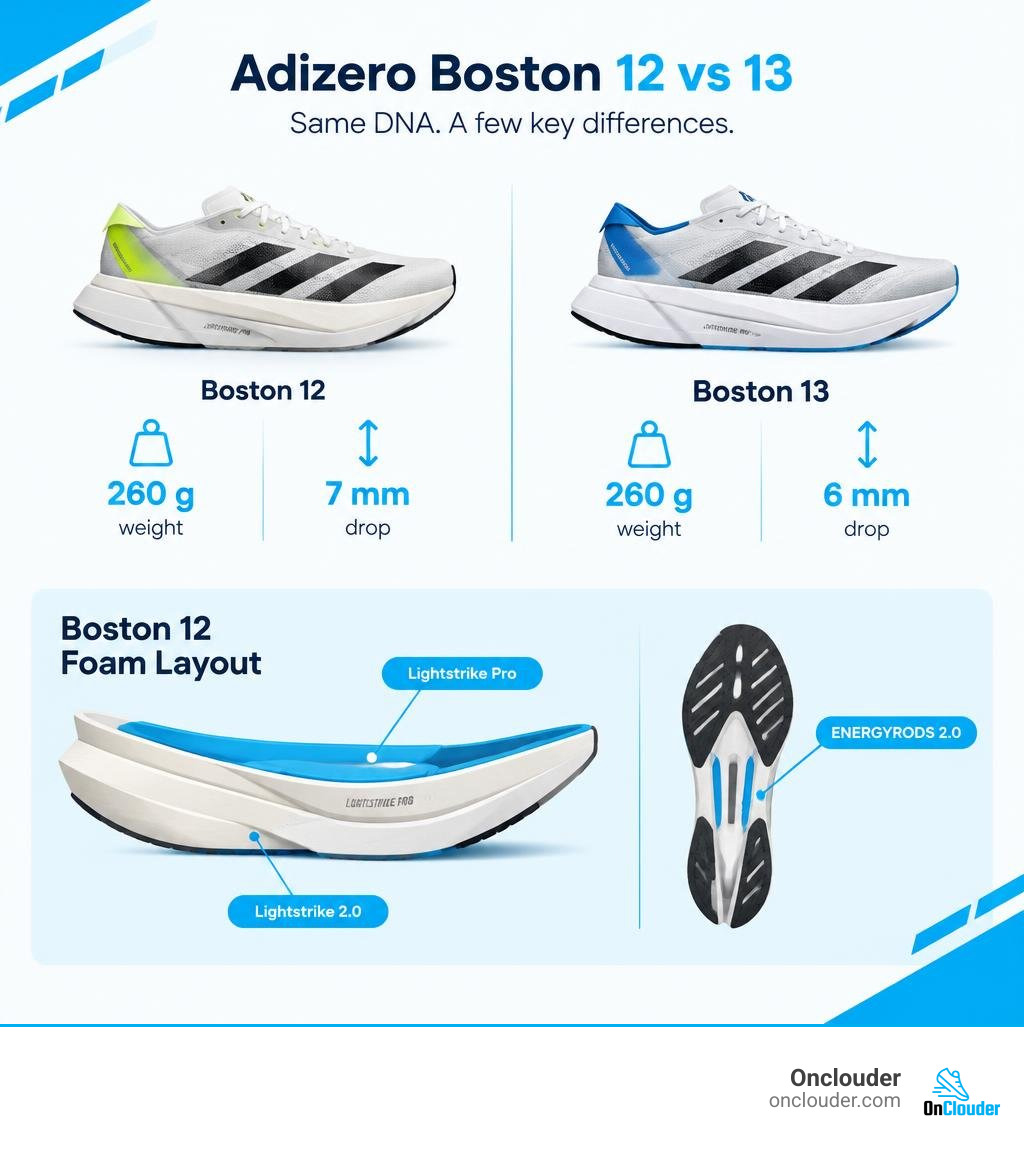
When exploring options across the adizero boston marathon lineup, training priorities often determine whether a super-trainer matches your target finishing time. Evaluating popular marathon racers alongside versatile marathon running shoes highlights how modern foam and rocker geometry differ from traditional trainers. Reviewing what defines a world record marathon shoe can also help you understand how race-day technologies trickle down into daily training footwear.
Heritage of the Adizero Boston Lineage
The Adizero Boston has a rich pedigree anchored directly in the historic marathon corridor between Hopkinton and Boylston Street. Born as an uncompromising, lightweight racing flat with a classic 10 mm heel-to-toe drop, earlier models like the Adizero Boston 7 Boston Marathon Edition delivered ground-hugging road feel, traditional mesh ventilation, and minimal stack heights. For years, experienced runners trusted that stripped-down profile for hard tempo efforts, interval workouts, and fast road racing.
As marathon training philosophies evolved toward muscle protection, impact mitigation, and energy conservation over 42.2 kilometers, the Boston franchise transitioned dramatically. The modern iterations transformed from thin flats into high-stack, dual-foam super-trainers engineered to handle hundreds of grueling preparation miles without beating up your legs. While top-tier athletes at major world marathons compete in specialized racers, the modern Boston line provides real-world runners with race-day propulsion packed inside a durable, high-mileage package built to withstand weekly high-volume training blocks.
This shift mirrors a broader trend across the running industry: training shoes increasingly borrow technology once reserved for race day. Dual-density foam stacks, carbon or composite plating, and wider platforms for stability have filtered down from elite racing models into everyday trainers meant for hundreds of kilometers of use. Understanding this lineage helps explain why a shoe branded for speed can still serve admirably as a long-run companion, provided you respect its particular strengths and limitations on tired legs.
Technical Breakdown: Boston 12 vs Boston 13 in the Adizero Boston Marathon Collection
Navigating the specifications between recent models highlights the evolution from pure utility to refined comfort. Whether picking up an existing pair like the Boston 12 AW24 edition or the Boston 12 SS25 update, understanding these mechanical layers helps you evaluate your gear against our marathon shoe recommendations for training and race day.
| Feature / Spec | Adizero Boston 12 | Adizero Boston 13 |
|---|---|---|
| Weight | 260 g (AW24) / 270 g (SS25) | 260 g |
| Heel Stack | 38 mm | ~38 mm |
| Forefoot Stack | 31 mm | 32 mm |
| Heel-to-Toe Drop | 7 mm | 6 mm |
| Midsole Composition | Lightstrike 2.0 bottom + Lightstrike Pro top | Tuned Lightstrike 2.0 + Softer Forefoot Lightstrike Pro |
| Propulsion Tech | Glass-fibre ENERGYRODS 2.0 | Glass-fibre ENERGYRODS 2.0 |
| Upper Construction | Lightweight engineered mesh (50% recycled) | Elastic engineered mesh with padded heel counter |
| Outsole Material | Continental Rubber | Continental Rubber |
| Retail Pricing Range | £69.99–£97.99 sale (£139.99 RRP) | $124.95–$159.99 (Special Marathon Editions available) |
Midsole Cushioning and Propulsion Mechanics
The magic of the modern Boston platform lies in its layered midsole architecture. A durable, responsive base of Lightstrike 2.0 EVA foam provides mechanical stability on impact, while an explosive layer of premium Lightstrike Pro foam sits directly under the forefoot to maximize bounce and energy return.
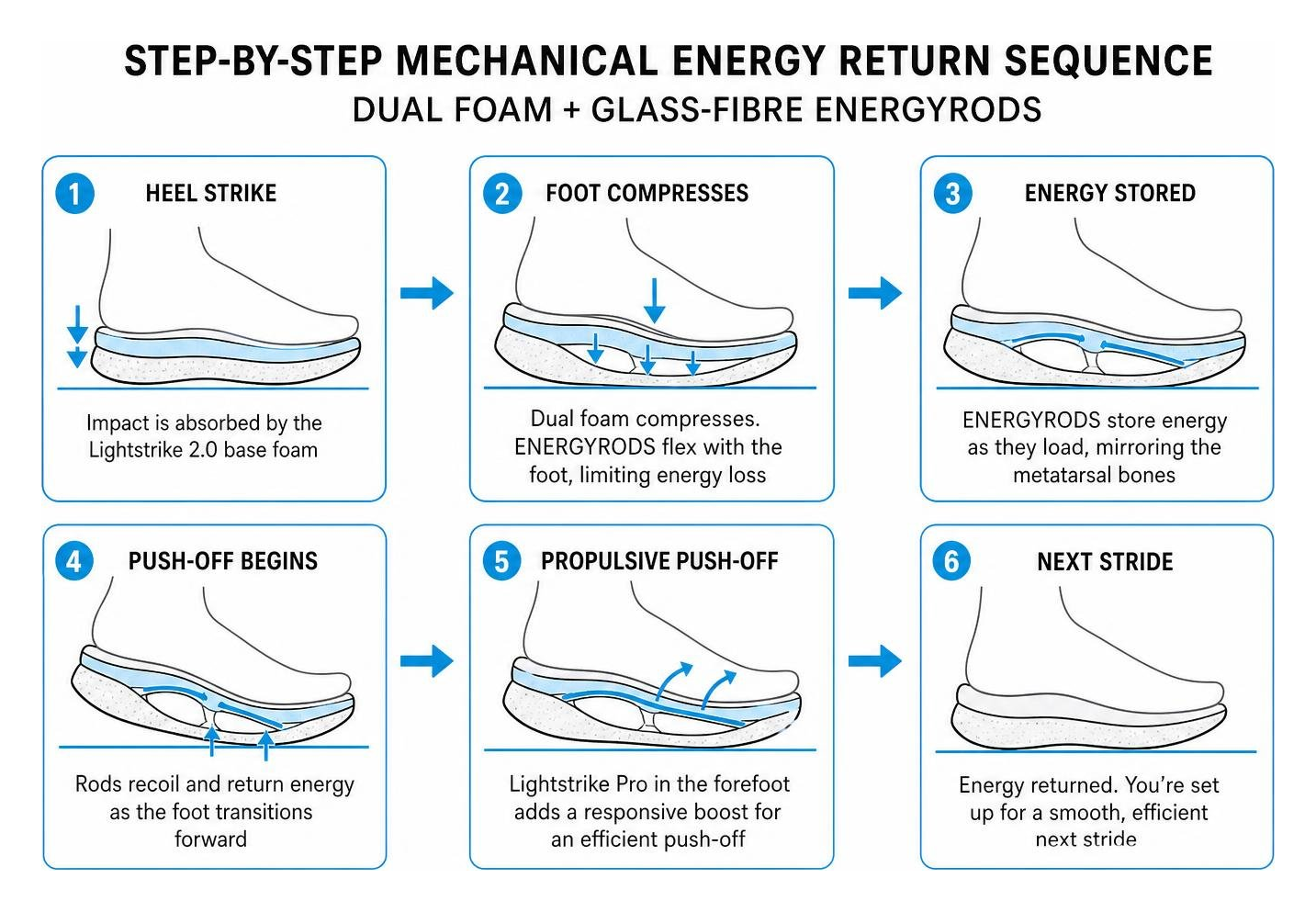
Sandwiched between these foam compounds are glass-fibre ENERGYRODS 2.0. Unlike rigid, full-length carbon plates that can feel overly harsh during training miles, these anatomical rods mirror the metatarsal bones of your foot. They limit energy loss during joint flexion, working dynamically with the rocker geometry to deliver a snappy, efficient push-off. If you are comparing different race setups, exploring speedboard vs carbon plates clarifies how stiff mechanical elements alter step-in comfort versus flat-out energy return.
Upper Comfort and Heel Counter Redesign
While the Boston 12 resolved many of the harsh rides of earlier generations with its breathable, eco-friendly upper composed of at least 50% recycled materials, the Boston 13 addresses runner fit directly.
Previous models like the Boston 11 suffered from rigid heel collars and stiff structural overlays that caused Achilles friction. The Boston 13 introduces a redesigned, padded classic foam heel counter alongside a more elastic mesh weave. This gives you secure midfoot lockdown without pinching or heel rub, keeping your feet blister-free during heavy training blocks and long weekend mileage.
On-the-Road Performance: Is It Ready for 42.2 Kilometers?

When putting in long miles on unpredictable road surfaces, traction and stability become paramount. Equipped with an aggressive Continental Rubber outsole, the Boston line scores a stellar 9.5/10 for grip in real-world testing. Whether you are cutting corners around slick city turns or training through heavy rain, the outsole bites firmly into wet asphalt, transferring power straight through toe-off without slipping.
Its sweet spot lies in its performance balance: an overall 9/10 for comfort, 8.5/10 for cushioning, and 8.5/10 for responsiveness. While it offers solid durability (rated 8/10), its ride dynamic leans firm and purposeful rather than pillowy soft, rewarding runners who maintain good posture and a forward cadence.
Best Training Paces and Long Run Workouts for the Adizero Boston Marathon Runner
The Boston reveals its true character when you pick up the pace. At easy warm-up speeds (around 5:00 min/km), the shoe feels stable and slightly springy. But when you dial your pace down to 4:15 min/km or drop into fast intervals between 3:35 and 3:45 min/km, the ENERGYRODS and Lightstrike Pro foam engage fully, creating an effortless, forward-rolling rhythm.
For first-time marathoners, it excels during:
- Marathon pace tempo blocks (10 to 18 km)
- Fast-finish progressive long runs
- Mid-week interval repeats (e.g., 5 x 1 km sessions)
- Steady-state lactate threshold runs
While the shoe comfortably carries runners up to roughly 25 km, beginners taking over 4.5 hours to complete a full marathon may find the ride fatiguing past the 30 km mark. To check how it fits into your weekly schedule, look at our breakdown of tested marathon training shoes.
Adizero Boston in a Multi-Shoe Rotation
If you plan to run a marathon, building a multi-shoe rotation helps spare your legs and extends gear life:
- Daily Recovery & Easy Miles: A plush, softer shoe designed strictly for impact absorption at slower paces.
- Tempo & Fast Long Runs: The Adizero Boston (taking the brunt of your hard training mileage).
- Race Day: A dedicated elite racing model for maximum weight savings and energy return.
To map out the ideal training toolkit, review our dedicated long run footwear rankings.
Frequently Asked Questions About the Adizero Boston Line
Is the Adizero Boston Marathon shoe suitable for beginners running their first 42.2K?
Yes, provided you prefer a moderately firm, stable shoe with responsive propulsion rather than a sink-in plush cruiser. For lighter beginners running at brisk paces, it provides a stable platform that protects the joints without feeling sloppy or unstable. Runners targeting a steady, comfortable finish might prefer pairing it with a softer high-cushion trainer for their longest runs.
What are the main differences between the Boston 12 and Boston 13?
The Boston 13 features a slightly lower 6 mm drop (compared to 7 mm on the Boston 12), a softer initial forefoot cushioning sensation, an elastic upper, and a heavily padded heel counter designed to eliminate Achilles rubbing during high-mileage weeks.
How does the Continental outsole grip perform on wet race courses?
The Continental rubber compound delivers class-leading traction on wet asphalt and damp road paint. With a grip score of 9.5/10, it maintains firm contact during aggressive toe-offs and high-speed cornering in wet conditions.
How many miles can you expect from the Adizero Boston?
Most runners achieve between 500 and 700 kilometers (300 to 450 miles) of reliable performance from the Boston series. The Continental outsole is exceptionally resilient against abrasion, and the dual-density Lightstrike foam retains its structural rebound longer than pure race-day PEBA foams.
Conclusion: Final Verdict on the Adizero Boston
The Adizero Boston delivers exceptional value as a high-mileage training and racing hybrid. It bridges the gap between everyday durability and race-day speed, making it an outstanding contender for runners tackling dedicated tempo workouts, structured intervals, and fast-finish long runs.
Before you make your final race-day decision, match your personal mechanics against our checklist for finding the best marathon running shoes, or explore our deep-dive footwear comparisons to find your perfect balance of speed, stability, and lasting comfort.