How to Choose Sneakers With Arch and Ankle Support
Start with a contoured arch footbed, a firm heel counter, and a snug fit that keeps your heel from slipping. If you use orthotics, look for removable insoles. Choose a width and toe box that leave room for your toes without letting your foot slide sideways.
The best pick depends on where you need help. Arch support can spread pressure across the foot, while a secure heel helps steady the rearfoot. Cushioning makes steps feel softer, but it cannot replace a stable fit. Below, we compare sneakers built for different foot shapes and daily needs so you can narrow your choices before you buy.
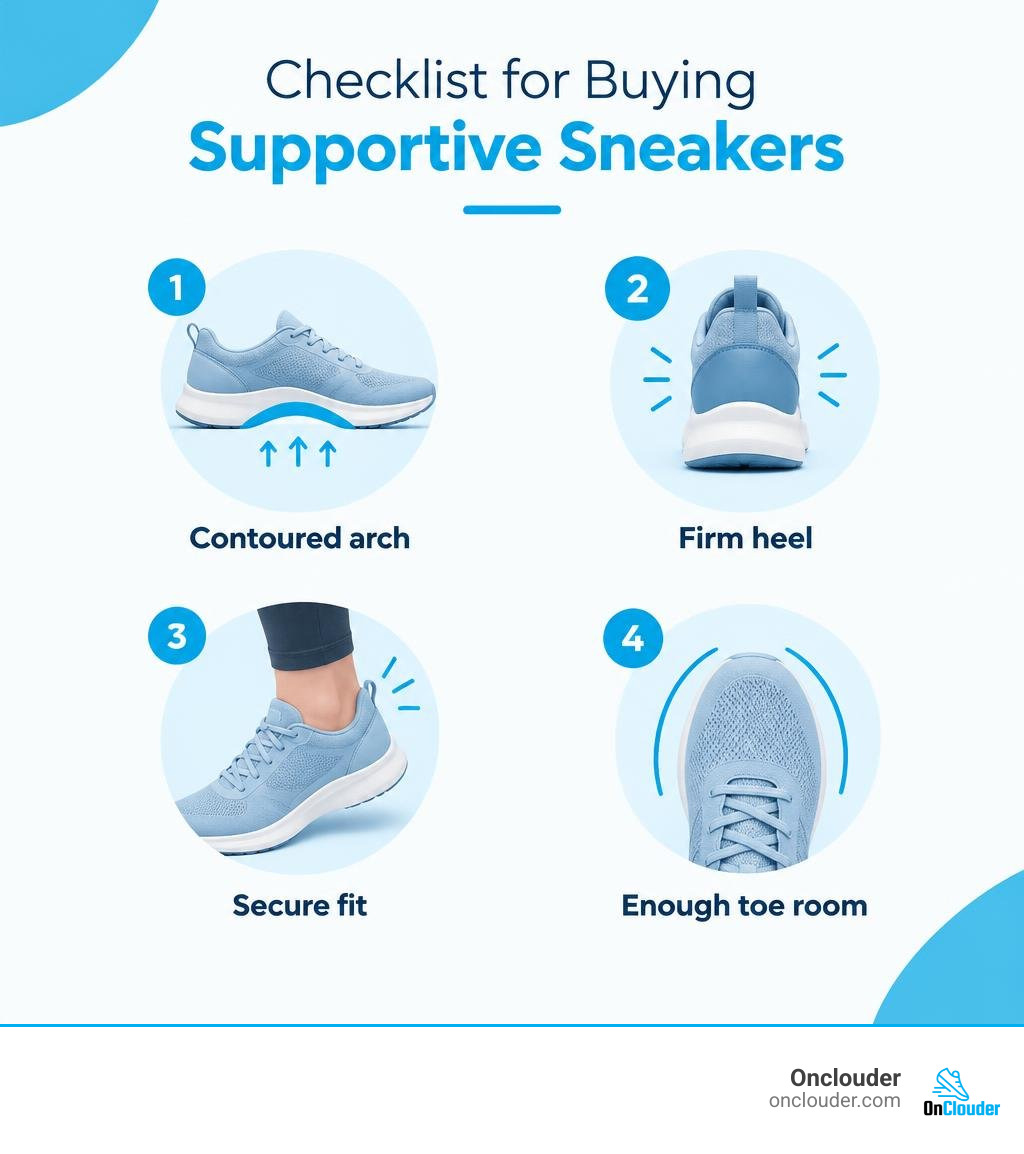
Sneakers with arch and ankle support word roundup:
Top-Rated Sneakers with Arch and Ankle Support
When you spend hours on your feet, ordinary lifestyle kicks just won’t cut it. Finding dependable footwear means seeking out a balance of firm medial support, deep heel cups, and durable torsional stability. Whether you are managing chronic pain or simply want all-day comfort, the models below represent our top lab-tested recommendations for structural integrity and real-world relief.
| Sneaker Model | Primary Support Focus | Closure Type | Width Options | Standout Feature |
|---|---|---|---|---|
| Orthofeet Sprint | Maximum Arch & Joint Alignment | Tie-Less Fastening / Straps | Medium (B/D), Wide (D/E), Extra Wide (2E/3E) | Anatomical orthotic insole, A5500 Medicare coding |
| SAS Tour Mesh | Multi-Zone Shock Absorption & Rearfoot Stability | Traditional Lace-up | 6 Widths (Slim 3A to Triple Wide 2E) | Handcrafted in USA, TRIPAD cushioning, AFO compatible |
| Klouds Charlie XW | Lateral Ankle Grip & High Arch Fill | Dual Entry (Zip & Lace) | Extra Wide (XW) | Built-in ankle grip lining, lightweight rubber foam base |
| Ron White Orissa | Metatarsal & Longitudinal Arch Relief | Lace-up Sneaker | Standard to Relaxed Fit | Pillow construction, anti-slip sole, removable luxury footbed |
Orthofeet Sprint Tie-Less Athletic Shoe
The Orthofeet Sprint athletic shoes are an engineering benchmark for therapeutic foot relief. Designed specifically for individuals managing chronic ailments like plantar fasciitis, severe overpronation, or arthritis, this shoe combines an anatomical orthotic system with seamless interior linings. It even carries the A5500 diabetic shoe coding, making it eligible for Medicare coverage in medical contexts.
Underneath your foot, the Sprint provides an anatomical arch booster combined with multi-layer cushioning that dynamically redistributes weight away from tender heel spurs and metatarsal heads. The deep heel cup locks the rearfoot in a neutral vertical axis, which prevents excessive inward rolling and takes direct strain off the ankle joint.
For those who struggle with flexibility or hand dexterity, the tie-less lace mechanism utilizes hidden hook-and-loop straps, allowing you to fasten the shoe effortlessly without bending down to tie complex knots. If you have low arches and need solid motion control, exploring supportive sneakers for flat feet can help eliminate foot fatigue without unnecessary bulk.
SAS Tour Mesh Handcrafted Walking Shoe
Handcrafted in San Antonio, Texas, by one of the last remaining heritage shoe manufacturers in the United States, the SAS Tour Mesh athletic sneaker reflects nearly 50 years of dedicated comfort engineering. This shoe stands out for its sizing precision: it is available in up to 88 size combinations per color and spans 6 distinct widths, from Slim (3A) to Triple Wide (2E).
At the core of the Tour Mesh is the proprietary TRIPAD comfort system, which directly cushions the three major weight-bearing zones of the foot: the inside ball, outside ball, and heel. By diffusing impact forces across these pressure points, the shoe alleviates the upward shock waves that normally travel directly into the ankle and knees.
The SAS Tour Mesh features a rigid external heel counter that resists deformation, creating an unshakeable platform for the rearfoot. Its extra-depth interior comfortably accommodates custom carbon-fiber insoles or Ankle-Foot Orthosis (AFO) braces, making it an exceptional choice for anyone dealing with severe ankle instability, drop foot, or adult-acquired flatfoot.
Klouds Charlie XW Leather Sneaker
For those who crave premium leather styling without sacrificing clinical-grade support, the Klouds Charlie XW sneaker provides an exceptional balance of structure and convenience. Featuring an extra-wide fit profile, the Charlie XW eliminates lateral pinch points while giving the toes ample room to splay naturally during gait cycles.
The true standout feature of this sneaker is its built-in internal heel grip system. The collar adheres gently yet securely to the contours of your ankle, preventing the micro-slipping and friction that frequently lead to blisters and unstable steps. Under the foot, an aggressive arch profile bridges the gap between your heel and forefoot to prevent midfoot collapse.
To make daily wear easy, Klouds integrated a clever dual-fastening system: set your ideal fit once using the traditional laces, and then use the smooth side zipper for effortless entry and exit. Supported by a lightweight rubber foam outsole and a rigid stabilizing shank, it offers shock absorption that shields joints from hard pavement without feeling heavy or clunky.
Ron White Orissa Sneaker
The Ron White Orissa Sneaker bridges the divide between high-end European craftsmanship and biomechanical arch protection. Built using the brand’s signature “Pillow Construction,” the Orissa combines buttery-soft leather uppers with a multi-density midsole that cushions every phase of your stride.
Inside the shoe rests a fully removable footbed engineered with both longitudinal arch contours and a built-in metatarsal pad. This dual-support setup reduces pressure on the ball of the foot while supporting the plantar vault, preventing the midfoot fatigue common during long days of city walking.
The anti-slip rubber outsole delivers dependable grip across wet tile, polished concrete, and uneven sidewalks, minimizing lateral ankle torsion before it starts. If you prefer high-end aesthetic detailing alongside medical-grade foot stability, the Orissa delivers supportive luxury without compromise.
Biomechanics of Arch and Ankle Stability in Footwear
To understand why supportive sneakers make such a dramatic difference in daily comfort, we need to look at the biomechanics of the lower kinetic chain. Your foot and ankle complex contains 26 bones, 33 joints, and over a hundred muscles, tendons, and ligaments. When your heel strikes the ground, forces equal to two to three times your body weight travel upward through this structural network.
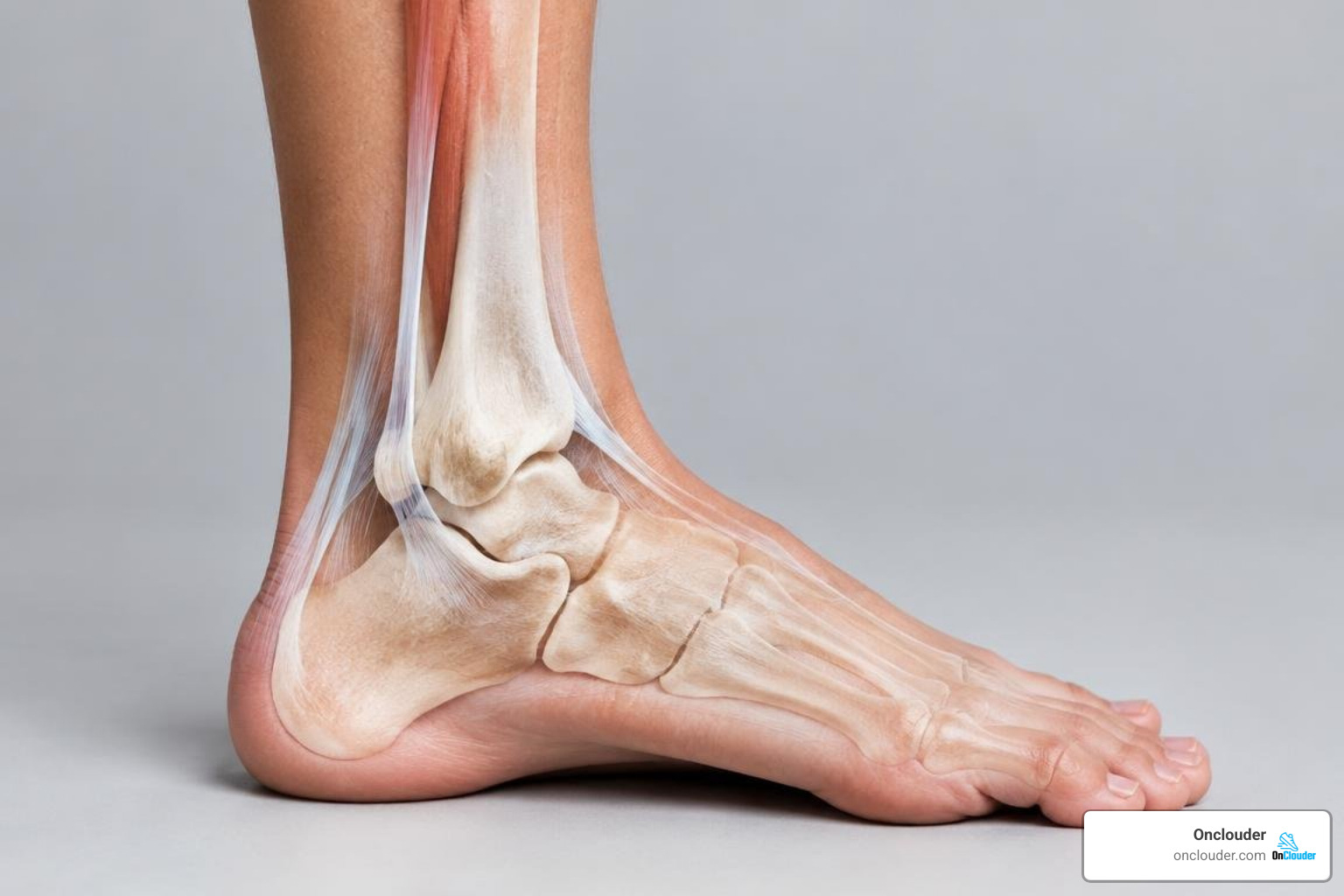
When you walk, the subtalar joint (located just below the ankle joint) naturally pronates—rolling slightly inward to absorb impact—and then supinates to create a rigid lever for pushing off. However, if your arch structure is overly flexible (flat feet) or excessively rigid (high arches), this mechanism falters:
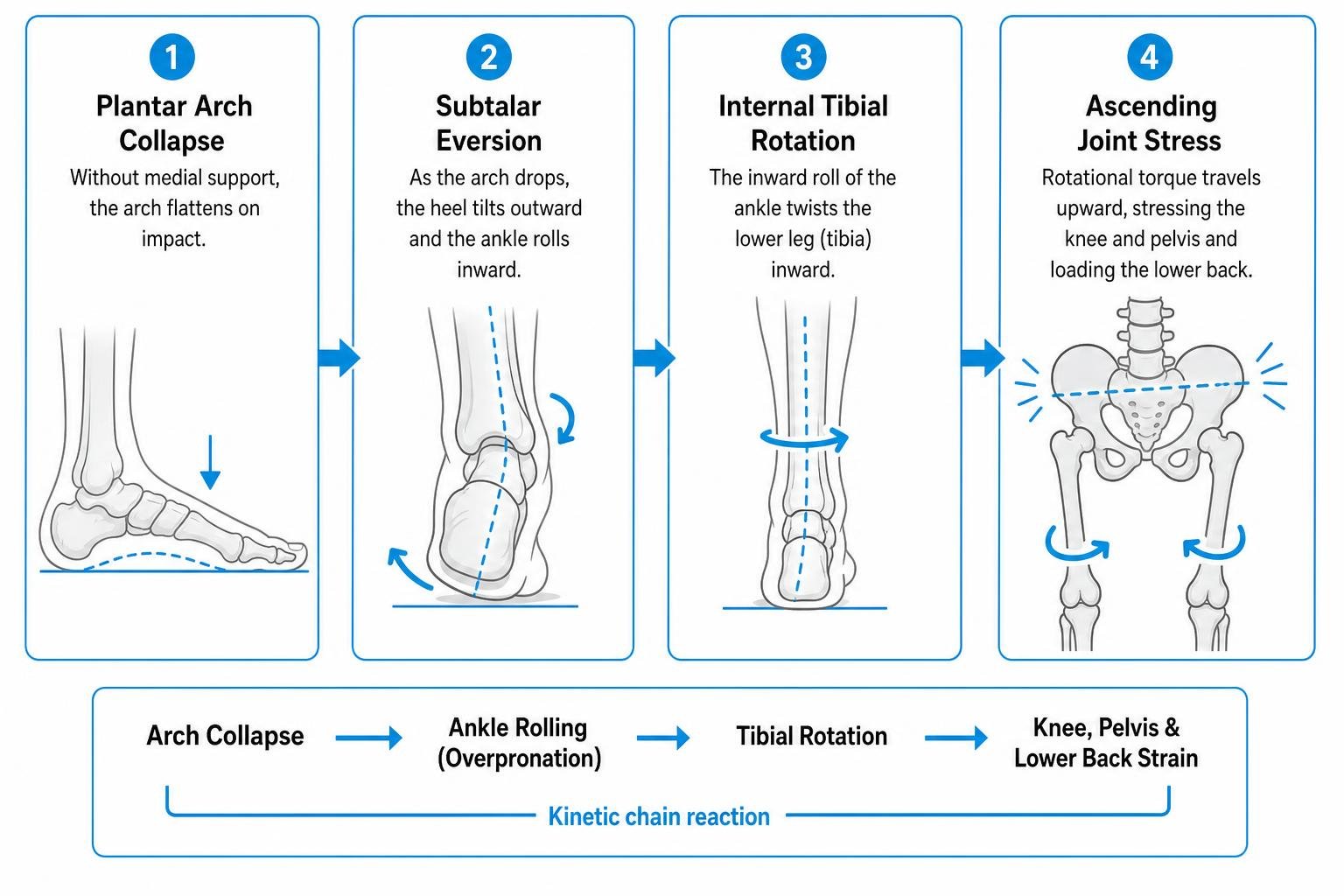
- Plantar Arch Collapse: Without contoured medial support, the long arch flattens completely upon impact.
- Subtalar Eversion: As the arch drops, the heel bone tilts outward, forcing the ankle joint to roll sharply inward (overpronation).
- Internal Tibial Rotation: The inward roll of the ankle twists the lower leg bone (tibia) inward.
- Ascending Joint Stress: This rotational torque pulls the patella off-track at the knee and tilts the pelvis, transferring mechanical strain straight into the lower back.
Sneakers designed with firm medial posting and rigid heel counters interrupt this painful chain reaction. By holding the calcaneus (heel bone) in a neutral alignment, the shoe prevents the ankle from rolling excessively.
At the same time, an anatomically curved footbed fills the empty space beneath the arch, distributing downward forces evenly across the entire plantar surface rather than concentrating it entirely on the heel and ball of the foot. Runners and walkers who struggle with this excessive inward motion often turn to podiatrist-approved shoes for overpronation to preserve joint health.
How Sneakers with Arch and Ankle Support Relieve Joint Pain
The benefits of supportive footwear extend well beyond the soles of your feet. Clinical studies demonstrate that shoes with proper arch support significantly reduce plantar fascia strain and lower peak plantar pressure in individuals with flat feet. By preventing the arch from over-stretching during the stance phase, supportive sneakers allow inflamed plantar tissue to rest and heal.
Supportive footwear also plays a critical role in shielding the Achilles tendon and knee joints:
- Achilles Tendon Relief: Shoes engineered with a rigid heel counter and a moderate heel-to-toe drop limit rapid, uncontrolled ankle pronation. This reduces the twisting forces (torsional strain) placed on the Achilles tendon, lowering the risk of insertional tendinitis.
- Knee Osteoarthritis Management: Research shows that wearing stability footwear with structured medial support can decrease knee adduction moments, significantly reducing inner knee joint pain in patients living with osteoarthritis.
- Spinal Alignment: Proper rearfoot positioning prevents anterior pelvic tilt. Many walkers find that switching to supportive footwear for back pain instantly eases tight lower-back muscles caused by poor walking posture.
There is a crucial distinction to make between pure cushioning and true stability. Soft, pillowy foams provide immediate step-in softness, but they compress unevenly under load. Without a rigid internal chassis, your ankle must work twice as hard to maintain balance on an unstable surface. True joint relief requires a firm foundation that balances responsive shock absorption with rigid motion control.
Custom Orthotics, Removable Insoles, and Width Fittings
A supportive shoe is only as effective as its interface with your foot. This is why removable factory insoles are an essential feature in high-performance comfort shoes. Being able to take out the standard liner allows you to insert custom-molded orthotics or medical-grade over-the-counter inserts without crowding your toes or pushing your heel too high out of the shoe’s collar. If you are exploring supplemental inserts, checking out our guide to arch support shoe insoles will help you choose the right profile.
Width fitting is equally vital. If a sneaker is too narrow, your foot spills over the edge of the midsole, creating painful pressure points and destabilizing the ankle. If it is too wide, your foot slides laterally inside the shoe, causing friction blisters and increasing the likelihood of an inversion ankle sprain.
Look for brands that offer dedicated width profiles (Narrow, Medium, Wide, Extra-Wide) and roomy toe boxes that allow your digits to splay naturally for balanced push-offs.
Critical Mistakes to Avoid and When to See a Podiatrist
Even the most supportive shoes cannot protect your joints if they are chosen incorrectly or worn past their prime. When shopping for footwear to relieve joint and foot pain, avoid these common pitfalls:
- Falling for “Cloud-Soft” Memory Foam: Memory foam feels luxurious for the first five minutes in a store, but it offers zero structural resistance. Under full body weight, memory foam completely compresses into a flat, unsupportive mat, leaving your arch unsupported and your ankle wobbling.
- Wearing Unsupportive Slip-Ons and Flip-Flops: Ultra-flat, flimsy sandals and backless slides force your toes to “claw” the footbed to keep the shoe on. This alters your normal gait mechanics, collapses the arch, and exposes your ankles to sudden lateral twists.
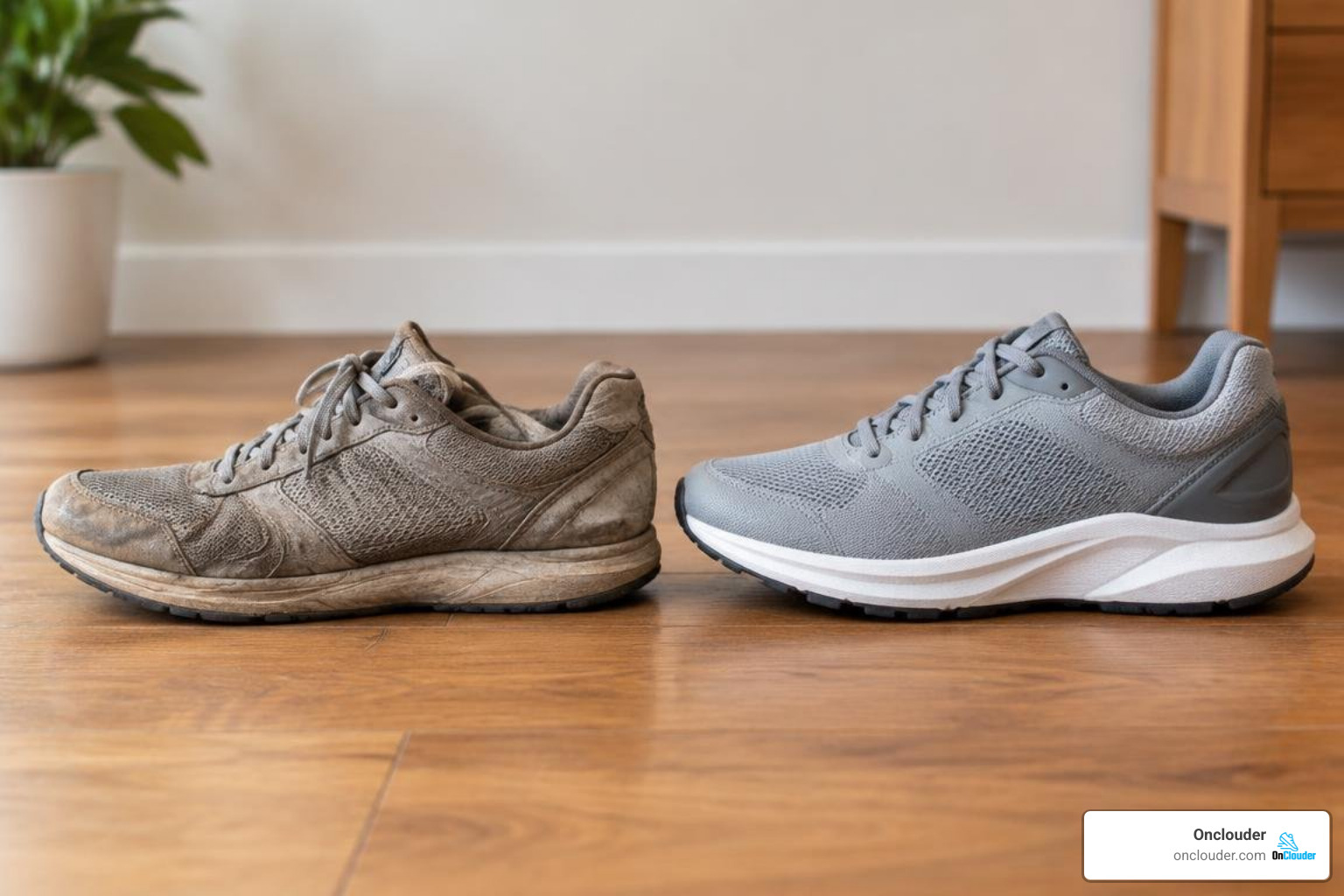
- Wearing Shoes Past Their Mileage Limit: The structural cushioning in most athletic walking and running sneakers degrades significantly after 300 to 500 miles of use. Even if the rubber outsole and mesh upper look pristine, the internal EVA midsole foam hardens and loses its ability to rebound, while the heel counter softens and loses its stabilizing grip.
- Ignoring High-Heel Forefoot Stress: Even modest lifestyle shoes with elevated heels shift body weight unnaturally forward, increasing forefoot pressure by up to 80% and destabilizing the rearfoot complex.
If your daily routine requires being on your feet for extended shifts, investing in the right footwear for standing all day can prevent premature joint fatigue and long-term strain.
When to Seek Professional Podiatric Care
While quality sneakers solve many alignment issues, footwear alone cannot cure severe structural pathology. You should schedule a consultation with a board-certified podiatrist or orthopedic specialist if you experience:
- Persistent Morning Heel Pain: Sharp, stabbing pain during your first morning steps that does not improve after two weeks of supportive footwear.
- Visible Asymmetrical Wear: Outsoles that wear down rapidly on only one edge of the heel, indicating severe uncompensated gait abnormalities.
- Numbness, Tingling, or Burning: Neuropathic sensations across the ball of the foot or toes (often indicative of Morton’s neuroma or tarsal tunnel syndrome).
- Frequent Ankle Giving-Way Episodes: Chronic lateral instability where the ankle regularly rolls or buckles during normal walking on flat terrain.
Frequently Asked Questions About Supportive Sneakers
Which conditions benefit most from sneakers with arch and ankle support?
Sneakers combining medial arch reinforcement and rigid heel stabilization offer direct therapeutic benefits for a broad spectrum of lower-limb conditions:
- Plantar Fasciitis: Distributing body weight across the entire plantar vault reduces mechanical tension across the inflamed plantar fascia band.
- Chronic Ankle Instability: Rigid heel counters and wider outsole bases restrict excessive inversion and eversion, preventing painful rolling episodes.
- Adult-Acquired Flatfoot (PTTD): Firm medial posting prevents the arch from collapsing, reducing strain on the overworked posterior tibial tendon.
- Knee & Hip Osteoarthritis: Correcting subtalar alignment stops internal leg rotation, keeping the knee tracking smoothly in its joint groove.
- High Arches (Pes Cavus): High arches have minimal natural surface contact, concentrating force on the heel and ball of the foot. Cushioned, contoured footbeds bridge that gap to disperse ground impact.
How do high-top designs and firm heel counters prevent ankle rolling?
High-top collars and rigid external heel counters stabilize the rearfoot through mechanical lockdown. The heel counter wraps securely around the calcaneus bone, keeping it aligned directly under the tibia. This prevents the initial subtalar tilt that causes ankle rolls.
High-top silhouettes add physical support around the malleoli (the bony bumps on either side of your ankle), increasing proprioceptive feedback so your stabilizing muscles react faster if your foot hits an uneven surface.
When should you replace sneakers used for arch and ankle stability?
You should replace your supportive sneakers every 300 to 500 miles, or roughly every 6 to 9 months if you wear them for daily walking and standing.
Even if the outer tread appears intact, the internal polyurethane or EVA midsole foam suffers structural fatigue from repetitive compression cycles. You can test your shoe’s integrity with a quick manual check: try bending the shoe in half; if it easily folds at the middle arch instead of flexing only at the ball of the foot, the internal shank and stability foam have collapsed and need immediate replacement.
Conclusion
Finding the right footwear is one of the most effective investments you can make in your daily comfort and long-term mobility. By prioritizing sneakers with anatomically contoured arch support, rigid heel counters, spacious toe boxes, and customizable closure systems, you protect your kinetic chain from the ground up.
Take the time to evaluate your specific arch profile, accommodate your unique width requirements, and replace compressed midsoles before they lose their supportive properties. If you are ready to explore more top-rated options, check out our ultimate guide to the best shoes with arch support to find the perfect pair for your daily stride.