How to Choose 3/4 Orthotic Insoles
Choose a 3/4 orthotic insole when you need heel and arch support but do not want to crowd your toes. Match the arch shape to your foot, then check that the heel sits flat and the insert does not make your shoe feel tight. Pick a thinner style for dress shoes; for active shoes, look for a secure fit and enough cushioning for your activity.
A 3/4 insole ends before the toes, so it can fit shoes that feel too snug with a full-length insert. But shorter is not always better: if you need cushioning under the ball of your foot, compare full-length options too. This guide will help you weigh support, shoe fit, and comfort before you buy.
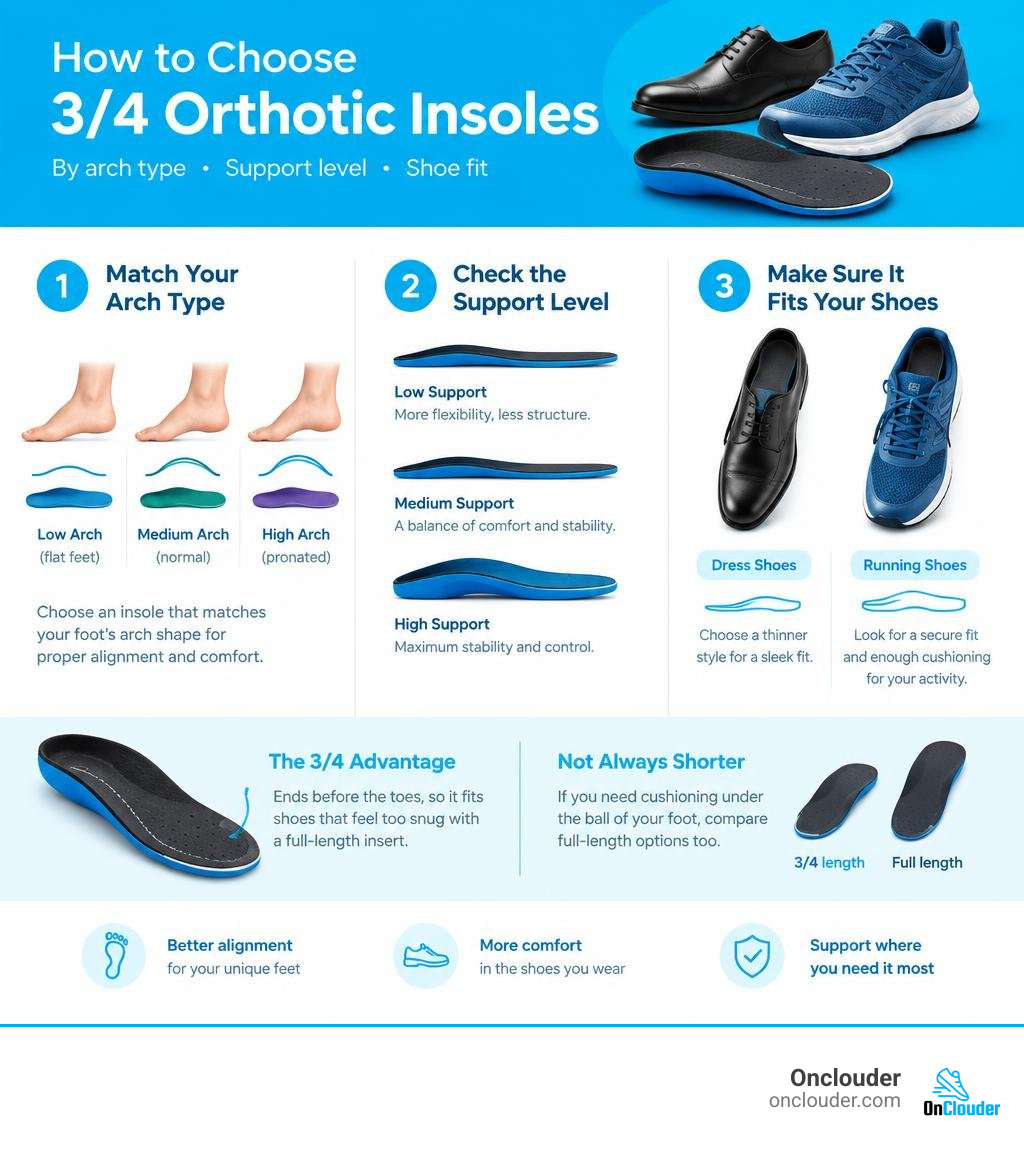
Terms related to 3 4 orthotic insoles:
Understanding 3 4 Orthotic Insoles vs. Full-Length Inserts
When shopping for foot support, deciding between a 3/4-length footbed and a full-length model often comes down to interior shoe volume. Full-length insoles extend from the back of the heel all the way to the tips of your toes. While full-length options provide complete underfoot cushioning, they take up vertical space across the entire shoe. If a shoe has a shallow toe box or a glued-down factory liner, adding a full-length insert can pinch your toes and cause blisters.
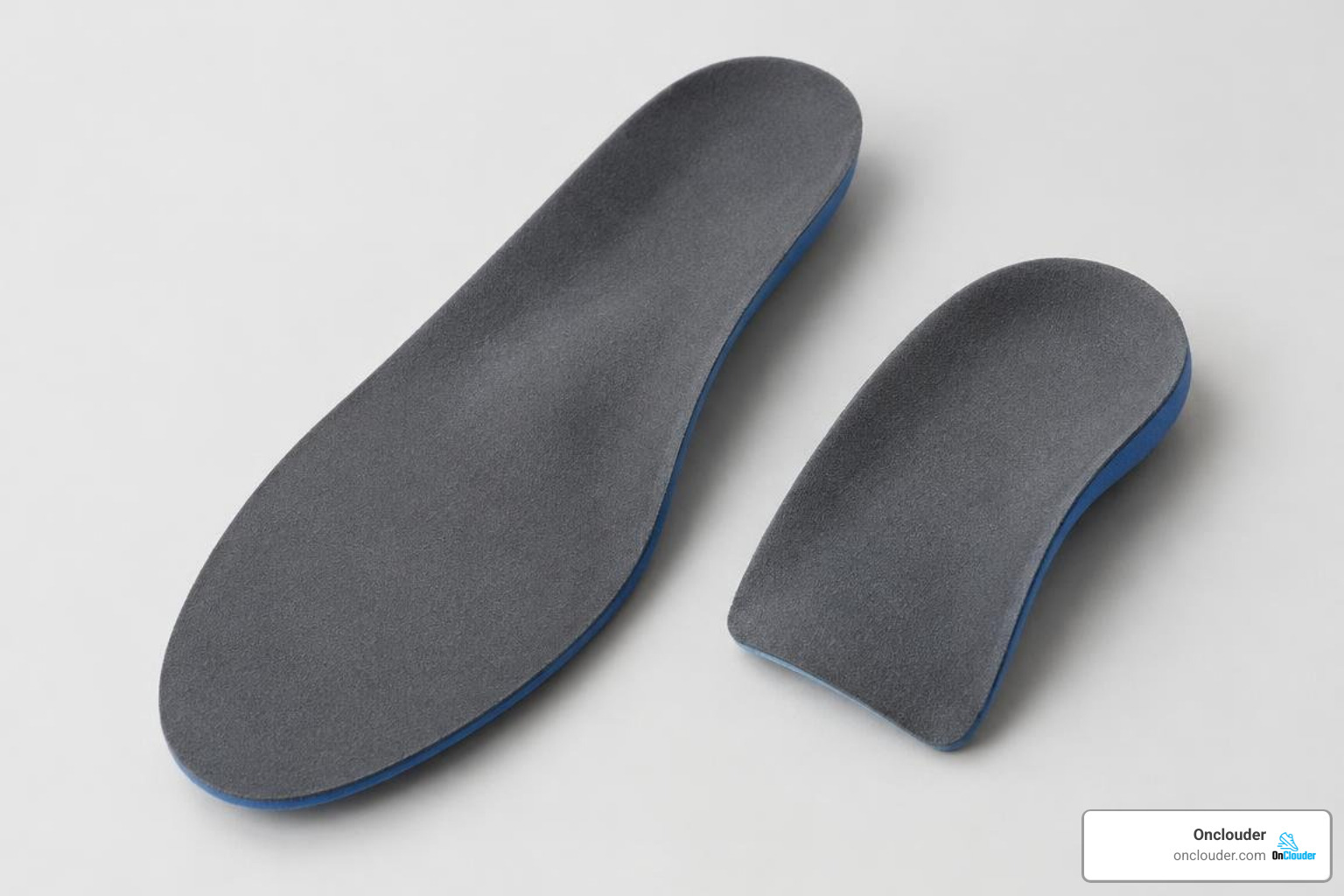
This is where 3 4 orthotic insoles excel. By terminating just behind the metatarsal heads (the ball of the foot), a 3/4 insole focuses corrective structural support under the heel and longitudinal arch while leaving the forefoot completely open. When deciding between non-prescription shoe inserts vs custom orthotics for plantar fasciitis, over-the-counter 3/4 models provide a practical, ready-to-use alternative that fits a broader range of footwear.
Key Benefits of 3/4 Length Footbeds
The primary advantage of a 3/4 profile is versatile volume management:
- Preserves Toe Box Volume: Leaving the front of the shoe open prevents vertical cramping, allowing your toes to splay naturally during gait.
- Accommodates Non-Removable Factory Footbeds: Many loafers, dress oxfords, fashion boots, and casual sneakers (such as classic skate shoes) feature glued-in liners. A 3/4 insole slides over the top of the existing liner without requiring surgical removal.
- Zero Trimming Required: Full-length inserts usually require trimming along the toe trim line with scissors. 3/4 inserts are pre-sized to match your arch and heel cup directly out of the box.
- Effortless Shoe Swapping: Because they do not wedge tightly into the forefoot, you can easily shift a single pair of 3/4 footbeds between work shoes, casual sneakers, and weekend boots.
Are 3/4 Inserts as Effective as Full-Length Options?
A common question we hear from shoppers is whether a shorter insole sacrifices therapeutic benefits. Biomechanically, the most critical corrections for foot health occur at the rearfoot and midfoot. Overpronation, excessive supination, and plantar fascia strain originate from heel instability and arch collapse.
A well-engineered 3/4 orthotic provides a deep heel cup that cradles the calcaneus (heel bone), maintaining the foot’s natural fat pad beneath the bone to absorb impact. Simultaneously, a semi-rigid arch bridge supports the plantar fascia ligament, preventing microscopic tearing and morning heel pain. For stabilizing an inward-rolling ankle, choosing dedicated overpronation correction insoles in a 3/4 profile provides the necessary medial posting without crowding your forefoot.
How to Choose the Best Orthotics for Your Feet and Footwear
Selecting the proper orthotic requires balancing your foot’s structural needs with the specific shoes you plan to wear. Learning how to choose the best insoles for foot pain involves evaluating three main factors: rigid biomechanical support, cushioning foam density, and shoe clearance.
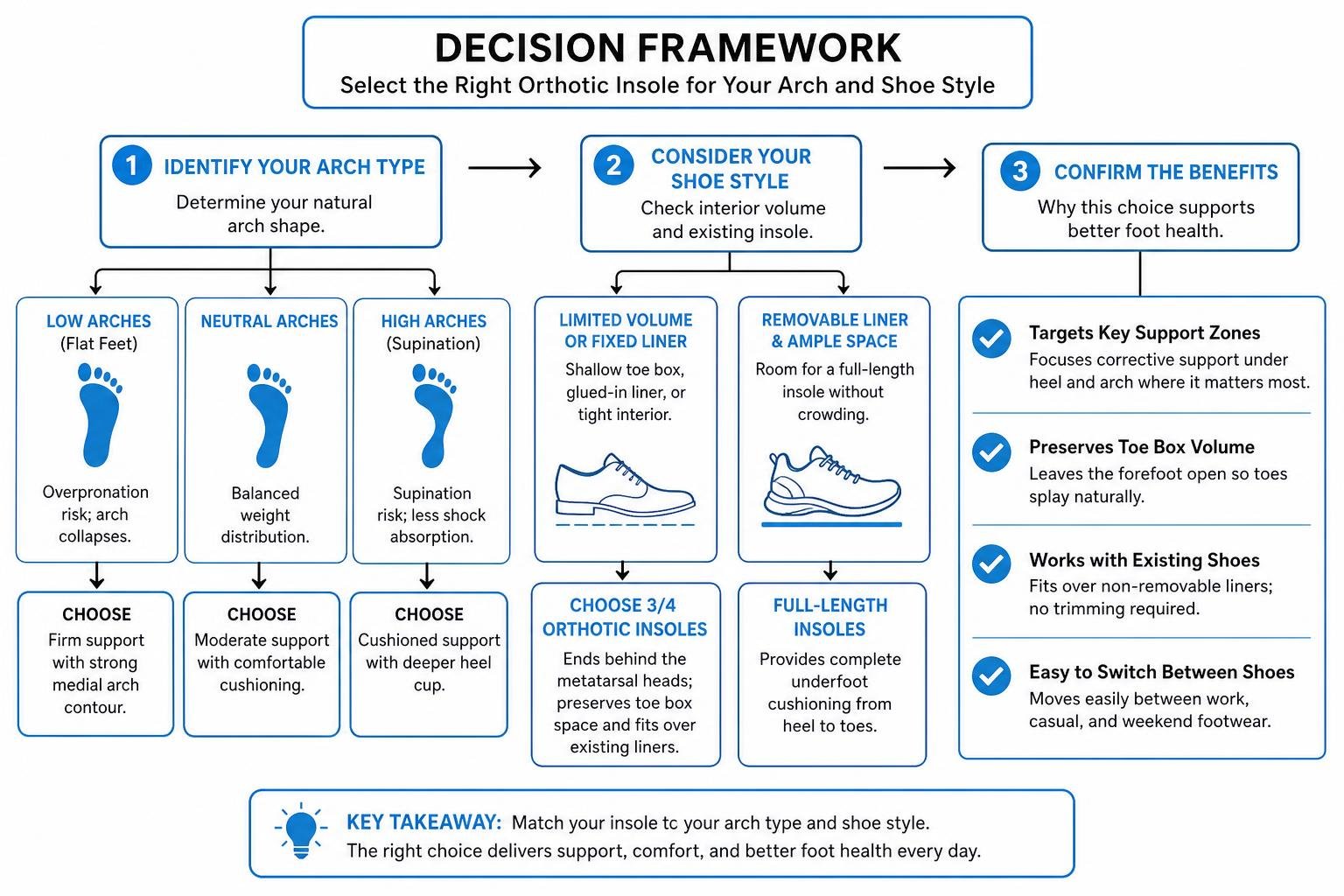
Matching 3 4 Orthotic Insoles to Your Specific Arch Type
Your arch shape determines the level of rigidity and profile height you need:
- Low Arches / Flat Feet: Flat feet often lead to overpronation, where the ankle rolls inward and the arch collapses under body weight. Look for a sturdy, semi-rigid shell with a firm medial arch contour. Using targeted arch support inserts for flat feet helps align the ankles, knees, and lower back.
- High Arches (Pes Cavus): High arches place excessive pressure on the heel and the ball of the foot while leaving the midfoot unsupported. Choose an insert with an elevated arch profile and adaptive foam cushioning (like memory foam or polyurethane) that fills the hollow space under your arch to redistribute pressure evenly.
- Neutral Arches: If you have normal arch mechanics but experience fatigue from standing, a flexible to semi-rigid arch contour with dual-layer foam cushioning maintains natural alignment while dampening repetitive impact.
Shoe Compatibility: Using 3 4 Orthotic Insoles in Dress Shoes and Sneakers
Because footwear styles vary widely in depth and width, pick an insert that matches the interior shape of your shoe:
- Dress Shoes and Loafers: Dress footwear typically features low volume and shallow heel collars. Look for ultra-slim, low-profile leather or composite insoles. Leather orthotics breathe well, resist odor buildup, and prevent heel slippage in stiff oxfords or flats.
- Athletic and Running Shoes: If you run or walk for exercise, your feet generate high impact forces. Choose 3/4 insoles with an EVA base, a shock-absorbing gel heel pad, and a moisture-wicking top cloth to keep your feet cool and stable.
- Work Boots and Daily Footwear: For jobs that keep you on your feet across hard concrete, look for insoles for standing all day that combine a structured support shell with resilient cushioning.
Comparing the Top-Rated 3/4 Orthotics on the Market
To help you find the right pair, we have compiled a side-by-side comparison of the leading 3/4 orthotic models based on support type, materials, and target shoe compatibility.
| Insole Model | Arch Profile | Primary Materials | Notable Feature / Rating | Best Shoe Compatibility | Price (USD) |
|---|---|---|---|---|---|
| PowerStep Pinnacle 3/4 | Neutral to High (Firm / Flexible) | Polypropylene Shell, EVA Cushioning, Polyester Top | 4.56/5 (378 reviews) / 90% pain reduction survey | Running Shoes, Casual Sneakers, Tight Lace-ups | $44.95 |
| Spenco RX 3/4 Arch Support | Semi-Rigid (Heat-moldable) | Moldable Plastic Base, SpenCore Layer, Silvadur | 88% 5-Star Reviews / 35+ years brand legacy | Work Boots, Everyday Walking, Dress Shoes | $37.99 |
| Pedag Viva Mini | Neutral / Longitudinal Arch | Vegetable-Tanned Leather, Carbon Odor Filter | APMA Seal of Acceptance | Dress Shoes, Loafers, Heritage Boots | $20.00 (sale) |
| RBX Plantar Fasciitis 3/4 | Flexible / Contoured | Adaptive Memory Foam, Gel Heel Cup, Torsion Cage | 4.4/5 (342 reviews) | Casual Athletic Shoes, Hiking Boots | $29.95 |
| DACAT Plantar Fasciitis 3/4 | Rigid High Arch | Hard EVA Base, Deep Heel Cup, Metatarsal Pad | Built-in Forefoot & Bunion Support | Roomy Casual Shoes, Wide Work Footwear | ~$19.99 |
| 3/4 Orthotic Insoles (Skyie) | High Arch / Overpronation | Dense EVA, Memory Foam Layer, Micro-Vented Top | Firm Biomechanical Alignment | Roomy Athletic Shoes, Boots | $19.18 |
| DACAT 3/4 Arch Support | High / Rigid Arch | Dual-Layer EVA, Deep Calcaneal Cradle | Targeted Bunion & Plantar Fascia Relief | Work Boots, Loose Athletic Footwear | ~$22.00 |
Firm Biomechanical Support: PowerStep Pinnacle and Spenco RX
For individuals dealing with moderate-to-severe overpronation, plantar fasciitis, or heel spurs, firm structural shells provide consistent stability.
The Powerstep Unisex-Adult SlimTech Pinnacle 3/4 ($44.95, rated 4.4 out of 5 from over 2,680 Amazon reviews) features a firm yet flexible polypropylene arch support bridge paired with a deep heel cradle. In customer surveys, 90% of PowerStep users reported reduced foot, knee, or back pain within two weeks of use. Its low-profile build slides cleanly into shallow footwear without pushing the foot upward, and the top polyester fabric helps manage moisture and friction.
Similarly, the Spenco RX 3/4 Custom Arch Insole ($37.99) delivers time-tested durability backed by 35+ years of production and an 88% 5-star rating across customer feedback. Built with a supportive base that can be heat-molded for a custom fit, it features SpenCore shock-absorbing cushioning and Silvadur antimicrobial treatment for odor control. The shell retains its structural shape over years of daily wear, making it an excellent choice for work boots and high-mileage walking shoes.
Low-Profile and Specialized Options: Pedag Viva Mini and RBX
If your shoes lack the vertical depth for traditional athletic orthotics, specialized low-profile models deliver targeted support without unnecessary bulk.
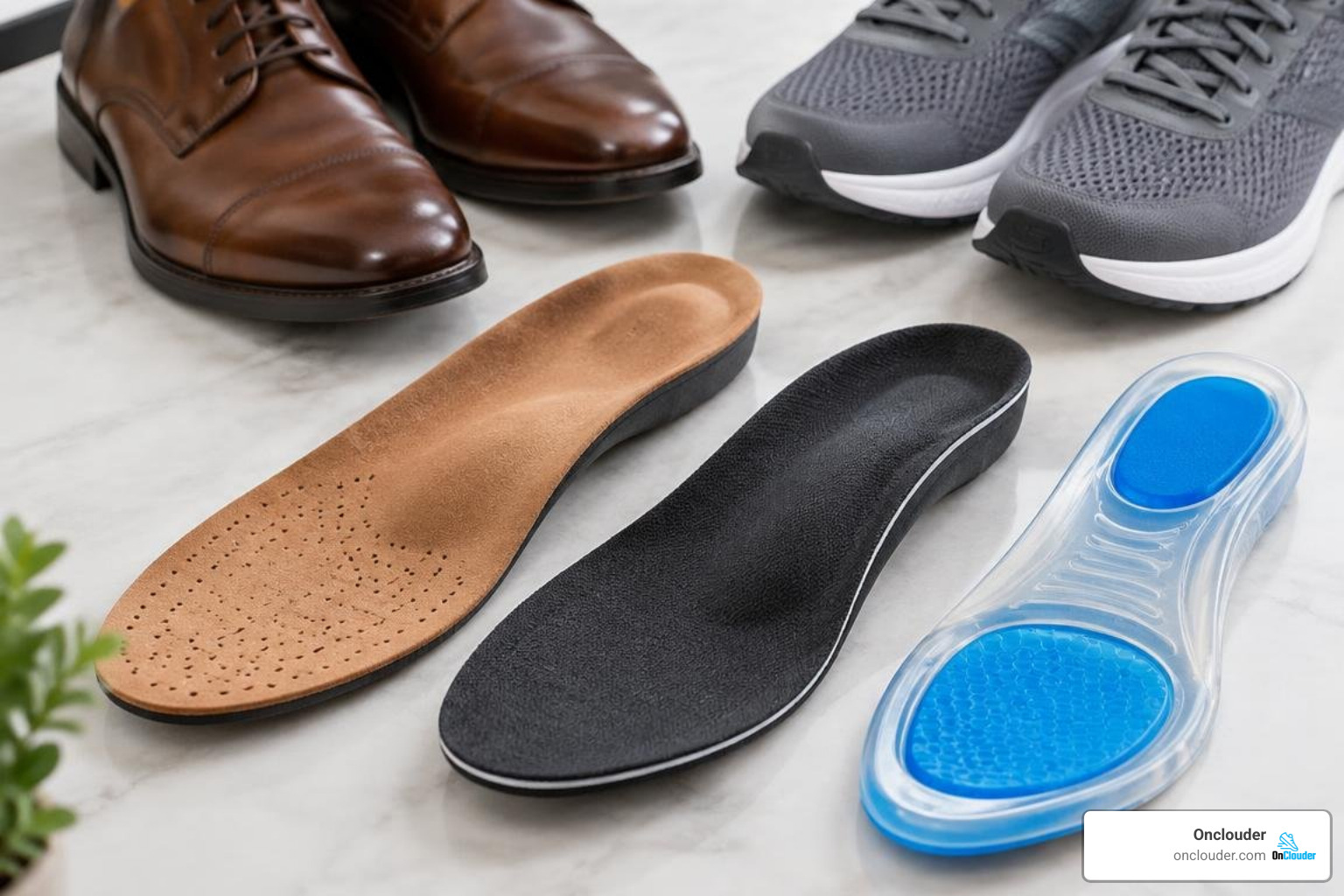
The pedag VIVA Mini Black ($20.00 sale price) is a German-crafted orthotic built from vegetable-tanned sheepskin leather. It holds the American Podiatric Medical Association (APMA) Seal of Acceptance. Designed specifically for tight dress footwear and low-profile slip-ons, it incorporates a semi-rigid longitudinal arch support, a gentle metatarsal pad to relieve ball-of-foot pressure, and an activated carbon layer that filters foot odor.
For those prioritizing heel cushioning over rigid arch correction, the RBX Plantar Fasciitis Ortho Insoles ($29.95, rated 4.4 out of 5) utilize a cupped gel heel unit combined with adaptive memory foam. A cross-vented torsion cage stabilizes the midfoot during lateral movement, while the moisture-wicking Hydrowick top sheet keeps feet cool during physical shifts and outdoor hikes.
Proper Fit, Placement, and Maintenance Tips
Correct insole placement ensures that your arch support lines up with your natural foot anatomy.
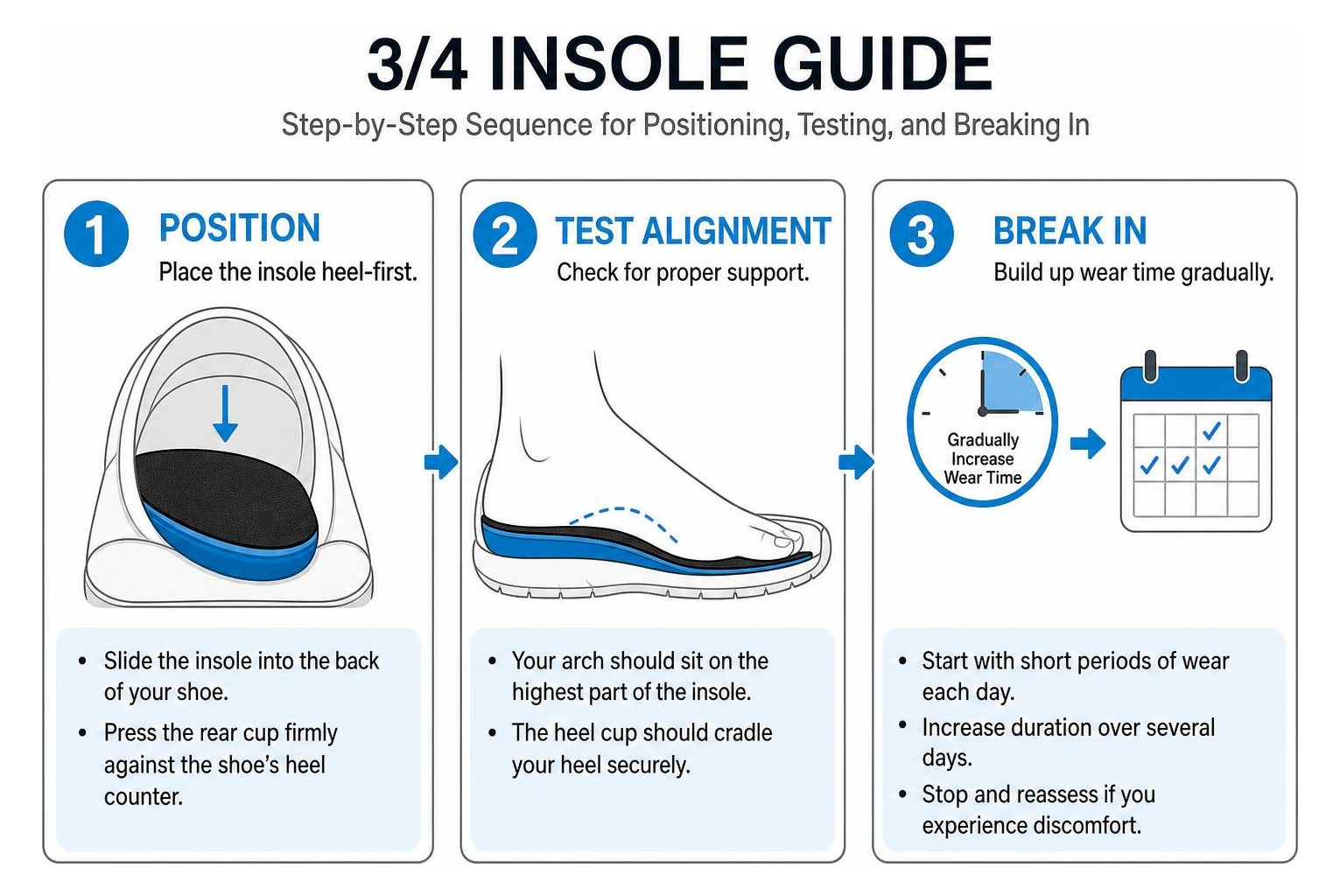
Positioning and Securing Inserts Without Trimming
Because 3/4 insoles arrive pre-shaped, installing them requires just a few quick steps:
- Place the Insole Heel-First: Slide the insert into the back of your shoe, pressing the rear cup firmly against the shoe’s heel counter.
- Verify the Forefoot Boundary: The tapered front edge of the insole should end just behind the metatarsal heads (the ball of your foot). If the edge rests directly under the ball of your foot, the insert is too long and can cause discomfort.
- Check for Slippage: While many 3/4 inserts feature a textured or non-slip base, smooth leather liners can occasionally cause an insert to shift forward during walks. If movement occurs, secure the underside of the heel cup with a strip of double-sided tape or a removable adhesive dot.
- Follow a Gradual Break-In Period: Stiff orthotic shells change the way your foot absorbs weight. Wear your new insoles for 1 to 2 hours on the first day, increasing wear time by an hour each day until your feet and calf muscles adapt comfortably.
Lifespan, Durability, and Cleaning Guidelines
Most high-quality 3/4 orthotics provide reliable biomechanical support for 6 to 12 months, depending on your activity level and body weight. While rigid composite shells can last several years without cracking, top-layer foams and friction-reducing fabrics compress over time.
To maximize insole life:
- Spot Clean Only: Wipe down the top sheet using a damp cloth and mild soap. Never submerge orthotics in water or wash them in a laundry machine, as heat and saturation degrade structural glues and molded plastics.
- Air Dry Completely: Allow your insoles to dry in an open, ventilated space away from direct heating vents or hair dryers.
- Monitor Wear Indicators: Replace your insoles when you notice visible thinning in the heel cushioning, peeling fabric edges, or a return of arch and heel soreness.
Frequently Asked Questions About 3/4 Orthotics
Do 3/4 insoles require trimming before use?
No. Unlike full-length orthotics that must be custom-cut to match your shoe’s exact toe curve, 3/4 insoles are designed ready-to-wear. You choose your standard shoe size, slide the insert firmly into the heel pocket, and head out the door.
Can you place 3/4 orthotics over factory insoles?
Yes. One of the greatest benefits of a 3/4 insole is its ability to sit directly on top of glued-down, non-removable shoe footbeds. Because the insole leaves the forefoot open, it provides heel and arch correction without squeezing your toes against the top of the shoe.
How long do 3/4 orthotic inserts typically last?
With everyday use, the cushioning foam and top cover of a 3/4 orthotic typically last between 6 and 12 months. The rigid plastic or composite arch shells often remain intact for several years, though we recommend replacing them once the cushioning compresses or no longer provides comfortable shock absorption.
Conclusion
Finding the right footwear support does not mean you have to sacrifice toe room or abandon your favorite dress shoes. By selecting a high-quality 3/4 orthotic insole matched to your arch shape, you gain targeted heel stability, structural arch support, and reliable plantar fascia relief across a wide variety of footwear styles.
At Onclouder, we test and review footwear gear to help you move comfortably and stay active without pain. For a deeper look at full-length and specialty inserts across every category, explore our complete guide to the best arch support insoles for total foot relief to keep your feet feeling their best every day.