

Why Orthopedic Composite Toe Shoes Deserve a Spot in Every Worker’s Rotation
Orthopedic composite toe shoes combine industrial-grade foot protection with the kind of comfort engineering your feet actually need during long, demanding shifts.
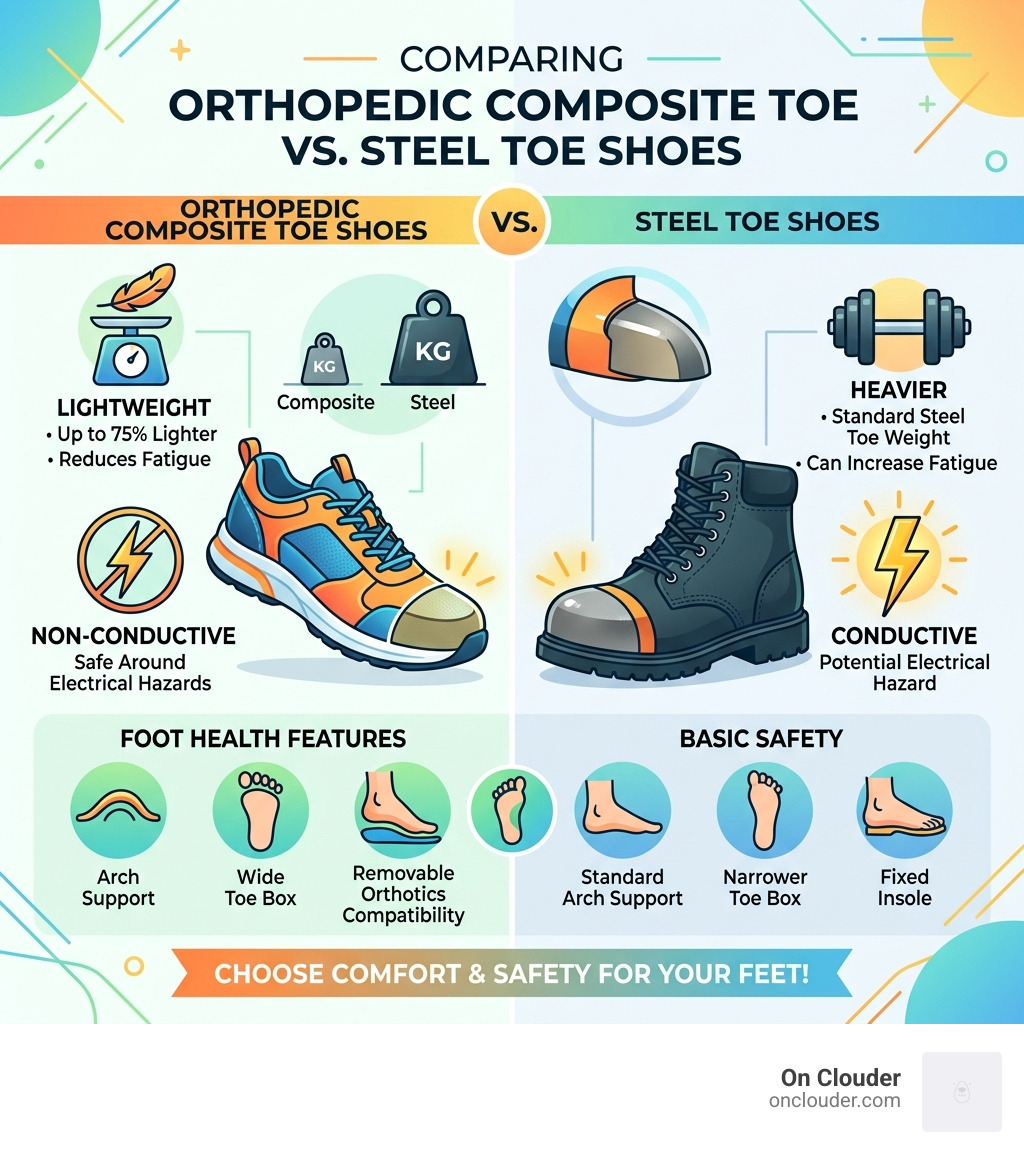
Quick answer: Here’s what makes them stand out:
| Feature | Orthopedic Composite Toe Shoes |
|---|---|
| Toe protection | Non-metallic composite cap (meets ASTM F2413) |
| Weight vs. steel | Up to 75% lighter |
| Conductivity | Non-conductive — safe around electrical hazards |
| Foot health support | Arch support, wide toe box, removable orthotics |
| Medical approval | Many models meet Medicare PDAC A5500 |
| Best for | Plantar fasciitis, diabetes, neuropathy, arthritis |
| Airport friendly | Yes — no metal detector triggers |
If you’re on your feet all day — whether on a job site, in a warehouse, or a medical facility — the wrong footwear doesn’t just cause discomfort. It can make existing foot conditions significantly worse.
Most traditional steel toe boots were designed around protection, not around your foot’s anatomy. That trade-off costs workers in pain, fatigue, and long-term joint damage.
Orthopedic composite toe shoes flip that equation. They meet the same safety standards as steel — while also addressing the biomechanical needs of real, working feet.
That’s a meaningful difference, especially if you’re managing a condition like plantar fasciitis, diabetic neuropathy, or arthritis.
I’m Faisal S. Chughtai, a footwear comfort expert who has spent years helping people navigate the intersection of performance, support, and safety — including the growing world of orthopedic composite toe shoes. In this guide, I’ll walk you through everything you need to choose the right pair with confidence.
Handy orthopedic composite toe shoes terms:
What Are Orthopedic Composite Toe Shoes and How Do They Differ from Steel?
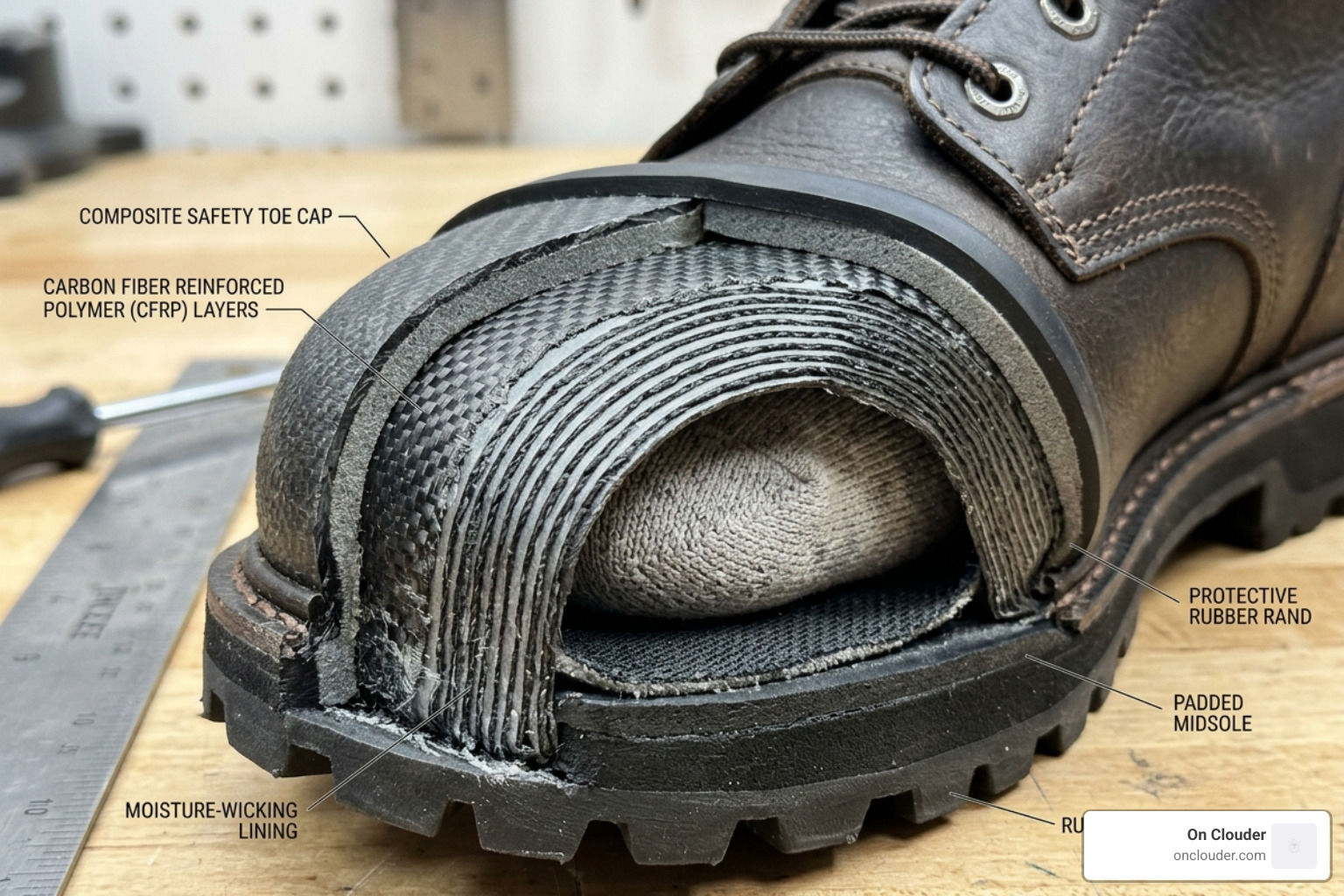
When we talk about orthopedic composite toe shoes, we are looking at a marriage of two distinct technologies: advanced safety materials and therapeutic footwear design. Unlike traditional steel toe boots that use a heavy carbon steel plate, composite toes are crafted from non-metallic materials such as carbon fiber, Kevlar, plastic, or high-tech glass fiber.
One of the most significant breakthroughs in this field is nanotechnology. For example, brands like Wolverine utilize CarbonMAX technology, which uses nanotubes to create a protective cap that is thinner and significantly lighter than steel while maintaining the same impact resistance. Because these materials are non-metallic, they offer several unique benefits:
- Weight Reduction: Composite toes can be up to 75% lighter than steel. This reduction in “swing weight” significantly lowers the energy required for every step, which is a lifesaver for workers walking miles on a concrete warehouse floor.
- Thermal Regulation: Steel is a conductor; it gets freezing in the winter and roasting in the summer. Composite materials are thermal insulators, meaning they don’t transfer outside temperatures to your toes.
- Safety Compliance: These shoes aren’t just “soft” alternatives. They are rigorously tested to meet ASTM F2413 standards for impact and compression.
- Airport/Security Friendly: Since they contain no metal, workers in high-security environments or those who travel frequently don’t have to remove their boots at every metal detector.
While Soft Toe Work Boots Are The Secret To Happy Toes for those without safety requirements, the composite toe is the gold standard for those who need protection without the “anchor” feeling of steel.
Health Benefits for Chronic Foot Conditions
For many of us, a work boot is more than just a uniform requirement—it’s a medical necessity. Orthopedic composite toe shoes are specifically engineered to alleviate pain from chronic conditions that traditional boots often aggravate.
Plantar Fasciitis and Heel Pain
If you wake up with a stabbing pain in your heel, you likely have plantar fasciitis. Orthopedic safety shoes address this with contoured heel seats and anatomical arch support. By properly aligning the foot, these shoes reduce the strain on the plantar fascia ligament. For a deeper dive into this specific issue, check out our Best Work Shoes Plantar Fasciitis Guide.
Diabetic Neuropathy and Medicare Compliance
For those with diabetes, foot protection is critical. Many high-end orthopedic composite toe shoes, such as those from OrthoFeet, meet Medicare PDAC A5500 requirements. This means they are recognized as therapeutic footwear for diabetics. They feature seam-free interiors to prevent friction and “hot spots” that could lead to ulcers, alongside extra depth to accommodate custom-molded inserts.
Arthritis and Hallux Rigidus
Arthritis in the toes (Hallux Rigidus) or “Turf Toe” can make every step agonizing. Specialized composite inserts, like Glass Fiber Composite Hallux Rigidus Turf Toe plates, can be integrated into these shoes to limit the painful bending of the big toe joint.
Bunions and Wide Feet
Traditional safety shoes are notoriously narrow. However, orthopedic brands offer extreme width options. For instance, the Apis 6508 is available in widths up to 14E (9E super extra wide), providing ample room for bunions, hammertoes, or severe swelling. This focus on volume ensures that even those with complex foot shapes can find Support Your Sole With These Orthopedic Nursing Shoes or work boots that don’t pinch.
Essential Safety Features and Industrial Certifications
Safety on the job site is non-negotiable. When shopping for orthopedic composite toe shoes, you must look for specific certifications to ensure you’re protected against workplace hazards.
| Standard | What it Measures | Why it Matters |
|---|---|---|
| ASTM F2413 | Impact & Compression | Protects toes from falling objects or heavy rolling equipment. |
| ASTM F3445 | Slip Resistance | Ensures the outsole maintains grip on wet or oily surfaces. |
| EH (Electrical Hazard) | Non-conductivity | Protects the wearer against open circuits up to 18,000 volts. |
| A5500 | Diabetic/Orthopedic | Confirms the shoe is medically graded for therapeutic use. |
Beyond the toe cap, the entire construction of the shoe plays a role in safety. Many models feature oil-resistant and slip-resistant rubber outsoles that are essential for industrial environments. Furthermore, understanding The Science Of Dry Waterproof And Breathable Steel Toe Boots Explained is crucial for those working outdoors; many orthopedic boots use waterproof leather and breathable membranes to keep feet dry and prevent fungal infections.
For our female readers, finding the right fit is especially important. We recommend checking out the Womens Steel Toe Shoes Survival Guide to learn how to navigate safety standards in styles designed for a woman’s foot anatomy.
Advanced Comfort Systems and Orthotic Integration
What truly separates an “orthopedic” shoe from a standard work boot is how it interacts with the rest of your foot. It isn’t just about the toe; it’s about the entire internal environment.
How do orthopedic composite toe shoes accommodate custom orthotics?
Most standard work boots have glued-in insoles that offer little support. In contrast, orthopedic composite toe shoes are built with “extra depth” construction. This means they have a removable footbed (often two) that can be swapped out for custom-made medical orthotics or AFOs (Ankle Foot Orthoses).
The Men’s Leather Composite Toe Work Boot | Apis 6508 even comes with three free custom heat-moldable inserts, allowing you to create a personalized fit right out of the box. Seam-free interiors and wide toe boxes ensure that even with a thick orthotic, your foot has plenty of room to breathe. For more on this, see The Ultimate Guide To Best Shoes With Arch Support.
Enhancing support with heat-moldable insoles and customizable fit systems
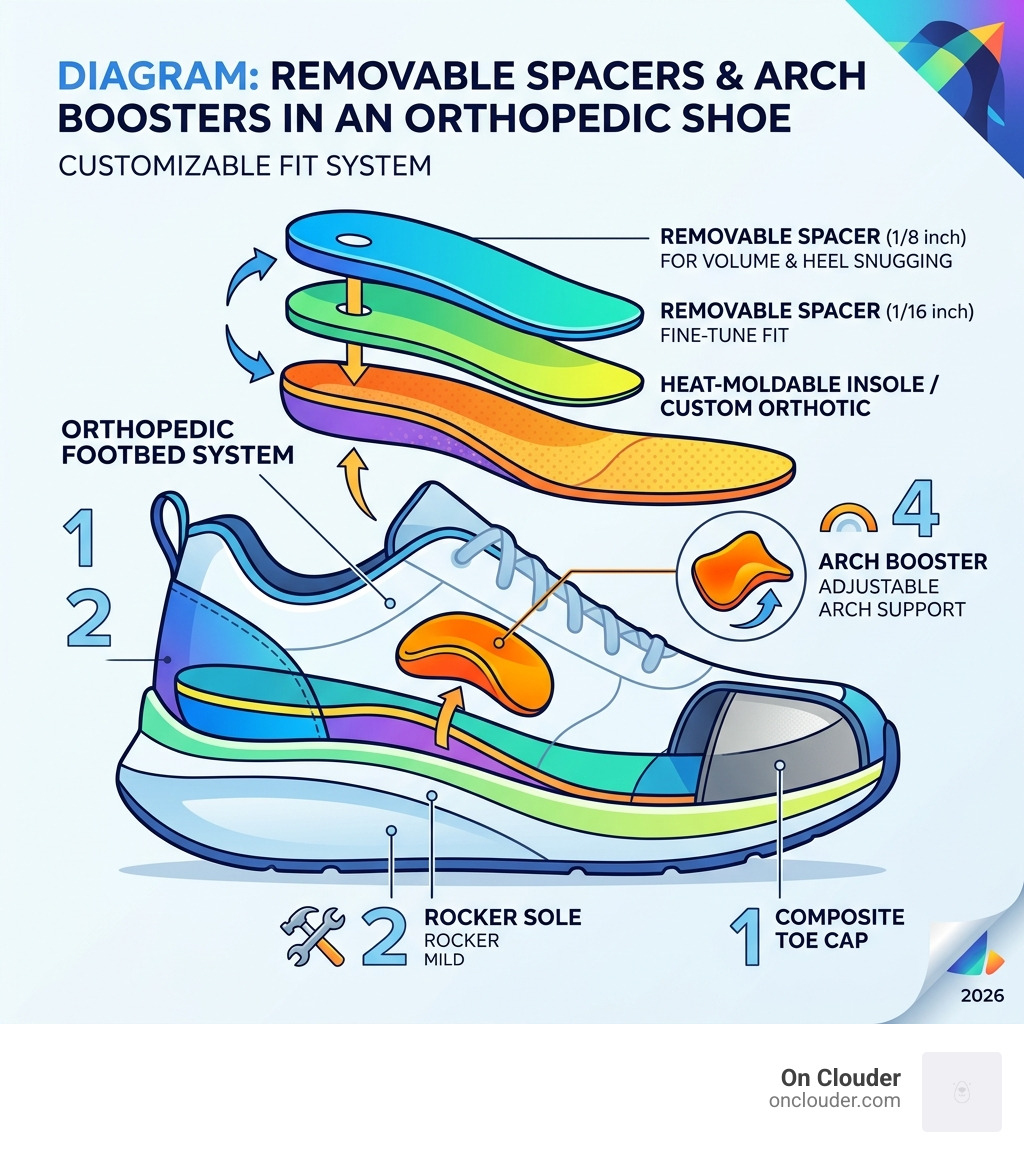
Modern systems like the Ortho-Cushion™ found in OrthoFeet Cobalt models use multiple layers of cushioning to absorb shock. Many of these shoes include:
- Arch Boosters: Removable plastic inserts that can be placed under the insole for extra lift.
- Fitting Spacers: 1/8-inch or 1/16-inch spacers that allow you to fine-tune the volume of the shoe to prevent heel slippage.
- Anti-microbial Fabrics: Linings that wick moisture and kill odor-causing bacteria.
- Mild Rocker Soles: A slight curve in the sole that helps propel the foot forward, reducing the effort required to walk.
Top-Rated Models and Styles for 2026 Work Environments
As we look at the landscape in May 2026, the variety of orthopedic composite toe shoes has never been better. You no longer have to wear a clunky brown boot if your job allows for a more athletic look.
What are the most affordable orthopedic composite toe shoes for 2026?
Safety shouldn’t be a luxury. Several brands offer excellent value-driven protection:
- Skechers: Often features BOGO 50% OFF promotions, with composite toe models like the Bulklin starting around $110.
- Volcom: The Volcom Chill offers a roomy composite toe and EH rating for under $95 at the Work Boots for Men – Orthotic Shop.
- Reebok Work: Known for their athletic “tennis shoe” feel, Reebok offers over 30 models ranging from $119 to $179, blending sports technology with industrial safety. See The Ultimate Guide To Womens Steel Toe Sneakers for similar lightweight options.
Specialized footwear for construction, warehouses, and medical sites
Different environments require different tools. Here is how to choose:
- Construction & Heavy Industry: Look for 6-inch boots like the OrthoFeet Graphite. These provide ankle stability and often feature defined heels for ladder climbing.
- Warehousing & Logistics: If you are constantly moving, a hands-free model like the OrthoFeet Onyx is a game-changer. You can slip them on without bending over, which is great for those with back pain.
- Summer/Hot Environments: Lightweight athletic designs are best here. We’ve ranked the Hot Jobs And Cool Toes The Most Comfortable Summer Work Boots Ranked to help you stay cool when the asphalt is melting.
- Medical & Service: Slip-resistant sneakers from brands like Propét or Men’s Orthopedic Work Shoes – Occupational Comfort Footwear offer the support needed for 12-hour shifts on hard hospital floors.

Frequently Asked Questions about Orthopedic Safety Footwear
Do composite toe shoes get cold in the winter?
No! This is one of their biggest advantages. Unlike steel, which acts as a heat sink and pulls warmth away from your feet, composite materials are poor conductors of heat. This means your toes stay warmer in freezing conditions.
How often should I replace my orthopedic work boots?
Most experts recommend replacing work shoes every 6 to 12 months, depending on usage. For orthopedic shoes, keep an eye on the midsole and arch support. Once the cushioning compresses and no longer “springs back,” it’s time for a new pair to avoid re-aggravating foot conditions.
Are composite toe shoes OSHA approved for construction sites?
Yes, as long as they are certified to ASTM F2413 standards for impact and compression. Always check the label on the inside of the tongue to ensure they meet the specific requirements of your job site. You can find a wide selection of compliant options at Composite Toe Work Boots & Shoes – Wolverine.
Conclusion
At On Clouder, we believe that your career shouldn’t come at the expense of your long-term mobility. Choosing orthopedic composite toe shoes is an investment in your future self. By reducing weight, providing anatomical support, and accommodating medical needs, these shoes help prevent the chronic workplace injuries that often lead to early retirement or persistent pain.
When purchasing, look for retailers that offer extended wear-test periods—like OrthoFeet’s 60-day trial—to ensure the shoes truly work for your specific foot shape. Whether you are navigating a construction site or a hospital corridor, the right pair of shoes will keep you safe, supported, and ready for the next shift.
For those rare occasions when you have to trade the boots for something more formal, don’t forget to check out our Ultimate Dress Shoes Guide Standing On Concrete to keep the comfort going after hours.
Ready to find your perfect pair?
- Explore Tag/Orthopedic Shoes
- Browse Tag/Composite Toe
- Check out Tag/Work Boots
