Best Shoes for Narrow Heels and Wide Toes: Where to Start
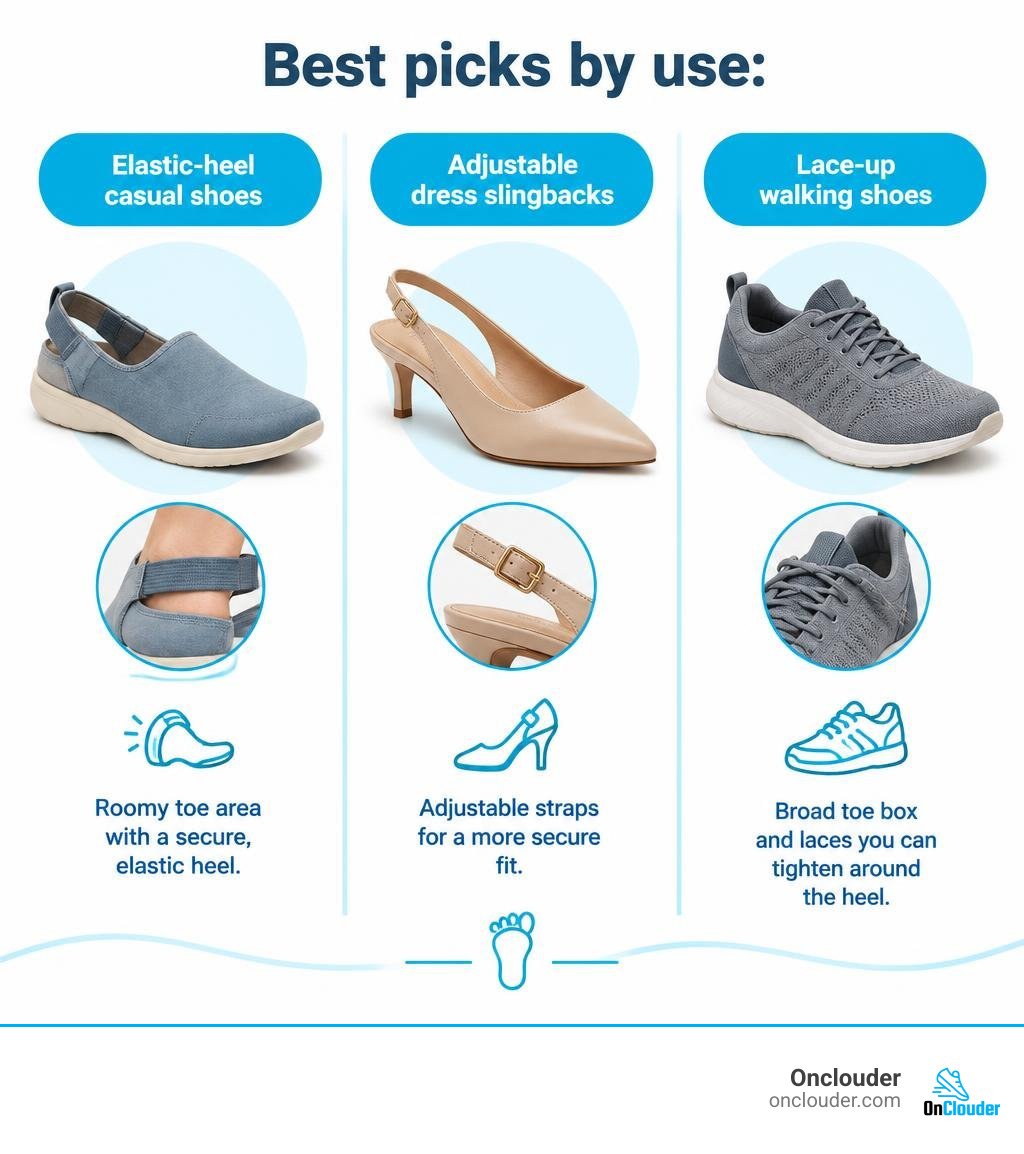
Start with shoes that give your toes room and hold your heel in place. Look for a casual option with a roomy toe area and an elastic heel. For dressier days, try styles with adjustable slingback straps. For walking shoes, look for a broad toe box and laces you can tighten around the heel.
A wide size alone may not solve the problem: it can add space at the heel, too. Before you buy, walk in both shoes. Your toes should spread without pressure, and your heels should stay put without rubbing.
Basic best shoes for narrow heels and wide toes vocab:
Understanding the Combination Foot: Anatomy and Fit Challenges
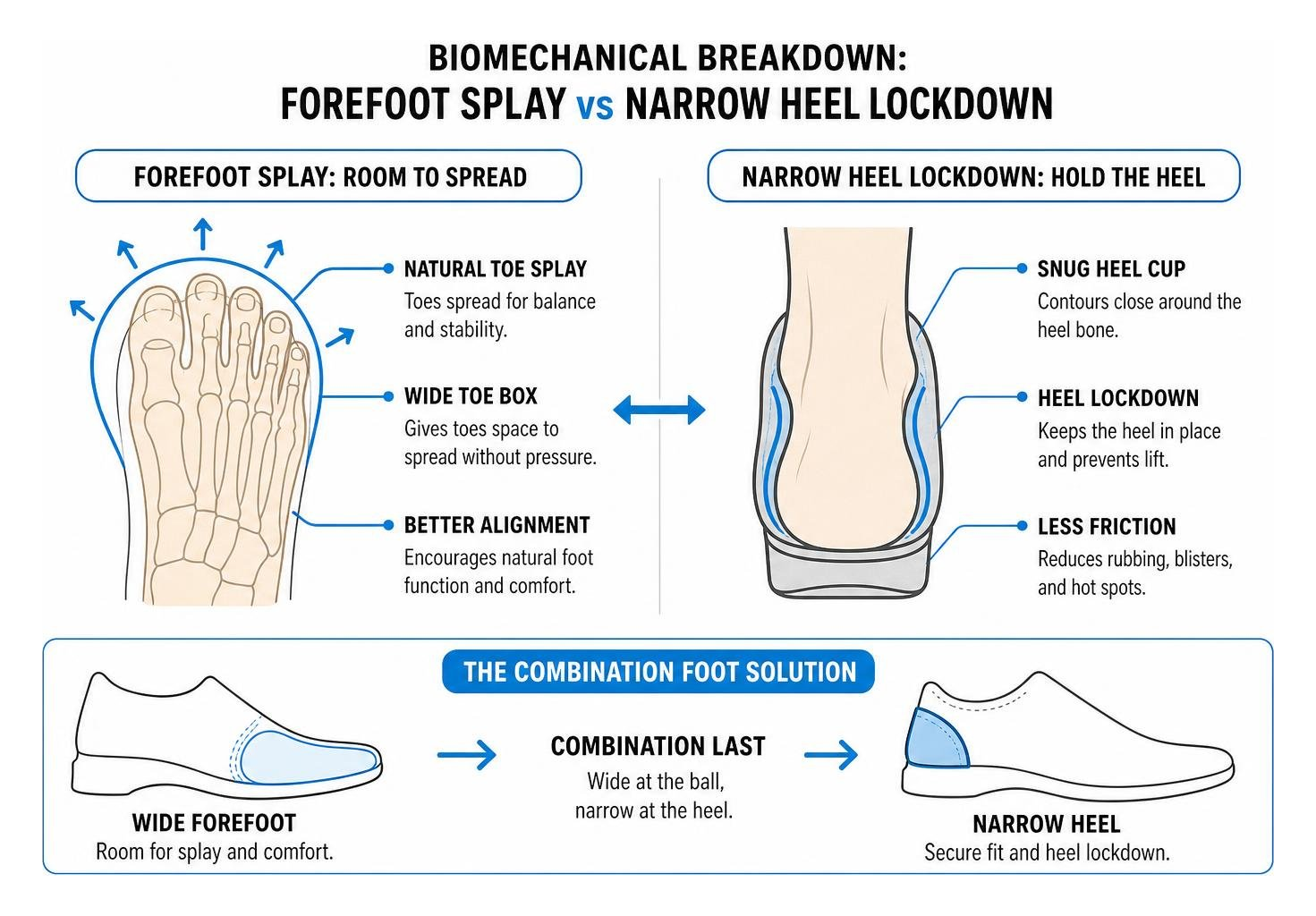
Shopping for what footwear designers call a combination foot can feel like searching for a mythical creature. A combination foot simply means your forefoot (the ball and toes) is broad, while your rearfoot (the calcaneus or heel bone) is noticeably slim. When you stand, your toes naturally want to splay out to give you balance, demanding width at the front. Meanwhile, your heel needs a snug, contoured cup so it doesn’t lift out of the back of the shoe with every stride.
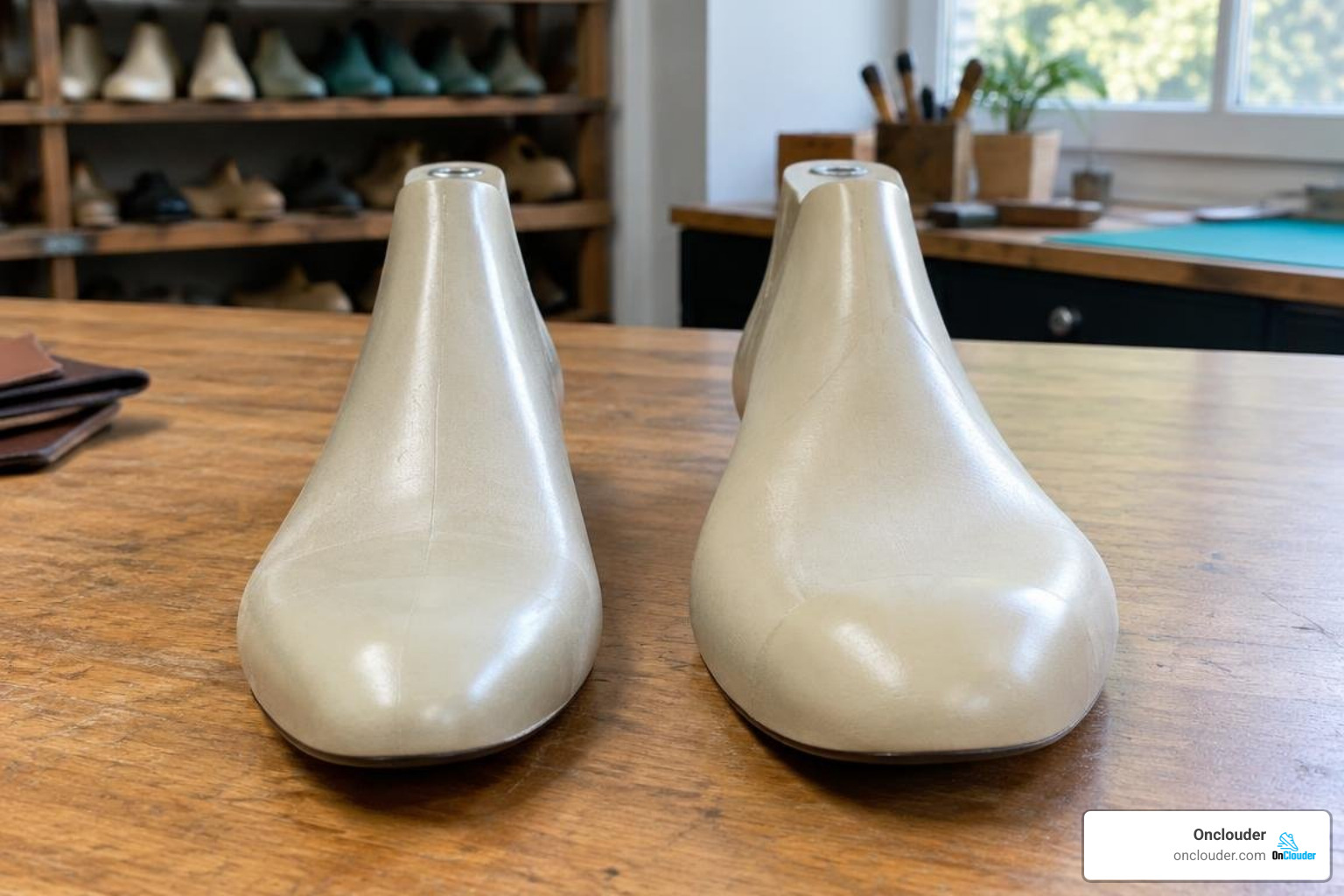
Most mass-market footwear brands construct their products on standard lasts. In a standard last, the width of the heel scales up proportionally with the width of the ball. When someone with a wide forefoot buys a standard “wide” (D or EE) shoe, the brand also widens the heel pocket. The result? Your toes finally get some breathing room, but your heels slip and slide out of the shoe like a loose pair of flip-flops.
Conversely, if you buy a medium width to lock your narrow heels in place, the shoe acts like a vice grip on your metatarsals, leading to numbness, pinched pinky toes, and bunion flare-ups. When the heel constantly slips out, friction against the shoe collar generates stubborn blisters within minutes.
To overcome this, you need footwear built on a combination last (also called a double last). A combination last features a proportional difference—often having a C or D width at the ball paired with an A or B width at the heel. Learning the essentials of finding the perfect match for your narrow heels and wide forefoot is the first step toward walking without pain.
Top Picks: The Best Shoes for Narrow Heels and Wide Toes Across Every Category
To save you the headache of endless returns, we evaluated popular footwear styles across office wear, daily casuals, and walking shoes based on their toe box geometry and heel retention mechanisms.
| Footwear Style | Toe Box Shape | Heel Retention Design | Ideal Use | Available Widths |
|---|---|---|---|---|
| Slingback Pump | Almond / Roomy | Adjustable Slingback Buckle | Formal / Office | Regular, Wide |
| Square-Toe Slingback Heel | Roomy Square | Adjustable Slingback Strap | Work / Events | Regular (runs slightly small) |
| Ankle-Strap Block Heel Sandal | Rounded Almond | Ankle Wrap Strap + Block Heel | Weddings / Dressy | Narrow, Regular, Wide |
| Elastic-Collar Casual Flat | Anatomical Round | Elasticized Heel Collar | Casual Daily Wear | Regular (Euro 36–42) |
| Lace-Up Athletic Walkers | Wide / Anatomical | Runner’s Loop Heel-Lock Eyelets | Walking / Fitness | Standard to Wide |
Work-Ready Pumps and Slingbacks: Best Shoes for Narrow Heels and Wide Toes for the Office
Work environments demand polish, but traditional rigid court shoes and closed pumps are notorious for causing heel slippage. The secret for combination feet in professional settings lies in mechanical retention: adjustable straps, slingbacks, and block heels.
Podiatrists frequently recommend a slingback pump style. Because it features a roomy almond toe box that provides wiggle room without pinching, paired with a fully adjustable slingback strap, you can lock your narrow heel firmly in place while allowing your forefoot to splay. Look for options in both regular and wide widths, letting you dial in your forefoot fit precisely.
Another standout option for professional settings is a square-toe slingback heel. Built with a spacious square toe box, it prevents that dreaded mid-afternoon pinky toe crush while incorporating built-in orthotic arch support. Its adjustable slingback strap ensures your heel does not lift or rub against stiff counters.
If you need a dress shoe for all-day conferences or formal events, an ankle-strap block heel sandal remains a gold standard. Look for options available in narrow, regular, and wide widths, combining a supportive 2.5-inch block heel with an adjustable ankle strap that completely bypasses heel-cup fit issues. For more formal styling tips, check out our in-depth advice on selecting wide toe box dress shoes.
Even in luxury footwear, shape selection is paramount. Classic fit guides note that round-toe styles, wedges with ankle straps, and Mary Jane silhouettes provide a much better fit for broad forefeet than hyper-aggressive, narrow pointed styles.
Everyday Casuals and Flats: Best Shoes for Narrow Heels and Wide Toes for Daily Wear
For off-duty days, errands, and casual office environments, finding closed flats that accommodate wide toes without gaping at the sides requires flexible uppers and specialized heel collars.
An elastic-collar casual flat is specifically designed for feet that are broader at the front and narrow at the back. Crafted using buttery-soft leathers, it features a generous, non-tapered toe box and an integrated elastic band around the heel collar that gently hugs the back of your foot without digging into your Achilles tendon.
When choosing ballet flats, prioritize round- or almond-toe silhouettes with elasticized top-lines. You can explore a curated selection in our guide to the best ballet flats with wide toe box for 2026 to find slip-ons that maintain firm contact with your heel throughout your gait cycle.
Athletic and Walking Footwear with Secure Heel Retention
Athletic and active walking shoes offer the greatest adjustability for combination feet because lacing systems allow you to isolate the forefoot tension from the ankle collar.
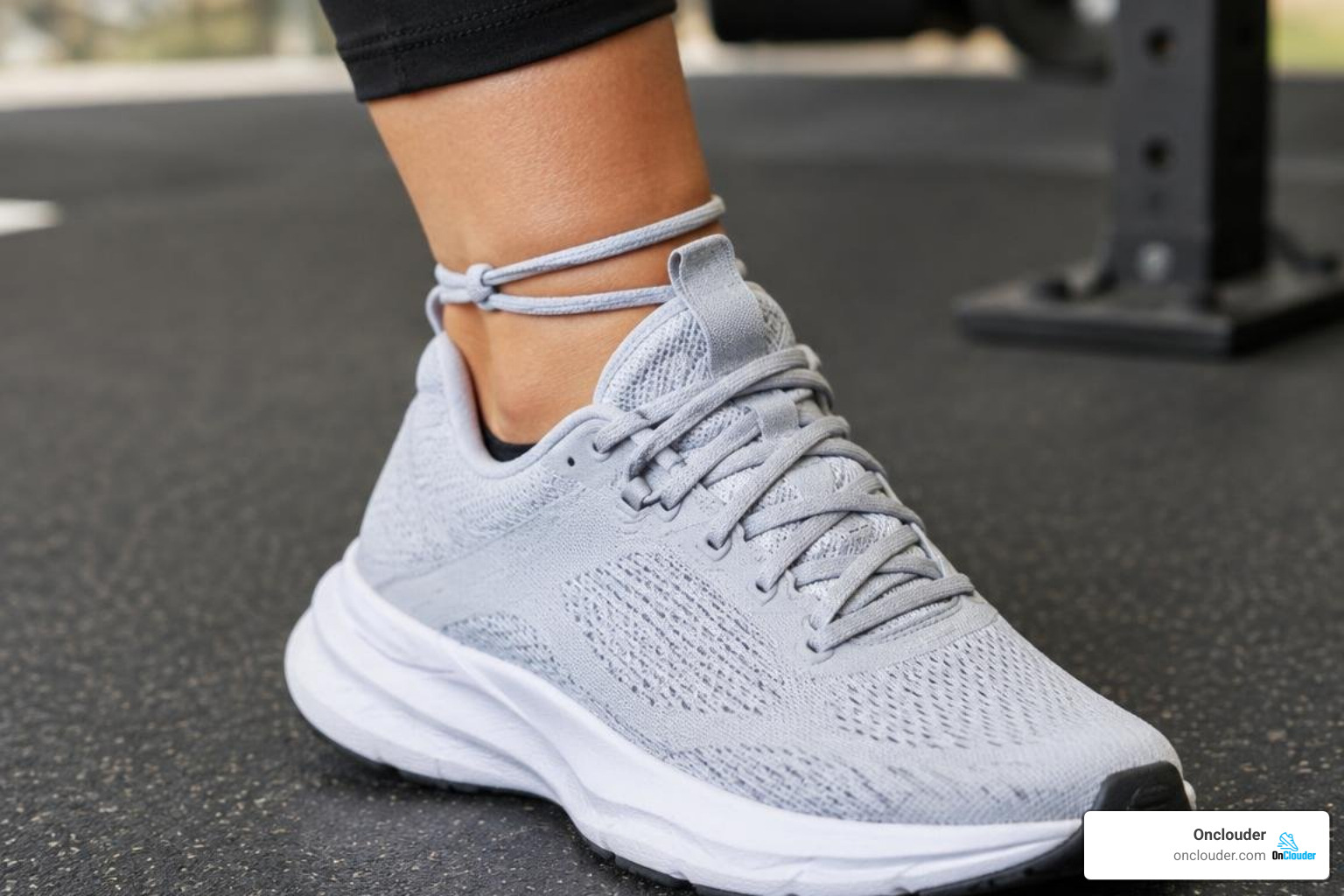
When selecting active shoes, look for models with a naturally broad forefoot platform paired with extra eyelets near the ankle collar. By utilizing the runner’s loop (or heel-lock lacing technique), you can thread the lace back through the auxiliary eyelet to create a snug cinch around the ankle. This completely immobilizes a narrow heel while leaving the front laces loose so your toes can splay out freely. You can learn how to implement these techniques in our guide to stop the slip with the best narrow heel and wide toe box shoes.
Essential Design Features to Look for (and Styles to Avoid)
Finding the right fit becomes much easier when you know exactly which structural elements to seek out and which to leave on the shelf.
A common mistake is assuming that any shoe labeled “wide” will accommodate wide toes. For example, consumer feedback on pointed flats frequently highlights that even in designated wide sizes, a sharply tapered toe box can severely pinch the toes while leaving the heel loose. If you suffer from forefoot joint irritation, choosing footwear with anatomically shaped toe boxes is critical; explore how wide toe box shoes can relieve bunion discomfort to understand the structural benefits.
How to Modify Ill-Fitting Shoes for Combination Feet
If you already have a pair of shoes that pinches your toes or slips off your heels, you don’t necessarily have to throw them away. You can make targeted adjustments using inexpensive fit hacks:
- Add Adhesive Silicone Heel Grips: Place contoured suede or silicone grips inside the shoe’s heel counter. This reduces the rear pocket volume by 2 to 3 millimeters, preventing vertical heel lift without affecting toe room.
- Insert Felt Tongue Pads: Stick a cushioned adhesive pad under the tongue of lace-up shoes or the upper vamp of loafers. This pushes your foot down and back into the heel pocket, locking the rearfoot in place.
- Use Spot Shoe Stretchers: Apply leather stretching spray and insert a mechanical shoe stretcher equipped with targeted plastic plugs. Position the plugs precisely over tight forefoot areas (such as the first and fifth metatarsal heads) to expand the toe box while leaving the heel cup unchanged.
- Swap for 3/4 Length Orthotics: Full-length insoles can crowd your toe box. A three-quarter length supportive insole stabilizes your arch and cups your narrow heel without taking up precious vertical space at the front of the shoe.
- Apply Ball-of-Foot Metatarsal Cushions: In heeled shoes, a slim silicone ball-of-foot pad prevents your foot from sliding forward into the toe box, which is a major hidden cause of both toe crowding and rear heel gap.
Frequently Asked Questions About Shoes for Narrow Heels and Wide Toes
How do I know if I have a combination foot rather than just wide feet?
To check your foot type, use a standard Brannock device at a reputable shoe store. Pay attention to both your heel-to-ball measurement and your heel-to-toe length. If the device indicates a wide width (such as D or EE) across the ball of your foot, but standard wide shoes constantly slip off your heel or leave large gaps around your ankles, you have a combination foot. Additionally, if your foot profile resembles a triangle or fan—broad across the toes and tapering down to a slim heel—you require combination lasts or adjustable retention features.
Why do standard wide-width shoes still slip off my heels?
Footwear manufacturing relies on standardized grading scales. When a factory produces a wide shoe, it enlarges the entire perimeter of the shoe mold by a set percentage. This means the heel cup, midfoot arch, and instep girth all expand along with the forefoot. Because combination feet are wide only at the metatarsal line and toes, standard wide shoes end up with too much empty volume in the heel cup, causing lateral wobbling and vertical heel slip.
What heel height is best for preventing forefoot pressure and heel slippage?
Podiatrists agree that the ideal heel height for foot stability and comfort is between two and three inches. Modest block heels or kitten heels distribute body weight more evenly between the rearfoot and forefoot. When heels exceed three inches, gravity drives your foot downward into the front of the shoe, crushing your toes into the toe box while pulling the heel away from the rear counter. Pairing a stable two-inch block heel with an almond or rounded toe box gives you height without sacrificing heel retention.
Conclusion
Living with a wide forefoot and narrow heels doesn’t mean choosing between painful toe blisters and annoying heel slippage. By prioritizing shoes designed on combination lasts, choosing styles with mechanical retention like slingback straps and elastic collars, and utilizing runner’s loop lacing on your athletic shoes, you can enjoy all-day comfort.
Ready to experience footwear designed for natural foot anatomy? Explore our comprehensive comparison and stop the squeeze with these barefoot wide toe box shoes to give your toes the room they deserve while keeping your heels secure.