Why Every Trail Runner Should Understand Wide Toe Box Trail Stability
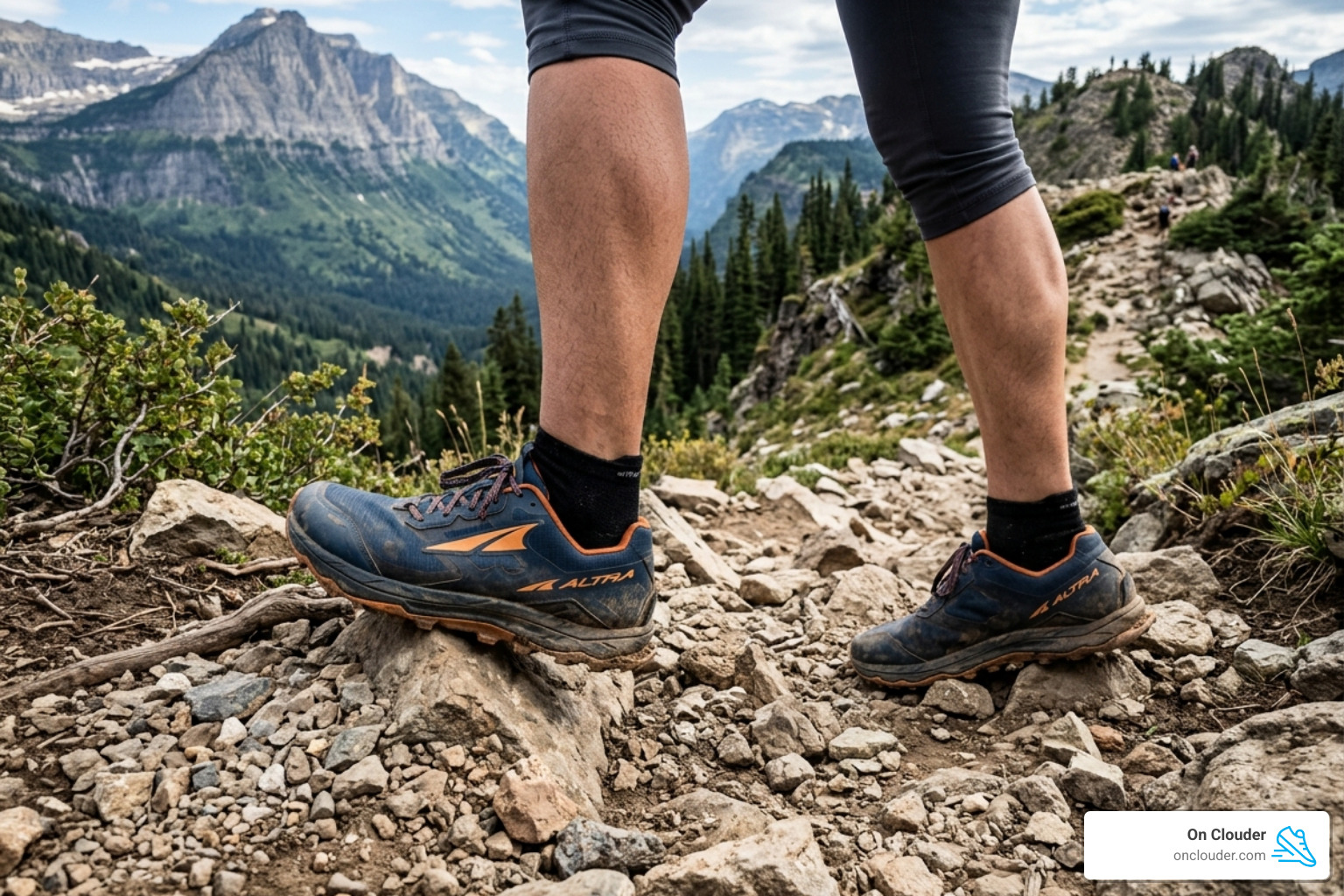
Wide toe box trail stability is the combination of a roomy forefoot design and shoe construction features that keep your foot secure and balanced on uneven, unpredictable terrain.
If you’re in a hurry, here’s what you need to know:
- Wide toe box = extra room at the front of the shoe so your toes can spread naturally
- More toe splay = a wider base of support = better balance on rocks, roots, and loose dirt
- Key stability features to look for: torsional rigidity, grippy outsoles (like Vibram Megagrip), low-to-zero drop, and a secure midfoot fit
- Top brands delivering both width and trail stability: Altra, Topo Athletic, and Hoka
- Common foot problems prevented: blisters, bunions, black toenails, and ankle rolls
Many runners assume a wider shoe means a less stable shoe. That’s a myth worth busting early.
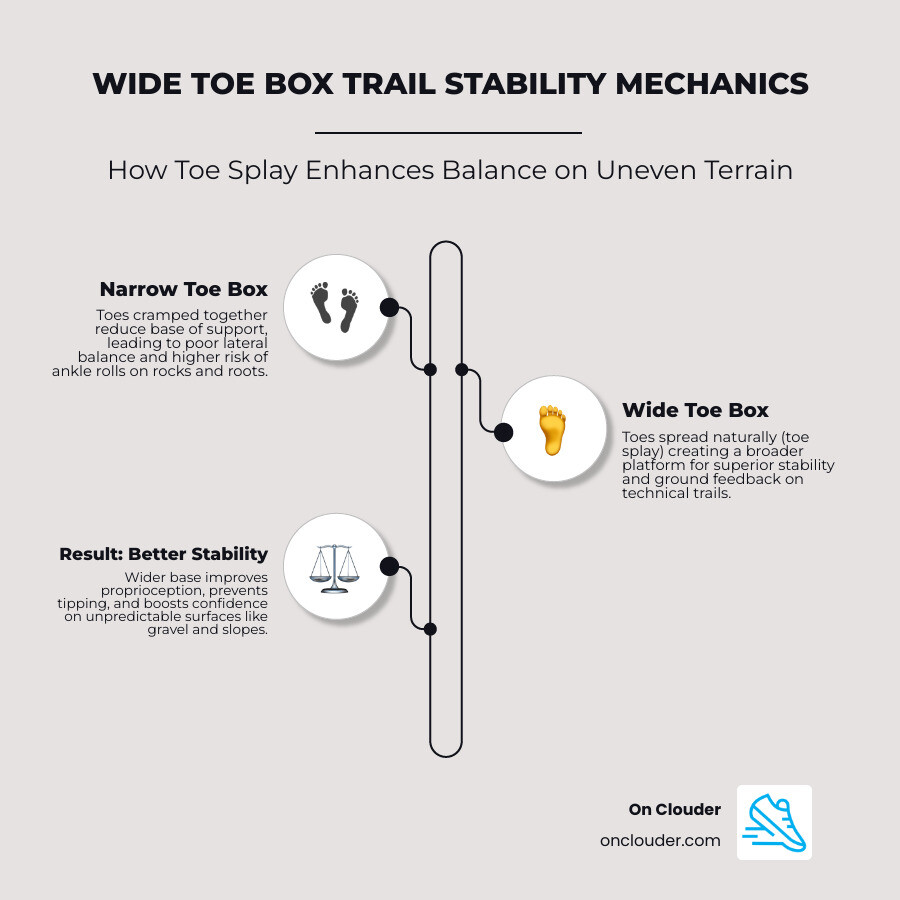
When your toes have room to spread, your foot creates a naturally broader platform — the same way you instinctively widen your stance on slippery ground. Narrow shoes force your toes together, shrinking that base and making balance harder, not easier.
The problem is that not all wide toe box trail shoes are built equally. Some are roomy but floppy. Others are stable but stiff in the wrong places. Knowing what to look for makes all the difference between a confident trail run and a twisted ankle.
This guide walks you through everything — from the mechanics of toe splay to lab-tested shoe metrics — so you can find the right fit for your foot shape, terrain, and running style.
I’m Faisal S. Chughtai, a footwear expert with years of experience testing and reviewing performance shoes, including extensive research into wide toe box trail stability across brands like Altra, Topo Athletic, and Hoka. I’ve helped thousands of runners and active professionals find shoes that keep them comfortable and confident, whether they’re on a rocky summit or a long work shift.
Why Wide Toe Box Trail Stability Matters on Uneven Terrain
When we head out onto the trails, our feet aren’t just landing on flat pavement. They are navigating jagged rocks, slippery roots, and shifting gravel. In these conditions, wide toe box trail stability becomes your best friend.
A wide toe box allows for “toe splay,” which is the natural spreading of your toes upon impact. Think of your foot like a tripod; the wider the legs of the tripod are spread, the more stable the camera remains. When your toes can fan out, they create a broader base of support. This natural expansion significantly improves your lateral balance, preventing the “tippy” feeling often associated with narrow, high-stack shoes.

Furthermore, a roomy forefoot enhances ground feedback. When your toes aren’t crushed together, they can better “feel” the terrain, allowing your brain to make micro-adjustments to your posture and gait. This is a core concept we explore in An Essential Guide To Wide Toe Box Shoes, where we discuss how natural foot function leads to better athletic performance.
Preventing Common Foot Issues with Wide Toe Box Trail Stability
One of the biggest reasons runners switch to a wider fit isn’t just for the “wiggle room”—it’s for survival. Traditional narrow shoes act like a vice on your forefoot, leading to a host of painful issues.
- Bunions and Neuromas: Constant pressure on the big toe joint can lead to bunions, while squeezed metatarsals often result in painful Morton’s neuromas.
- Blisters: Friction is the enemy. When toes rub against each other or the sides of the shoe, blisters are inevitable. Providing space effectively stops this friction. Check out our tips on how to Dont Let Your Toes Suffer On The Trail With These Roomy Hikers.
- Black Toenails: On steep descents, your foot naturally slides forward. In a narrow shoe, your toes hit the “ceiling” or the front wall. A wide and high toe box prevents this painful “hiker’s toe.”
- Plantar Fasciitis: By allowing the foot to sit flat and spread naturally, you reduce the unnatural strain on the arch and the plantar fascia ligament.
Enhancing Proprioception and Balance
Proprioception is your body’s ability to sense its position in space. On a technical trail, this is the difference between a clean landing and a rolled ankle. Wide toe box trail stability enhances this by keeping your big toe—the primary stabilizer of the foot—in its natural, straight alignment.
When the big toe is allowed to stay straight rather than being pushed inward, it can provide significantly more “umph” and balance during the push-off phase. This leads to a sense of technical terrain confidence that narrow shoes simply can’t match. For those looking for the ultimate trail experience, The Best Wide Toe Box Hiking Shoes For Serious Trail Comfort offers a deep dive into shoes that prioritize this sensory connection.
Key Features of Stable Wide Toe Box Trail Shoes
To achieve true wide toe box trail stability, a shoe needs more than just a wide front. It needs a structural “chassis” that supports the foot without being overly restrictive.
| Feature | Importance for Stability | Top Performance Metric |
|---|---|---|
| Torsional Rigidity | Prevents the shoe from twisting on rocks | 4/5 or 5/5 Score |
| Outsole Grip | Ensures the shoe stays where you put it | Vibram Megagrip / MaxTrac |
| Midsole Width | Provides a wide “platform” for landing | 115mm+ Forefoot Base |
| Heel Lockdown | Keeps the foot from sliding within the shoe | Molded Heel Collar |
Modern trail shoes use advanced foam compounds, like Topo’s ZipFoam or Altra’s EGO MAX, to provide a plush ride that doesn’t feel “mushy.” A key component is torsional rigidity—how much the shoe resists twisting. For example, the Topo Atmos scores a perfect 5/5 for torsional rigidity, making it incredibly stable despite its high cushion. For more rugged options, see our Best Wide Toe Box Hiking Boots Guide.
The Role of Heel-to-Toe Drop in Wide Toe Box Trail Stability
The “drop” of a shoe is the height difference between the heel and the forefoot. In wide toe boxes, you typically see two camps:
- Zero-Drop (0mm): Popularized by Altra, this keeps your heel and forefoot at the same level. This mimics the natural barefoot position, promoting better alignment and a midfoot strike, which is inherently more stable on trails.
- Low-Drop (3mm – 5mm): Brands like Topo Athletic often use a slight drop. This can be easier on the Achilles tendon for those transitioning from traditional 10mm-12mm drop shoes while still keeping the foot close to its natural plane.
Choosing the right drop depends on your personal biomechanics and injury history. We compare these extensively in our Best Wide Toe Box Running Shoes Guide.
Outsoles and Uppers for Rugged Support
A wide toe box is useless if the bottom of the shoe slides out from under you. Look for proprietary rubber compounds like Vibram Megagrip (found on the Altra Olympus and Topo MTN Racer) which offer unparalleled traction on wet and dry surfaces.
The upper material also plays a role. While we want a roomy toe box, we need a “lockdown fit” through the midfoot and heel. This prevents your foot from sliding around inside the shoe, which can cause instability. Features like Altra’s GaiterTrap or reinforced TPU overlays add protection and security without cramping your toes.
Top-Rated Models for Maximum Trail Support
When we look at the market for wide toe box trail stability, a few models consistently rise to the top of our lab tests and trail reviews.
Lab-Tested Performance Metrics
Data doesn’t lie. When we look at the numbers, we see why certain shoes feel more stable:
- Topo Atmos: Features an ultra-spacious 85.0 mm big toe area (3.0 mm wider than average) and a massive 119.1 mm forefoot base.
- Hoka Gaviota 5: While often seen as a road shoe, its H-Frame technology and 125.1 mm base provide the best stability among wide-toebox shoes tested, making it a viable option for light, groomed trails.
- Topo Specter 2: Offers a 80.2 mm big toe area and a traction score 20% grippier than the industry average.
Specialized Stability for Technical Trails
For truly technical terrain, the Altra Lone Peak 9 remains a legend. It uses the “Original FootShape” (Altra’s widest fit) and a MaxTrac outsole for a “grounded” feel. If you need more cushion, the Altra Olympus 6 offers a max-stack height of 33mm combined with a Vibram Megagrip outsole, making it a tank on the trails.
The Altra Experience Wild is another interesting contender, offering a 4mm drop and rocker geometry for those who find zero-drop a bit too taxing on long climbs.
How to Choose Your Ideal Wide Toe Box Trail Shoe
Choosing the right shoe is a balance of foot shape, terrain, and personal preference.
- Identify Your Foot Shape: Do you have a “Roman” foot (toes similar in length) or a “Germanic” foot (wide forefoot)? Altra’s “Original” fit is best for the widest feet, while their “Standard” or “Slim” fits cater to those needing a bit more lockdown.
- Consider the Terrain: For muddy, soft trails, look for deep lugs (5mm+). For rocky, technical trails, prioritize torsional rigidity and a rock plate (like the Altra StoneGuard).
- Check the Volume: Width is one thing, but “volume” (the height of the toe box) is another. If you have high-volume feet, you need a shoe that doesn’t press down on the top of your toes.
If you’re on a budget, don’t worry—there are great options out there. Check our Best Trail Shoes For Hiking Under 100 2026 Guide.
Pros and Cons vs. Traditional Narrow Options
| Feature | Wide Toe Box Trail Shoe | Traditional Narrow Shoe |
|---|---|---|
| Stability | High (natural base) | Moderate (rely on tech) |
| Weight | Can be slightly heavier | Often lighter/more “agile” |
| Comfort | High (no toe squish) | Low (blister prone) |
| Agility | Great on technical flats | Better for fast “sprints” |
While narrow shoes might feel “faster” or more “precise” to some, the long-term benefits of wide toe box trail stability—including injury prevention and all-day comfort—usually outweigh the slight weight penalty. You can find more specific stability discussions in our stability shoe reviews section.
Sizing and Fit Checklist
- The Insole Test: Remove the insole and stand on it. If your toes hang over the edges, the shoe is too narrow.
- The Thumb Rule: You should have about a thumb’s width of space between your longest toe and the front of the shoe to account for foot swelling.
- Heel Lock Lacing: Use the extra eyelet at the top to create a “runner’s loop” if you feel any heel slippage.
- Swelling Allowance: Your feet will swell after an hour on the trail. What feels “roomy” in the store might feel “perfect” at mile 10.
Explore more fitting tips in our wide toe box footwear guide.
Frequently Asked Questions about Trail Stability
Are wide toe box shoes less stable on technical terrain?
Actually, the opposite is true. While a poorly designed wide shoe can feel “sloppy,” a high-quality wide toe box shoe provides a superior base of support. The key is ensuring the midfoot and heel are snug while the toes remain free. This prevents lateral sliding while maximizing balance. For more on this, visit our trail running resources.
Can I use road stability shoes for trail running?
You can, but it’s not always ideal. Road stability shoes like the Hoka Gaviota 5 have the “base” for stability, but they lack the aggressive lug patterns and durable uppers needed for rugged trails. They are best kept to light gravel paths or “road-to-trail” transitions. See more at our trail footwear comparisons.
How do I know if my toe box is too wide?
If your foot is sliding side-to-side inside the shoe, or if you find yourself clenching your toes to “grip” the shoe, it’s too wide. You want “room,” not “sloppiness.” A secure midfoot lockdown is essential for footwear stability.
Conclusion
At On Clouder, we believe that your feet are the foundation of every adventure. Achieving wide toe box trail stability isn’t just about buying a bigger shoe; it’s about choosing footwear that respects the natural anatomy of your foot while providing the technical features—like grippy outsoles and rigid midsoles—needed for the wild.
By prioritizing toe splay and natural alignment, you’re not just preventing blisters and bunions; you’re building a more resilient, balanced, and confident version of yourself on the trail. Ready to make the switch? Start with our comprehensive guide to wide toe box running shoes to find your perfect pair. Happy trails!