
Why Heavy Runners Need to Think Differently About Cushioned Running Shoes
If you’re searching for the best cushioned running shoes for heavy runners, here are the top picks by use case:
| Use Case | Top Pick | Key Feature |
|---|---|---|
| Daily Training | Brooks Glycerin 23 | Nitrogen-infused DNA Tuned foam, 38mm heel stack |
| Max-Cushion Stability | Saucony Hurricane 25 | Dual-density pronation resistance, 38mm stack |
| Recovery Runs | HOKA Bondi 9 | 41mm+ stack, wide platform, high shock absorption |
| Speed & Tempo | ASICS Superblast 3 | 46.5mm stack, high energy return, lightweight |
| Wide Feet | ASICS Gel-Nimbus 27 Extra Wide | Maximum cushion, extra-wide fit, 8mm drop |
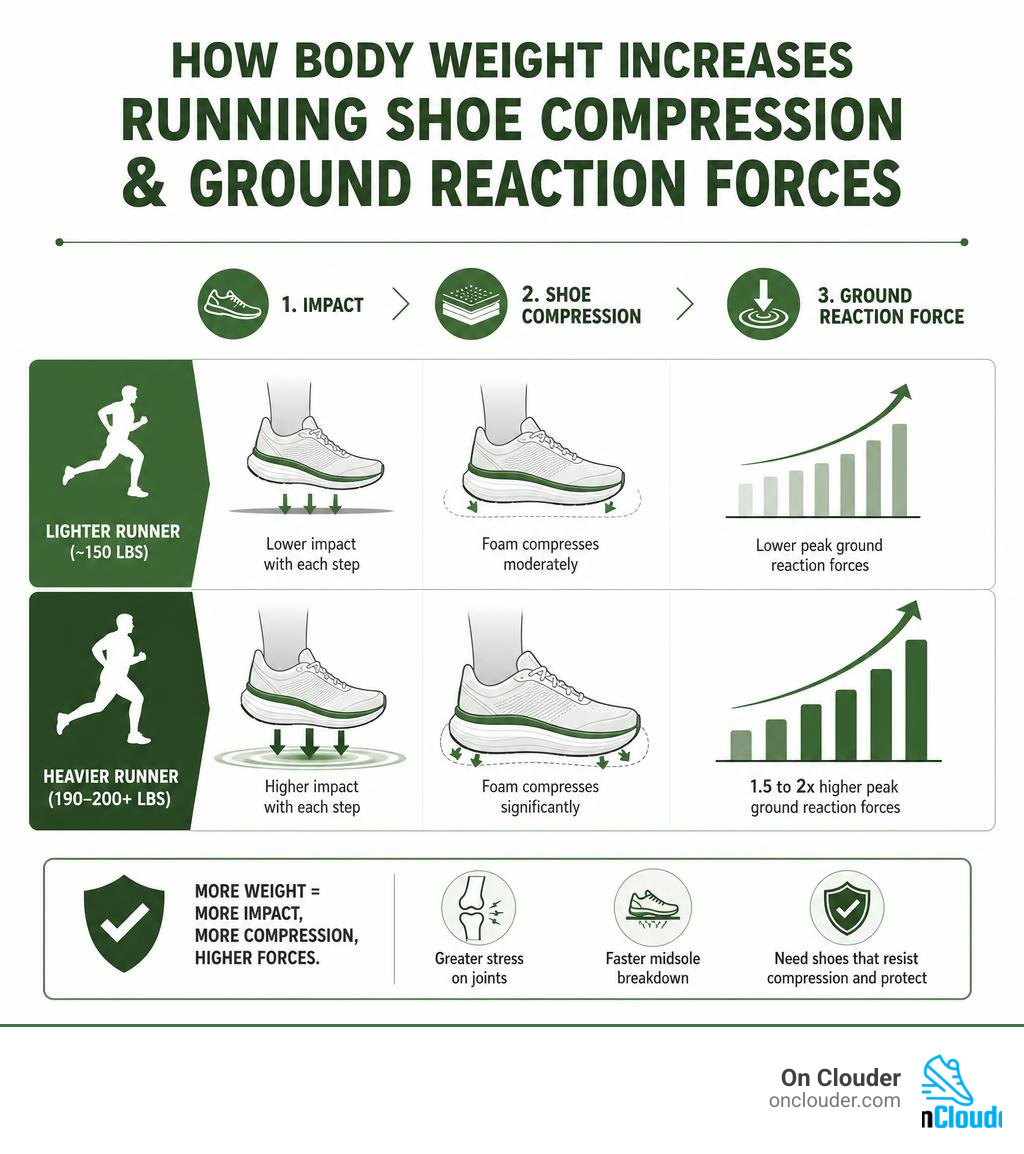
Runners over 190-200 lbs experience 1.5 to 2 times higher peak ground reaction forces than lighter runners with every single stride. That’s not a minor difference. It means the foam that feels plush and supportive under a 150 lb runner can feel completely flat — or even unstable — under someone heavier.
Most running shoe reviews are written by and tested on average-weight runners. That creates a real gap. A shoe praised for its “cloud-like” feel may bottom out, wear through early, or offer zero real shock absorption once a heavier body is in the equation.
The right shoe for a heavier runner isn’t just the softest one on the shelf. It’s the one that resists compression under load, holds its structure mile after mile, and keeps your joints protected without sacrificing stability.
I’m Faisal S. Chughtai, a footwear expert with years of experience helping runners find shoes built for real-world performance and comfort — including identifying the best cushioned running shoes for heavy runners who are underserved by mainstream reviews. Below, I’ll walk you through exactly what to look for and which shoes actually deliver under heavier loads.
Quick best cushioned running shoes for heavy runners terms:
Biomechanics and Selection Criteria for the Best Cushioned Running Shoes for Heavy Runners
When we talk about biomechanics for “Clydesdale” runners (typically defined as men over 200 lbs and women over 160 lbs), we have to look closely at vertical ground reaction forces. Because heavier runners strike the ground with significantly more force, their shoes must provide an elevated level of impact attenuation.
Ideally, we want to look for shoes with a measured heel shock absorption rating of 120 SA or higher. Anything less, and the foam will struggle to disperse the energy of your stride, transferring that raw impact directly up into your ankles, knees, and lower back.
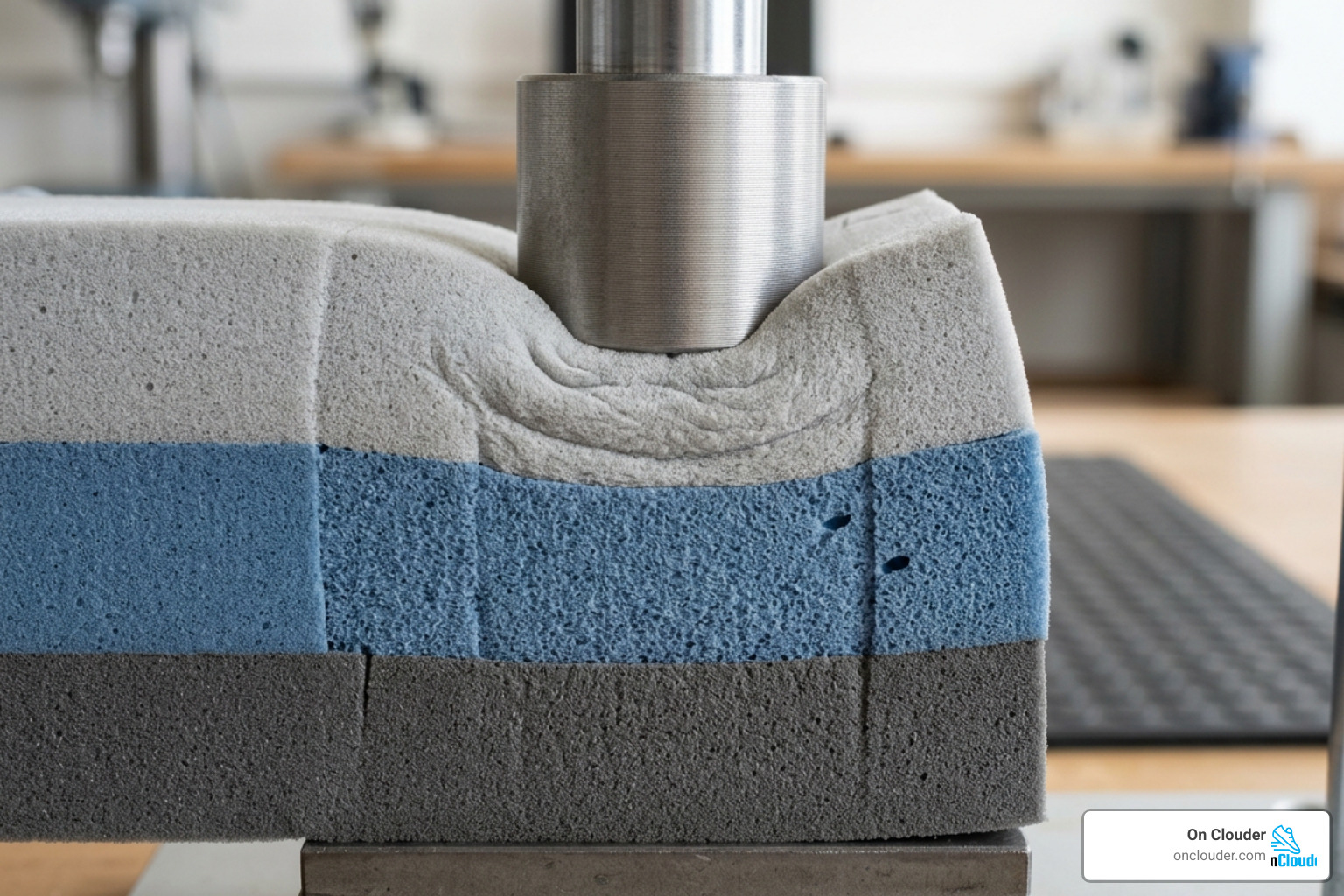
But shock absorption is only half the battle. We also have to prevent the dreaded phenomenon of “bottoming out” — which is when a midsole foam completely compresses under your weight until your foot meets the hard outsole and the pavement beneath it. To prevent this, we turn to the durometer rating, which measures the hardness of the shoe’s foam.
Heavier runners should target midsoles that score at least 20 HA on the durometer scale. A foam that is too soft (under 20 HA) might feel incredibly plush when you step into it at the store, but it will quickly collapse under load during an actual run.
Furthermore, running in excessively soft, unstable shoes actually increases leg stiffness and ankle joint stiffness. Your brain senses the wobble underneath your feet and subconsciously forces your leg muscles to tighten up to keep you upright. This counteracts the comfort of the cushioning and can amplify your injury risk.
To keep your stride stable, look for a wide platform. A heel platform width of at least 90 mm is the gold standard for creating a planted, wobble-free landing zone.
If you want to dive deeper into how stack height and foam densities interact, check out The Ultimate Guide to Best Cushioned Running Shoes. If you have wider feet and need a spacious, highly cushioned option that respects these biomechanical rules, the ASICS Gel-Nimbus 27 Extra Wide Specs provide an excellent benchmark for maximum impact protection.
Why Traditional Foams Fail: Finding the Best Cushioned Running Shoes for Heavy Runners
Standard Ethylene-Vinyl Acetate (EVA) foam has been the industry workhorse since 1975, but it has a major flaw for heavier runners: it packs out quickly. Under a heavier load, cheap, low-density EVA bubbles rapidly lose their structural integrity, resulting in a shoe that feels dead and flat after just 150 to 200 miles.
To combat this, modern footwear brands have developed highly resilient, advanced foam compounds:
- Supercritical Foams & Nitrogen-Infused EVA: By injecting nitrogen gas into the foam during the molding process, brands create a matrix of larger, more uniform bubbles. This structure resists permanent compression far better than standard EVA.
- PEBA (Polyether Block Amide): Known for its incredible energy return (often over 80%), PEBA foam is highly resilient. However, some ultra-soft PEBA formulations can feel unstable unless paired with a plate or a wider base.
- PWRRUN PB (Saucony): An expanded PEBA foam that balances premium bounce with excellent long-term durability.
- DNA Tuned (Brooks): A dual-cell technology that places smaller, firmer cells in the forefoot for responsive toe-offs and larger, softer cells in the heel for plush impact protection.
For heavier runners, these advanced foams are not a luxury; they are a necessity. They offer the compression resistance required to keep your foot suspended above the road, ensuring that the shoe’s cushioning properties actually last through a full training cycle.
Stability vs. Pronation Resistance for Heavier Strides
There is a common misconception in the running world that if you are a heavier runner, you must wear a stiff, highly corrective stability shoe. This simply isn’t true. You only need a dedicated stability shoe if you actually overpronate. If you have a neutral gait, forcing your feet into rigid posting can cause unnecessary discomfort and alter your natural stride.
Instead of traditional, aggressive “stability,” heavier runners should look for pronation resistance. This means the shoe is designed to resist collapsing inward under heavy loads without relying on hard plastic medial posts. Modern pronation resistance is achieved through:
- Wide Platforms: A broad base inherently resists tipping.
- Dual-Density Midsoles: Utilizing a firmer foam on the medial side of the shoe to naturally guide the foot.
- Guide Rails: Raised sidewalls of foam that act like bumpers on a bowling alley, keeping your foot centered only when it begins to roll too far inward.
By choosing a neutral shoe with a wide, stable base or a modern, unobtrusive stability shoe, you get the protection you need without the harshness of old-school correction. For a breakdown of how these modern supportive features stack up, read through our guide on the Best Supportive Running Shoes for Comfort and Protection and check out The Ultimate Guide to Best Running Shoes for Flat Feet.
Top Product Recommendations for High-Impact Road Running
To help you compare the top options on the market in 2026, we have compiled the core specifications of the leading models suited for heavier runners:
| Shoe Model | Category | Heel Stack | Forefoot Stack | Heel Drop | Weight (Men’s 9) |
|---|---|---|---|---|---|
| Brooks Glycerin 23 | Daily Trainer | 38 mm | 30 mm | 8 mm | 10.6 oz (300g) |
| Saucony Triumph 22 | Daily Trainer | 37 mm | 27 mm | 10 mm | 10.1 oz (286g) |
| ASICS Gel-Nimbus 27 | Recovery / Easy | 39.5 mm | 31.5 mm | 8 mm | 10.8 oz (305g) |
| Saucony Hurricane 25 | Max Stability | 38 mm | 32 mm | 6 mm | 10.4 oz (295g) |
| ASICS Gel-Kayano 32 | Daily Stability | 40 mm | 32 mm | 8 mm | 10.7 oz (303g) |
| ASICS Superblast 3 | Super Trainer | 46.5 mm | 38.5 mm | 8 mm | 8.4 oz (238g) |
| HOKA Skyward X2 | Speed / Tempo | 46 mm | 41 mm | 5 mm | 11.1 oz (314g) |
Top Daily Trainers: The Best Cushioned Running Shoes for Heavy Runners on the Road
Daily trainers are the workhorses of your shoe rotation. They need to handle high mileage, protect your joints, and retain their cushioning properties day after day.
Brooks Glycerin 23
The Brooks Glycerin 23 remains a gold standard for neutral daily training. Featuring Brooks’ advanced DNA Tuned nitrogen-infused foam, it offers a beautifully balanced ride. The dual-cell technology places larger cells in the heel for a soft landing and smaller cells in the forefoot to ensure a stable, energetic toe-off.
With a generous 38mm heel stack and a highly secure upper, it holds the foot firmly in place, making it incredibly reliable for runners over 200 lbs.
Saucony Triumph 22
The Saucony Triumph 22 Specs highlight a major upgrade: the integration of premium PWRRUN PB foam. This is the same high-energy return material Saucony uses in its racing line, but configured here for daily durability.
The Triumph 22 features a wider midfoot platform than its predecessors, creating a highly balanced landing zone. It resists bottoming out beautifully and offers a plush, accommodating upper that handles foot swelling on long runs.
ASICS Gel-Nimbus 27 Extra Wide
For those who want to feel like they are floating, the ASICS Gel-Nimbus 27 is a top-tier choice. It utilizes FF BLAST PLUS ECO cushioning (made with 24% bio-based materials) alongside rearfoot PureGEL technology.
The Extra Wide (4E) version is a lifesaver for heavier runners, providing a massive, stable platform that prevents the foot from spilling over the sides of the midsole. It is incredibly soft but retains enough structural integrity to keep your feet protected on long, easy pavement miles.
Alternative Option: If you are looking for a highly cushioned daily trainer built on a unique scanning database to accommodate wider, higher-volume feet, the Karhu Men’s Mestari Run 2.0 HiVo utilizes an encapsulated Fulcrum technology to guide your transition forward smoothly.
Best Max-Cushion Stability Options for Overpronators
If your ankles roll inward excessively under load, these options combine high-volume cushioning with robust pronation resistance.
Saucony Hurricane 25
The Saucony Hurricane 25 is a masterpiece of modern stability. Instead of relying on a stiff medial post that can feel harsh under a heavy stride, it utilizes Saucony’s Center-Path Technology.
This design features higher sidewalls, a broad platform, and an asymmetrical sole geometry that naturally guides the foot forward. Packed with PWRRUN PB foam, it proves that a stability shoe can feel incredibly soft and responsive without sacrificing support.
ASICS Gel-Kayano 32
The Gel-Kayano line has been a favorite for decades, and the Kayano 32 continues that legacy with its 4D Guidance System. This system uses adaptive design features that work with your body’s natural movement patterns, providing on-demand stability when your form starts to break down late in a run.
With a 40mm stack of FF BLAST PLUS ECO foam, it delivers exceptional impact protection and consistent pronation resistance.
HOKA Gaviota 6
The Gaviota 6 uses HOKA’s signature H-Frame technology to deliver stability. This interlocking frame of firmer foam sits on top of a softer cushioning layer, preventing the foot from rolling inward or outward while maintaining a smooth, rockered ride.
With a wide, stable base and a 40mm heel stack, it is an incredibly robust option for overpronating runners who need maximum protection.
Best Speed, Tempo, and Race Day Shoes for Bigger Runners
Who says big runners can’t go fast? If you are looking to pick up the pace, do speedwork, or line up for a race, these “super trainers” offer incredible energy return without bottoming out.
ASICS Superblast 3
The Superblast 3 is a legendary non-plated super trainer. It features a massive 46.5mm heel stack consisting of a premium Turbo foam top layer over a stable base. Because it lacks a rigid plate, it offers a natural, highly cushioned ride that doesn’t feel overly stiff.
Despite its towering height, the platform is wide and incredibly stable, making it a favorite for long runs and tempo sessions alike.
HOKA Skyward X2
For runners who want the benefit of carbon fiber but find traditional racing shoes too unstable, the Skyward X2 is a game-changer. It features a deep, rockered bed of supercritical foam wrapped around a curved carbon fiber plate.
The plate requires a bit of weight to activate properly, meaning heavier runners will get a massive, propulsive spring out of this shoe that lighter runners might struggle to engage.
Adidas Prime X3 Strung
With a mind-boggling 50mm stack height (making it “illegal” for elite World Athletics competition, but perfectly fine for the rest of us), the Prime X3 Strung uses three layers of resilient Lightstrike Pro foam and carbon energy rods.
The innovative Strung upper provides a highly precise, secure fit. It is incredibly bouncy and handles heavy compression with ease, leaving your legs feeling remarkably fresh the next day.
Trail/Hybrid Option: If you want to take your high-impact miles off-road, the La Sportiva Prodigio Max Running Shoe features an innovative XFlow Endurance nitrogen-infused midsole cage that provides exceptional trail stability and rock protection for heavier runners.
Durability, Fit, and Practical Trade-offs under Heavy Loads
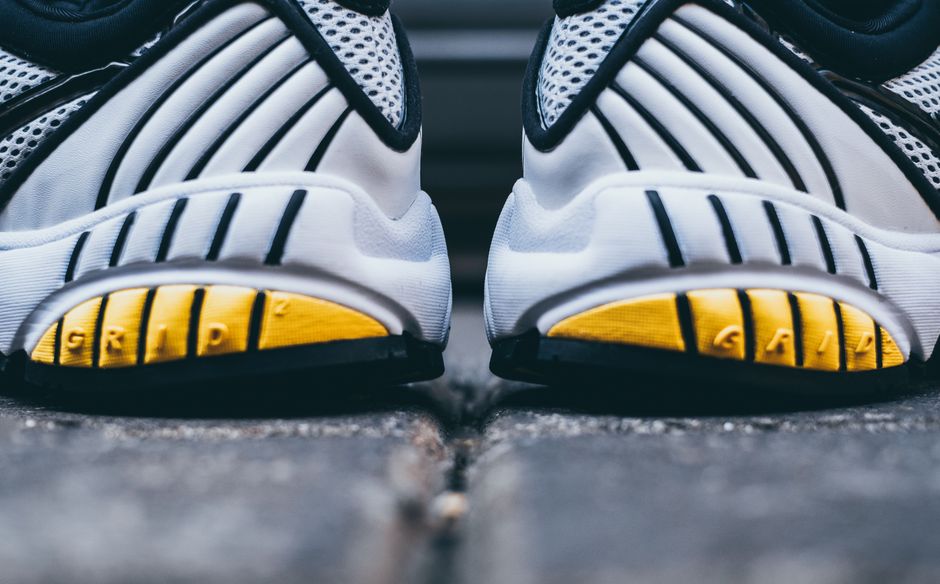
When you weigh over 190 lbs, you place unique demands on your footwear. First and foremost, outsole durability is critical. Heavier runners generate more friction and lateral force, which can quickly shred exposed midsole foam.
Look for shoes with generous rubber coverage, particularly in high-wear areas like the heel and forefoot. Segmented rubber outsoles protect the precious foam underneath and ensure your traction lasts.
There are also practical trade-offs to keep in mind:
- Weight vs. Cushioning: The average running shoe recommended for big men weighs 296.8 g (10.5 oz), compared to 265.3 g (9.4 oz) for standard running shoes. More foam and rubber mean more weight. Accept that your daily trainers will be slightly heavier in exchange for the joint protection they provide.
- Breathability: Thicker, highly supportive uppers can sometimes trap heat. If you run in hot climates, look for engineered mesh uppers with open-weave patterns.
- Toe Box Volume and Swelling: Your feet naturally swell during a run, and this effect is amplified under heavier loads. Opting for shoes with high toe box volume or choosing wide (2E/4E) widths prevents friction, blisters, and black toenails.
To find shoes that balance durability with all-day comfort, check out our guide on The Best Shoes for Long Distance Walks That Actually Last.
Frequently Asked Questions about High-Impact Running Shoes
Do heavier runners need different running shoes than lighter runners?
Yes. Heavier runners generate significantly higher ground reaction forces, which causes midsole foam to compress more deeply and degrade faster. A shoe that feels perfectly cushioned for a 140 lb runner may bottom out completely under a 210 lb runner. Bigger runners need to prioritize premium, compression-resistant foams, wider platforms, and durable rubber outsoles.
How often should heavy runners replace their cushioned running shoes?
While the standard industry recommendation is to replace running shoes every 300 to 500 miles, heavier runners should expect to replace their shoes closer to the 300-mile mark. Because foam degrades faster under heavier loads, pay close attention to how your joints feel. If you start experiencing unusual knee, hip, or lower back soreness after your runs, it is a sign that the shoe’s midsole has packed out, even if the outsole still looks intact.
Are max-cushioned shoes always the safest option for heavy runners?
Not necessarily. While max-cushion shoes provide excellent impact protection, if the foam is too soft and lacks a wide platform, it can cause your foot to wobble. This instability forces your leg and ankle muscles to stiffen up to compensate, which can actually increase your injury risk. The safest shoe is one that balances high stack height with a firm durometer rating (at least 20 HA) and a broad base (at least 90 mm).
Conclusion
Finding the best cushioned running shoes for heavy runners is all about understanding the relationship between weight, foam compression, and stability. By choosing shoes with high-quality, nitrogen-infused or supercritical foams, wide platforms, and robust outsole rubber, you can protect your joints and enjoy a smooth, comfortable ride.
A shoe is only one part of the equation. To stay injury-free, we highly recommend:
- Building a Shoe Rotation: Rotating between two different pairs of shoes allows the midsole foam of each shoe to fully decompress and recover between runs, extending the life of your footwear.
- Strength Training: No shoe can fix weak glutes or hips. Incorporating basic strength work will keep your body resilient.
Ready to find your perfect fit? Explore On Clouder’s Ultimate Shoe Guides to compare the latest models, or check out our specialized reviews like The Best Cushioned Running Shoes and the Best Running Shoes for Beginners 2026 Update to jumpstart your running journey today!
