Key Features of the Most Comfortable Shoes for Nursing Work
When we talk about comfortable shoes for nursing work, we aren’t just talking about a soft feel when you first slip them on. True comfort for a 12-hour shift is about engineering. Since nurses often log up to 16,000 steps a day, the shoe must act as a shock absorber for the entire body.
The most critical technical feature is the midsole. Research suggests that for optimal impact protection on hard hospital floors, a shoe should have at least 15 mm of EVA (Ethylene Vinyl Acetate) material in the metatarsal zone and a heel height between 18 mm and 36 mm. In modern athletic and professional shoes, we often look for a “heel stack” of 30mm or more to ensure the foam doesn’t bottom out by hour eight of your shift.
Another non-negotiable is slip resistance. Hospitals are full of “surprises”—spilled saline, water, or other fluids. Look for shoes that meet the ASTM F2913-19 standard. This ensures the outsole has been tested for traction on slippery surfaces. Furthermore, an “Easy Clean” tread design is helpful; it prevents debris from getting stuck in the grooves, which can compromise your grip over time.
To help you decide which style fits your workflow, we’ve broken down the three most common categories:
| Feature | Traditional Clogs | Athletic Sneakers | Professional Slip-ons |
|---|---|---|---|
| Shock Absorption | Moderate (Rocker sole focus) | High (Max cushion foam) | High (Orthotic-grade) |
| Weight | Heavier (Leather/Rubber) | Ultralight (Mesh/Synthetics) | Moderate |
| Cleaning | Very Easy (Wipeable) | Moderate (Usually washable) | Easy (Stain-resistant) |
| Best For | OR/Surgical Settings | ER/Fast-paced units | Med-Surg/Long Rounds |
Finding Comfortable Shoes for Nursing Work with Flat Feet
If you have flat feet (low arches), your feet tend to roll inward—a process called overpronation. This can lead to knee and hip pain if your shoes don’t provide enough stability. For these nurses, “plush” isn’t always better. You need a shoe with a firm heel counter (the back part of the shoe that holds your heel in place) to prevent excessive movement.
A wide toe box is also essential. As you stand all day, your feet naturally swell and spread. A cramped toe box can lead to bunions or nerve pain. Many top-tier brands now offer wide and extra-wide versions of their most popular models to accommodate this. If you want to dive deeper into specific models, check out The Complete Guide To Best Sneakers For Nurses On Feet All Day for a breakdown of stability-focused options.
Managing Plantar Fasciitis with Comfortable Shoes for Nursing Work
Plantar fasciitis is the bane of the nursing profession. That sharp, stabbing pain in the heel usually stems from inflammation of the tissue connecting your heel bone to your toes. To manage this, we recommend shoes with “rocker soles.” A rocker bottom gently transitions your weight from heel to toe, reducing the strain on the plantar fascia.
Heel cushioning is also vital. Look for shoes with a “drop” (the height difference between the heel and the toe) that isn’t too flat. A slight elevation in the heel can take the pressure off your Achilles tendon and the bottom of your foot. For more strategies on surviving long hours, see our Best Shoes For Standing All Day Detailed Guide.
Top Podiatrist-Approved Features for Long Shifts
Podiatrists—the experts in foot health—often look for the APMA Seal of Acceptance. This seal is granted by the American Podiatric Medical Association to products found to promote good foot health. When searching for comfortable shoes for nursing work, this seal is a gold standard.
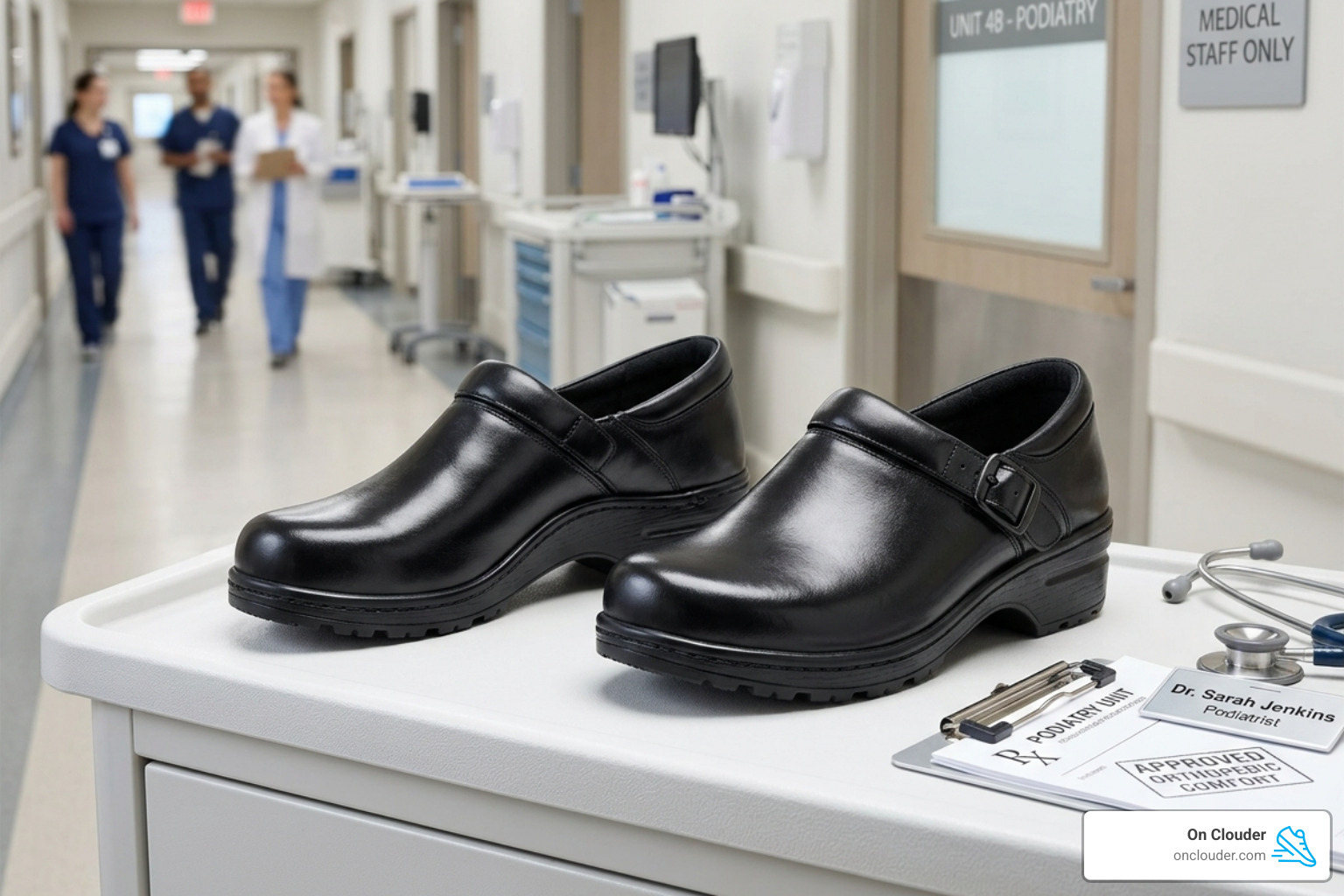
One feature podiatrists frequently praise is the removable footbed. High-quality nursing shoes often feature footbeds made of cork, memory foam, and latex that actually mold to the shape of your foot over time. If you have specific orthopedic needs, being able to swap the factory insole for a custom orthotic is a game-changer.
Furthermore, podiatrists emphasize “torsional rigidity.” If you can twist your shoe like a pretzel, it’s probably not providing enough support for a 12-hour shift. A good nursing shoe should be flexible at the toes but stiff through the midfoot to support your arch. You can find more recommendations in our guide on The Best Shoes For Standing All Day.
Safety and Hygiene: Slip-Resistance and Easy Cleaning
In a hospital, your shoes are PPE (Personal Protective Equipment). They protect you from more than just sore feet; they protect you from biohazards and falls.
Slip-Resistance: True slip-resistance goes beyond just a “grippy” feel. Professional-grade outsoles often use proprietary rubber compounds that maintain friction even on oily or wet tile. Look for a “friction coefficient” of 0.45 or higher if you work in high-spill areas like the ER or ICU.
Easy Cleaning: Nurses know that things get messy. Whether it’s a coffee spill or something more clinical, you need uppers that don’t absorb fluids.
- Leather and Synthetic Leather: These are the gold standard for hygiene. They can be wiped down with hospital-grade disinfectant wipes without damaging the material.
- Treated Mesh: Some modern athletic shoes now use a water-resistant coating on their mesh to allow for breathability while still repelling liquids.
- Molded EVA: These are often entirely waterproof and can even be hosed off or washed with soap and water, making them popular for those working in labor and delivery or surgery.
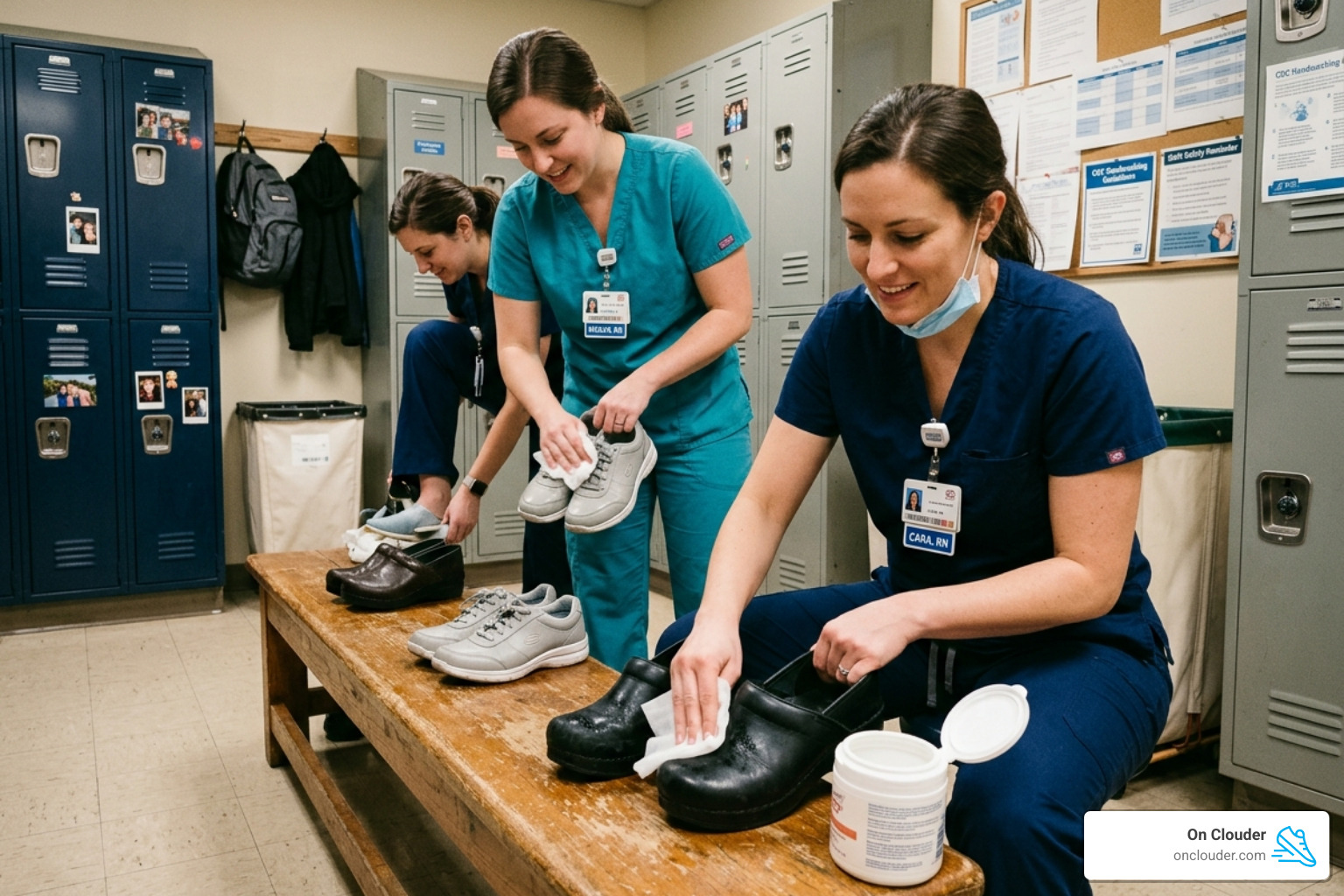
Maximizing Longevity: When to Replace and Rotate Your Footwear
One of the biggest mistakes we see nurses make is wearing the same pair of shoes until they literally fall apart. By the time a shoe looks “dead,” its supportive features have likely been gone for months.
The 300-500 Mile Rule: Most high-quality walking and running shoes are designed to last between 300 and 500 miles. If you are hitting 15,000 steps (about 7 miles) per shift, you are putting nearly 21 miles on your shoes every three-day work week. At that rate, your shoes may need replacement every 4 to 6 months.
The Power of Rotation: We highly recommend owning at least two pairs of comfortable shoes for nursing work and rotating them. This isn’t just a sales pitch—it’s science. Foam midsoles need time to “decompress” after being stood on for 12 hours. Rotating pairs allows the cushioning to recover its shape, which extends the life of both pairs and provides more consistent support for your joints.
Compression Socks: Don’t forget what goes inside the shoe. Podiatrists and veteran nurses alike recommend compression socks (usually 15-20 or 20-30 mmHg). These socks help maintain blood flow and reduce “edema” (swelling) in the lower legs. When your feet swell less, your shoes fit better throughout the entire shift, preventing the “pinching” feeling that often happens by hour ten. Learn more about why specific gear combinations are so popular in our Web Stories on Why Nurses and Teachers Love Specific Shoes.
Frequently Asked Questions about Nursing Footwear
How often should I replace my nursing work shoes?
As a general rule, replace them every 4 to 6 months if you work full-time. A good way to tell if they are spent is to look at the midsole for “compression wrinkles” or to check if you’re starting to feel new aches in your knees or back that weren’t there before.
Are athletic sneakers better than traditional clogs for 12-hour shifts?
It depends on your foot type and work environment. Sneakers generally offer better shock absorption and are lighter, which is great for ER nurses who are constantly running. Traditional clogs offer superior arch support and are easier to sanitize, which is often preferred in the OR.
Do compression socks actually improve shoe comfort?
Yes! By preventing your feet from swelling significantly during the day, compression socks ensure that your shoes don’t become too tight. This maintains proper circulation and prevents the friction that causes blisters.
Conclusion
At On Clouder, we know that your work is demanding enough without having to fight your own footwear. Choosing comfortable shoes for nursing work is an investment in your long-term health and your daily performance. Remember to look for that 30mm+ heel stack, ensure you have certified slip resistance, and never underestimate the power of a fresh pair of compression socks.
Don’t forget to look for healthcare worker discounts! Many top brands offer 15% to 25% off for medical professionals as a thank-you for your service. Ready to find your next favorite pair? Explore the complete guide to nursing shoes on our site to see our latest performance rankings and deep-dive reviews. Your feet (and your back) will thank you.