Why the Right Sneakers Can Make or Break a 12-Hour Nursing Shift
The best sneakers for nurses on feet all day need to do a lot more than just look good. Nurses average around 15,000 steps per 12-hour shift — that’s miles of hard hospital floors, emergency sprints, and hours of standing that quietly wear down your feet, knees, and lower back.
Here are the top sneaker picks for nurses based on cushioning, support, and real-world shift performance:
| Sneaker | Best For | Key Strength |
|---|---|---|
| Hoka Bondi 9 | Max cushioning | High stack height, flat-feet friendly |
| Hoka Clifton 10 | Overall performance | Balanced cushioning + stability |
| Brooks Ghost Max 2 | Flat feet | Plush foam, lightweight |
| Asics Gel-Nimbus 27 | Active nursing roles | Stability for lifting + walking |
| New Balance Fresh Foam X More v6 | Shock absorption | Superior impact protection |
| ASICS GT 2000 14 | Overpronation | Firm stability, wide base |
| Skechers Arch Fit 2.0 | Budget pick | Solid support under $100 |
The stakes are real. Poor footwear choices are directly linked to musculoskeletal disorders — a known occupational hazard in nursing. The wrong shoe doesn’t just hurt your feet. It affects your knees, hips, and back over time.
“As a nurse, your fitness watch probably records up to 16,000 steps per shift, compounding to stratospheric numbers by the end of the week,” as one footwear expert put it. No wonder the shoe you pick for work matters as much as the one you pick for race day.
I’m Faisal S. Chughtai, a footwear comfort specialist who has spent years researching and reviewing performance shoes — including the best sneakers for nurses on feet all day. In this guide, I’ll walk you through everything you need to make a confident, pain-free choice for your next shift.
Key Features of the Best Sneakers for Nurses on Feet All Day
When we evaluate the best sneakers for nurses on feet all day, we aren’t just looking for “soft” shoes. In a hospital environment, softness without structure can actually lead to more fatigue. We look for a specific cocktail of engineering features that protect your musculoskeletal health over a 12-hour stretch.
Shock Absorption and Stack Height
Standing on linoleum-covered concrete is unforgiving. To combat this, podiatrists recommend shoes with a substantial “stack height”—the amount of material between your foot and the ground. Ideally, you want at least 30mm of heel stack and 20mm in the forefoot. High-performance foams, like lightweight EVA or nitrogen-infused compounds, provide a high Shock Absorption (SA) rating. A rating of at least 100 is the gold standard for all-day wear, as it significantly reduces the impact on your joints during those 15,000 steps.
Slip Resistance and Safety
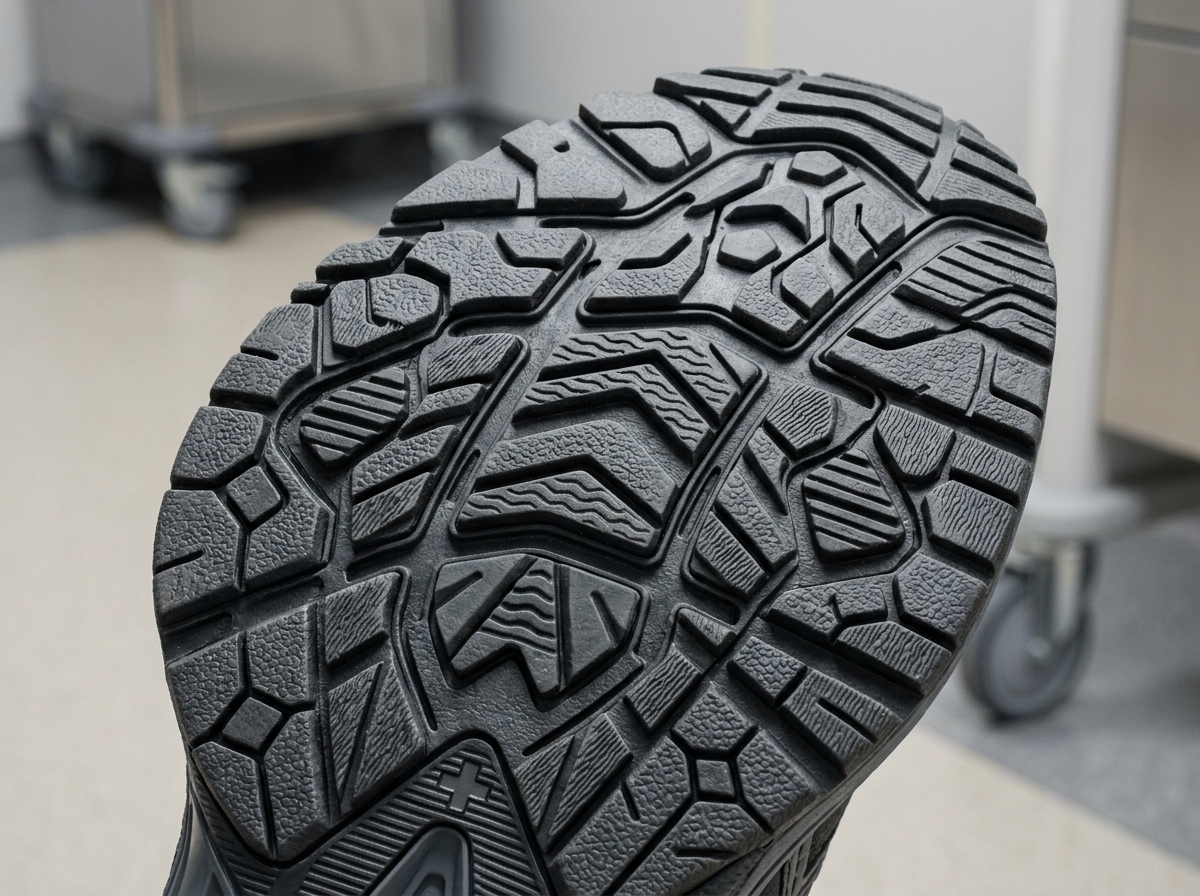
Hospitals are high-spill zones. Whether it’s water, saline, or other fluids, the best sneakers for nurses on feet all day must feature outsoles that meet ASTM F2913 standards for slip resistance. Look for full-length rubber outsoles with specialized tread patterns (like “trip guards”) that maintain friction on wet or soapy tiles. This isn’t just about comfort; it’s about workplace safety.
Arch Support and Stability
If you have flat feet or high arches, your footwear needs to compensate for the lack of natural alignment. For more detailed guidance, check out our best shoes all day standing guide. We prioritize shoes with firm heel counters and high torsional rigidity—meaning the shoe doesn’t twist like a dishrag when you wring it. This stability prevents the “micromovements” that lead to plantar fasciitis and lower back pain.
Breathability and Materials
Nursing shifts are hot. A breathable mesh upper allows heat to escape, preventing sweat buildup and friction blisters. However, if you work in an area prone to major spills (like the ER or OR), you might prioritize fluid-resistant synthetic leathers that can be wiped clean with a single germicidal cloth.
Top-Rated Footwear for Healthcare Professionals
The market is flooded with “comfort shoes,” but only a few brands consistently pass the “nurse test.” We’ve analyzed the data to find the models that offer the best return on investment for your feet.
Rocker Bottom Designs
Shoes with a rocker geometry (a curved sole) are a secret weapon for walkers. They assist in the “toe-off” phase of your stride, essentially doing some of the work for your calf muscles. This is why brands like Hoka and certain On Cloud models are so popular; they propel you forward, reducing the energy required for every step. For a deeper dive into these options, see our review of the best on cloud shoes for nurses and healthcare professionals.
Highly Cushioned Models
For those who spend more time standing still—perhaps at a nursing station or during a long procedure—maximalist cushioning is king. The New Balance Fresh Foam X More v6, for example, offers a massive 41.8mm stack height. This provides a “cloud-like” feel that absorbs the static pressure of your body weight, which is vital for preventing heel pain.
Responsive Foam Designs
In units like the ICU or ER, you need a shoe that reacts. Responsive foams provide “energy return,” meaning the foam bounces back quickly after being compressed. This prevents that “sinking” feeling that can make your legs feel like lead by hour nine.
Best Sneakers for Nurses on Feet All Day with High Arch Support
High arches can lead to supination (rolling outward) and excessive pressure on the ball of the foot. Podiatrists often recommend “neutral” shoes with deep heel cups and structured midsoles that allow for the addition of semi-rigid orthotics.
If you’re looking for a blend of style and medical-grade support, many professionals have found success with specialized athletic lineups. You can find more teacher and nurse approved shoes that focus specifically on neutral alignment and long-term arch preservation.
Best Sneakers for Nurses on Feet All Day for Wide Feet
Foot swelling is a physiological reality of a 12-hour shift. Your feet can actually increase in volume by the end of the day. This makes a wide toe box essential.
- Bunion Relief: A wide forefoot (look for measurements around 150mm) prevents the shoe from rubbing against the big toe joint.
- Generous Forefoot Space: Brands like New Balance and Altra are famous for offering “Wide” and “Extra Wide” versions of their top sneakers, ensuring your toes can splay naturally rather than being crushed together.
Podiatrist-Recommended Habits for Long Shifts
Even the best sneakers for nurses on feet all day can’t do it all alone. Podiatrists emphasize that foot health is a combination of the right gear and the right habits.
The Power of Shoe Rotation
This is the most overlooked tip in the industry: Never wear the same pair of shoes two days in a row.
- Foam Recovery: Most midsole foams require 24 to 48 hours to fully decompress and return to their original shape. If you wear them back-to-back, you’re walking on “dead” foam.
- Moisture Management: Rotating shoes allows them to dry out completely, which prevents the growth of bacteria and fungi—and keeps your shoes from smelling like a locker room. For more tips on managing long hours, visit our standing all day tag.
Compression Socks: The Unsung Hero
While sneakers handle the impact, compression socks handle the circulation. We recommend 15-20 mmHg (mild) or 20-30 mmHg (medium) compression.
- Benefits: They reduce edema (swelling) and prevent blood from pooling in your lower legs, which significantly reduces that “heavy leg” feeling at the end of a shift.
- Material: Choose cotton blends for better moisture-wicking compared to pure nylon.
Stretching and Maintenance
Simple calf and hamstring stretches before and after your shift can prevent the tightening of the Achilles tendon, a leading cause of plantar fasciitis. Additionally, consider using semi-rigid over-the-counter inserts if your factory insoles feel too flimsy.
Essential Maintenance and Safety for Hospital Floors
Your sneakers are a piece of medical equipment. Treating them as such will extend their life and protect your safety.
Fluid Resistance and Hygiene
Hospital floors are biohazard zones. The best sneakers for nurses on feet all day should be easy to sanitize.
- Cleaning: Many modern sneakers are machine washable (cold cycle, air dry only!).
- Protection: If you work in surgery, look for shoes with leather or treated synthetic uppers that resist fluids and protect against dropped sharps.
Knowing When to Say Goodbye
Nurses often wear their shoes long after the support has vanished. Because nurses walk so much, a pair of work shoes typically lasts only 300 to 500 miles.
- The 4-6 Month Rule: For a full-time nurse, this means replacing your shoes every 4 to 6 months.
- Visual Cues: Look for “compression sets” (wrinkles in the foam) or smoothed-out tread on the outsole. If you start feeling new pains in your shins or lower back, your shoes have likely expired. You can find more discussions on this in our shoes for nurses section.
Frequently Asked Questions about Nursing Sneakers
How often should nurses replace their work shoes?
As mentioned, 4-6 months is the standard. Even if the upper looks brand new, the internal cushioning loses its ability to absorb shock over time. Once the foam “bottoms out,” the impact of every step travels directly into your joints.
Are running shoes better than clogs for nurses?
It depends on your role.
- Running Sneakers: Offer superior shock absorption, better “lockdown” for quick movements, and are generally more breathable.
- Clogs: Are often easier to clean (fluid-resistant) and offer a higher heel-to-toe drop which some find relieves back pain. However, they lack the athletic stability needed for sprinting to a code.
Do healthcare workers get discounts on top sneaker brands?
Yes! Many top brands realize how much nurses rely on their products. Through programs like ID.me, you can often secure 10-15% off at major retailers. This includes popular brands like Hoka, Nike, New Balance, and even On Cloud. Always check for a “Healthcare Discount” link in the footer of the brand’s website before you buy.
Conclusion
At On Clouder, we know that your work is demanding enough without having to fight your footwear. Finding the best sneakers for nurses on feet all day isn’t about following a trend; it’s about investing in your long-term joint health and making sure you have the energy to care for your patients.
Whether you need the maximalist cushion of a Hoka or the lightweight agility of a New Balance, prioritize support, slip resistance, and a proper replacement cycle. Your feet carry the weight of your career—give them the support they deserve.