

Top Rated Shoes for Retail Workers Who Walk Miles Indoors
Why the Best Shoes for Retail Workers Can Make or Break Your Shift
If you’re looking for the best shoes for retail workers right now, here are the top picks:
| Shoe | Best For | Key Feature |
|---|---|---|
| Hoka Bondi SR | Max cushion + slip resistance | Thick EVA foam, SR outsole |
| Hoka Clifton 10 | All-day walking | Lightweight, plush ride |
| Snibbs Spacecloud | Slip resistance + style | ASTM F2913 certified |
| New Balance 626 V2 | Stationary tasks, spill zones | Stable, slip-resistant |
| Brooks Ghost Max | Floor associates on the move | Wide base, smooth transitions |
| Skechers Go Walk | Lightweight comfort | Responsive Goga Mat insole |
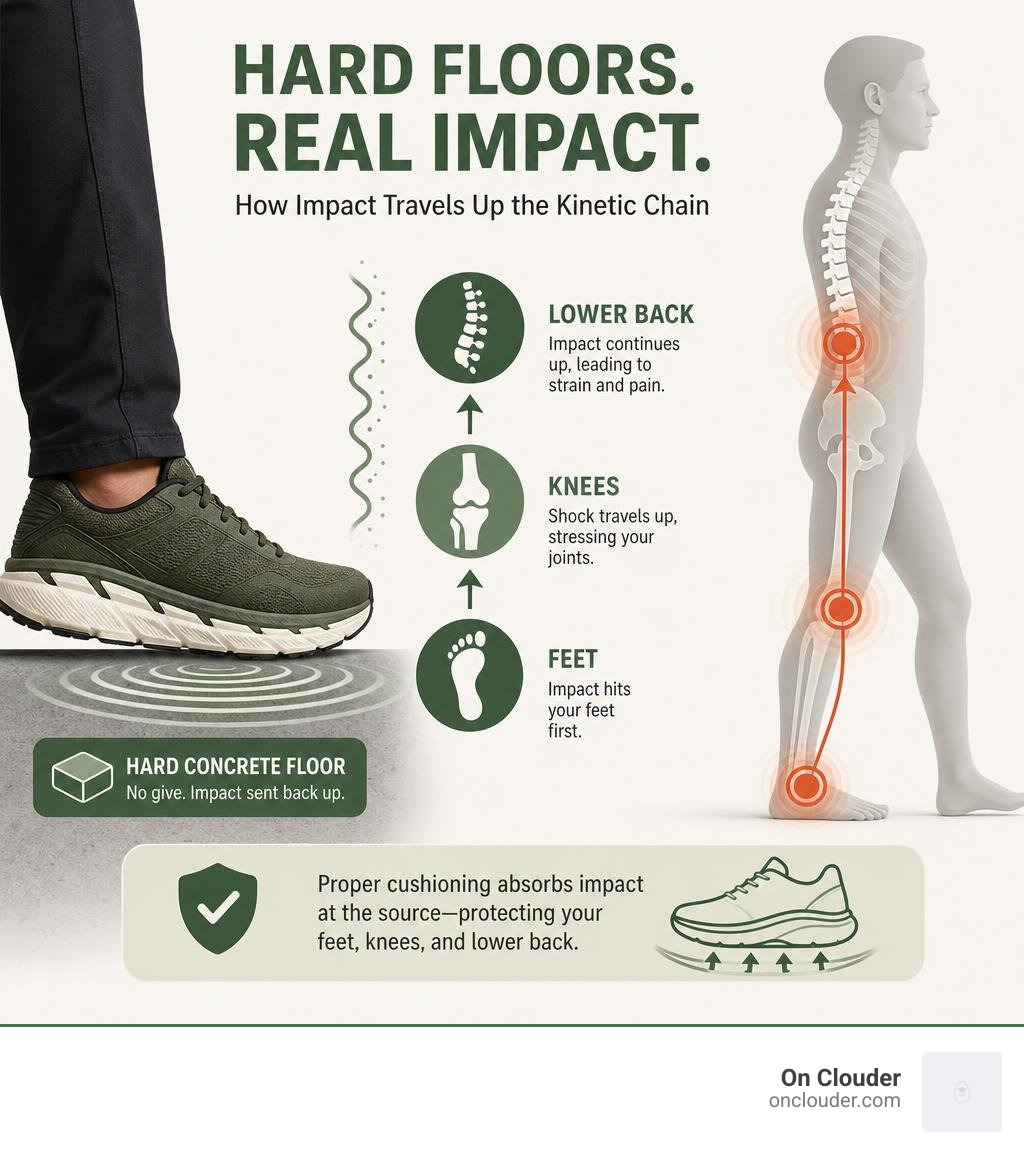
Retail work is physically demanding in ways most people don’t realize. You’re on your feet for 8 to 12 hours. The floors are concrete or hard tile. There’s no give, no cushioning — just relentless impact sent straight back up into your heels, knees, and lower back.
Over 70% of retail workers report foot pain by the end of their shift when wearing the wrong shoes. That’s not a minor inconvenience — it compounds over time into real injuries like plantar fasciitis, arch collapse, and chronic joint pain.
The right pair of shoes doesn’t just make your shift more comfortable. It protects your long-term health.
I’m Faisal S. Chughtai, a footwear expert specializing in comfort and performance shoes, and I’ve spent my career testing and evaluating the best shoes for retail workers and other professionals who spend long hours on hard surfaces. In this guide, I’ll break down exactly what to look for — and which models deliver where it counts.
Best shoes retail workers word list:
What Features Define the Best Shoes Retail Workers Can Wear?
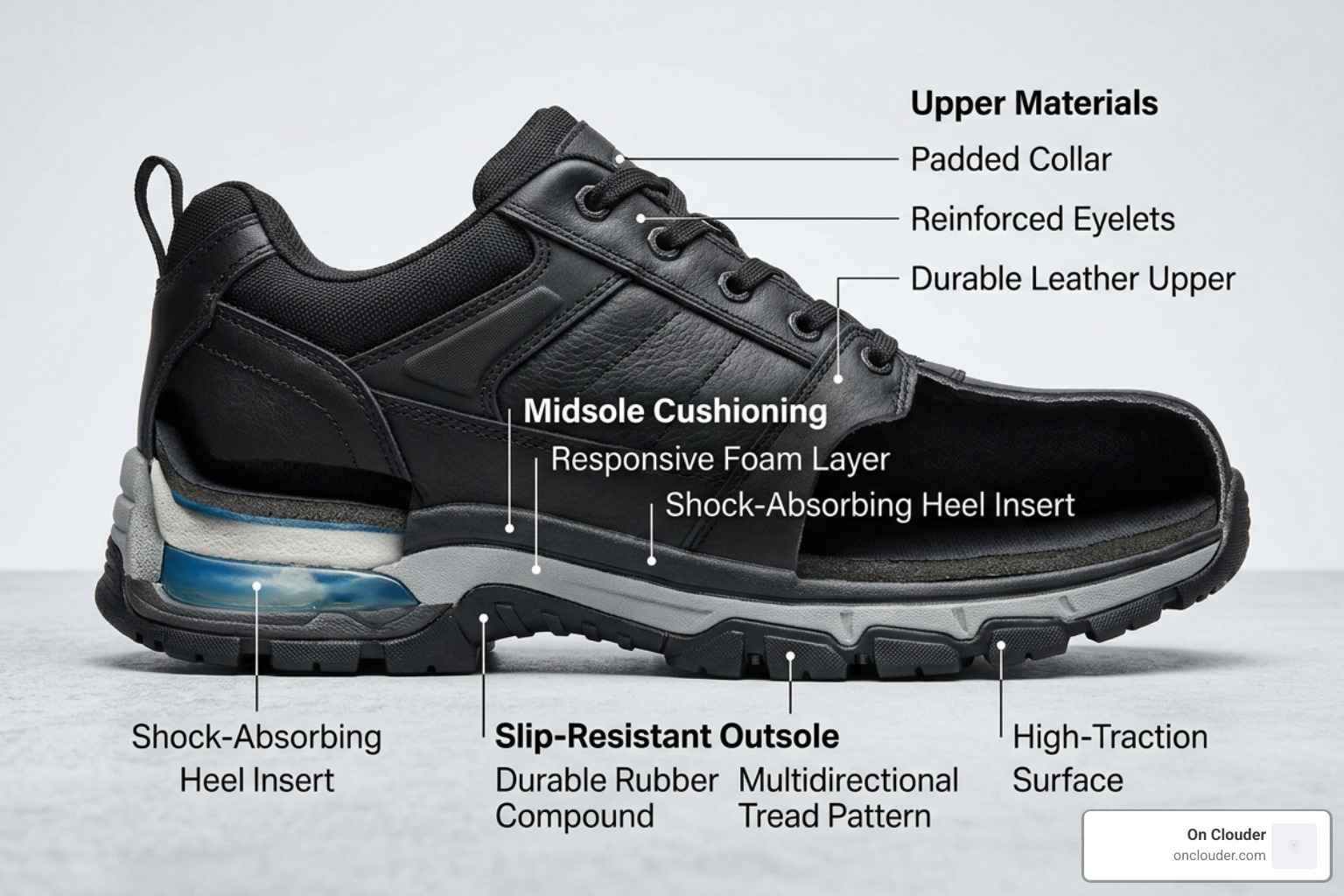
To survive an 8-to-12-hour shift on unforgiving retail floors, you cannot simply grab any pair of sneakers from your closet. The physical demands of walking miles indoors on concrete, tile, or polished stone require a highly specialized set of features. When we evaluate the best shoes for retail workers, we look at five critical pillars of shoe anatomy.
1. Cushioning and Shock Absorption
Concrete and tile floors have absolutely no “give.” Every time your foot strikes the ground, that impact force travels straight up your kinetic chain. High-quality midsoles made of molded EVA (ethylene-vinyl acetate) or proprietary polyurethane blends absorb this shock before it reaches your joints. Research indicates that proper footwear with adequate cushioning and arch support can reduce foot pain and fatigue by up to 50% for workers who stand for extended periods.
2. Structured Arch Support
While soft cushioning feels fantastic when you first slip a shoe on, cushioning alone will eventually collapse under sustained body weight. This is why structured arch support is essential. It distributes your body weight evenly across the entire surface of your foot, preventing your arches from overpronating (collapsing inward) or supinating (rolling outward). For a deeper look at how arch support keeps your body aligned, check out your feet’s best friend a guide to standing all day.
3. Slip Resistance
Spills are an inevitable part of the retail environment, whether you are working near a mall food court, navigating a freshly mopped stockroom, or dealing with a broken bottle in a grocery aisle. To avoid dangerous falls, look for shoes with rubber outsoles specifically certified under ASTM F2913 standards. These outsoles feature specialized tread patterns designed to channel liquids away and maintain traction on wet, oily, or soapy surfaces. Statistically, shoes with slip-resistant outsoles reduce slip-and-fall incidents by approximately 50% in these environments.
4. A Wide, Foot-Shaped Toe Box
As your shift progresses, blood pools in your lower extremities, causing your feet to swell—sometimes by up to half a size. If your shoes have a narrow toe box, your toes will be squeezed together, leading to blisters, bunions, and aggravated nerve pain. A wide toe box allows your toes to splay naturally, which provides a more stable base of support and accommodates afternoon swelling.
5. Breathability and Easy Maintenance
If you are running back and forth between the sales floor and the stockroom, your feet are going to sweat. Breathable mesh uppers keep air flowing to prevent moisture buildup and hot spots. However, if your role involves messy tasks, you might prefer water-resistant synthetic leathers that can be easily wiped clean at the end of the day.
For more detailed guidelines on choosing the right construction for service environments, refer to Shoes for retail and hospitality workers – Run United .
Footwear Categories: Max-Cushion Runners vs. Walking Shoes vs. Clogs
Not all retail roles are the same, and neither are the shoes designed for them. Understanding how different footwear categories perform on hard floors will help you choose the right style for your daily duties.
| Category | Best For | Pros | Cons |
|---|---|---|---|
| Max-Cushion Runners | Floor associates walking high mileage | Incredible shock absorption, lightweight, highly breathable | Can lack lateral stability; mesh is prone to staining |
| Walking-Specific Shoes | Stationary cashiers & stockroom workers | Extremely durable, built-in structural support, stable platform | Often heavier and less breathable than running shoes |
| Clogs & Professional Slips | Grocery, back-of-house, and wet areas | Easiest to clean, excellent arch support, highly durable | Stiff feel, can take time to break in, clunky aesthetic |
| Hybrid Dress Sneakers | High-end retail & management | Professional look, decent cushioning, leather uppers | Less cushioning than athletic shoes, higher price point |
Choosing between these categories depends heavily on whether your job keeps you stationary or moving. For a comprehensive breakdown of how these categories stack up over long hours, read the ultimate guide to footwear for long standing.
Hoka Bondi SR and Clifton: The Best Shoes for Retail Workers Seeking Max Cushion
When retail workers talk about “cloud-like” comfort, Hoka is almost always the first brand mentioned. Known for their oversized midsoles, Hoka shoes act as personal anti-fatigue mats that you wear on your feet.
The Hoka Bondi SR is the brand’s dedicated workhorse. It takes the massive, plush EVA midsole of the famous Bondi running shoe and wraps it in a water-resistant, easy-to-clean leather upper. Most importantly, it features a slip-resistant rubber outsole tested to meet slip-resistance standards. It is highly favored by baristas, grocery workers, and retail staff who need maximum protection against hard tile floors but are required to wear slip-resistant, professional-looking shoes.
On the other hand, if your workplace has a casual dress code and you spend your day walking miles across a massive department store, the Hoka Clifton (such as the Clifton 10) is an exceptional choice. It features a highly breathable engineered mesh upper and a lightweight design that reduces leg fatigue over long shifts. The Clifton utilizes Hoka’s signature early-stage Meta-Rocker technology, which gently rolls your foot forward through your natural gait cycle, making walking feel completely effortless.
Many service workers in 2026 describe the feeling of wearing Hokas as a game-changer for foot health, as highlighted in The Best Shoes for Standing All Day, According to Service Workers in 2026 .
Snibbs Spacecloud and New Balance: The Best Shoes for Retail Workers Needing Slip Resistance
If your primary concern is slipping on slick tile or polished concrete, you need footwear engineered specifically for traction and durability.
The Snibbs Spacecloud (specifically the Spacecloud Premium 2.0) has quickly become a favorite in the service and retail industries. Designed by physical therapists and orthopedic specialists, the Spacecloud features a slip-resistant outsole certified under the rigorous ASTM F2913 standard. It is built with a water-resistant vegan leather upper, meaning spills slide right off, and the shoe can be wiped clean in seconds. Inside, a dual-density insole and a spacious, anti-squeeze toe box ensure your feet remain comfortable and pain-free even during 12-hour shifts.
For workers who prefer a more traditional athletic silhouette with unmatched stability, the New Balance 626 V2 is a classic choice. New Balance is legendary for offering their shoes in multiple widths (including extra-wide options), making them a lifesaver for workers with wide feet or severe swelling. The 626 V2 features an internal shank for midfoot support, a compression-molded midsole for consistent cushioning, and a non-marking, slip-resistant outsole that provides incredible traction on polished store floors.
To explore more about Snibbs’ specialized slip-resistant designs, you can check out Best Non-Slip Shoes for Retail Workers – All-Day Comfort – Snibbs .
Brooks Ghost Max and Skechers Go Walk: Comfort for Floor Associates
For floor associates who are constantly on the move, folding clothes, organizing shelves, and climbing ladders, agility and lightweight comfort are paramount.
The Brooks Ghost Max is a masterclass in protective cushioning. It features a high-stack midsole of DNA LOFT v2 foam, which provides a soft land-zone without feeling overly mushy or unstable. The broad base of the shoe offers excellent lateral stability, which is crucial when you are carrying heavy boxes or stepping sideways. Its GlideRoll Rocker design promotes smooth transitions from heel to toe, actively reducing the workload on your calf muscles and plantar fascia.
For a highly accessible, budget-friendly option, the Skechers Go Walk series remains incredibly popular. These shoes are remarkably lightweight and feature Skechers’ responsive Goga Mat insoles, which mimic the springy feel of a yoga mat. They are easy to slip on and off, highly breathable, and ideal for casual retail environments where comfort is the number-one priority.
If you struggle with daily foot fatigue, you can find additional relief strategies in stop the ache with these all day standing work shoes.
Sizing, Rotation, and Foot Care Strategies for Retail Environments
Finding the best shoes for retail workers is only half the battle. How you wear, maintain, and care for your footwear plays an equally massive role in preventing foot pain and extending the lifespan of your shoes.
The Power of Shoe Rotation
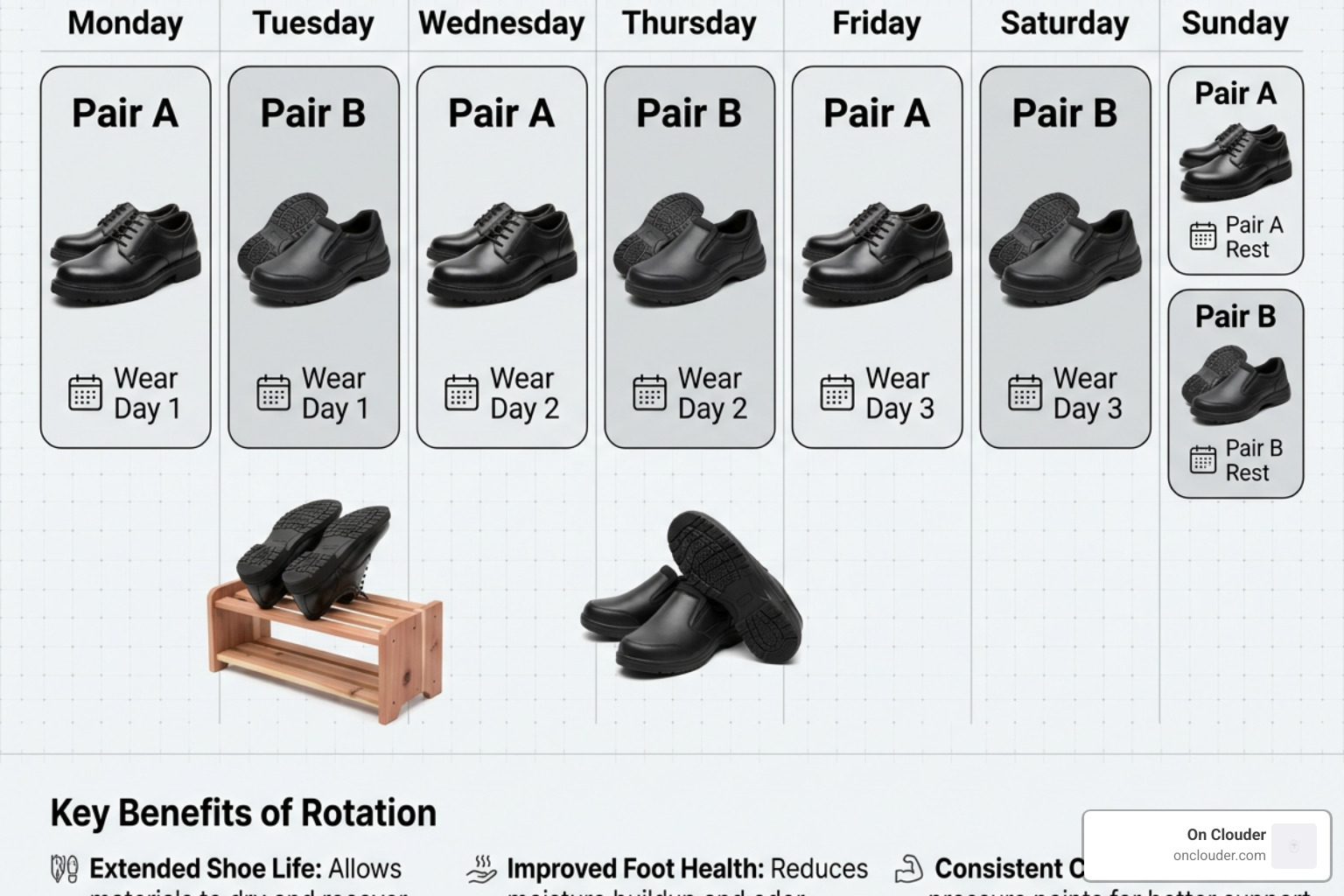
We highly recommend buying two comfortable pairs of work shoes and alternating them every other day. When you stand on a foam midsole for 8 to 10 hours, the tiny air pockets within the foam compress. It takes approximately 24 to 48 hours for that foam to fully decompress and regain its original shock-absorbing properties. If you wear the same pair every single day, the midsole will collapse prematurely, cutting the shoe’s protective lifespan in half.
Sizing for Afternoon Swelling
Always shop for work shoes in the late afternoon or after a long shift, when your feet are at their largest. If you buy shoes first thing in the morning, they may feel too tight by 3:00 PM. Look for shoes that leave about a thumbnail’s width of space between your longest toe and the end of the shoe, and ensure the toe box is wide enough to let your toes wiggle freely.
Proactive Foot Care Off the Clock
- Wear Compression Socks: Graduated compression socks improve blood circulation, which significantly reduces swelling and throbbing in your ankles and calves at the end of the day.
- Stretch Daily: Spend five minutes stretching your calves and arches after every shift. Rolling the arch of your foot over a frozen water bottle is an excellent way to reduce inflammation and prevent plantar fasciitis.
- Inspect Your Soles: Keep an eye out for early warning signs of wear. If the tread is wearing smooth, or if you notice new aches in your knees or lower back, it is time to replace your shoes.
For more helpful tips on shift-work foot care, check out best shoes standing all day guide 2.
Frequently Asked Questions About Retail Footwear
What are the best shoes for cashiers who stand in one spot?
Cashiers face a unique physical challenge: stationary standing. Unlike floor associates who walk around, cashiers stand in one place, which places continuous, static pressure on the heels and lower back.
For cashiers, we recommend shoes with a firmer, more structured midsole rather than extremely soft, squishy running shoes. A structured shoe like the Hoka Bondi SR or New Balance 626 V2 paired with a firm, supportive arch insole is ideal. Additionally, cashiers should always request an anti-fatigue floor mat for their workstation to help absorb impact.
How often should retail workers replace their work shoes?
As a general rule, retail workers should replace their work shoes every 6 to 12 months. If you walk high mileage across a large store, your midsoles may compress and lose their protective qualities after 300 to 500 miles.
If you start noticing that your feet, knees, or lower back are hurting at the end of a shift in a way they didn’t a few months ago, it is a clear sign that the internal cushioning has collapsed and it is time for a new pair.
Are custom orthotics better than gel inserts for concrete floors?
Yes, firm orthotic inserts are vastly superior to soft gel inserts for long-term standing on concrete. Gel inserts feel nice and squishy for the first twenty minutes, but they do not provide any structural support.
A firm orthotic (whether custom-made or high-quality over-the-counter) supports your arch and cups your heel, keeping your entire skeletal system aligned and reducing the strain on your plantar fascia.
Conclusion
Working in retail is an athletic endeavor. Walking miles across hard, unforgiving floors and standing for hours on end requires professional-grade equipment. Investing in the best shoes for retail workers is an investment in your comfort, your daily energy levels, and your long-term joint health.
Whether you prefer the massive, plush cushioning of the Hoka Bondi SR, the certified slip resistance of the Snibbs Spacecloud, or the lightweight agility of the Brooks Ghost Max, finding a shoe that fits your foot shape and job duties will completely transform your workday experience.
For more in-depth shoe reviews, comparisons, and expert recommendations to keep you pain-free on the job, explore our comprehensive guide on choosing the best shoe for standing. Your feet will thank you!