

Why Your Feet Pay the Price on Every Nursing Shift
Orthopedic shoes for nurses are purpose-built footwear designed to protect your feet, joints, and lower back through the brutal demands of 12-hour hospital shifts.
Quick answer — the best orthopedic shoes for nurses should have:
| Feature | Why It Matters |
|---|---|
| 30mm+ heel stack | Absorbs shock on hard floors over 16,000 steps |
| Slip-resistant outsole (ASTM F2913) | Reduces falls on wet tile — 42.9% of NHS staff injuries are slips |
| Wide toe box | Accommodates foot swelling mid-shift |
| Firm arch support | Prevents overpronation and plantar fasciitis |
| Lightweight EVA midsole | Reduces leg fatigue over long hours |
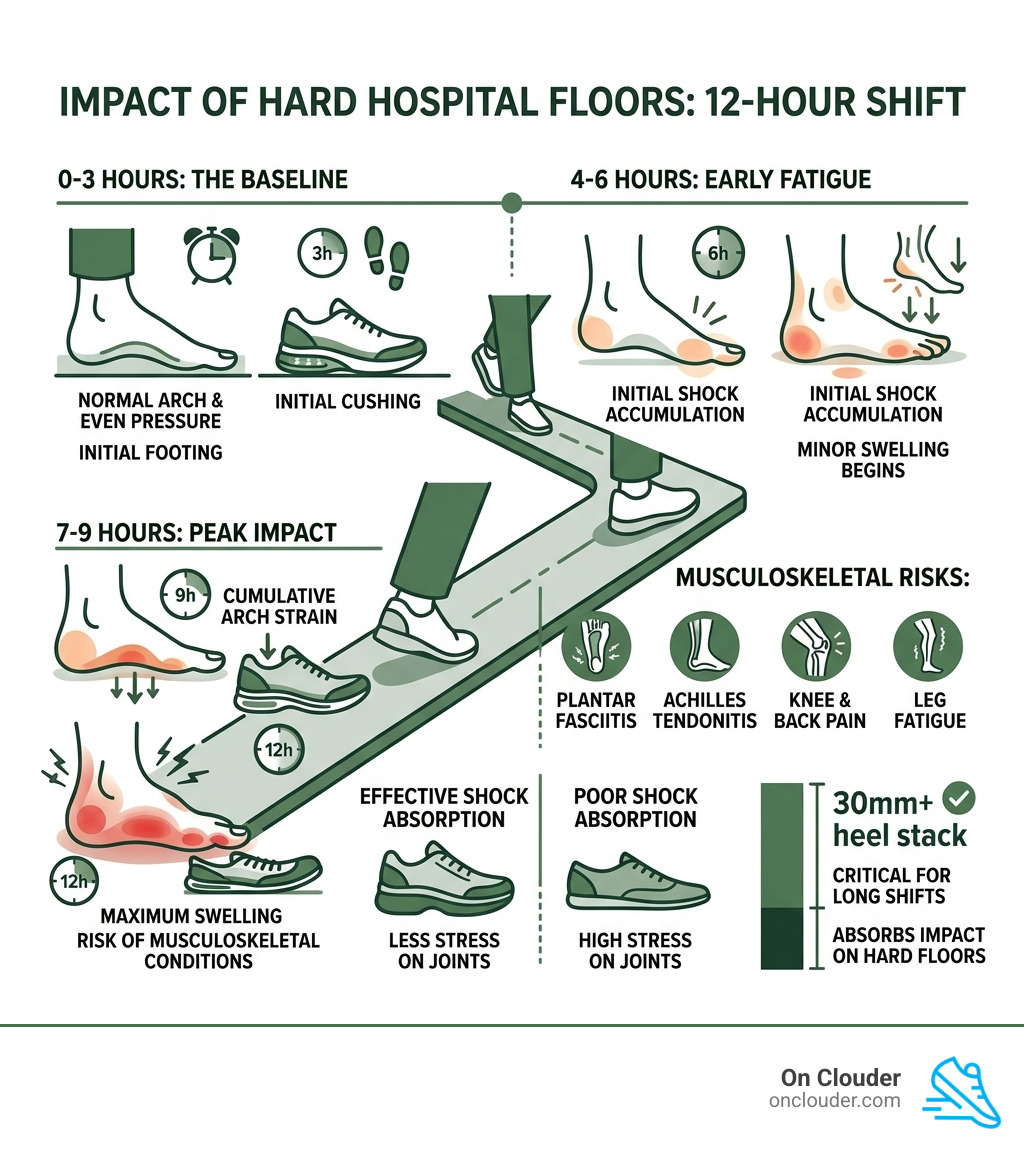
Nurses average 16,000 steps per shift. That’s not a typo. By the end of a five-day week, the cumulative load on your feet, knees, and lower back is staggering — and the wrong shoes make it significantly worse. Research shows that musculoskeletal disorders are more common among nursing professionals than almost any other occupation, largely because of prolonged walking and standing on unforgiving concrete and tile floors.
The right footwear isn’t a luxury. For nurses, it’s a clinical-grade necessity.
I’m a footwear comfort specialist who has spent years researching and reviewing supportive shoes — including orthopedic shoes for nurses — to help active professionals stay pain-free through demanding shifts. Read on for my top picks and everything you need to know before buying.
Why Orthopedic Shoes for Nurses are Essential
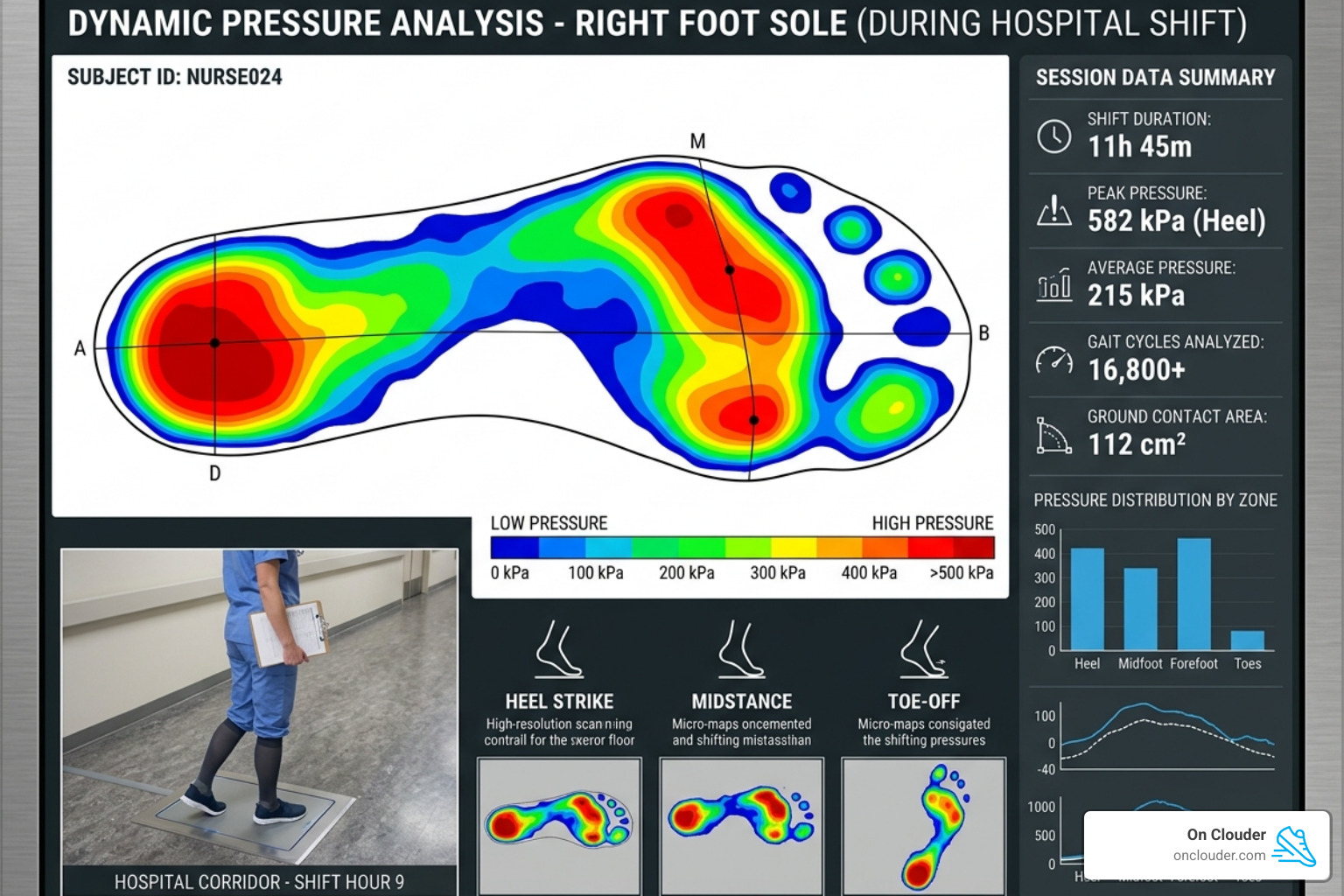
It is April 2026, and the demands on healthcare workers are higher than ever. If you are a nurse, your fitness tracker likely records up to 16,000 steps per shift. Over a year, that adds up to millions of impacts against hard, polished hospital floors. Without the right protection, this leads to a high risk of musculoskeletal disorders, including chronic back pain and knee strain.
Standard sneakers are often designed for casual walking, not for 12 hours of continuous weight-bearing. This is where orthopedic shoes for nurses become essential. They are engineered to provide superior shock absorption, which is critical when you consider that every step sends a vibration up your skeletal system. By utilizing advanced materials, these shoes help manage the Science of Comfortable Shoes for Nursing Work by distributing pressure evenly across the sole.
Furthermore, proper joint alignment is a key benefit of orthopedic design. When your feet are correctly supported, your ankles, knees, and hips stay in a neutral position. This reduces the cumulative impact that leads to “heavy leg” syndrome at the end of the day. For a deeper dive into the mechanics of shift-ready footwear, check out our Complete Guide to Best Sneakers for Nurses on Feet All Day.
Key Features of the Best Orthopedic Shoes for Nurses
Choosing the right pair requires looking past the brand name and focusing on the technical specifications. We recommend looking for shoes that balance stability with cushioning.
Clogs vs. Sneakers: The Great Debate
Nurses often find themselves choosing between traditional clogs and modern athletic sneakers. Here is how they stack up:
| Feature | Orthopedic Clogs | Athletic Sneakers |
|---|---|---|
| Ease of Use | Slip-on convenience | Secure lace-up fit |
| Arch Support | Usually very rigid and high | Often adaptive and cushioned |
| Protection | High fluid resistance | High breathability |
| Stability | Rocker bottoms reduce fatigue | Better for quick pivots and running |
Safety Standards and Slip Resistance
In the hospital environment, “non-slip” isn’t just a marketing buzzword-it’s a safety requirement. Look for shoes that explicitly mention ASTM F2913 testing standards. This ensures the outsole has been tested for a high coefficient of friction on wet and oily surfaces. Statistics show that 42.9% of slip and fall incidents among healthcare staff involve slips, and this number peaks during winter months when moisture is tracked indoors.
Cushioning and Stack Height
For maximum comfort, we suggest a heel stack height of at least 30mm. This provides enough EVA (Ethylene Vinyl Acetate) material to prevent the foam from bottoming out halfway through your shift. A wide toe box is equally important; your feet will naturally swell as blood pools in the lower extremities during long hours of standing. Check out our Best Shoes for Standing All Day Detailed Guide for more on cushioning tech.
For more shift-ready options, browse our Comfortable Nursing Shoes collection.
Top Recommendations for 12-Hour Shift Comfort
When we look for the gold standard in orthopedic shoes for nurses, we prioritize high-performance cushioning and energy return. You want a shoe that doesn’t just sit there but actually helps propel you forward.
Many of the top-rated models in 2026 feature rocker bottom technology. This curved sole design mimics the natural gait cycle, reducing the amount of work your foot muscles have to do with every step. This is a game-changer for nurses who feel like their feet are “burning” by hour eight.
For those who prefer a modern, sporty look without sacrificing orthopedic benefits, focus on shoes with supportive midsoles, reliable slip resistance, and a secure fit for clinical settings.
If you are curious about why certain features matter so much during long workdays, explore our The Science of Comfortable Shoes for Nursing Work guide. You can also browse our full range of Comfortable Nursing Shoes to find your perfect match.

Addressing Common Foot Conditions in Healthcare
Nursing is hard enough without battling foot pain. Many healthcare workers suffer from pre-existing conditions that are exacerbated by the job. Using specialized Orthopedic Footwear can mitigate these issues.
- Overpronation: This occurs when the arches collapse and the feet roll inward. It can lead to knee and hip pain.
- Bunions: A wide toe box is non-negotiable here to prevent the shoe from rubbing against the joint.
- Heel Spurs: Extra padding in the heel area is required to cushion the bony protrusion.
For many, the solution involves orthotics. Many orthopedic shoes for nurses come with removable insoles, allowing you to swap in custom-made medical inserts for personalized support. Explore our Work Shoes for Nurses and Nursing Sneakers for models that accommodate orthotic devices.
Selecting Orthopedic Shoes for Nurses with Flat Feet
If you have flat feet, you need “stability” or “control” shoes. These often feature a medial post—a firmer piece of foam on the inside of the shoe that prevents the foot from rolling inward too far. This motion control is vital for maintaining a healthy posture during a long shift.
Best Orthopedic Shoes for Nurses Dealing with Plantar Fasciitis
Plantar fasciitis is the bane of the nursing profession. It feels like a stabbing pain in the heel, especially during those first steps after a quick lunch break. The best Orthopedic Shoes for this condition feature a deep heel cup to stabilize the fatty pad under your heel and firm arch support to take the tension off the plantar fascia ligament. Find more relief options in our Shoes for Nurses guide.
Maintenance and Longevity of Professional Footwear
Even the best orthopedic shoes for nurses won’t last forever. In fact, most podiatrists recommend replacing work shoes every 4 to 6 months, or roughly every 500 miles. Given that a nurse can easily walk 40-50 miles a week, those miles add up fast.
The Power of the Rotation
One of the best tips we can offer is to rotate between two different pairs of shoes. This allows the cushioning foam (usually EVA or polyurethane) to fully decompress and “rest” for 24 hours. It also helps the shoes dry out completely, which is essential for hygiene and preventing odors.
Cleaning and Inspection
Keep your outsoles clean. Slip resistance fails most often because the tread is filled with debris or has worn flat. Weekly cleaning with warm water and a stiff brush can preserve your traction. Check out our Work Shoes for Nurses section for more maintenance tips.
Frequently Asked Questions about Nursing Footwear
How do I determine the right fit for orthopedic shoes to accommodate swelling?
We always recommend measuring your feet in the evening or after a long walk. By the end of a shift, your feet can be up to half a size larger due to swelling. When trying on Nursing Sneakers, ensure there is a thumb-width of space between your longest toe and the end of the shoe. The forefoot volume should be roomy enough that you can wiggle your toes freely.
Are slip-on orthopedic clogs safer than lace-up sneakers for nurses?
It depends on the “lockdown.” A slip-on is safe as long as your heel doesn’t lift out of the shoe, which can cause instability. However, lace-up sneakers generally offer better ankle stability and a more customizable fit, which can reduce trip hazards during a emergency. Check our Nursing Sneakers tag for comparisons.
How often should podiatrists recommend replacing orthopedic work shoes?
Most experts suggest tracking your mileage. Once you hit the 300–500 mile mark, the internal support structures often begin to fail, even if the outside looks fine. If you start feeling new aches in your knees or back, it’s a sign the shoes have lost their “bounce.” Find your next pair in our Shoes for Nurses collection.
Conclusion
At On Clouder, we believe that your career shouldn’t come at the cost of your physical health. Investing in high-quality orthopedic shoes for nurses is an investment in your long-term wellness. By choosing footwear with the right stack height, slip resistance, and arch support, you can finish your shift with less pain and more energy for your life outside the hospital.
Ready to upgrade your work gear? Explore our Comfortable Nursing Shoes and experience the difference that professional-grade support makes. Your soles will thank you!