

On Cloud vs Ultraboost: Which Running Shoe Is Right for You in 2026?
The on cloud vs ultraboost debate is one of the most common shoe comparisons active runners and professionals face today — and for good reason. Both are premium shoes, but they serve different needs.
Quick answer: Which shoe should you choose?
| On Cloud 5 | Adidas Ultraboost | |
|---|---|---|
| Best for | Casual wear, walking, shorter runs | Long-distance running, heel strikers |
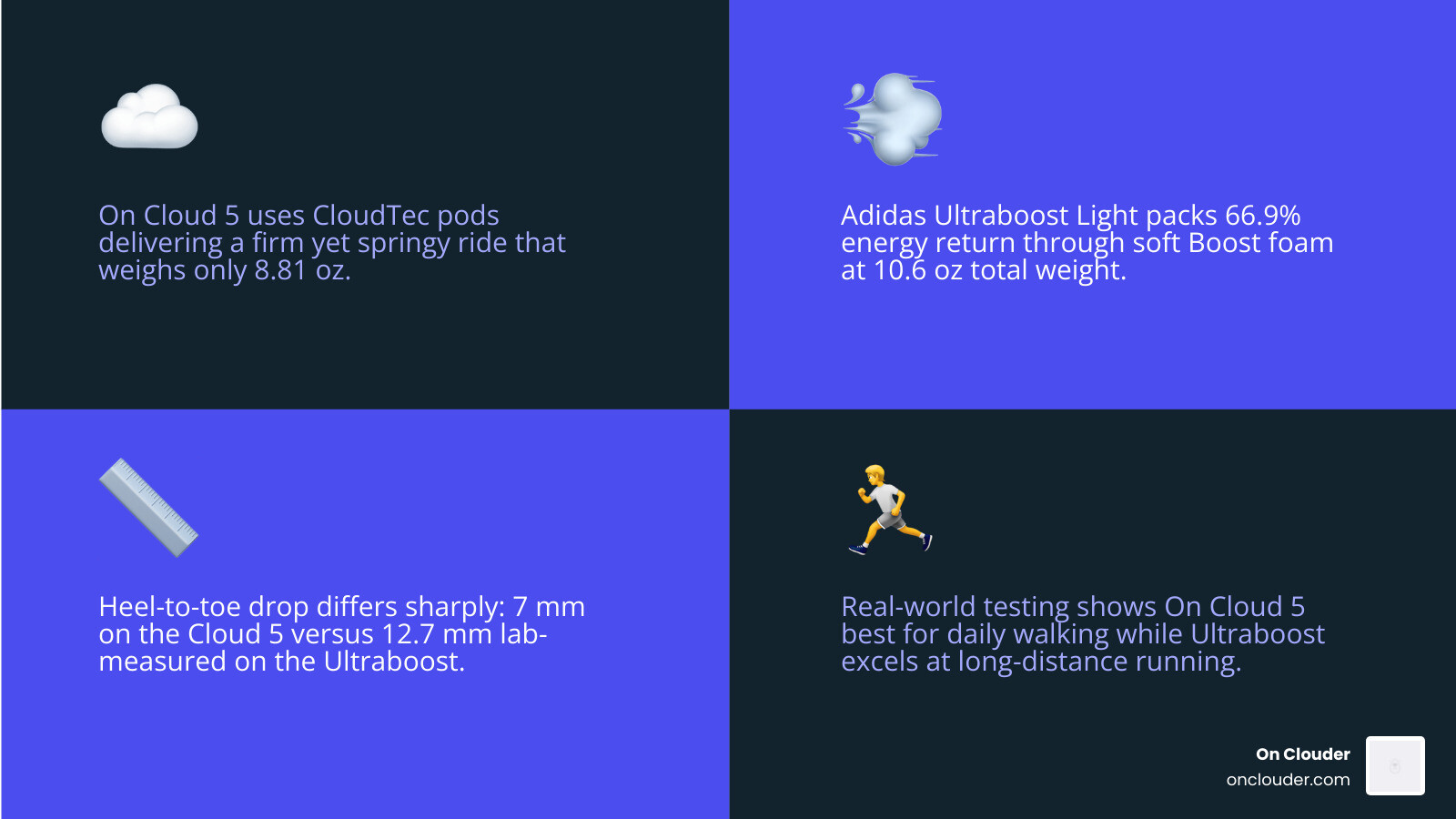
| Weight | 8.81 oz (250g) | 10.6 oz (301g) |
| Cushioning | CloudTec pods, firm and springy | Boost foam, soft and bouncy |
| Heel drop | 7mm | 12.7mm (lab measured) |
| Price | ~$139.99 | ~$180–$200 |
| Durability | 300–500 miles | 400–600 miles |
| Top strength | Lightweight, breathable | Energy return (66.9%) |
Bottom line:
- Choose the On Cloud 5 if you want a lighter, more breathable everyday shoe for walking, casual wear, or shorter runs.
- Choose the Adidas Ultraboost if you prioritize maximum cushioning, energy return, and long-distance running comfort — especially if you’re a heel striker.
Picking the wrong shoe can mean sore feet, fatigue, and wasted money. Whether you’re logging miles on a morning run, standing through a long shift, or just want a shoe that does it all — this comparison breaks down exactly what each shoe does well and where it falls short.
I’m Faisal S. Chughtai, a footwear expert focused exclusively on On Cloud shoes, and I’ve spent years testing and analyzing the on cloud vs ultraboost matchup across real-world conditions. Read on for the full breakdown to help you make the smartest choice for your feet.
Technical Breakdown: On Cloud vs Ultraboost Technology
When we look under the hood of these two giants, we see two completely different philosophies on how to handle impact. It is a battle between mechanical engineering and chemical innovation.
CloudTec and Helion Superfoam
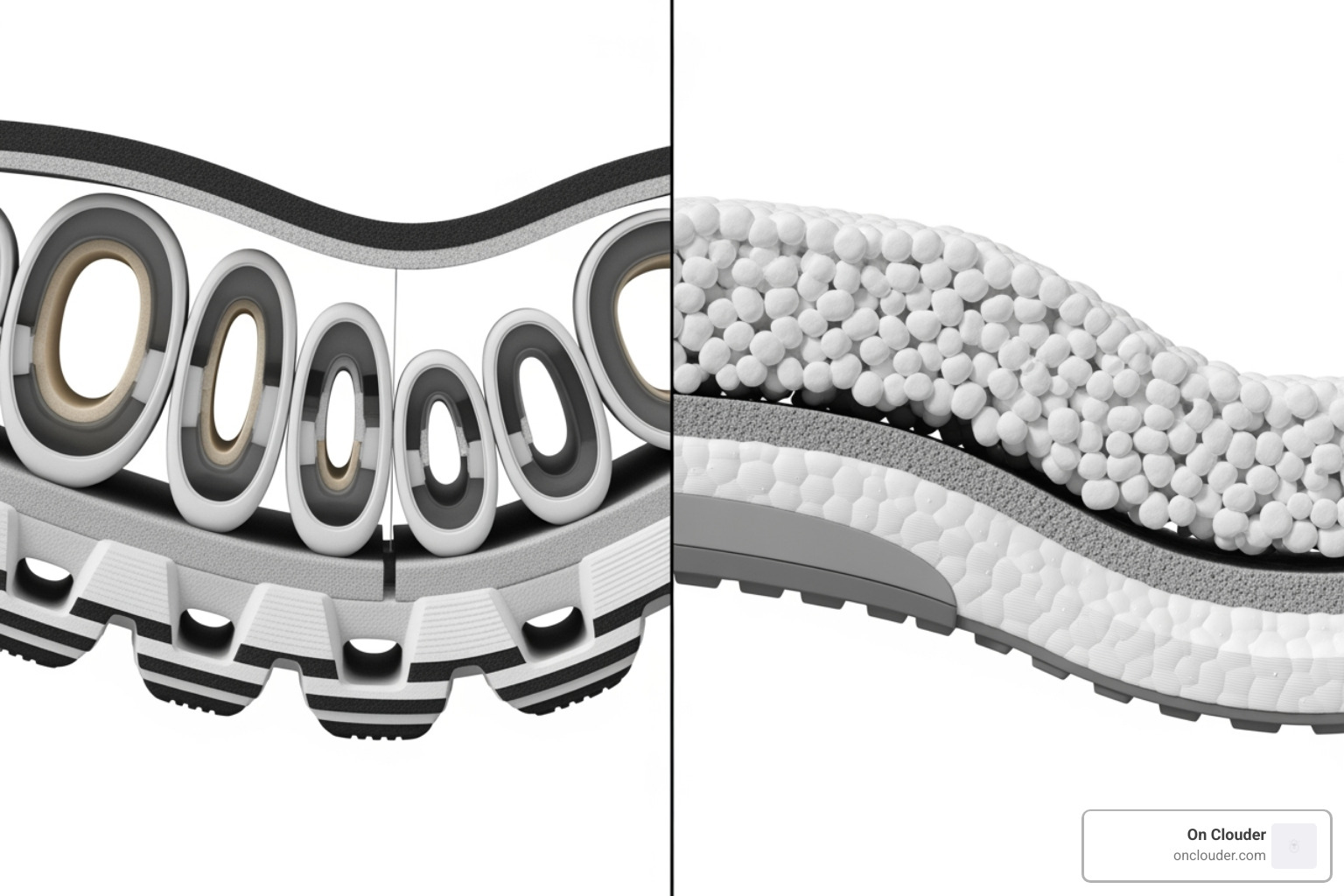
On’s signature is the On Cloud Technology, specifically the CloudTec pods. These hollow elements are designed to compress both vertically and horizontally. This “mechanical” cushioning absorbs the impact of your strike and then locks firm to provide a solid foundation for a powerful takeoff.
In many models like the Cloud 5, these pods are paired with Helion superfoam—a material designed to be temperature resistant, meaning it won’t get too soft in the May 2026 heat or too stiff in the winter. Most On shoes also feature a Speedboard, a liquid-injected plate that acts like a bow, bending as you land and snapping back to propel you forward.
Boost Foam and Primeknit+
Adidas, on the other hand, relies on its legendary Boost foam. Created by fusing thousands of expanded thermoplastic polyurethane (eTPU) capsules, Boost provides a “marshmallow” feel that is significantly softer than On’s standard pods. The newer Ultraboost Light models have managed to reduce weight slightly, but the core remains that high-energy-return foam.
The upper of the Ultraboost uses Primeknit+, a sock-like textile that wraps the foot. It’s incredibly flexible, though some users find it less structured than the engineered mesh found on On models.
Spec Comparison Table
| Feature | On Cloud 5 | Adidas Ultraboost 1.0/Light |
|---|---|---|
| Weight (Men’s 9) | 8.81 oz | 10.4 oz – 10.6 oz |
| Midsole | CloudTec (Hollow Pods) | Boost (Expanded Foam) |
| Heel-to-Toe Drop | 7mm | 10mm – 14.2mm |
| Upper Material | Breathable Antimicrobial Mesh | Primeknit+ / Textile |
| Ride Feel | Firm, Responsive, Grounded | Plush, Bouncy, Protective |
Performance for Runners: Cushioning and Energy Return
For those of us hitting the pavement, the on cloud vs ultraboost choice often comes down to how our legs feel at mile five.
The Adidas Ultraboost is a champion of energy return. Lab testing, such as research published by Runner’s World, shows it offers a 66.9% energy return, which is significantly higher than the average daily trainer. This makes it a fantastic choice for heel strikers, as it features a massive 122 SA shock absorption rating in the heel. If you tend to land heavy on your heels, the Ultraboost acts like a shock absorber for your entire skeletal system.
However, the On Cloud Running Experience is tailored for those who prefer a “snappier” ride. While the Ultraboost can sometimes feel like you are sinking into the foam, the On Cloud 5 keeps you on top of the road. It provides enough protection to dampen the vibration but remains firm enough for quick tempo changes. For a deeper dive into these specifics, check out our On Cloud vs Adidas Ultra Boost comparison.
One major advantage for Adidas in the performance category is the Continental rubber outsole. At 5.8mm thick (compared to the industry average of 3.2mm), it provides exceptional grip on wet pavement—something the exposed foam on some On models can struggle with.
Is On Cloud vs Ultraboost Better for Long Distance?
If you are training for a marathon in 2026, weight becomes your enemy. The Adidas Ultraboost 1.0 weighs in at 10.6 oz, which is substantially heavier than the average running shoe. Over 26.2 miles, that extra weight can contribute to muscle fatigue.
This is where On’s On Cloud Performance Features shine. The On Cloud 5 is roughly 30% lighter than traditional trainers. However, for true long-distance comfort, we often point runners toward the Cloudmonster. It uses larger Cloud elements to provide more “squish” than the Cloud 5, making it a more direct competitor to the Ultraboost’s plushness while remaining lighter.
Daily Wear: Walking, Standing, and Lifestyle
Not everyone is a marathoner. Many of our readers are nurses, retail workers, or travelers who need a shoe for 12-hour days.
The On Cloud 5 has become the unofficial “uniform” for healthcare workers and tech professionals. Why? The slip-on speed lacing system is a game-changer. You can kick them off under a desk or slide them on in seconds. Plus, the aesthetic is sleek and minimalist, fitting in better with scrubs or jeans than the more “sporty” look of the Adidas.

Our On Cloud Shoes Review highlights that the breathability of the On mesh is superior to the thick knit of the Ultraboost. In warmer climates, the Ultraboost can occasionally develop “hot spots,” whereas the Cloud 5 is designed for maximum airflow. For a comprehensive look at the brand’s offerings, see The Ultimate Guide to On Cloud Shoes.
Choosing On Cloud vs Ultraboost for All-Day Comfort
When standing all day, the high heel-to-toe drop of the Ultraboost (measured as high as 14.2mm in some lab tests) can be polarizing. Some find it relieves pressure on the Achilles, while others feel it pushes their weight too far forward onto the balls of their feet.
The On Cloud 5 offers a more moderate 7mm drop and a lower stack height (28mm heel). This provides a more stable, grounded feel that many find preferable for standing on hard hospital floors. However, the On Cloud Comfort and Fit profile is generally narrower. If you have feet that swell significantly throughout the day, the stretchy Primeknit of the Adidas might offer more “forgiveness.”
Durability, Sizing, and Value for Money
Let’s talk about the investment. Neither of these shoes is cheap, so you want them to last.
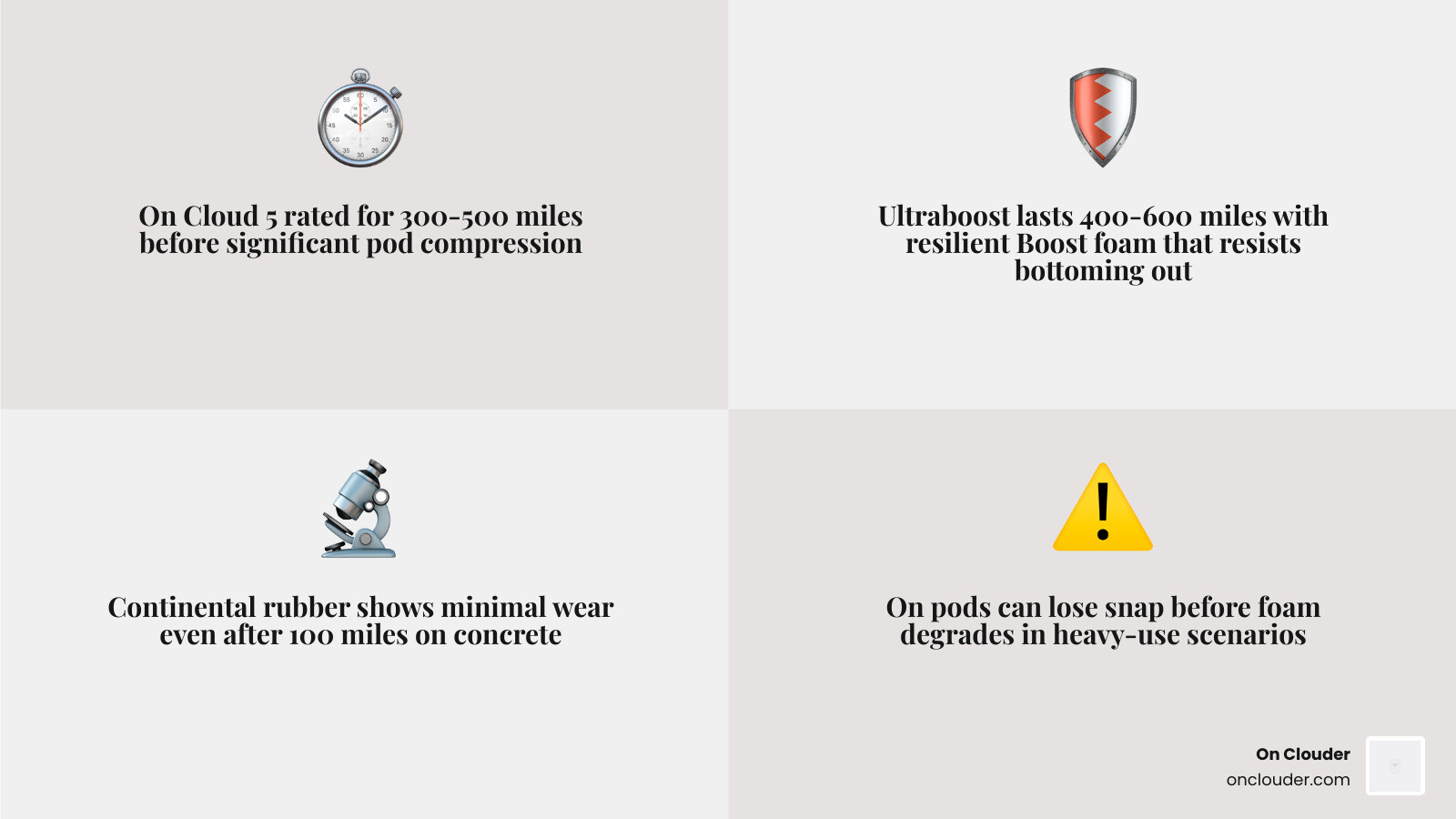
The Adidas Ultraboost generally wins the longevity battle. The Boost foam is incredibly resilient; it doesn’t “bottom out” as quickly as traditional EVA foams. Most users report getting 400 to 600 miles out of a pair. The Continental rubber outsole is also a tank, showing very little wear even after 100 miles of concrete pounding.
On shoes have historically faced some criticism regarding the “pods” picking up stones on gravel paths, though newer designs have minimized this. The Cloud 5 is rated for 300 to 500 miles, but some heavy users note that the mechanical pods can lose their “snap” before the foam actually dies. For a full breakdown of the lifespan of these models, read our On Cloud vs Ultraboost Complete Guide.
Sizing Tips:
- On Cloud 5: Tends to run a bit long but narrow. Many people find they need to size down a half step for a performance fit, or stay true to size for casual wear. Check our On Cloud Sizing Guide for more details.
- Adidas Ultraboost: Generally true to size, but the “bootie” construction is very snug. If you have a high instep, you might find them difficult to get on initially.
Frequently Asked Questions about On and Adidas
Which shoe is better for wide feet?
Generally, the Adidas Ultraboost is better for wide feet because the Primeknit upper is basically a stretchy sock. It can expand to accommodate bunions or a wider midfoot. While the On Cloud 5 is narrow, the On Cloudmonster or the Cloudsurfer offer a much roomier toe box. If you have truly wide feet, check our On Cloud Fit Guide to find the models that offer “Wide” versions.
How many miles do these shoes last?
As mentioned, the Ultraboost usually hits the 400-600 mile mark. The On Cloud 5 is closer to 300-500 miles. A key sign of wear for On shoes is when the CloudTec pods no longer rebound after being compressed. For Adidas, the foam usually lasts longer than the knit upper, which can eventually develop holes near the toe.
Are On Clouds better for gym workouts?
Yes, specifically the On Cloud X. While the Ultraboost is too “mushy” for lifting (it lacks lateral stability), the On Cloud X is designed for cross-training. It has a lower profile and firmer foam that won’t compress under the weight of a squat or deadlift. The Ultraboost is a running and walking shoe; it is not a gym shoe.
Conclusion
In the battle of on cloud vs ultraboost, there is no universal winner—only the shoe that fits your specific lifestyle in 2026.
At On Clouder, we’ve found that the On Cloud 5 is the ultimate lifestyle and travel companion. Its lightweight build and easy-entry lacing make it unbeatable for daily errands, light gym work, and walking. However, if your primary goal is high-mileage running or you need maximum impact protection for your joints, the Adidas Ultraboost remains a powerhouse of comfort and energy return.
We recommend going to a local store and trying one of each on your feet. Walk around for five minutes; your gait will usually tell you immediately whether you prefer the “cloud-like” firmness of On or the “boosted” bounce of Adidas. For more head-to-head battles, check out our On Cloud vs Ultraboost Complete Guide page.