
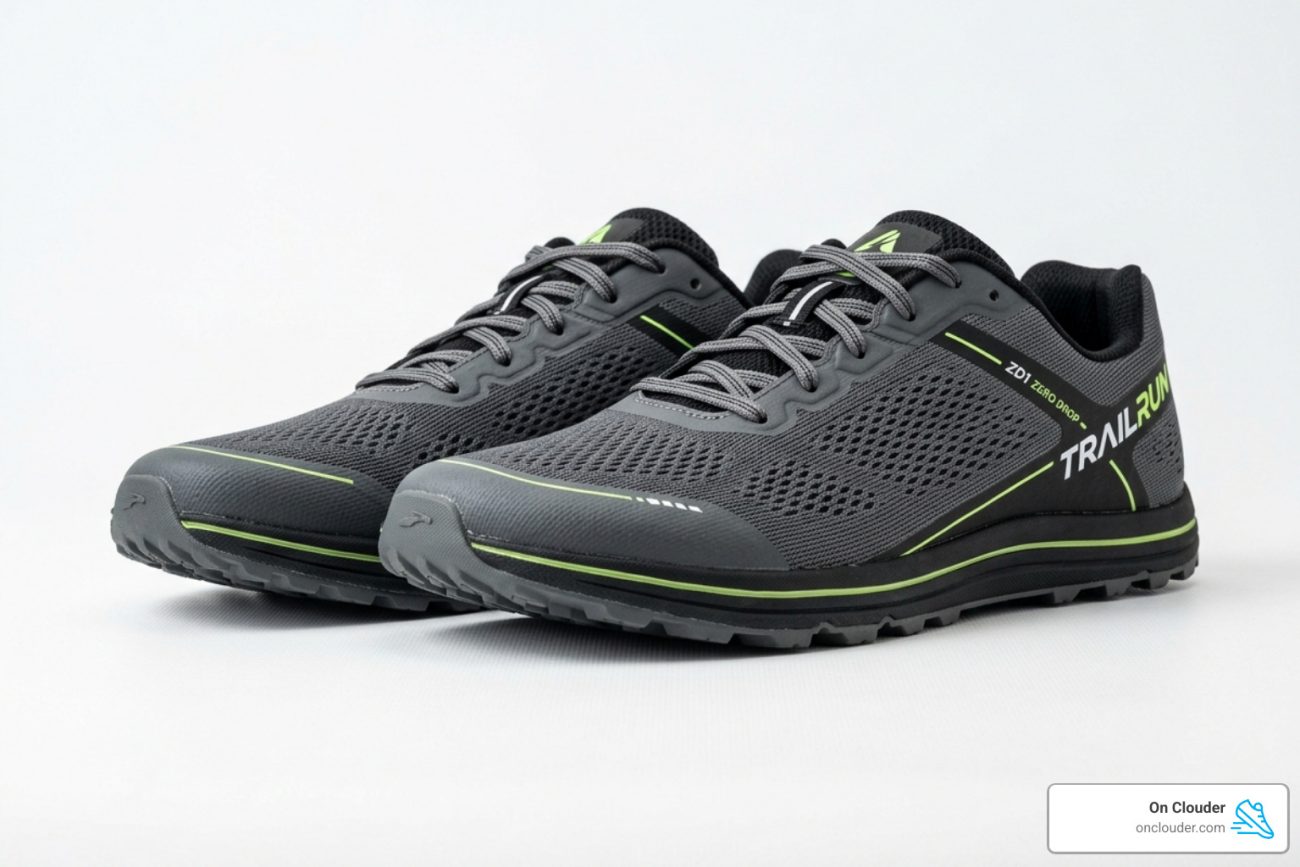
Why the Best Zero Drop Shoes Might Be the Smartest Footwear Switch You Make
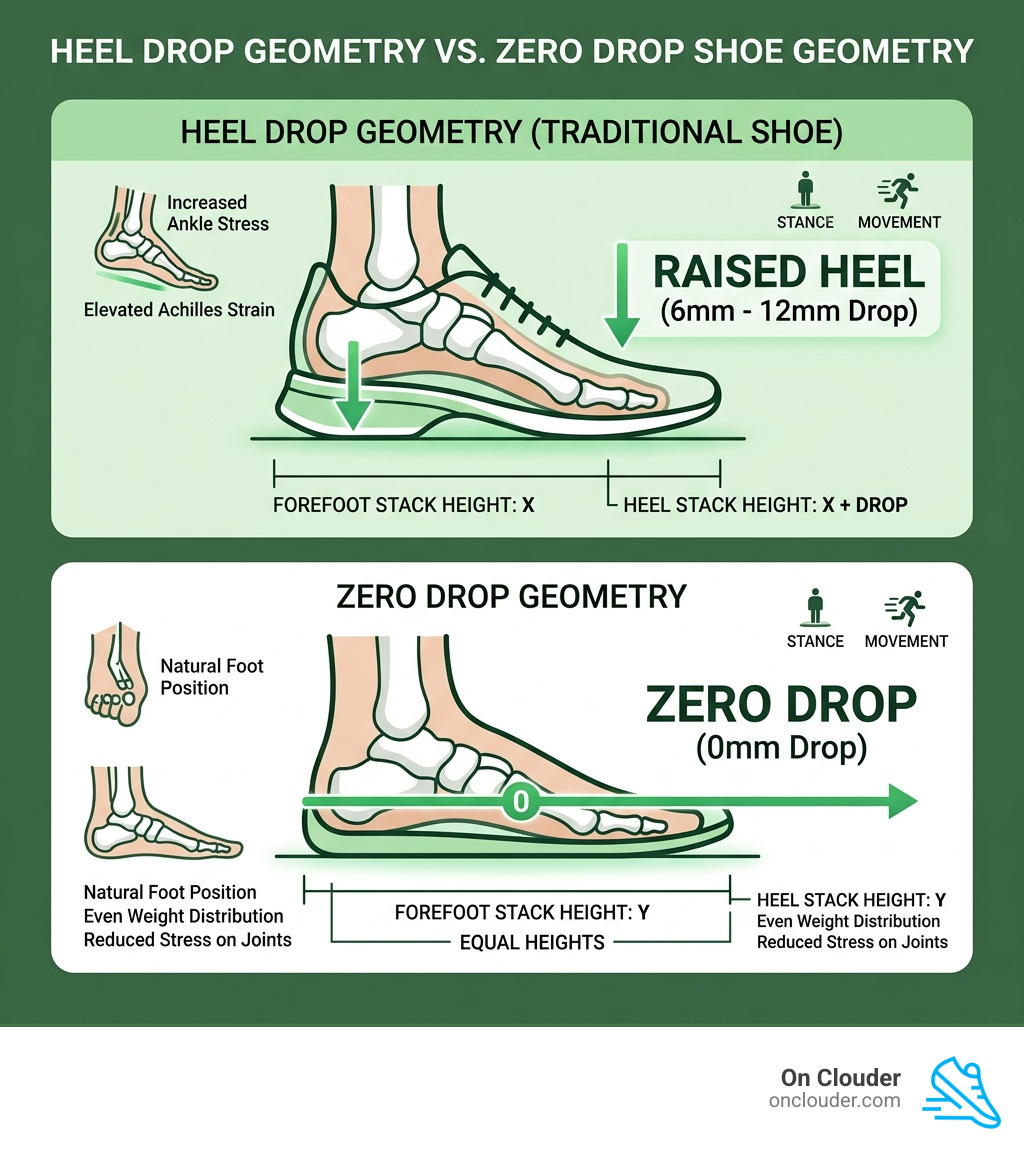
The best zero drop shoes keep your heel and forefoot at the exact same height — unlike most traditional shoes, which raise the heel anywhere from 5mm to 12mm above the toes.
Here are the top picks at a glance:
| Shoe | Best For | Stack Height | Weight | Price |
|---|---|---|---|---|
| Altra Escalante 4 | Daily walking / all-day wear | 24mm | 233g (8.2 oz) | $130 |
| Altra Torin 8 | Cushioned running | 30mm | 288g (10.2 oz) | $150 |
| Xero HFS Original | Lightweight road running | Minimal | 247g (8.7 oz) | $119.99 |
| Merrell Trail Glove 7 | Trail running / hiking | Minimal | — | — |
| Vivobarefoot Motus Strength 2 | CrossFit / gym training | 6.5mm | 320g (11.3 oz) | — |
Most people don’t realize how much a raised heel changes the way their entire body moves. Research shows that elevated heels can increase ankle stress by up to 75% compared to walking barefoot. Over an 8–12 hour day, that adds up fast — in foot fatigue, poor posture, and joint strain.
Zero drop shoes fix that by letting your foot sit in a natural, flat position. Your body’s weight distributes more evenly. Your muscles work the way they were designed to. And over time, many people notice real improvements in posture, balance, and how their feet feel at the end of the day.
That said, zero drop shoes aren’t a one-size-fits-all solution — and jumping in too fast is one of the most common mistakes new wearers make.
This guide covers everything: the science, the top models for every activity, what to look for, and how to transition safely.
I’m Faisal S. Chughtai, a footwear expert who has spent years helping people find the right shoes for comfort, performance, and long-term foot health — including testing and recommending the best zero drop shoes for runners, walkers, and active professionals. Let’s get into it.
Quick look at best zero drop shoes:
- best wide toebox shoes
- running shoes for wide feet
- running shoes for overpronators
The Science and Benefits of the Best Zero Drop Shoes
When we talk about the best zero drop shoes, we aren’t just talking about a fashion trend. We’re talking about a fundamental shift in how your body interacts with the ground. Traditional shoes often act like a “wedge,” tilting your pelvis forward and forcing your spine to compensate. By removing that heel lift, zero drop footwear restores your body to its natural alignment.
Ankle Stress and Postural Alignment
The statistics are hard to ignore. Studies have shown that higher heels increase ankle stress by up to 75% compared to barefoot walking. When your heel is elevated, your weight shifts onto the balls of your feet, which can lead to issues like bunions or neuromas. Zero drop shoes distribute that weight across the entire foot, reducing the load on the forefoot and allowing the Achilles tendon to stretch to its natural length.
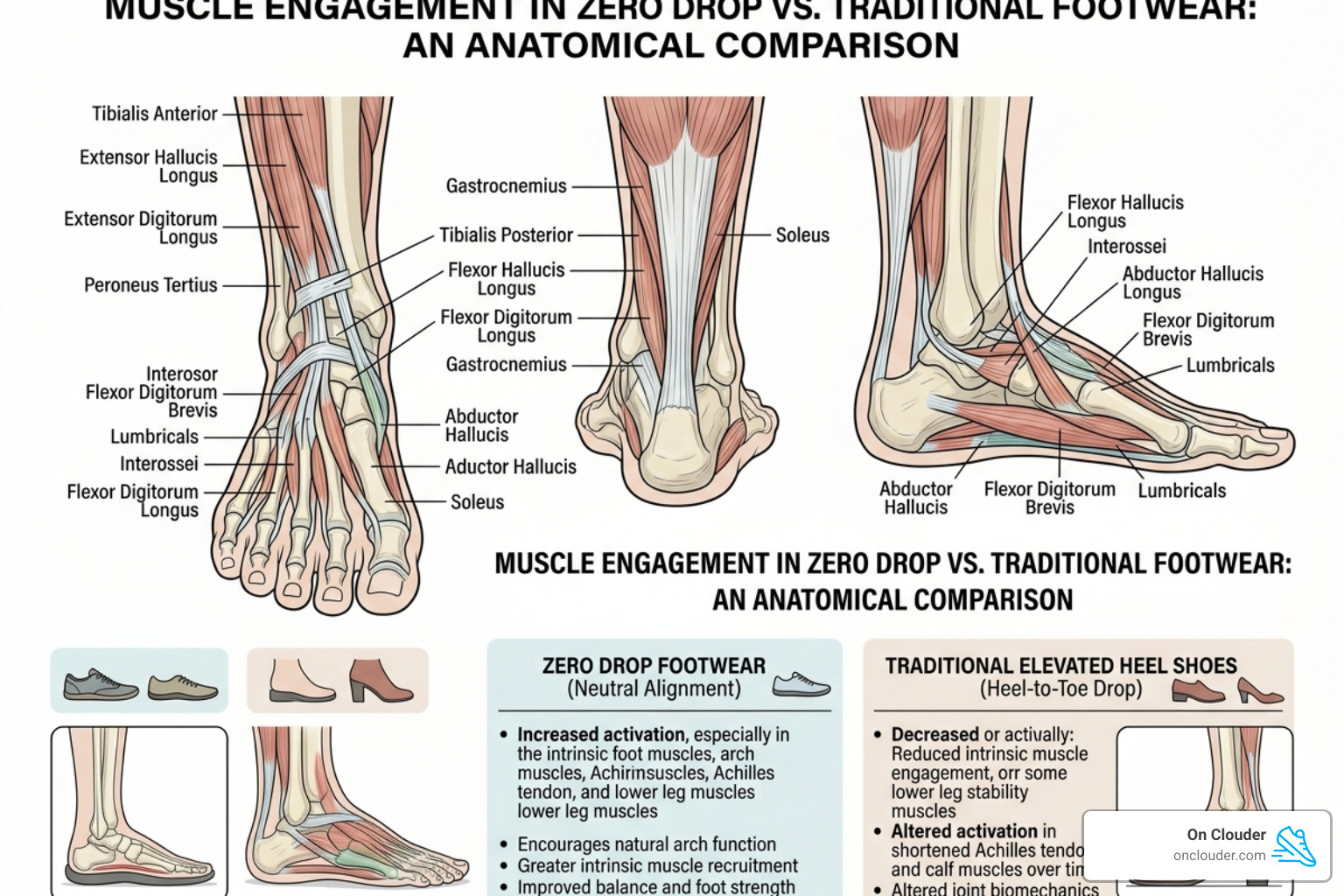
Engaging the 29 Muscles of the Foot
Your foot and ankle are home to 29 different muscles. In traditional, stiff shoes, many of these muscles go “dormant” because the shoe is doing all the work. Switching to the best zero drop shoes encourages these muscles to engage. This doesn’t just make your feet stronger; it improves your overall balance and stability. This is especially beneficial for middle-aged and older individuals, where minimal footwear has been shown to improve physical function compared to conventional shoes.
Natural Gait and Joint Health
A zero drop platform encourages a midfoot or forefoot strike rather than a heavy heel strike. This shift is crucial for joint health because it allows the foot’s natural arch to act as a shock absorber, taking the pressure off your knees and lower back. For a deeper dive into how this affects your stride, check out A Practical Guide To Zero Drop Running Shoes/.
Best Zero Drop Shoes for Daily Walking and Work
For many of us, the real “marathon” happens during an 8-hour shift on our feet. Whether you are a nurse, a teacher, or a retail worker, the cumulative postural stress of a raised heel can lead to chronic fatigue.
The best zero drop shoes for walking prioritize a balance of cushioning and natural alignment. While “barefoot” purists might love a paper-thin sole, we’ve found that for all-day wear on hard surfaces like concrete or tile, a stack height of 10mm to 30mm is often the “sweet spot.”
- Altra Escalante 4: With a 24mm stack height, this is widely considered one of the best zero drop shoes for daily use. It offers enough protection for long days but remains incredibly flexible.
- Altra Torin 8: If you need maximum cushioning, the Torin 8 provides a 30mm stack height. It’s the “plush” option for those who want the benefits of zero drop without feeling every pebble on the sidewalk.
- Freet Skeeby: A great option for those who want a high-volume fit that feels more “barefoot” but still offers a 10.5mm stack for comfort.
Walking provides a gentler transition to zero drop than running, making these models excellent entry points for beginners.
Best Zero Zero Drop Shoes for Trail Running and Hiking
When you leave the pavement, ground feedback and grip become your best friends. The best zero drop shoes for the trail allow your foot to sense the terrain, which actually helps prevent ankle rolls. Instead of a thick, unstable heel, you have a low center of gravity.
- Inov-8 Trailfly Zero: Designed specifically for hard and rocky ground, these provide a natural feel while protecting you from sharp stones.
- Altra Lone Peak 8: A legend in the hiking community. Its wide toe box and “MaxTrac” grip make it a favorite for thru-hikers. You can learn more about its history in our guide on Altra Shoes For Running And Hiking/.
- Inov-8 Mudtalon Zero: If your trails involve deep mud and soft fells, the Mudtalon offers aggressive lugs that “bite” into the earth while keeping your foot level.
For those curious about going even more minimal in the woods, see our Tag/Barefoot Hiking/ section.
Key Features to Look For in Zero Drop Footwear
Not all zero drop shoes are created equal. To find the best zero drop shoes for your specific needs, you need to understand three main variables: stack height, toe box width, and flexibility.
Stack Height: Cushioning vs. Ground Feel
Stack height refers to the amount of material between your foot and the ground.
- Minimalist (3mm–10mm): Best for gym training and those who want maximum “ground feel.”
- Cushioned (20mm–30mm): Best for long-distance road running or all-day work shifts.
The Wide Toe Box: “Stop the Squeeze”
Traditional shoes are often shaped like a “V,” squeezing your toes together. The best zero drop shoes feature an anatomical, foot-shaped toe box. This allows your toes to splay naturally, which is essential for balance. If you’ve ever felt like your pinky toe is being crushed, it’s time to Stop The Squeeze With These Barefoot Wide Toe Box Shoes/.
| Model | Activity | Stack Height | Weight | Price (Approx) |
|---|---|---|---|---|
| Xero HFS 2 | Road Running | 11mm | 8.7 oz | $120 |
| Vivobarefoot Primus | Minimalist/Gym | 2-4mm | 7.0 oz | $170 |
| Altra Lone Peak | Trail/Hiking | 25mm | 10.6 oz | $150 |
| Tolos Archetype 2.0 | Gym/Lifting | Minimal | 8.7 oz | $155 |
Flexibility and Ground Feel
A shoe should move with your foot, not against it. The best zero drop shoes can often be rolled up or twisted with ease. This flexibility allows your foot to function as a dynamic lever, improving agility and power. For those looking for style without sacrificing these features, check out Tag/Foot Shaped Footwear/.
How to Safely Transition to Zero Drop Footwear
The biggest mistake people make is switching to the best zero drop shoes overnight. If you’ve worn 12mm drop shoes for twenty years, your calves and Achilles tendons have likely shortened. Jumping straight into a 5-mile run in zero drop shoes is a recipe for a strain.
The 12-Week Transition Plan
We recommend a phased approach to help your body adapt:
- Phase 1 (Weeks 1-3): Wear your new shoes for 15–30 minutes of walking around the house or a short walk to the mailbox.
- Phase 2 (Weeks 4-6): Increase wear time to 1–2 hours of daily activity. Use them for a light gym session or a grocery run.
- Phase 3 (Weeks 7-9): Start incorporating short, easy runs (if that’s your goal) or full 4-hour blocks of wear.
- Phase 4 (Weeks 10-12): Transition to full-day wear or longer workouts.
Calf Strengthening and Maintenance
During this time, perform “towel scrunches” with your toes and gentle calf raises. This helps rebuild the strength in the 29 muscles of your foot. For more details on the mechanics, read our guide on Transitioning To Minimalist Footwear/.
If you are a runner, you might want to see how these compare to other popular brands in our On Cloud Vs Altra/ comparison.
Frequently Asked Questions about Zero Drop Shoes
Who should avoid zero drop shoes?
While we love them, they aren’t for everyone. If you have an active, acute injury like a fresh stress fracture or severe, unmanaged plantar fasciitis, consult a podiatrist first. People with certain structural foot issues may require specific orthopedic support that a neutral, zero drop shoe doesn’t provide. Always listen to your body; if you feel sharp pain (not just muscle soreness), stop and reassess. Check out Choosing The Right Running Shoes For Your Needs/ for more context.
Do zero drop shoes help with back pain?
Yes, for many people, they do! By eliminating the heel lift, these shoes help correct a “forward pelvic tilt.” This realigns the kinetic chain from your feet up through your knees, hips, and spine. When your weight is centered over your midfoot rather than your toes, your lower back muscles don’t have to work as hard to keep you upright.
How should zero drop shoes fit?
The “Thumb’s Width Rule” is key. You should have about a thumb’s width of space between your longest toe and the end of the shoe. This allows your foot to slide forward slightly during your stride and gives your toes room to splay. If the shoe feels “loose” in the midfoot, look for models with better lockdown, but never sacrifice toe room. For a list of stylish options that fit this criteria, see our list of 15 Barefoot Sneakers/.
Conclusion
The journey toward finding the best zero drop shoes is really a journey toward reclaiming your natural movement. Whether you choose the plush comfort of an Altra Torin or the raw ground feel of a Xero HFS, you are giving your feet the freedom they were born with.
Brands like Xero Shoes even offer a 5,000-mile sole warranty, showing just how durable these minimalist designs can be. By choosing footwear that respects the anatomy of your foot, you’re investing in years of better posture, stronger muscles, and more comfortable miles.
Ready to see how these stack up against the competition? Explore more shoe comparisons and reviews/ on our main site to find your perfect match.
