Why the Right Shoes Make or Break Long-Distance Walking
The best walking shoes for long distance walking can mean the difference between finishing a 10-mile day feeling strong and limping home with sore joints. Here are the top picks for 2026:
Best Walking Shoes for Long Distance Walking (2026)
| Shoe | Best For | Heel Stack | Drop | Weight |
|---|---|---|---|---|
| Brooks Ghost Max 3 | Overall best | 39mm | 8mm | 9 oz |
| Hoka Bondi 9 | Max cushion/concrete | 41mm | 5mm | 10.7 oz |
| On Cloudtilt | Lightweight comfort | 35.5mm | 8.7mm | 9.4 oz |
| ASICS GT 2000 14 | Stability/arch support | 36.9mm | 8mm | 9.8 oz |
| Altra Experience Flow 2 | Wide feet | 30mm | 4mm | 9 oz |
| Nike Motiva | Smooth transitions | 34.9mm | 9.3mm | 9.5 oz |
Long-distance walking puts serious stress on your feet, knees, and hips. Every mile adds up. Without the right cushioning and support, you’ll feel it in your joints long before you reach your destination.
Most people grab whatever sneakers they own. But dedicated walking shoes are built differently. They prioritize shock absorption, rocker geometry, and foam that doesn’t flatten out by mile 5.
The stakes are real. A shoe that scores below 100 on standardized shock absorption (SA) testing is generally considered inadequate for all-day wear on hard surfaces like concrete. And lightweight shoes often trade a thinner heel stack – around 3mm less cushioning – for that reduced weight.
That tradeoff matters more the longer you walk.
At On Clouder, we focus on helping readers compare comfort, support, and performance using real-world observations and lab-focused metrics. This guide is designed to help you find the best walking shoes for long distance walking based on practical fit considerations and measurable performance features. Read on for a deep dive into what separates a great long-distance walking shoe from one that just looks the part.
Key Features of the Best Walking Shoes for Long Distance Walking
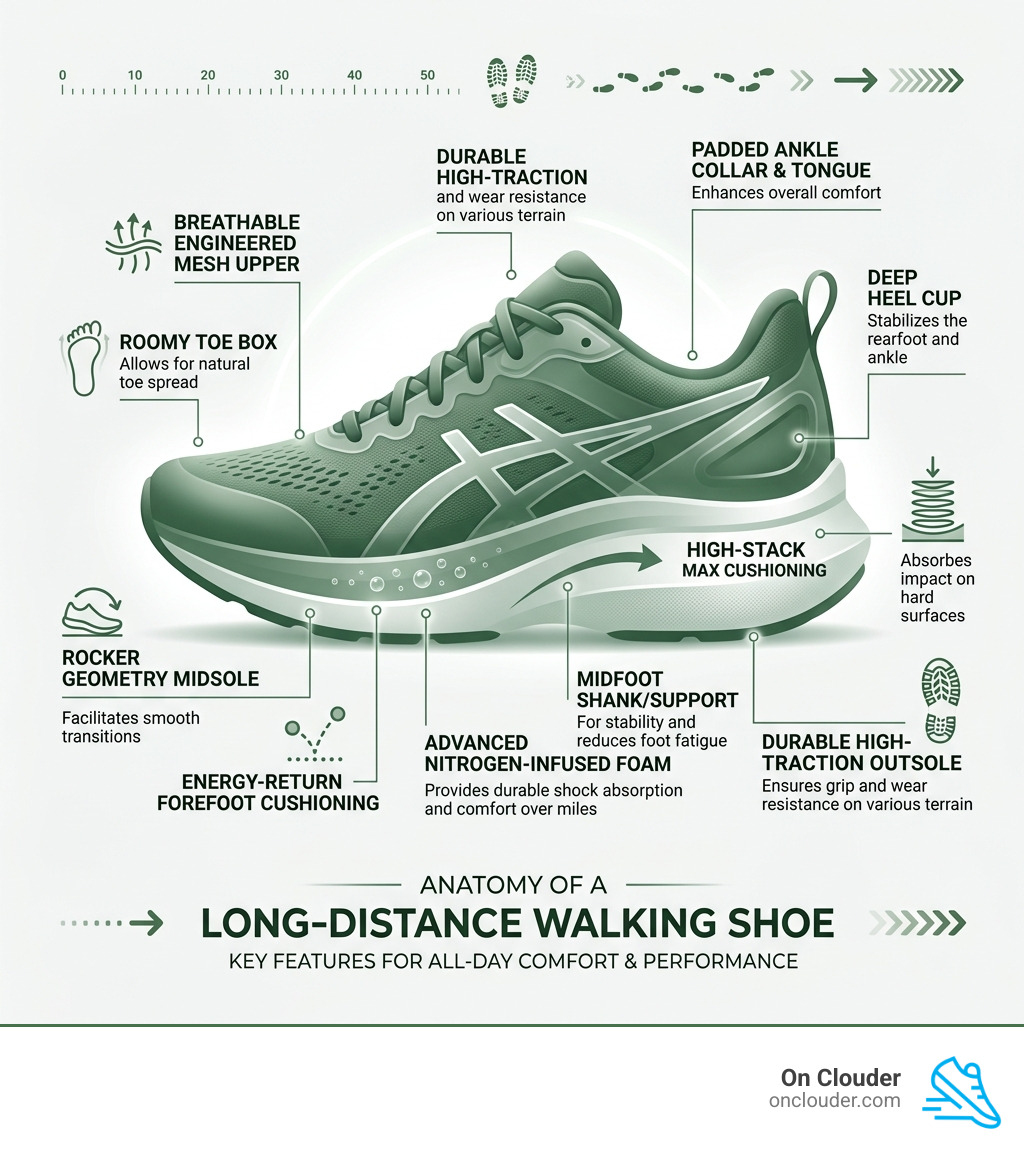
When we evaluate the best walking shoes for long distance walking, we aren’t just looking at how they feel in the store. We look at the engineering that keeps your legs feeling fresh at mile 10.
Advanced Cushioning and Nitrogen-Infused Foams
The heart of a long-distance shoe is its midsole. Modern technology has moved beyond basic EVA foam. We now see nitrogen-infused foams, like the DNA Loft v3 found in the Brooks Ghost Max 3. This process creates a foam that is incredibly plush but doesn’t “bottom out” or lose its springiness after several hours of weight-bearing activity. For those covering high mileage, this consistency is vital.
Rocker Geometry and Sole Design
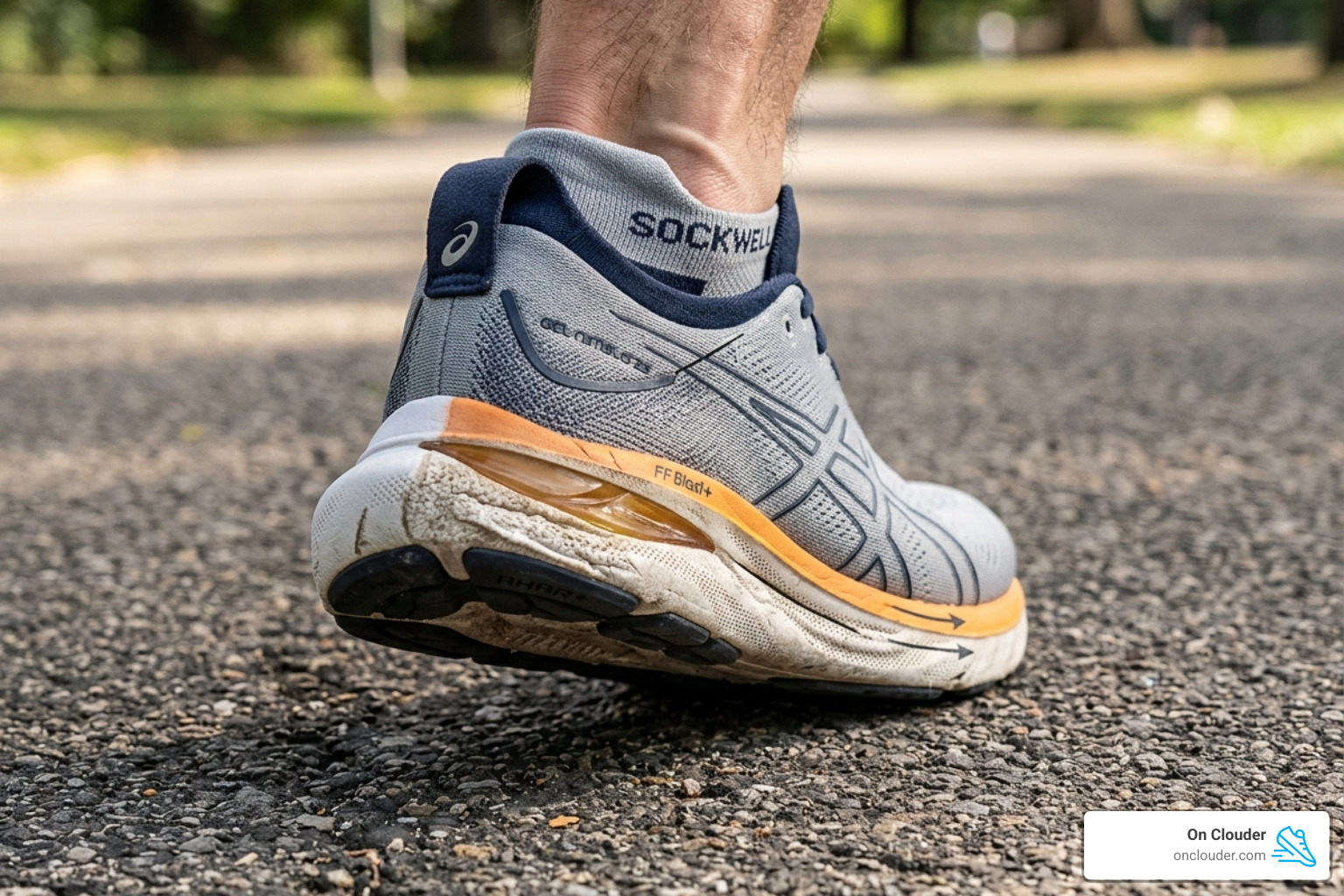
Walking is a repetitive heel-to-toe motion. A “rocker” design—a curved sole that mimics the natural roll of the foot—helps propel you forward. This geometry reduces the workload on your calf muscles and ankles. For example, the Nike Motiva uses a significant rocker and a midsole that is 43.1% stiffer than average, which sounds counterintuitive but actually creates a much smoother transition that saves energy over long distances.
Stack Height and Shock Absorption (SA)
Stack height refers to the amount of material between your foot and the ground. In 2026, “maximalist” shoes are leading the pack. A heel stack of 35mm to 41mm is now common for high-mileage walkers. Lab metrics show that shoes with a shock absorption (SA) score of 130 or higher—like the On Cloudtilt or Nike Motiva—provide roughly 18% better impact protection than the average trainer.
Breathability and Drop
The “drop” is the height difference between the heel and the forefoot. Most walking shoes fall between 5mm and 10mm. A higher drop can relieve pressure on the Achilles tendon, while a lower drop (like 4mm) encourages a more natural midfoot strike. Breathability is equally critical; long walks generate heat, and mesh uppers help moisture escape to prevent the friction that leads to blisters.
Top-Rated On Cloud Models for High-Mileage Comfort in 2026
At On Clouder, we have spent years tracking how different On models perform under pressure. For 2026, the shift toward “CloudTec Phase” technology has improved long-distance comfort across the lineup.
| On Model | Weight | Drop | Best Feature |
|---|---|---|---|
| On Cloudtilt | 9.4 oz | 7mm | Ultra-smooth weight transfer |
| On Cloudsurfer 2 | 8.6 oz | 10mm | Computer-optimized cushioning |
| On Cloud 6 | 8.5 oz | 8mm | Lightweight versatility |
On Cloudtilt: The Long-Distance Specialist
The On Cloudtilt has emerged as a favorite for those who spend all day on their feet. In lab tests, it registered a shock absorption score of 132, putting it nearly 19% above the industry average. It features a wide forefoot platform (117.7 mm), which provides a stable base that helps reduce foot fatigue during 10+ mile walks.
Lab-Tested Durability and Friction
One of our favorite things about the 2026 On lineup is the focus on outsole friction. The Cloudtilt, for instance, has a friction rating of 0.77, helping improve grip on wet marble or smooth city sidewalks. Furthermore, the durability of these midsoles has improved; they are designed to maintain their structural integrity for up to 500 miles.
Best Walking Shoes for Long Distance Walking on Concrete
Walking on concrete is notoriously unforgiving. It is a “dead” surface that offers zero energy return, meaning your shoes have to do all the work.
For these conditions, we recommend shoes with a high stack height. On’s most cushioned options stand out here, with plush midsoles designed to reduce joint stress on paved surfaces. Similarly, the On Cloudtilt uses its unique collapsing “Clouds” to help soften the harsh impact of concrete, making those 15,000-step days feel much shorter.
Best Walking Shoes for Long Distance Walking on Trails
If your long walks take you off the pavement, you need more than just cushion – you need protection.
Key features for trail walking include:
- Multi-directional lugs: Usually 4mm to 5mm deep for grip on loose dirt.
- Rock shields: A flexible plate that helps prevent sharp stones from poking through the sole.
- TPU mud guards: Reinforced edges that protect the mesh from abrasion against rocks and roots.
- Durable rubber outsoles: Useful for traction on wet, slippery surfaces.
Choosing the Right Shoe for Your Foot Type and Style
Finding the best walking shoes for long distance walking requires an honest assessment of your feet. We always recommend measuring your feet in the afternoon when they are at their largest due to natural swelling.
Pronation and Arch Support
- Neutral: Your foot rolls inward slightly to absorb shock. Most cushioned shoes work well for you.
- Overpronation: Your foot rolls inward excessively. You’ll want a “Stability” shoe like the ASICS GT 2000 14, which features a wider platform and firmer foam on the medial side to keep your gait aligned.
- Flat Feet: Look for shoes with a stiff heel counter and a wide midfoot base to provide the structure your arch lacks.
The Wide Toe Box Advantage
On long walks, your toes need room to splay. If your toes are cramped, you risk bunions and blisters. Brands like Altra are famous for their “FootShape” toe boxes. The Altra Experience Flow 2 is a standout for 2026, offering a 4mm drop and a wide forefoot that allows for a natural, fatigue-free stride.
Zero-Drop vs. Traditional Drop
Zero-drop shoes (where the heel and forefoot are the same height) encourage a more natural posture. However, if you are used to a traditional 10mm drop, do not switch overnight. We suggest a gradual transition over 20 miles to avoid straining your calves.
Frequently Asked Questions about Long-Distance Footwear
Are running shoes suitable for long-distance walking?
Yes, but with caveats. “Daily trainer” running shoes are excellent for walking because they are designed for high impact. However, “speed-day” or “racing” shoes are often too unstable and narrow for the slower, more deliberate gait of walking. Walking involves a heavier heel strike than running, so the best walking shoes for long distance walking often have extra cushioning specifically in the rearfoot.
How often should I replace my walking shoes?
The general rule is every 300 to 500 miles. For a dedicated long-distance walker, this might mean a new pair every six to twelve months. Signs of “midsole fatigue” include new aches in your knees or a visible compression of the foam that doesn’t bounce back overnight. We recommend rotating between two pairs to allow the foam in each shoe to fully “decompress” between walks.
What common foot conditions do these shoes address?
- Plantar Fasciitis: Look for shoes with excellent arch support and a rocker sole to reduce the strain on the plantar fascia ligament. The GEL-CONTEND WALKER is a budget-friendly option that provides the necessary heel stability.
- Bunions: A wide toe box is non-negotiable.
- Joint Pain: Maximalist cushioning (stack heights over 35mm) is your best friend for reducing the load on hips and knees.
Conclusion
At On Clouder, we believe that walking is one of the best things you can do for your long-term health—provided you have the right gear. Whether you are training for a marathon walk, commuting through the city, or exploring rugged trails, the best walking shoes for long distance walking are an investment in your well-being.
From the plush, concrete-conquering Hoka Bondi 9 to the lightweight, high-tech On Cloudtilt, the options in 2026 have never been better. Remember to prioritize fit over “vibes,” and don’t be afraid to try a rocker sole or a wider toe box to see how much more enjoyable those long miles can become.
Happy walking!