
How moisture wicking shoe insoles Work to Combat Sweat
Moisture wicking shoe insoles are insoles designed to pull sweat away from your feet, keeping them dry, fresh, and blister-free throughout the day. Here are the top picks for 2026:
| Pick | Best For | Key Technology |
|---|---|---|
| Superfeet Hike Support | Overall performance | Antimicrobial top layer |
| Dr. Scholl’s Odor-X® | Odor and sweat control | SweatMAX™ + activated charcoal |
| Currex RunPro | High-mileage running | Bamboo + charcoal, 1.41 oz |
| Spenco Polysorb Cross Trainer | Budget comfort | Silpure antimicrobial |
| HAIX Breathable Insoles | Work boots | Airflow channels + microfiber |
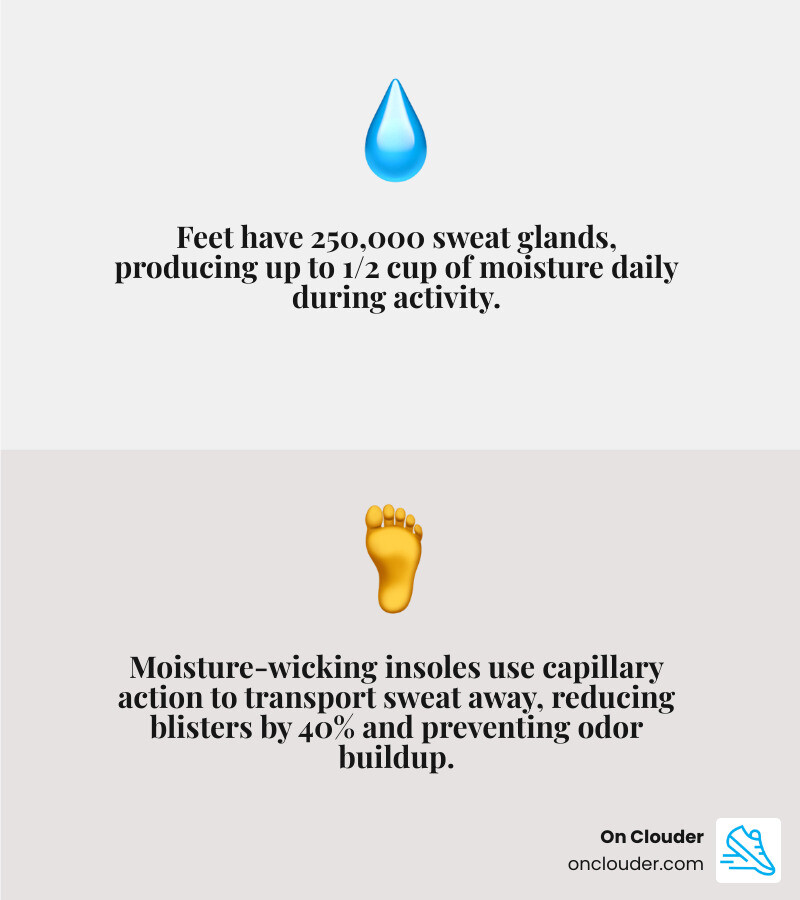
Your feet contain more than 250,000 sweat glands — and when that moisture gets trapped inside a shoe, it creates the perfect environment for odor, blisters, and discomfort. For active professionals and runners, that’s not just annoying. It can slow you down, cut a shift short, or sideline you from a run.
The good news? The right insole does more than just cushion your foot. It actively moves sweat away, neutralizes odor, and keeps you comfortable — whether you’re logging miles on a trail or standing on hard floors for ten hours straight.
I’m Faisal S. Chughtai, a footwear comfort and performance specialist who has spent years evaluating shoe insoles — including moisture wicking shoe insoles — to help active people find the best fit for their lifestyle. Let’s walk through exactly what to look for and which options deliver in 2026.
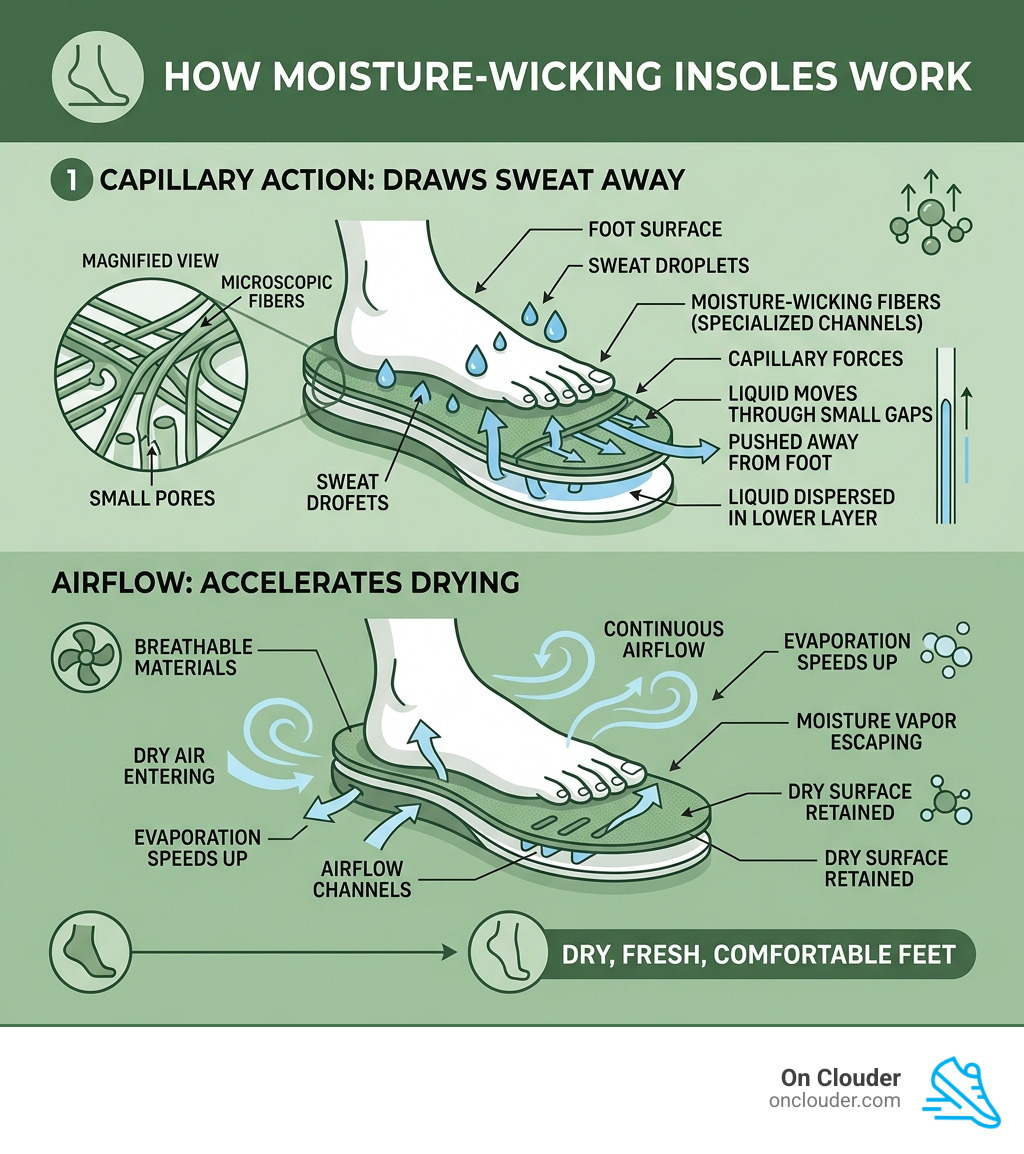
To understand why moisture wicking shoe insoles are a game-changer, we have to look at the science of “capillary action.” Essentially, these insoles don’t just sit there and soak up liquid like a kitchen sponge. If they did, you’d be walking on a soggy mess within an hour. Instead, they use specialized Moisture Wicking Insoles technology to transport liquid away from the surface.
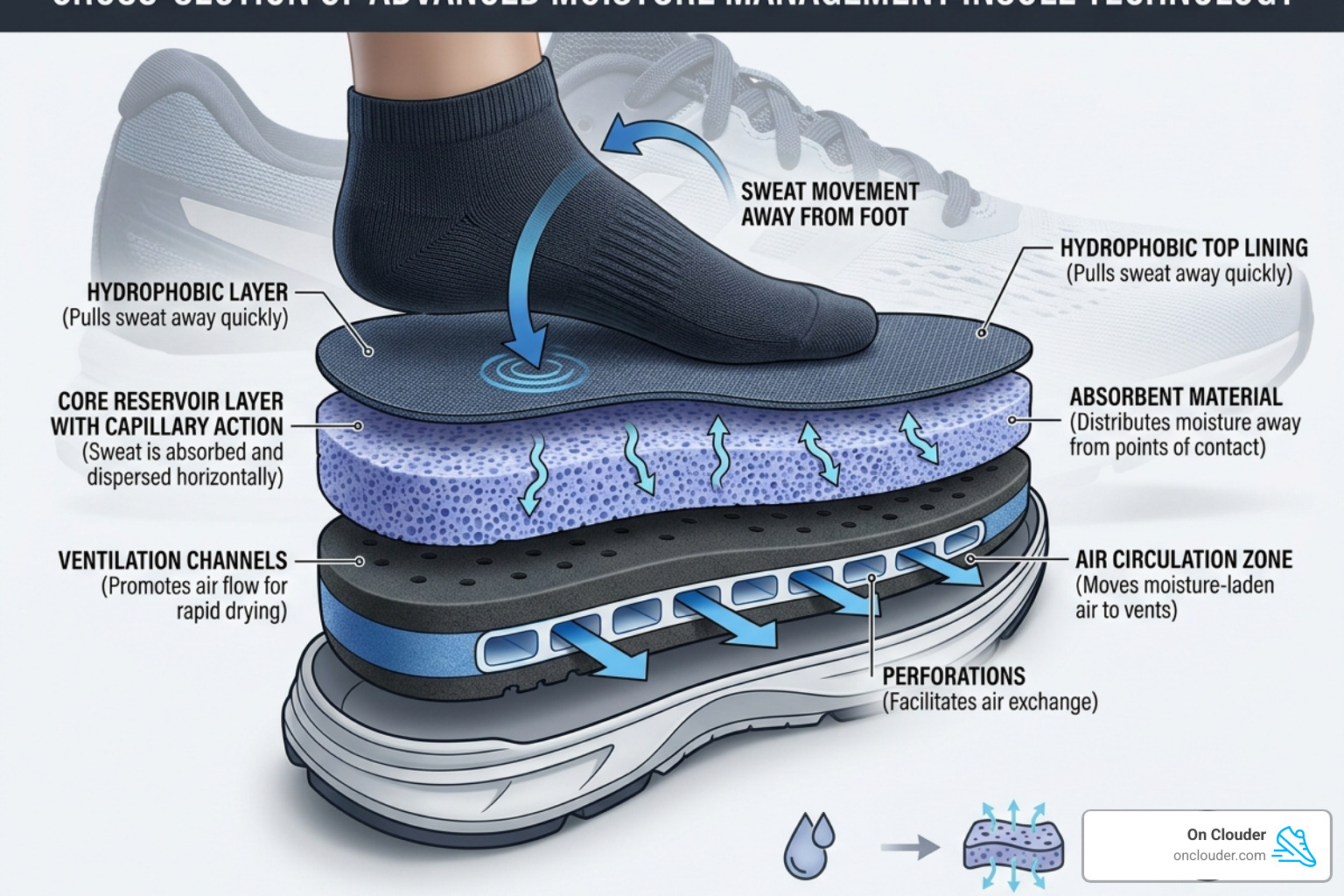
Most high-quality sweat-absorbing inserts feature a multi-layer construction:
- The Top Layer: This is usually a synthetic blend or a natural fiber like bamboo or wool. It’s designed to be “hydrophobic,” meaning it pushes moisture through to the next layer rather than holding onto it.
- The Core: This layer acts as a reservoir or a transport hub. It uses capillary action to pull sweat through the top fabric and spread it out over a larger surface area.
- Ventilation Channels: Many professional-grade options, like those found in Work Boot Insoles | Moisture Absorbing Breathable Insoles, feature “AIRFLOW” channels. These are physical grooves or perforations that allow air to circulate under the foot, speeding up evaporation and helping regulate temperature.
By moving sweat away from your skin and encouraging evaporation, these insoles prevent the “swamp foot” feeling that leads to friction-based blisters and fungal growth.
Key Features of the Best Sweat-Absorbing Inserts
When you’re shopping for moisture wicking shoe insoles in April 2026, you’ll notice a lot of technical jargon. Here is what those features actually do for your feet:
- Activated Charcoal & Baking Soda: These are the heavy hitters for odor. Products like Stay Odor-Free & Dry Comfort Insoles with Odor-X® – DrScholls utilize SweatMAX™ technology. The baking soda neutralizes the acidic waste produced by bacteria, while activated charcoal traps odor molecules before they can escape your shoe.
- Antimicrobial Treatments: Look for terms like Silpure or Polygiene. These are silver-ion or salt-based treatments applied to the fabric to stop odor-causing bacteria from colonizing the insole in the first place.
- Natural Materials: Bamboo and cedarwood are becoming increasingly popular. Cedarwood is naturally antibacterial and has a pleasant scent, while bamboo is incredibly soft and can absorb significantly more moisture than cotton.
- Microfiber & Wool: These materials are excellent for temperature regulation. They keep feet cool in the summer and warm in the winter while maintaining a dry surface.
- Anti-Slip Top Layers: When your feet get sweaty, they tend to slide around. This friction is the #1 cause of blisters. The best insoles have a textured or “grippy” top cloth to keep your foot locked in place even during intense activity.
Top-Rated Options for Every Activity
Choosing the right insole depends heavily on what you’re doing. A runner needs something lightweight with high energy return, while a nurse or construction worker needs maximum cushioning and durability for long shifts.
| Feature | Superfeet Hike | Currex RunPro | Spenco Polysorb | Dr. Scholl’s Odor-X |
|---|---|---|---|---|
| Weight (Pair) | 2.82 oz | 1.41 oz | ~3.0 oz | ~2.5 oz |
| Arch Height | 1.8 cm | 2.0 cm (varies) | 1.5 cm | Variable (Trim) |
| Primary Material | High-density foam | Bamboo/Charcoal | Polysorb PU | SweatMAX™ Foam |
| Best For | Support/Hiking | Running | Budget/Cushion | Odor Control |
Best moisture wicking shoe insoles for High-Impact Running
For runners, weight is everything. You don’t want to add heavy, bulky inserts to a pair of $160 lightweight trainers. The Currex RunPro is a standout here, weighing in at just 1.41 oz. It features a decoupled heel cup that allows the insole to move with your foot’s natural gait while using bamboo and charcoal to manage the inevitable sweat of a 10-mile run.
If you struggle with impact-related pain, Enertor | Shock-Absorbing, Premium Running Insoles for Shoes – ENERTOR® are worth the investment. They use PX1 technology, which is engineered to absorb up to 51% of impact forces. This is crucial for preventing common issues like runner’s knee or shin splints, especially when your feet are already slippery from perspiration.
Best moisture wicking shoe insoles for Work Boots and Daily Wear
If you’re on your feet for 10-hour shifts, you need an insole that won’t flatten out by lunch. The Spenco Polysorb Cross Trainer is a classic choice, offering a thick 2.25 cm heel cushion and Silpure antimicrobial technology.
For those in professional or safety footwear, the Sticky Refill Insoles Moisture control Sweat Absorption System provides a multi-layer absorption system specifically designed for non-slip shoes. Similarly, the HAIX Airflow system is built for the rigors of firefighting and EMS work, using washable microfiber and dedicated air channels to keep feet dry under heavy gear.
Choosing and Maintaining Your Insoles
Buying the insole is only half the battle; you have to make sure it fits your foot and your shoe correctly.
1. Match Your Arch Type
One size does not fit all. If you have flat feet, you need structured support to prevent overpronation. If you have high arches, you need an insole that fills the gap to distribute pressure. We’ve covered these needs extensively in our guides on The Top High Arch Support Insoles Reviewed and the Ultimate Guide Arch Support Inserts Flat Feet.
2. Trim for a Perfect Fit
Most moisture wicking shoe insoles are “trim-to-fit.”
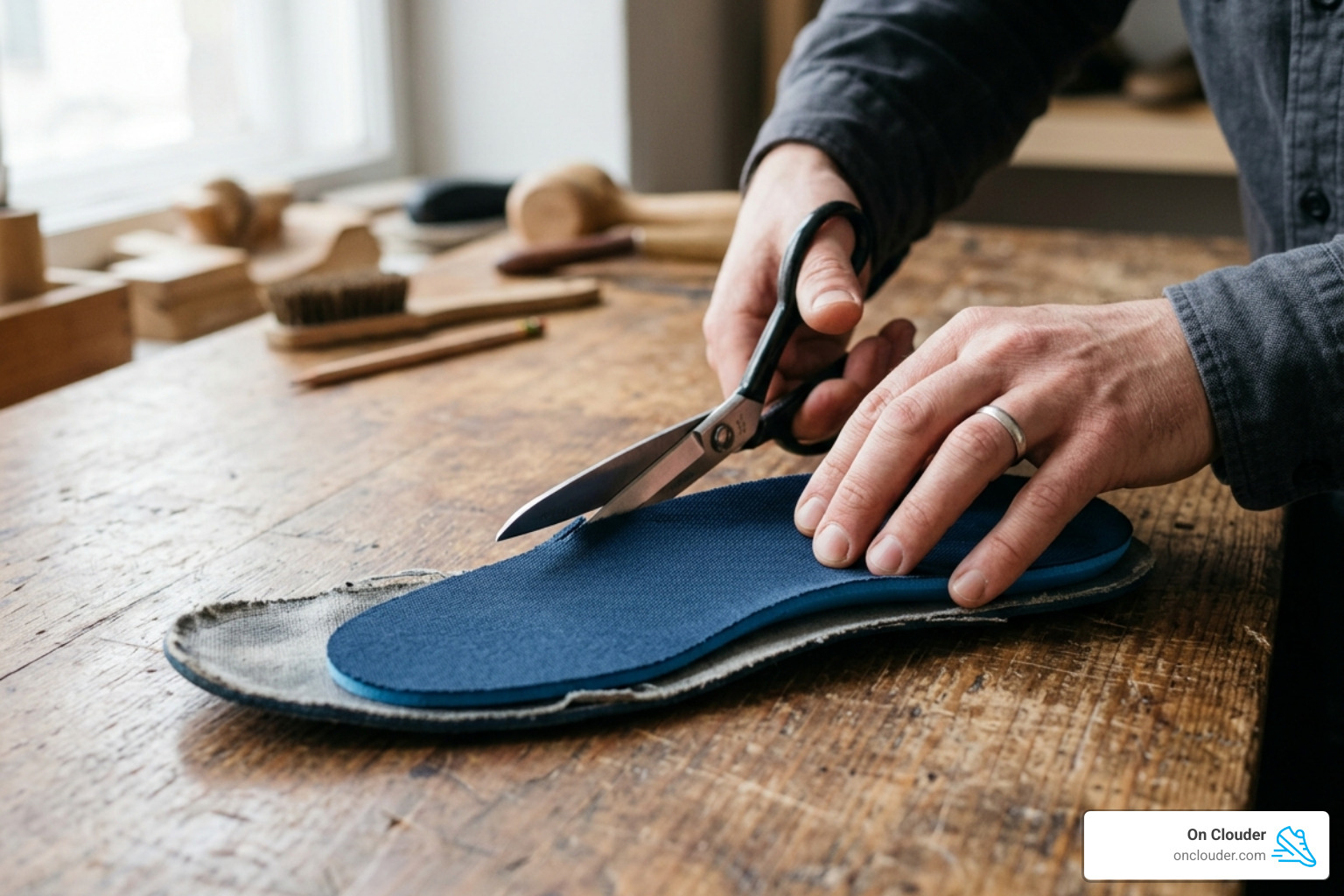
- Pro Tip: Do not just guess. Remove the original factory insole from your shoe, place it on top of the new insole, and trace the outline with a pen. Trim along that line with sharp scissors. This ensures the insole doesn’t bunch up at the toes, which can cause blisters.
3. Maintenance and Care
Because these insoles are designed to trap and move sweat, they need to be cleaned.
- Washing: Most microfiber and foam insoles, like the HAIX models, can be hand-washed or machine-washed in cool water (around 86°F). Avoid high heat, as it can de-laminate the layers or shrink the foam.
- Drying: Never put your insoles in the dryer. Air dry them completely before putting them back in your shoes.
- Replacement: Even the best moisture-wicking technology wears out. For daily wearers, we recommend a 6-month replacement cycle. If you notice the cushioning has flattened or the odor-control features aren’t working as well, it’s time for a new pair.
Frequently Asked Questions about Sweat Control
Can moisture-wicking insoles help with plantar fasciitis?
Yes! While their primary job is sweat management, many of these products are also designed as high-quality orthotics. For example, The Complete Guide To Buying Orthotic Insoles For Flat Feet explains how rigid arch support and deep heel cups stabilize the plantar fascia ligament. By keeping the foot dry, these insoles also prevent the foot from sliding, which reduces the micro-tears that lead to heel pain.
Do these insoles require a break-in period?
Generally, yes. If you are switching from a soft, standard foam insert to a semi-rigid support insole (like Superfeet), give your feet about a week to adjust. Start by wearing them for a few hours a day and gradually increase the time. Some premium options are even heat-moldable, allowing you to achieve a custom fit in your own oven for immediate comfort.
What is the difference between moisture-wicking and standard cushioned insoles?
Standard insoles are usually just a slab of EVA foam or gel. While they provide “squish,” they often trap heat and moisture against the skin. Moisture wicking shoe insoles prioritize breathability and active transport. They use technical fabrics and chemical neutralizers (like charcoal) to maintain a dry environment, whereas standard inserts just provide a soft surface.
If you find your feet “rolling” inward despite the extra cushion, you might need to Stop The Roll With The Best Overpronation Insoles.
Conclusion
At On Clouder, we believe that the right footwear setup can change your entire day. Dealing with sweaty, smelly feet isn’t just a cosmetic issue — it’s a comfort and health priority. By upgrading to a high-quality pair of moisture wicking shoe insoles, you’re investing in blister prevention, odor control, and long-term joint support.
Whether you choose the high-tech impact protection of Enertor or the tried-and-true odor fighting of Dr. Scholl’s, make sure to replace them regularly to keep your feet in peak condition. Ready to find the perfect match for your specific shoe type? Step Up Your Game With The Best Arch Support Inserts and see our latest performance rankings.