

Why the Best Running Shoes for Plantar Fasciitis Women Can Make or Break Your Run
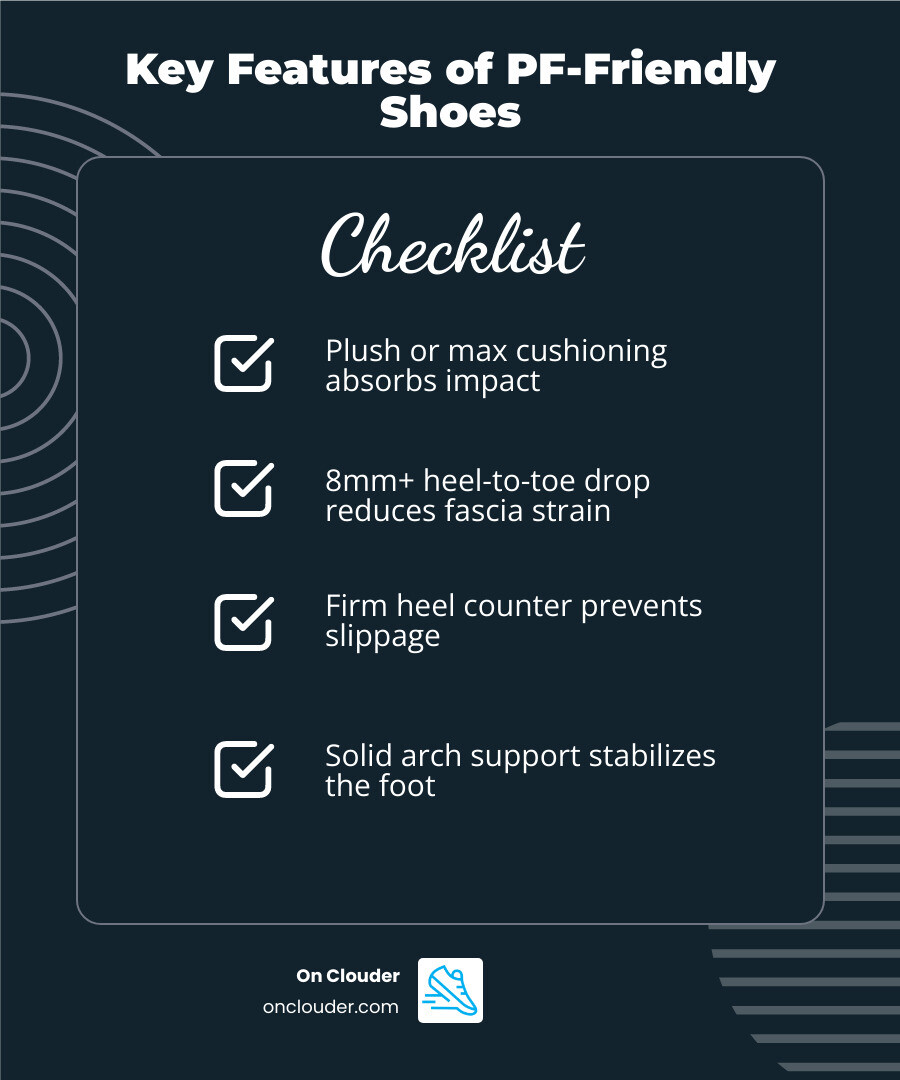
The best running shoes for plantar fasciitis women share a few key traits: plush or max cushioning, a heel-to-toe drop of 8mm or more, a firm heel counter, and solid arch support.
Here are the top picks at a glance:
| Shoe | Cushioning | Drop | Best For |
|---|---|---|---|
| Saucony Guide 18 | Plush | 6mm | Stability & daily training |
| Saucony Ride 18 | Plush | 8mm | Versatile daily runs |
| Saucony Triumph 22 | Max | 10mm | Long runs & recovery |
| Hoka Bondi 9 | Max | 5mm | Slow-pace comfort |
| Brooks Adrenaline GTS | Plush | 12mm | Overpronation support |
| Asics Gel Kayano 32 | Plush | 10mm | Stability & cushion |
| Nike Pegasus 41 | Moderate | 10mm | Everyday road running |
Plantar fasciitis is an inflammation of the plantar fascia — the fibrous band that runs along the bottom of your foot, connecting your heel to your toes. When that tissue gets stressed repeatedly, it becomes painful. Really painful.
The telltale sign? That sharp, stabbing heel pain when you take your first steps in the morning.
For women runners, the risk is real. Repetitive impact during training puts constant load on the plantar fascia. Without the right shoe, every stride can make the condition worse — not better.
According to research, plantar fasciitis affects 1 in every 10 adults. And for runners logging daily miles, the wrong footwear is often what tips the scale from manageable soreness to a full-blown injury.
I’m Faisal S. Chughtai, a footwear expert who has spent years helping runners find the right fit for conditions like plantar fasciitis — and this guide on the best running shoes for plantar fasciitis women pulls from that hands-on experience. Let’s break down exactly what to look for and which models are worth your money.
Understanding the Best Running Shoes for Plantar Fasciitis Women
When we talk about the best running shoes for plantar fasciitis women, we aren’t just looking for “soft” shoes. In fact, shoes that are too soft can sometimes make the problem worse by allowing the foot to wobble and strain the fascia further. We need a specific cocktail of biomechanical features to keep the foot happy.
The Anatomy of a PF-Friendly Shoe
To alleviate heel pain, a shoe needs to act as a supportive cradle. Here are the non-negotiables:
- Arch Support: This is the most critical factor. Proper support prevents the arch from collapsing excessively, which reduces the tension on the plantar fascia. If you have high arches or very flat feet, this becomes even more vital. You can learn more about this in our Best Arch Support Shoes Insoles Guide.
- Firm Heel Counter: The heel counter is the plastic structure in the back of the shoe. It should be stiff enough that you can’t easily fold it down. A firm counter stabilizes the calcaneus (heel bone), preventing the “fat pad” under your heel from shifting and losing its natural shock-absorbing power.
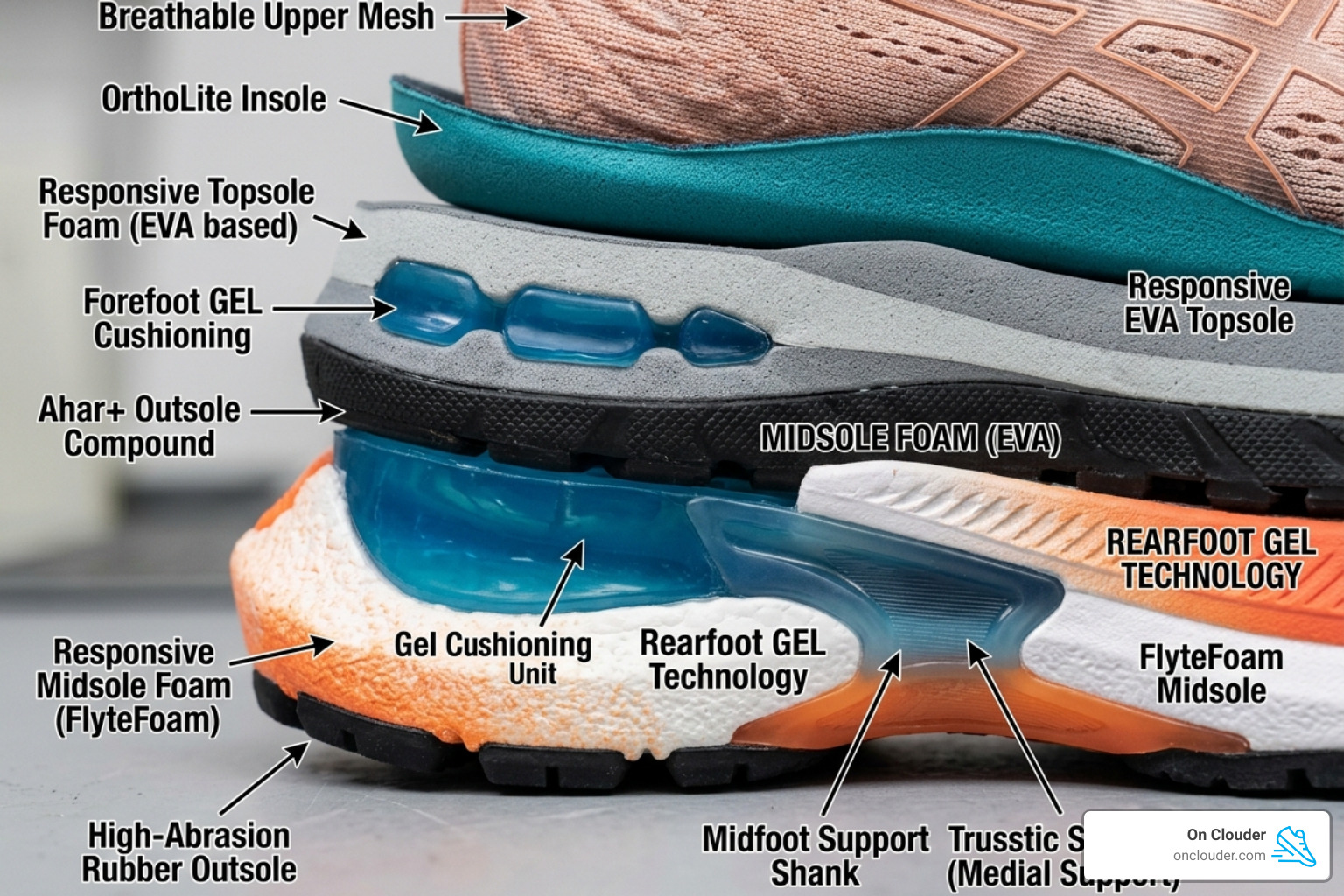
- Torsional Rigidity: If you grab a shoe and try to twist it like a wet towel, it shouldn’t give in easily. High torsional rigidity (ideally rated 3-5 out of 5) prevents the midfoot from flexing in ways that pull on the inflamed fascia.
- Stack Height and Shock Absorption: While stack height (the amount of foam between you and the ground) is important, the quality of that foam matters more. Lab tests suggest looking for shoes with a shock absorption (SA) score of at least 115 to truly dampen the impact of road running.
Top-Rated Models: Best Running Shoes for Plantar Fasciitis Women
Finding the right pair often feels like a “Goldilocks” mission—not too hard, not too soft, but just right. For many women, the search starts with brands that have a long history of medical-grade engineering.
Saucony is a heavy hitter in this category. They offer 78 different women’s models suitable for plantar fasciitis, which is actually more than they offer for men! This shows a clear commitment to women’s specific foot shapes, which tend to be narrower in the heel and wider in the forefoot.
One standout is the Women’s Guide 18. Priced at $140, it features “Hollow-Tech” stability that supports the foot without feeling like a heavy brick. It’s available in 13 colors and—crucially—comes in wide and extra-wide options. If your feet swell during runs or you naturally have a wider midfoot, these widths are a lifesaver.
Another legend is the Brooks Adrenaline GTS. This shoe has been around for over 20 years for a reason. It uses “GuideRails” technology, which acts like bowling alley bumpers for your feet, keeping your stride aligned and reducing the rotational stress that can tug on the plantar fascia. It’s a top choice for those dealing with overpronation. For a deeper dive into how these work, check out An Essential Guide to Best Overpronation Shoes or explore our tag/plantar-fasciitis/ for more specific reviews.
Maximum Cushioning for Best Running Shoes for Plantar Fasciitis Women
If your heel pain feels like you’re walking on glass, you might need “Max” cushioning. These shoes are designed to provide the highest level of impact protection possible.
- Hoka Bondi 9: The Bondi is the king of max cushion. With a massive heel stack (often over 40mm) and a rockered sole, it helps “roll” you through your stride, which reduces the need for your foot to flex at the toes—a movement that can aggravate the fascia.
- Saucony Triumph 22: This shoe uses PWRRUN+ foam, which is incredibly plush but has a “bouncy” energy return. It’s perfect for long recovery runs where you want to protect your heels but don’t want to feel like you’re running in sand.
When choosing between these two, consider your pace. The Bondi is fantastic for slow, steady miles, while the Triumph handles a variety of speeds a bit better. For more comparisons, see our tag/hoka-vs-brooks-for-plantar-fasciitis/ section.
Daily Trainers and Versatile Options for Best Running Shoes for Plantar Fasciitis Women
Not every runner wants a massive platform. For those who prefer a more traditional feel but still need protection, daily trainers are the way to go.
The Nike Pegasus 41 is a versatile workhorse. The newest version features ReactX foam, which is 13% more responsive than previous versions. With a 10mm heel-to-toe drop and dual Air Zoom units (one in the heel and one in the forefoot), it provides a “snappy” feel while keeping the heel well-padded. It’s a great neutral option that works for a variety of foot types.
The Saucony Ride 18 is another reliable choice. It’s slightly firmer than the Triumph but offers a very stable, balanced ride. It uses FORMFIT technology, which is a 360-degree approach to fit that ensures the shoe molds to your foot shape, providing a secure cradle for the arch. If you have flat feet and need a neutral but stable trainer, you might also find our guide on No Arch No Problem Best Running Shoes for Flat Feet helpful.
How to Select the Right Fit, Width, and Cushioning
Selecting the best running shoes for plantar fasciitis women requires looking past the color and price tag. You need to understand your own foot’s “stats.”
Cushioning Levels Explained
| Level | Feel | Best For |
|---|---|---|
| Light | Firm & Responsive | Speedwork, racing (use with caution for PF) |
| Plush | Soft but Supportive | Daily training, high-mileage weeks |
| Max | Maximum Impact Protection | Severe PF, recovery days, heavy strikers |
The Importance of Width
Many women make the mistake of buying shoes that are too narrow. When your foot is squeezed, the muscles and fascia cannot function correctly. Saucony, for example, offers 120 products in medium width but also 27 in wide and 4 in extra-wide. If you feel pressure on the sides of your feet or if your toes feel “bunched,” try a wide width. A wider base also provides a more stable platform, which reduces the side-to-side wobble that irritates the heel.
FORMFIT and Heel-to-Toe Drop
Look for features like FORMFIT, which uses higher sidewalls to “hug” the foot. This creates a natural arch support system.
The heel-to-toe drop (the height difference between the heel and the forefoot) is also a major factor. For plantar fasciitis, we generally recommend a drop of 8mm to 12mm. A higher drop takes some of the strain off the Achilles tendon and the calf muscles, which are directly connected to the plantar fascia. If your calves are tight, they pull on your heel, which pulls on your fascia. A higher drop gives that whole system a bit of “slack.”
If you’re balancing high arches and flat feet (yes, it’s possible!), check out our Best Shoes for Flat Feet High Arches 2026 Guide.
Expert Strategies for Managing Heel Pain While Training
Even the best running shoes for plantar fasciitis women are only part of the solution. To truly get back to pain-free running, you need a holistic approach.
- Load Management: Don’t follow the “no pain, no gain” mantra here. If your pain is a 5/10 or higher, it’s time to rest or cross-train. A good rule of thumb is the 10% rule: never increase your weekly mileage by more than 10%.
- Strength Training: Focus on your “intrinsic” foot muscles. Exercises like towel scrunches (using your toes to pull a towel toward you) and single-leg calf raises are gold. Stronger feet can support the arch better, taking the load off the fascia.
- The Knee-to-Wall Test: This measures your ankle flexibility. If you can’t touch your knee to a wall with your toes 10cm away (while keeping your heel down), your tight ankles might be the root cause of your PF.
- Morning Routine: Before you even get out of bed, flex your feet up and down and use your hands to gently stretch your toes back toward your shin. This “wakes up” the fascia before you put weight on it.
For more tips on staying injury-free, visit our tag/plantar-fasciitis-prevention/ or tag/foot-pain-relief/ collections.
Frequently Asked Questions About Women’s Plantar Fasciitis Shoes
Can women run with active plantar fasciitis symptoms?
The short answer is: it depends. If the pain “warms up” and disappears after the first mile, you can usually continue light training. However, if the pain persists throughout the run or gets worse the next morning, you are likely doing more damage. Always prioritize PT exercises and avoid using painkillers to “mask” the pain before a run. Check out tag/prevent-foot-pain/ for more advice on running through injuries.
Should I choose stability or neutral shoes for heel pain?
This depends on your gait. If you overpronate (your feet roll inward), a stability shoe like the Asics Gel Kayano or Brooks Adrenaline is essential to prevent the arch from collapsing and stretching the fascia. If you have a neutral gait or high arches, a supportive neutral shoe like the Saucony Triumph or Nike Pegasus is often better. For help deciding, read The 5 Best Running Shoes for Flat Feet Overpronation 2026 Guide.
What is the ideal heel-to-toe drop for plantar fascia relief?
Most experts and podiatrists recommend a drop of at least 8mm. This higher heel reduces the amount of “dorsiflexion” (the foot bending upward) required during your stride, which directly reduces the tension on the plantar fascia. Zero-drop shoes (where the heel and toe are at the same height) can actually aggravate PF if you aren’t used to them, as they put maximum stretch on the calf and heel. Explore more about tag/heel-pain/ to see how drop affects different conditions.
Conclusion
At On Clouder, we know that the right pair of shoes is the difference between a morning run that clears your head and one that leaves you limping. Finding the best running shoes for plantar fasciitis women isn’t just about cushioning—it’s about finding the right blend of stability, width, and drop for your unique biomechanics.
Whether you choose the max-cushioned comfort of the Hoka Bondi or the reliable stability of the Saucony Guide, consistency is key. Pair your new shoes with strength training and proper recovery to keep your feet moving for years to come. For more professional advice, don’t miss our 10 Expert Foot Health Tips and the Best Shoes to Prevent Pain. Happy running!

One thought on “Top Running Shoes for Women That Actually Go the Distance”
Comments are closed.