

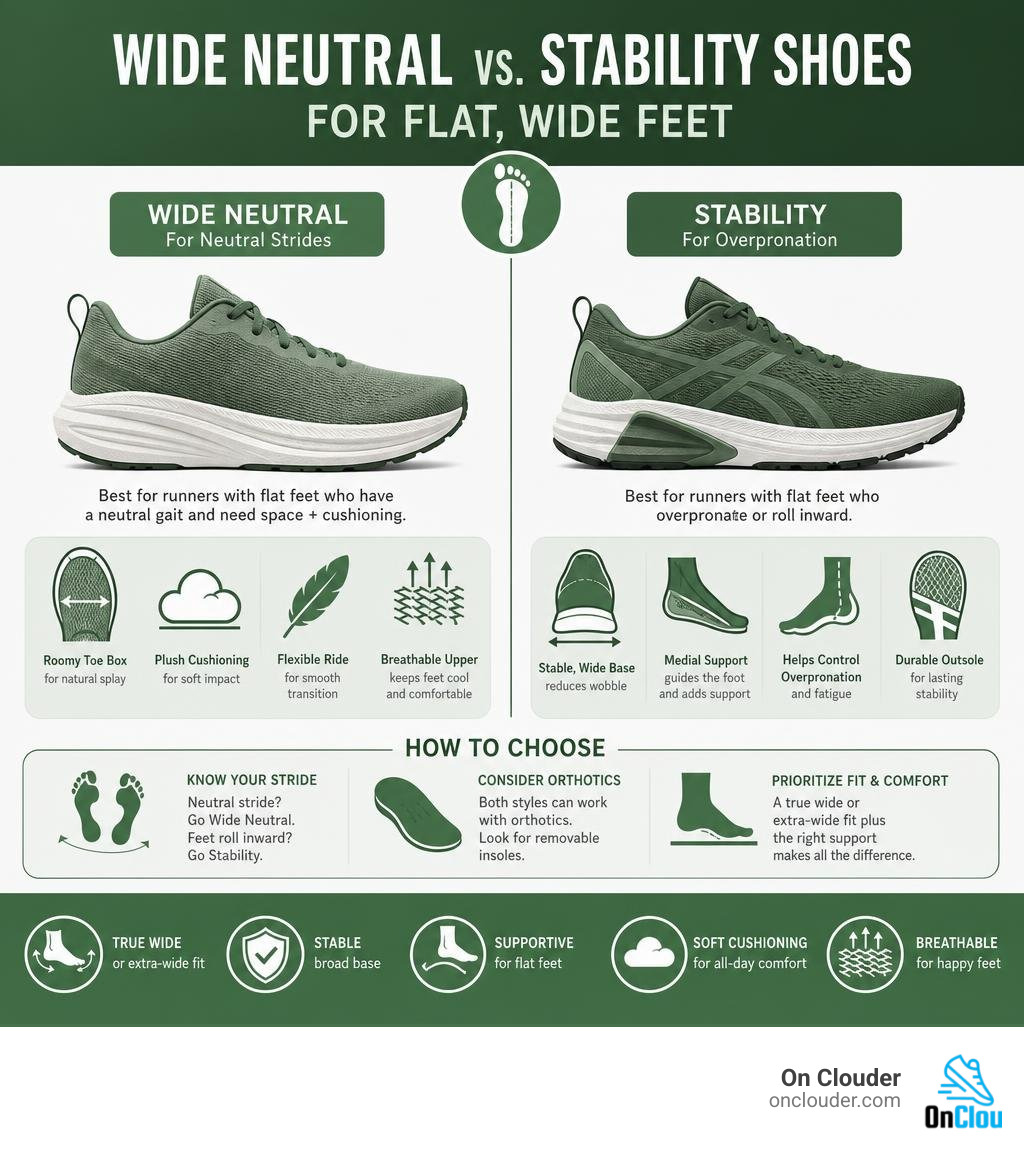
The best running shoes for flat and wide feet combine a roomy toe box with the right amount of support for your stride. If your feet roll inward noticeably as you run, start with a wide stability shoe such as the ASICS GEL-KAYANO 32 Wide or Karhu Mestari Run 2.0 HiVo. If your stride is neutral and you mainly need space plus soft impact protection, a cushioned wide or extra-wide neutral shoe such as the ASICS GEL-NIMBUS 27 Wide can be a better match.
Look for these essentials:
- A true wide or extra-wide fit, not simply a stretchy standard-width upper
- A stable, broad base to reduce side-to-side wobble
- Guidance or arch-cradling support if flat feet cause overpronation
- Soft, durable cushioning for road miles, walking, and long shifts
- Breathable engineered mesh or flexible knit that allows forefoot splay without pinching
Flat feet do not automatically require a rigid motion-control shoe. The better choice depends on comfort, foot roll, and whether you use orthotics. A wide neutral trainer may work well for a runner with flat arches and a neutral gait, while a stability model can help when inward rolling leads to arch fatigue, ankle strain, or uneven wear.
I’m Faisal S. Chughtai, and I help runners and active professionals sort through comfort, cushioning, and fit concerns to find the best running shoes for flat and wide feet. In this guide, I’ll break down the leading wide-fit options and show you how to choose support without sacrificing comfort.
Simple best running shoes for flat and wide feet word guide:
Essential Guide to Support and Cushioning for Broad, Low Arches
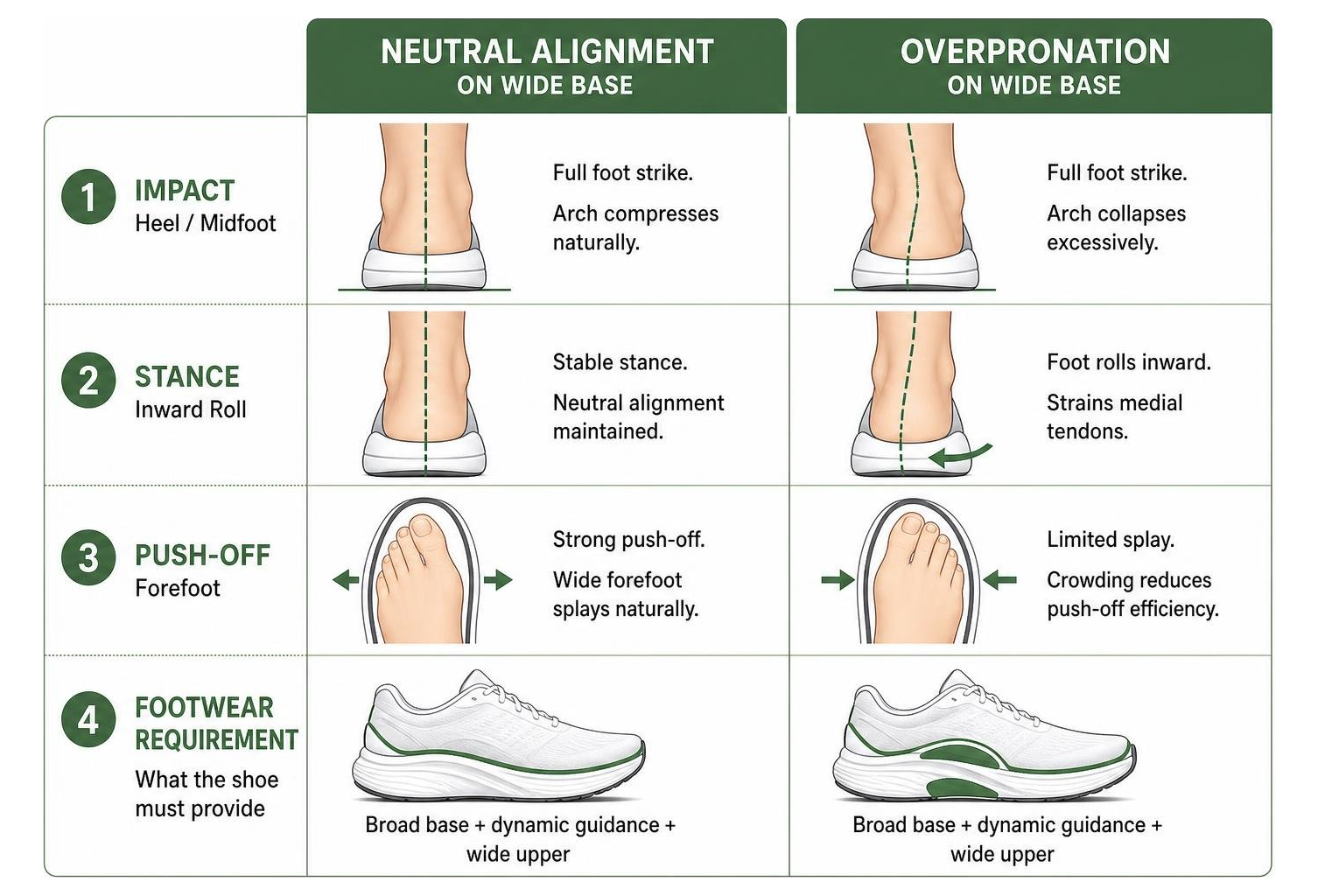
Running with low or collapsed arches puts unique biomechanical demands on your footwear. When an arch lacks vertical height, the entire midfoot makes direct contact with the ground during the stance phase of your gait. This natural structural flattening often triggers overpronation—where the foot rolls excessively inward toward the medial edge—placing strain on the plantar fascia, posterior tibial tendon, and knees. For an in-depth look at managing this movement, check out The Ultimate Guide to Running with Overpronation.
When you combine flat arches with wide feet, the challenges multiply. A broad foot structure requires higher upper volume and a wider platform to prevent your midfoot and metatarsals from spilling over the sides of the sole. Standard shoes force wide feet into narrow channels, creating harsh pressure points, blister-inducing friction, and pinched nerves.
To accommodate both traits comfortably, runners need footwear that respects natural anatomy through wide toe box shoes and responsive midsole geometries. Modern footwear design has evolved past the days of stiff plastic medial posts. Today’s daily trainers use broader sole geometries, sculpted sidewalls, and adaptive guidance setups that support flat arches without feeling like wooden planks beneath your feet.
Key Features of the Best Running Shoes for Flat and Wide Feet
When shopping for running shoes engineered for low arches and broad dimensions, evaluate these core structural elements:
- Broad Midsole Platform: A wide base provides inherent physical stability. If the waist (the middle portion) of the shoe outsole is carved out too aggressively, a flat foot loses ground contact and collapses inwards.
- Dynamic Guidance Systems: Modern support shoes utilize geometric design, wider flare bases, and adaptive foams that cradle the medial side only when your foot fatigues and rolls.
- Adaptive Upper Fabrics: Look for multi-directional engineered mesh or structured jacquard knits. These materials offer targeted midfoot lockdown while stretching gently across wide metatarsal heads to eliminate pinching.
- Reinforced Arch Cradles: Extended tongue wings and internal midfoot gussets secure the foot from the top, preventing the arch from sliding laterally inside the shoe.
For further details on how structural support interacts with everyday comfort, read Flat Feet Running 101 Everything You Need to Know About Support and Comfort.
Stability Trainers vs Neutral Wide Options
One common misconception is that every runner with flat feet must buy heavy stability trainers. That is simply not true. Biomechanics vary, and understanding your gait determines whether you need structured support or wide neutral cushioning:
- Stability Running Shoes: Ideal for runners whose low arches actively collapse upon weight-bearing, causing excessive internal tibial rotation and arch fatigue. Modern stability running shoes balance corrective guidance with lightweight, plush cushioning.
- Wide Neutral Running Shoes: Perfect for runners with anatomically flat feet who maintain a rigid, neutral alignment throughout their gait cycle. They are also the top pick for runners who use custom orthotics, as neutral trainers provide an uninhibited, flat platform that accepts prescribed inserts seamlessly.
If you are exploring whether neutral footwear is right for your profile, explore No Arch No Problem Best Running Shoes for Flat Feet.
Top Models: Best Running Shoes for Flat and Wide Feet Reviewed
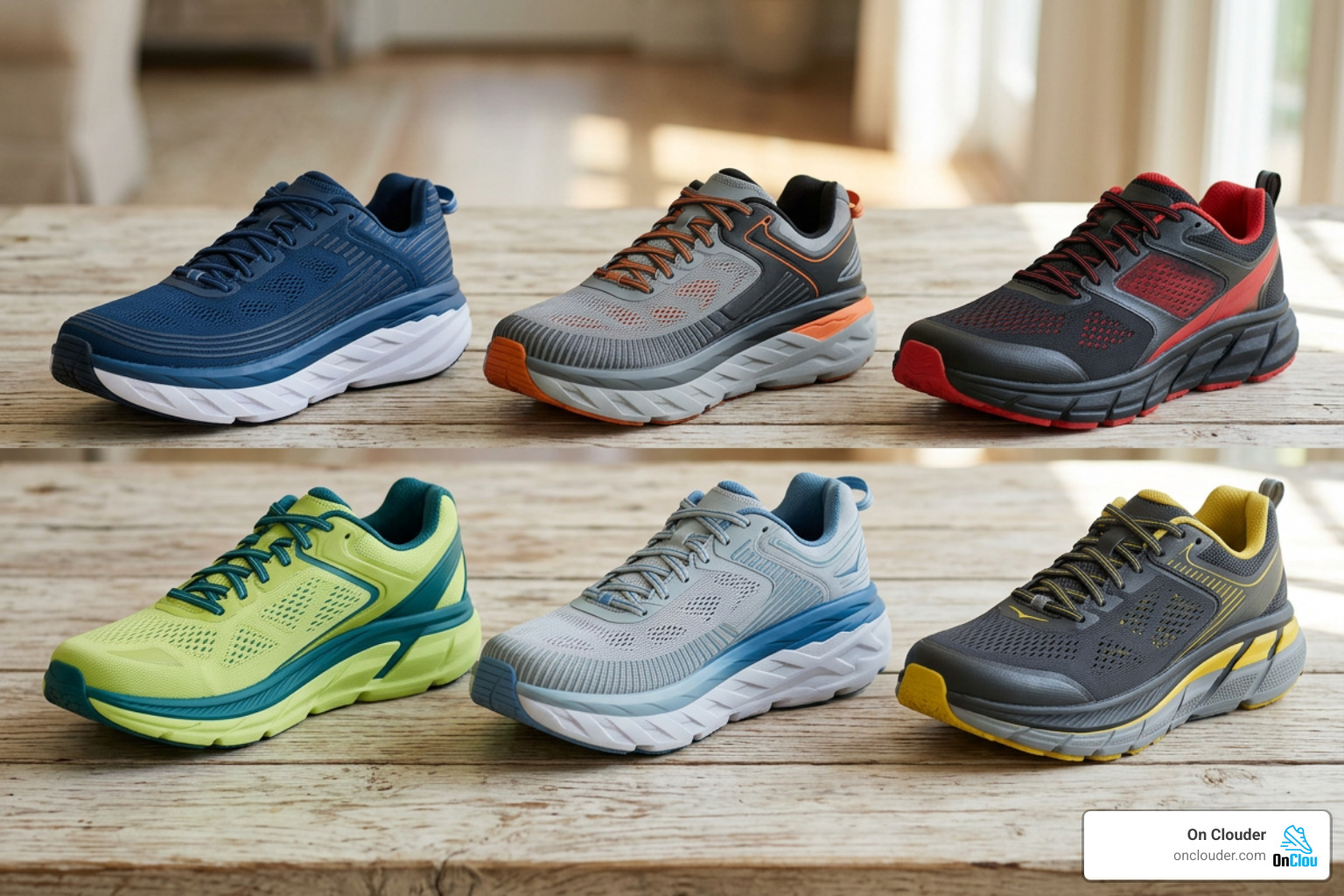
To help you find the perfect pair, we field-tested several leading road running shoes that offer dedicated wide sizing and anatomical platforms. Here is how our top picks compare at a glance:
| Model | Weight (Men’s 9/10) | Heel Drop | Width Options | Support Category | Key Technology |
|---|---|---|---|---|---|
| ASICS GEL-KAYANO 32 Wide | 300 g / 10.58 oz | 8 mm | Wide (2E), Extra Wide (4E) | High Stability | 4D GUIDANCE SYSTEM, FF BLAST PLUS |
| Karhu Mestari Run 2.0 HiVo | 340 g / 12.0 oz | 8 mm | HiVo (Wide Fit) | Guided / Max Cushion | Encapsulated Fulcrum, 3D Scan Geometry |
| ASICS GEL-NIMBUS 27 Wide | 305 g / 10.8 oz | 8 mm | Wide (2E), Extra Wide (4E) | Neutral / High Cushion | PureGEL, FF BLAST PLUS ECO |
| ASICS GEL-EXCITE 11 Extra Wide | 290 g / 10.2 oz | 8 mm | Extra Wide (4E) | Neutral / Versatile Value | AMPLIFOAM PLUS, PureGEL |
How We Evaluated the Best Running Shoes for Flat and Wide Feet
Our testing team evaluated each model across hundreds of road miles, prioritizing the demands of broad feet with low arches. We looked at:
- Midfoot Volume and Pressure Relief: Ensuring that wider feet do not feel restricted across the instep or choked at the arch.
- Arch Support Integration: Assessing whether the shoe supports tired arches dynamically without creating painful upward hot spots.
- Toe Box Splay: Measuring forefoot freedom to confirm toes can spread naturally during toe-off.
- Heel Lockdown: Verifying that wider platforms hold the rearfoot securely without heel slippage.
You can browse our full catalog of tested footwear on our dedicated best running shoes for flat feet index.
ASICS GEL-KAYANO 32 Wide – Best Overall Stability
The ASICS GEL-KAYANO 32 Wide stands as a premier stability trainer engineered specifically for runners needing structured arch support without excess bulk.
- Weight: 300 g / 10.58 oz
- Heel Drop: 8 mm
- Fit: Dedicated Wide (2E) and Extra Wide (4E) platforms
- Midsole: FF BLAST PLUS cushioning paired with PureGEL technology
The centerpiece of the Kayano 32 is its adaptive 4D GUIDANCE SYSTEM. Instead of forcing your foot into place with hard, unforgiving plastic posts, this system utilizes a softer, high-rebound foam pod placed directly beneath the medial arch. As your foot rolls inward during late-run fatigue, the foam compresses and springs back, guiding your foot smoothly forward.
ASICS also added a reinforced tongue wing along the medial arch that locks the midfoot down securely. Wide-footed runners who suffer from overpronation will appreciate how the shoe combines structured containment with deep shock absorption. It easily ranks among our favorite overpronation shoes for high-mileage training.
Karhu Mestari Run 2.0 HiVo – Best Anatomical Wide Fit
The Karhu Men’s Mestari Run 2.0 HiVo is an exceptional max-cushioned daily trainer designed specifically around the natural shapes of wider feet.
- Weight: 340 g / 12.0 oz (US size 10)
- Heel Drop: 8 mm (34 mm heel / 26 mm forefoot)
- Fit: HiVo (High Volume wide fit)
- Upper: IdealKnit breathable mesh
Karhu developed its HiVo last using anatomical data gathered from more than 4 million 3D foot scans. The result is an upper that provides generous vertical and horizontal volume across the forefoot and midfoot without creating excess heel looseness.
Underfoot, the Mestari Run 2.0 utilizes Karhu’s proprietary encapsulated Fulcrum technology. This system cradles the foot and uses a mechanical rocker geometry to gently guide the foot through early to mid-stage overpronation. Its AeroFoam NITRO midsole provides soft, responsive landings that protect flat arches across recovery runs and long-distance road sessions.
ASICS GEL-NIMBUS 27 Wide and Extra Wide – Best Maximum Cushion
For runners with flat arches who do not need heavy stability control, the GEL-NIMBUS 27 WIDE delivers an ultra-plush, cloud-like ride.
- Weight: 305 g / 10.8 oz
- Heel Drop: 8 mm
- Fit: Available in Wide (2E) and Extra Wide (4E)
- Cushioning: PureGEL heel insert with FF BLAST PLUS ECO foam
The Nimbus 27 uses an eco-conscious midsole featuring roughly 24% bio-based material that absorbs harsh road impact effortlessly. Its broad, flat underfoot footprint provides natural inherent stability, making it an excellent platform for runners who wear custom orthotics or have neutral flat-foot mechanics.
The engineered jacquard mesh upper delivers gentle stretch across the forefoot, eliminating side blowouts and outer-toe friction. To discover more options with roomy forefoot dimensions, read our Best Wide Toe Box Running Shoes Guide.
ASICS GEL-EXCITE 11 Extra Wide – Best Budget-Friendly Option
Finding high-quality wide footwear on a budget can be difficult, but the ASICS GEL-EXCITE 11 Extra Wide offers outstanding value without sacrificing build quality.
- Weight: 290 g / 10.2 oz
- Heel Drop: 8 mm
- Fit: Extra Wide (4E)
- Midsole: AMPLIFOAM PLUS foam with PureGEL rearfoot cushioning
The GEL-EXCITE 11 Extra Wide features an accessible, lightweight package with a forgiving 4E fit that accommodates broad feet comfortably. Its AMPLIFOAM PLUS midsole stack is soft yet durable, offering versatile support for daily jogs, treadmill sessions, and gym cross-training.
While it lacks the specialized dynamic guidance mechanics found in premium stability models like the Kayano, its broad base and breathable mesh upper make it an exceptional starting shoe. If you are just getting into road running, check out our Best Running Shoes for Beginners 2026 Update for additional entry-level insights.
How to Measure Foot Width and Avoid Sizing Mistakes
Buying running shoes for flat and wide feet often leads to sizing errors. The most common mistake runners make is buying standard medium (D width) shoes a half or full size larger just to gain extra width. While this gives your toes a little extra breathing room, it shifts the shoe’s built-in arch support further forward, throws off the flex points of the shoe, and leads to heel slipping.
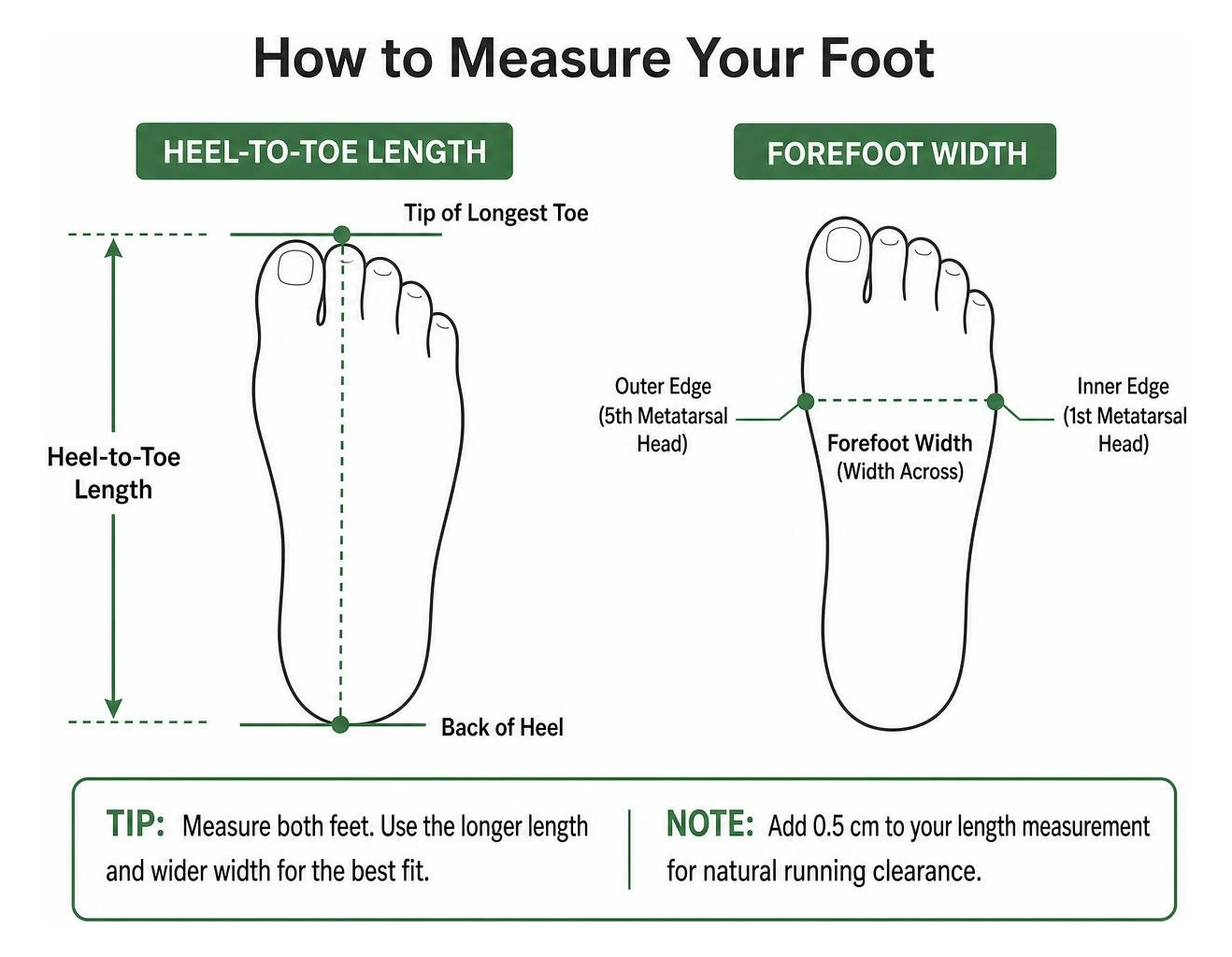
Follow this simple guide to measure your feet accurately at home:
- Measure at the End of the Day: Your feet naturally expand, flatten, and swell throughout the day and during runs.
- Trace Your Foot: Place a blank sheet of paper against a flat wall. Stand on it with your heel lightly touching the wall.
- Mark the Key Points: Trace the widest part of your forefoot across the first and fifth metatarsal heads, then mark the tip of your longest toe.
- Calculate Length and Width: Measure the length in centimeters, add 0.5 cm for natural running clearance, and check against the manufacturer width charts.
For more in-depth sizing strategies, head over to our Beginners Guide to Wide Fit Running Shoes.
Frequently Asked Questions About Running Shoes for Low Arches
Can runners with flat feet wear neutral shoes if they choose a wide width?
Yes. Having flat feet does not guarantee that you overpronate. If your ankles and knees stay neutrally aligned during foot strike, a cushioned, broad-base neutral shoe (like the GEL-NIMBUS 27 Wide) is completely appropriate. Neutral wide shoes are also the best option if you use rigid custom orthotic inserts made by a podiatrist.
What is the difference between Wide (2E) and Extra Wide (4E) running shoes?
A Wide (2E) shoe increases upper volume and sole platform width by approximately 5 to 8 millimeters across the forefoot and midfoot compared to standard medium (D) sizing. An Extra Wide (4E) shoe adds even more circumference and girth, preventing excessive lateral overhang for runners with exceptionally broad or high-volume feet.
Do premium running shoes offer real advantages over budget models for flat feet?
Yes. While budget shoes like the GEL-EXCITE 11 provide solid comfort for lighter running, premium models offer superior foam resilience and specialized motion guidance. High-tier models use advanced foams that resist premature compression under the heavy medial loading typical of flat arches.
Conclusion
Finding the right running shoes when you have low arches and broad feet comes down to balancing structural width with stride-specific support. For maximum stability and adaptive pronation control, the ASICS GEL-KAYANO 32 Wide remains the gold standard. If you want big-data anatomical shaping and smooth forward guidance, the Karhu Mestari Run 2.0 HiVo is a standout choice. Meanwhile, neutral runners and orthotic users will love the plush step-in feel of the ASICS GEL-NIMBUS 27 Wide.
Prioritize true wide sizing, look for broad platform bases, and give your toes the room they need to splay naturally. For more tips on keeping your feet healthy on roads and all-day feet-on-the-ground routines, explore our guide on how to support flat feet on daily runs and long shifts.
