When Every Step Hurts: Finding the Best Running Shoes for Plantar Fasciitis Men

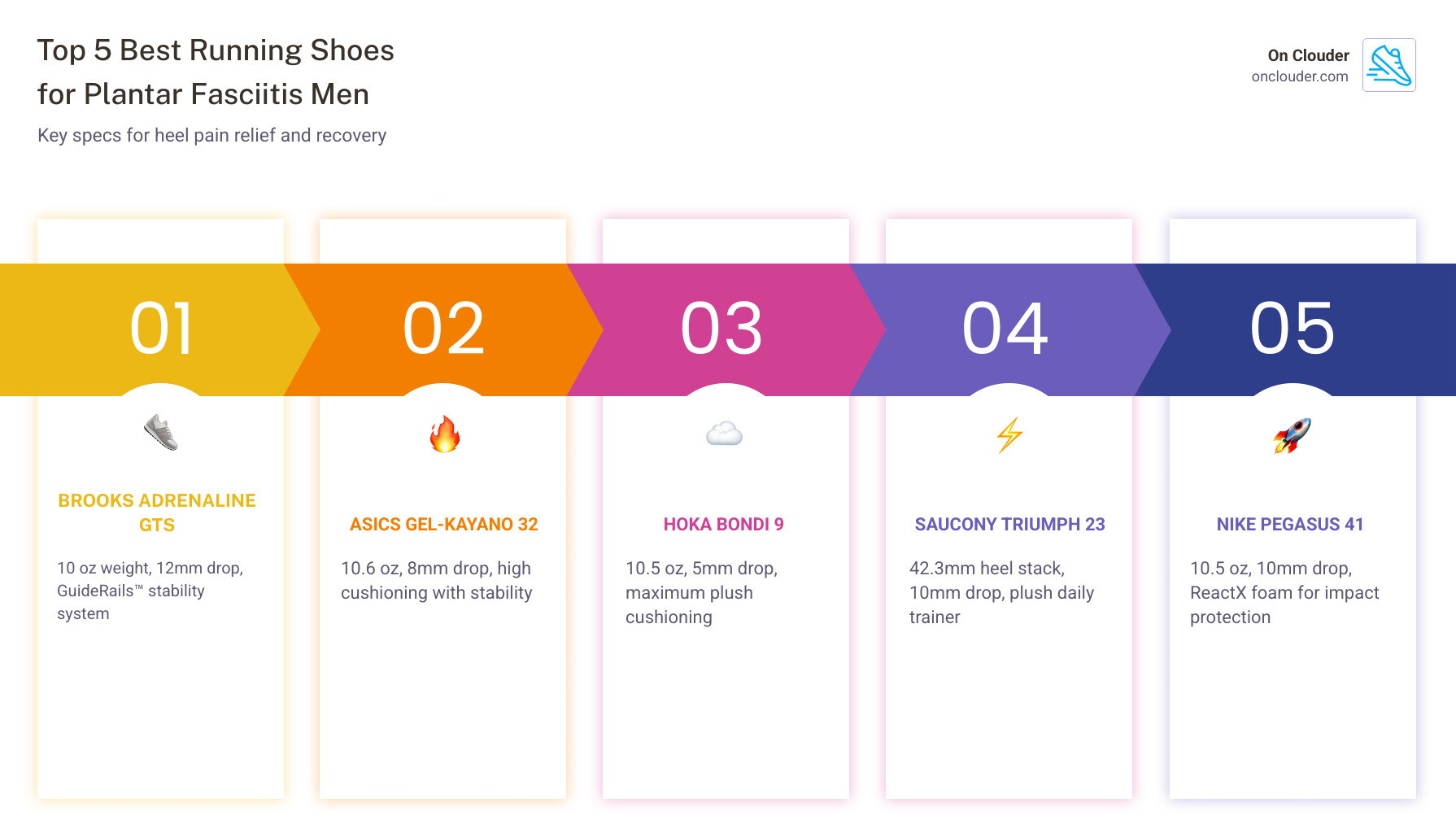
The best running shoes for plantar fasciitis men can make the difference between a painful limp and a confident stride. Here are the top picks at a glance:
- Brooks Adrenaline GTS – 10 oz, 12mm drop, GuideRails stability
- ASICS Gel-Kayano 32 – 10.6 oz, 8mm drop, high cushion stability
- Hoka Bondi 9 – 10.5 oz, 5mm drop, maximum cushioning
- Saucony Triumph 23 – 42.3mm heel stack, 10mm drop, plush daily trainer
- Nike Pegasus 41 – 10.5 oz, 10mm drop, ReactX foam cushioning
Plantar fasciitis affects 1 in every 10 adults. For male runners, that stabbing pain in the heel — worst right after waking up or after a long run — can derail training fast.
The plantar fascia is a thick band of tissue that runs along the bottom of your foot, connecting your heel bone to your toes. When it gets overloaded from repetitive impact, it becomes inflamed. And once it flares up, even walking to the kitchen in the morning feels brutal.
The good news? The right pair of running shoes can significantly reduce strain on the plantar fascia, support recovery, and get you back to logging miles without dread.
This guide breaks down exactly what to look for — heel drop, stack height, stability features, width options — and which shoes actually deliver relief for men dealing with this condition.
I’m Faisal S. Chughtai, a footwear expert who has spent years helping runners find the right shoe for their specific needs, including identifying the best running shoes for plantar fasciitis men across a wide range of foot types and training styles. Let’s get into what actually works — so you can stop guessing and start running pain-free.
Understanding Plantar Fasciitis in Male Runners
If you’ve ever felt like someone was driving a tent stake into your heel the moment you stepped out of bed, you’ve met the beast known as plantar fasciitis. For us men, especially those of us who enjoy the rhythmic pounding of the pavement, this condition isn’t just a nuisance; it’s a training disruptor.
The plantar fascia is a resilient, fibrous band of tissue, but it isn’t invincible. According to the Mayo Clinic, it acts as a shock absorber and supports the arch of the foot. However, repetitive stress—whether from ramping up mileage too quickly, running on hard surfaces, or wearing worn-out shoes—can cause tiny tears in this tissue. The result is inflammation and that classic heel pain that makes every step a chore.
Men often face unique biomechanical challenges. We tend to be heavier than female runners on average, which puts more cumulative load on the foot with every strike. Furthermore, tight calf muscles—a common trait in many male athletes—pull on the Achilles tendon, which in turn tightens the plantar fascia. It’s a chain reaction that leads straight to discomfort. Understanding this “why” is the first step toward finding foot pain relief.
Key Features of the Best Running Shoes for Plantar Fasciitis Men
When you’re hunting for the best running shoes for plantar fasciitis men, you can’t just pick the flashiest pair on the shelf. You need a shoe that acts as a structural partner for your foot. We look for a “holy trinity” of features: arch support, cushioning, and stability.
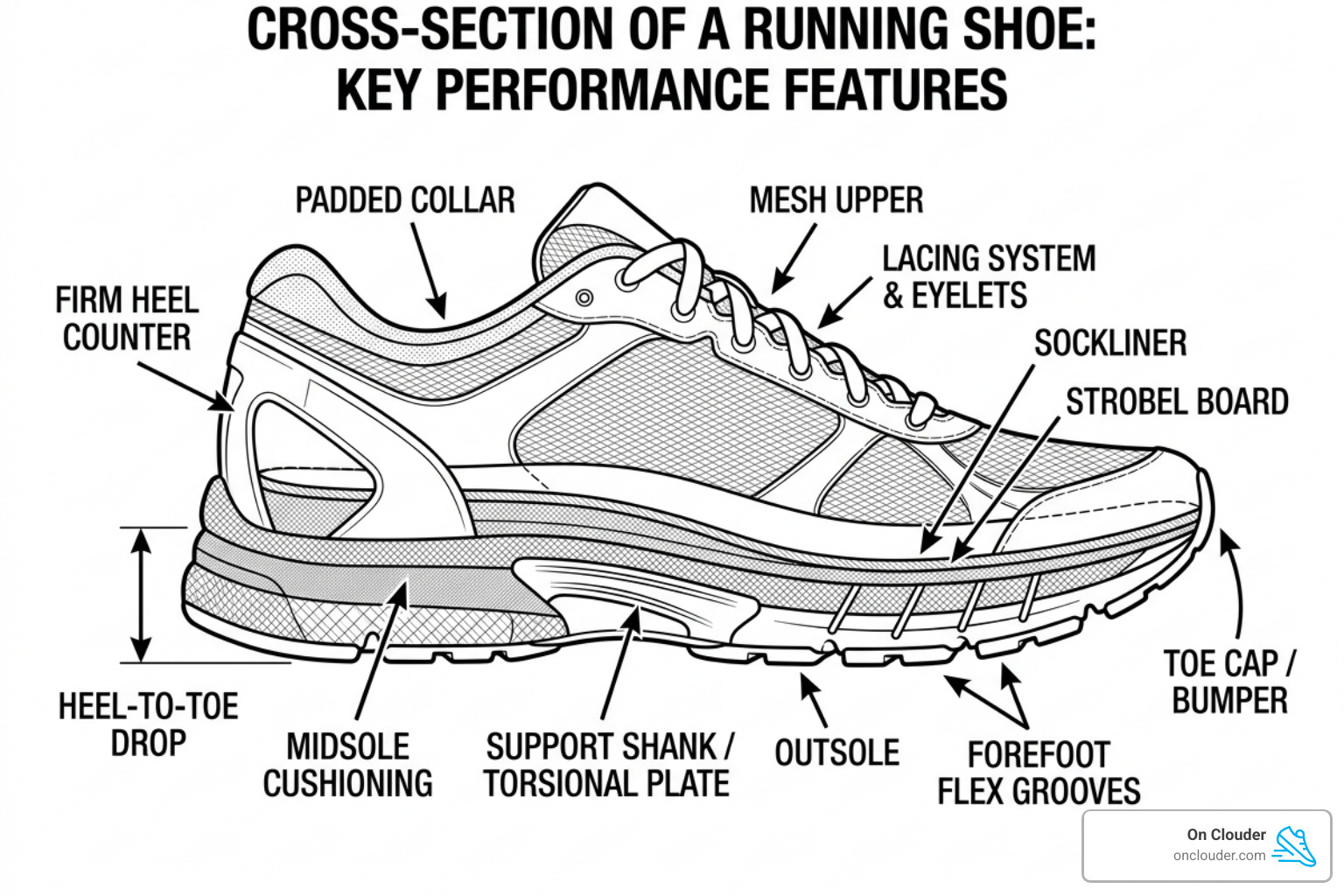
- Arch Support: This is non-negotiable. Proper support helps distribute your weight evenly across the foot, preventing the plantar fascia from overstretching.
- Torsional Rigidity: If you can twist your shoe like a pretzel, put it back. A shoe that is rigid through the midfoot prevents the arch from collapsing excessively during your stride.
- Firm Heel Counter: A stiff, deep heel cup locks your foot in place, preventing the side-to-side “shimmer” that can aggravate an inflamed fascia.
- Cushioned Midsole: You want something that absorbs impact before your heel has to. However, there’s a balance—too soft, and your foot sinks, which can actually increase the strain.
Finding these features is the core of plantar fasciitis relief.
Optimal Heel Drop and Stack Height for Men’s Best Running Shoes for Plantar Fasciitis
Heel drop (the difference in height between the heel and the forefoot) is a critical metric. For men with heel pain, a higher drop—typically 8mm to 12mm—is often the sweet spot. A higher drop shifts some of the load away from the heel and Achilles and moves it toward the forefoot and calves.
Stack height refers to how much material is between your foot and the ground. While “maximalist” shoes with high stack heights (often over 35mm) offer incredible shock absorption, they must be paired with a stable base. The goal is to dampen the “thud” of each step without making you feel like you’re balancing on marshmallows.
Stability vs. Neutral Support for Pronation
Should you go with a stability shoe or a neutral one? It depends on your “pronation”—how your foot rolls inward when you land.
- Overpronation: If your arches collapse and your ankles roll inward, you likely need a stability shoe. This is common for those with flat feet. Stability shoes use tech like “GuideRails” or firmer foam on the inner side to keep your foot aligned.
- Neutral/Supination: If you have high arches or a neutral gait, a neutral shoe with plenty of arch contouring is usually better.
If you’re unsure, check out our 5 Best Running Shoes For Flat Feet Overpronation 2026 Guide to see where you land on the spectrum.
Top Recommendations: Best Running Shoes for Plantar Fasciitis Men
We’ve analyzed the data and tested the miles. Here is how the heavy hitters stack up for men seeking the best running shoes for plantar fasciitis men.
| Shoe Model | Weight (Men’s) | Heel Drop | Key Benefit |
|---|---|---|---|
| Brooks Adrenaline GTS | 10.0 oz | 12 mm | Industry-leading stability |
| ASICS Gel-Kayano 32 | 10.6 oz | 8 mm | Adaptive support & max cushion |
| Hoka Bondi 9 | 10.5 oz | 5 mm | Ultimate shock absorption |
| Saucony Triumph 23 | 10.2 oz | 10 mm | Plush, neutral comfort |
| Nike Pegasus 41 | 10.5 oz | 10 mm | Responsive daily trainer |
The Hoka vs Brooks for plantar fasciitis debate is a classic one. Brooks offers a more traditional feel with a high drop, while Hoka provides that “rocker” geometry that rolls you through your stride, reducing the need for your foot to flex painfully at the arch.
Max Cushion Options for Heavy Heel Strikers
For the “big and tall” runners or those who land heavily on their heels, maximum cushioning is a lifesaver.
The ASICS Gel-Kayano 32 is a standout here. With its 4D Guidance System and FF Blast+ foam, it provides a “luxe” feel that doesn’t sacrifice stability. Similarly, the Nike Pegasus 41 has introduced ReactX foam, which is 13% more responsive than previous versions, giving you a springy ride that protects the heel. These foams are designed to compress and return energy, ensuring that your foot doesn’t take the full brunt of the road.
Wide and Extra-Wide Fits for Men’s Best Running Shoes for Plantar Fasciitis
Let’s talk about “the squeeze.” Many men have wider feet, and cramming a wide foot into a narrow shoe is a recipe for plantar fascia disaster. If your toes can’t splay naturally, your arch can’t function correctly.
Shoes like the ASICS Gel-Kayano 32 (Extra Wide) and the Saucony Guide 18 are fantastic because they offer genuine width without losing the structural integrity of the shoe. A wide toebox allows your foot to settle naturally, reducing pressure on the forefoot and indirectly easing the tension on the plantar fascia. For more on this, see our Best Shoes For Flat Feet High Arches 2026 Guide or browse our flat feet shoes tag.
Beyond Footwear: Managing Pain and Recovery
While the best running shoes for plantar fasciitis men are your primary tool, they aren’t a “magic wand.” Recovery requires a multi-faceted approach.
- Stretching: Don’t just stretch your feet; stretch your calves! Tight calves are a major contributor to plantar fasciitis.
- Orthotics: Sometimes, the factory insole isn’t enough. Adding a medical-grade orthotic can provide the extra arch rigidity you might need during a flare-up.
- Ice Therapy: After a run, roll your foot over a frozen water bottle. It provides a massage and reduces inflammation simultaneously.
- Weight Management: Reducing the load on your feet can significantly speed up recovery from foot pain.
Frequently Asked Questions about Men’s Running Shoes for PF
Can I still run with plantar fasciitis?
Yes, but with caution. If the pain is a 3/10 or less and disappears after you warm up, you can usually continue light training. However, if the pain causes you to change your gait (limping), stop immediately. You’ll only create new injuries elsewhere.
Should I choose a soft or firm midsole for heel pain?
Medium-firm is usually best. While “squishy” shoes feel great for thirty seconds in the store, they often lack the support needed for long-term plantar fasciitis relief. You want cushioning that absorbs shock but a midsole that doesn’t collapse under pressure.
How do I know if I need stability or neutral shoes?
Look at the bottom of your old running shoes. If the inner side of the sole is more worn down, you likely overpronate and need stability shoes. If the wear is even or on the outer edge, neutral shoes are likely your best bet.
Conclusion
At On Clouder, we know that being sidelined by foot pain is frustrating. Finding the best running shoes for plantar fasciitis men is about more than just comfort—it’s about reclaiming your freedom to move. Whether you choose the rock-solid stability of the Brooks Adrenaline or the maximalist cloud-like feel of the Hoka Bondi, the right shoe is out there.
Remember to listen to your body, rotate your shoes to avoid repetitive stress, and don’t skip the recovery work. For more deep dives into supportive footwear, check out our 5 Best Running Shoes For Flat Feet Overpronation 2026 Guide. Your journey back to pain-free miles starts with the first step—make sure it’s a supported one!