
Power Up Your Ski Day with High-Performance Heated Footbeds
How to Choose the Best Heated Insoles for Ski Boots
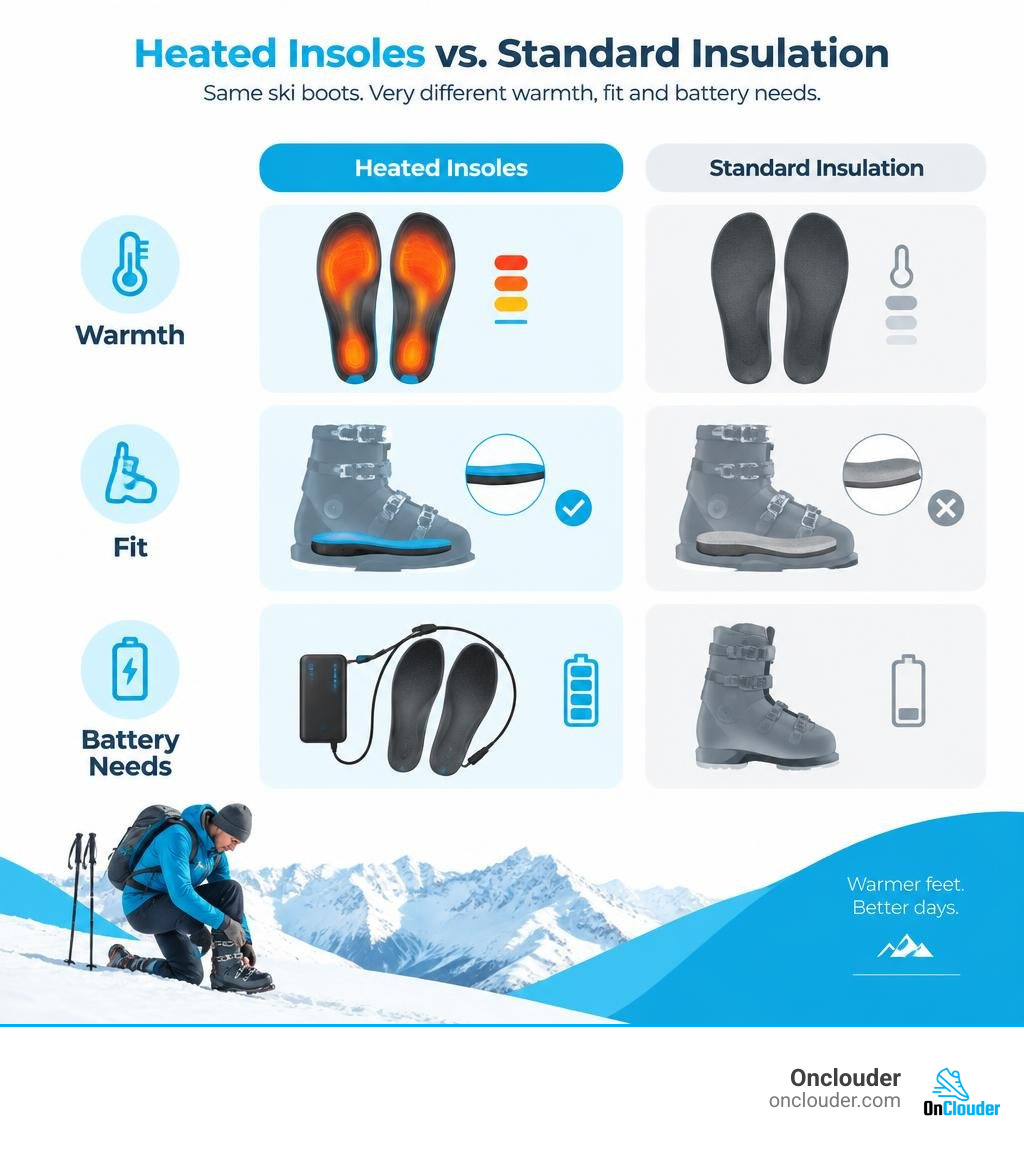
The best heated insoles for ski boots keep your toes warm without changing how your boots fit. Look for a thin footbed that matches your boot’s shape, heat settings you can adjust, and a battery that lasts for your ski day. Check where the battery attaches and how the cable runs before you buy.
Heated insoles add warmth when insulation alone is not enough, especially on cold lifts. But fit comes first: a footbed that crowds your toes can make your feet less comfortable, even when the heat is on.
Key Features of the Best Heated Insoles for Ski Boots
Finding the sweet spot between thermal output and precision ski control requires paying close attention to technical components. High-performance alpine setups leave little room for excess bulk, meaning an electric footbed must perform its job discreetly beneath your socks.
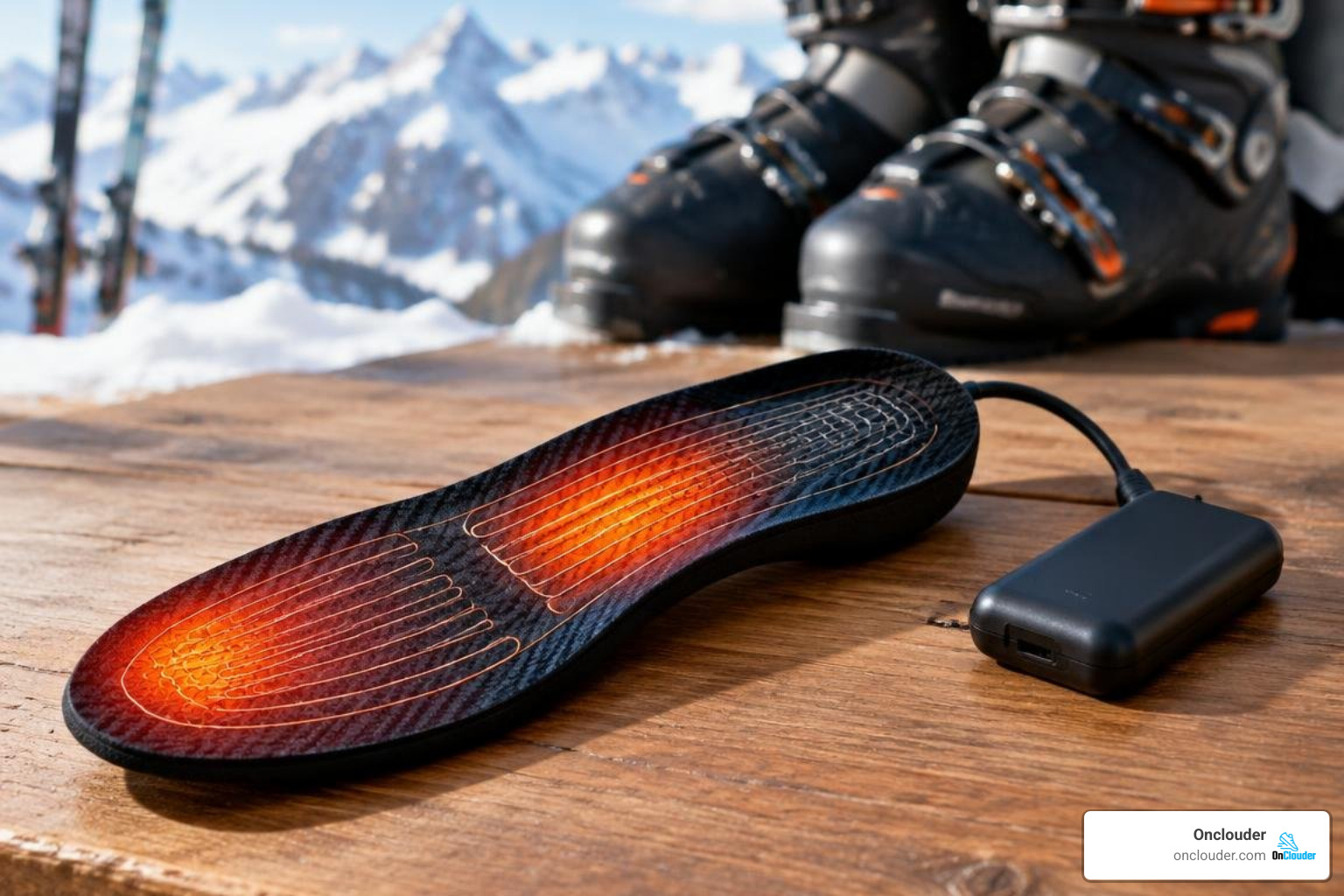
When evaluating modern units, the heating elements themselves make a massive difference. Traditional metallic wiring has largely been replaced by flexible, ultra-fine carbon-fiber filaments. These threads flex naturally under foot pressure without cracking, providing even heat distribution across the metatarsal area and toe box where peripheral circulation drops first.
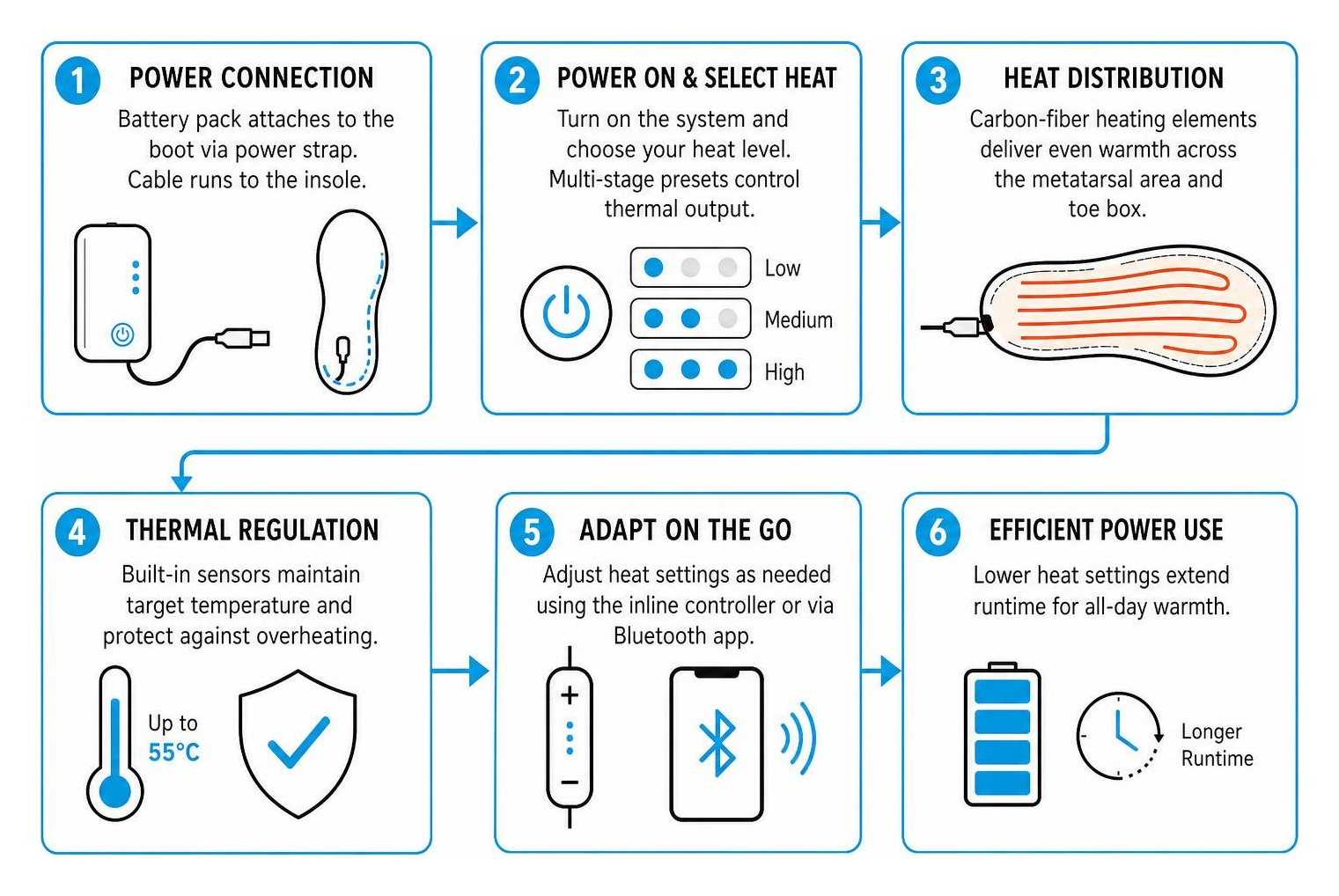
Rechargeable power packs determine how long you can carve turns before the cold creeps in. Premium setups, such as the Lenz Heat Sole lithium pack, provide lightweight lithium-ion power packs designed to snap onto the power strap or rear spine of your boot shell. Premium lithium cells maintain steady voltage output even when the thermometer plunges well below freezing.
Thermal Output, Battery Life, and Overheating Protection
Runtime longevity varies significantly depending on the ambient air temperature, shell construction, and selected heat level. Modern setups offer multi-stage temperature presets ranging from mild baseline warmth (around 37°C to 40°C) to intense bursts of heat (reaching up to 50°C or 54°C).
For continuous operation, low heat settings are typically engineered to keep your feet at baseline body temperature for an entire day on the slopes—some premium battery packs can run for up to 22 hours under ideal low-output conditions. Meanwhile, products like the ultra-thin Nordic Heat carbon-fiber insoles can draw from compact 5V power banks, yielding 6 to 9 hours of warmth from a standard 5000 mAh pack, or up to 12 hours with higher-capacity batteries.
Safety engineering is paramount when pairing high-output electrical circuits with snug plastic shells. Reliable heated footbeds feature built-in overheating protection systems with automated thermal cutoffs (often kicking in around 55°C) to protect against burns or heat rash. Modern units increasingly offer smartphone integration via Bluetooth, allowing you to fine-tune thermal output directly from your mobile device on the chairlift without wrestling with your ski pants.
Anatomical Support, Materials, and Moisture Management
Warmth means little if your arches collapse under high edge angles. Top-tier footbeds use multi-density EVA foam and pre-shaped 3D contours that cradle the heel and stabilize the longitudinal arch. Models like the Therm-ic Set Heat 3D footbeds merge supportive anatomical footbed geometry with integrated heating lines, maintaining balanced pressure distribution from edge to edge.
Breathability and moisture management are equally critical. As your feet warm up, sweat generation naturally increases; if that moisture remains trapped, evaporative cooling will accelerate heat loss the moment the heating element cycles down. The best options incorporate abrasion-resistant, moisture-wicking top covers that transport perspiration away from the skin, pairing durable synthetic layers with breathable foams to keep your feet dry and warm inside rigid ski boot liners.
Fitting and Integrating Active Warmth in Alpine Boots
Integrating electronic accessories into a stiff polyurethane ski boot shell requires careful attention to volume management. A millimeter of extra thickness can alter your stance, reduce blood circulation, or cause painful shin bang.
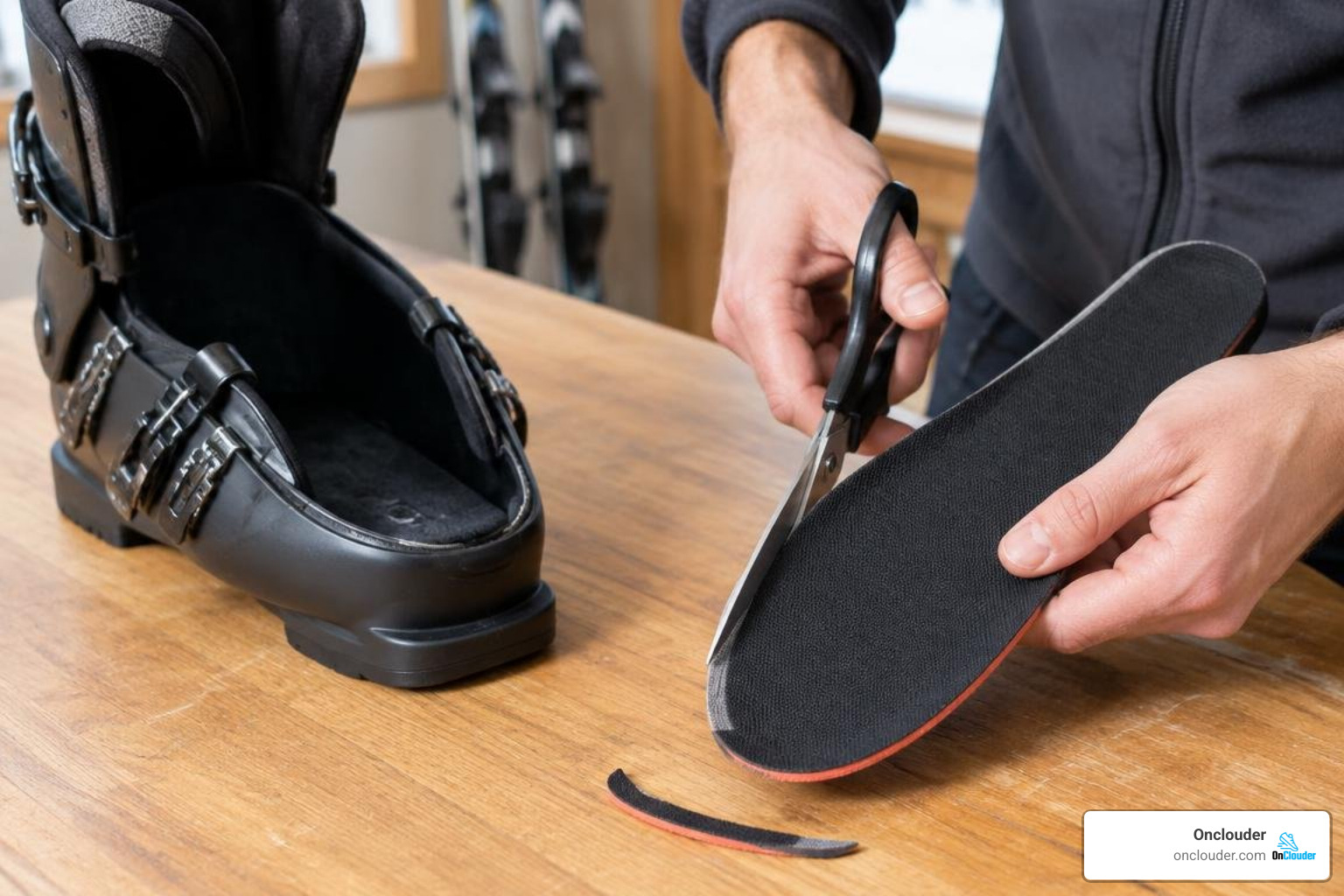
Fit and Shell Compatibility: Trimming the Best Heated Insoles for Ski Boots
Proper installation begins by evaluating insole thickness. Most high-performance electric footbeds feature an ultra-thin 3mm forefoot profile, preventing toe-cramping and allowing seamless replacement of stock factory footbeds.
To achieve an exact match:
- Remove the stock footbed from your ski boot liner.
- Align the heel cups of both footbeds.
- Trace the contour of your original footbed onto the underside of the new heated footbed.
- Carefully trim around the toe perimeter with sharp scissors, staying strictly within marked trim lines to avoid severing internal carbon-fiber heating traces.
- Thread the low-profile ribbon cable through the designated rear or heel slit in the liner, routing it up the calf to the power pack.
Whether you ski in a wide-last comfort boot or a narrow 98mm race shell, custom trimming ensures the footbed sits flat without bunching or shifting during aggressive carving.
Environmental Footprint and Durability of Active Footwear
Electronic winter sports accessories carry an environmental footprint tied to battery production, polymers, and electronic components. High-end manufacturers address this by engineering modular systems where components can be replaced individually:
- Battery Lifecycles: High-grade lithium-ion packs maintain capacity across hundreds of charge-discharge cycles. Fully charging your power packs before summer storage prevents deep-discharge cell degradation and extends battery life for multiple seasons.
- Sustainable Polymers: Brands are shifting toward recycled polyester top fabrics, bio-based EVA footbed bases, and RoHS-compliant electronics.
- Modular Design: Independent battery packs, universal cables, and replaceable footbeds mean you can upgrade or replace individual worn-out parts instead of discarding the entire warming system.
Heated Insoles vs. Alternative Foot-Warming Solutions
Choosing the best active warming solution depends on your fit requirements, budget, and how often you ski.
| Feature / Metric | Heated Insoles | Heated Socks | Integrated Heated Boot Liners |
|---|---|---|---|
| Primary Heat Location | Direct plantar/underfoot metatarsal zone | 360° toe wrap & forefoot surrounding heat | Toe box & surrounding liner insulation |
| Boot Fit Impact | Replaces stock insole (zero to minimal added volume) | Fits like a standard midweight/heavyweight ski sock | Built directly into custom-molded liner volume |
| Versatility & Transfer | Easily swapped between ski, snowboard, and winter boots | Wearable across multiple sports and everyday winter footwear | Fixed to a single pair of specific ski boots |
| Maintenance & Care | Wipe clean; avoid full submersion of wiring | Machine washable (gentle cycle in laundry bag) | Liner air-drying and exterior wipe-down |
| Average Battery Life | 6 to 22 hours (depending on battery pack capacity) | 7 to 16 hours (depending on powerpack and setting) | 6 to 18 hours (integrated or clip-on battery) |
Heated Socks and Built-In Boot Liners
While heated footbeds deliver targeted heat from beneath the sole, alternative solutions offer distinct benefits. Advanced heated socks, such as the R-Heat merino heated ski socks, weave invisible heating filaments directly into a premium wool-synthetic blend for seamless warmth without added hardware inside the boot.
Similarly, high-performance compression options like Sidas Ski Heat compression socks provide 15–20 mmHg of graduated compression to support blood circulation while delivering targeted forefoot heating.
For an all-in-one package, factory-integrated solutions like the Rossignol Pure Pro Heat ski boots integrate heating elements and Bluetooth temperature controls directly into thermoformable merino wool liners, eliminating loose cables and separate insole swaps.
Frequently Asked Questions About Ski Boot Heating
How Long Do Battery Packs Last in Extreme Sub-Zero Conditions?
Sub-zero ambient temperatures cause lithium-ion chemistries to discharge faster due to increased internal resistance. However, because battery packs clip onto the boot collar—where they benefit from radiant leg warmth under snow pants—they remain insulated from direct wind chill. On low-to-medium settings, high-capacity lithium packs reliably deliver 6 to 12 hours of warmth, while operating continuously on maximum output reduces runtime to roughly 3 to 5 hours.
Can Heated Footbeds Damage Custom Ski Boot Liners?
No, provided they are installed correctly and operated within manufacturer specifications. High-quality heated footbeds incorporate automated thermal cutoffs that prevent temperatures from exceeding 50°C to 55°C. Thermo-moldable custom liners require temperatures above 80°C to 90°C to deform, making active footbed warmth completely safe for custom cork, foam, or EVA liners.
Which Are the Best Heated Insoles for Ski Boots with Tight Race Fits?
For low-volume race shells (93mm to 96mm lasts), select an ultra-thin 3mm flat profile insole with carbon-fiber heating elements. Flat, low-profile designs ensure your stance alignment, heel hold, and canting angles remain completely unchanged while delivering warmth to your metatarsal zone.
Conclusion
Active foot warming has transformed cold-weather skiing from an endurance test into a comfortable, high-performance experience. Finding the right heated footbed comes down to balancing battery life, anatomical support, and boot-volume compatibility. By selecting a system with precise temperature controls and a low-profile fit, you can keep your circulation steady and ski from first chair to last run.
For everyday footwear and non-heated winter support, check out the best arch support insoles for total foot relief to keep your feet comfortable in every season.