

Why Your Feet Are Suffering at Work — And What to Do About It
Flat feet work shoe insoles are one of the most effective ways to stop foot pain, reduce fatigue, and protect your joints during long shifts — whether you’re a nurse, construction worker, or warehouse professional.
Here are the top picks at a glance:
| Insole | Best For | Price Range |
|---|---|---|
| PowerStep Pinnacle Low | Best Overall | ~$35–$45 |
| VALSOLE Heavy Duty | Heavy Boots & High Load | ~$30–$40 |
| Superfeet Work Slim-Fit | Athletic Work Shoes | ~$44 |
| SoleBrace WorkFit | All-Day Standing | ~$40–$50 |
| Spenco RX Comfort | Budget Pick | ~$20–$30 |
| Superfeet All-Purpose Medium Arch | Plantar Fasciitis | ~$60 |
| Fulton Athletic | Nurses & Teachers | ~$40–$50 |
| SoleAid Work III | High-Rebound Performance | ~$36 |
| Upstep Custom Orthotics | Custom Fit | ~$249+ |
| Spenco Total Support Low | Wide Work Footwear | ~$25–$35 |
If your feet hurt by midday, you’re not alone.
88% of workers report heel or arch pain after 8+ hours on their feet. And 77% say that soreness doesn’t stay at work — it bleeds into their mood, sleep, and home life.
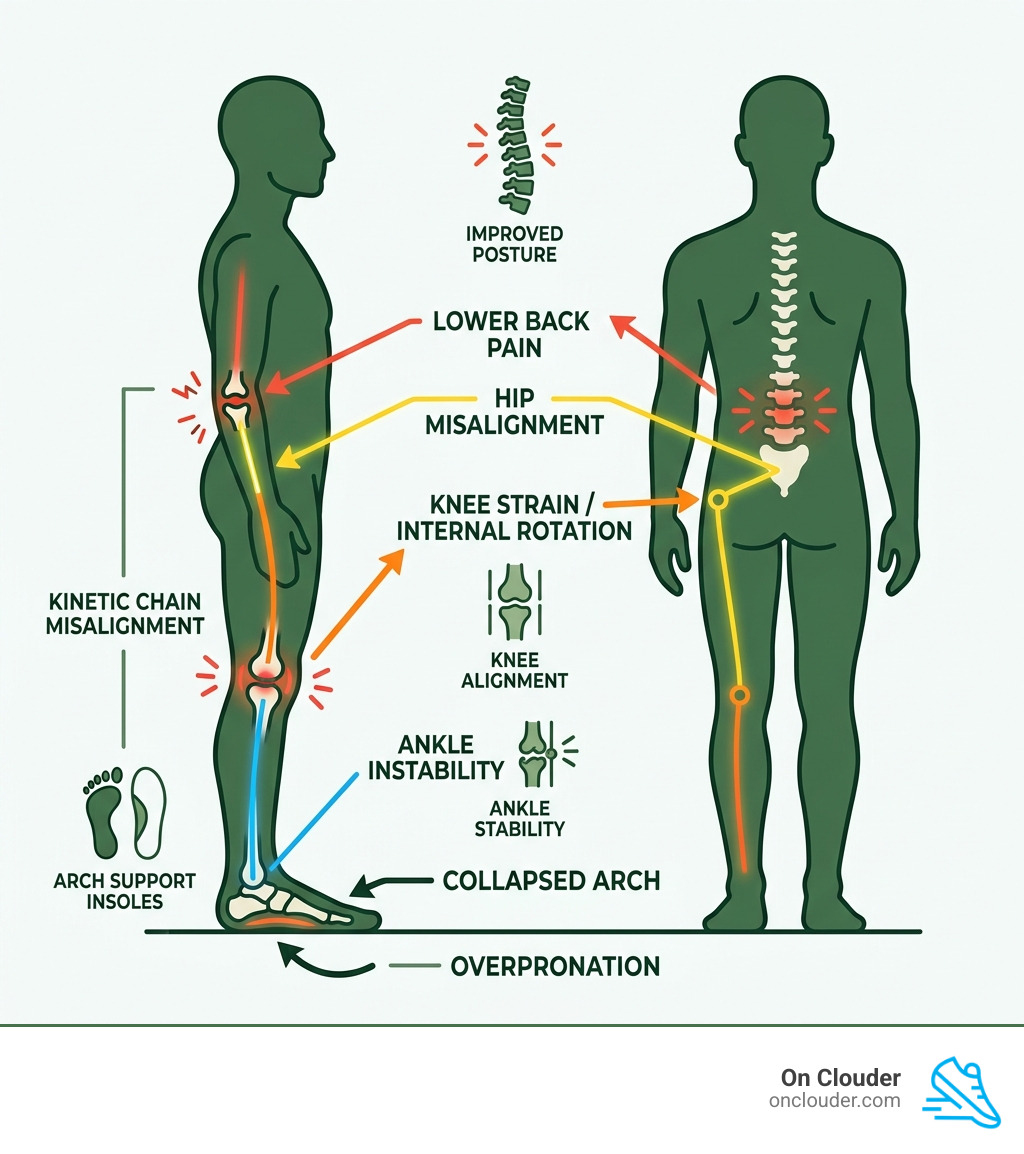
For people with flat feet, the problem runs deeper. When your arches are low or absent, your foot has no natural shock absorber. Every step on concrete, tile, or hard flooring sends impact straight up through your ankles, knees, and lower back. Over time, that adds up fast.
The root cause is a condition called overpronation — where the foot rolls inward with each step because there’s no arch to stabilize it. Left unaddressed, this misalignment strains the entire body, not just the feet.
The good news? The right insole can change everything.
I’m Faisal S. Chughtai, a footwear comfort specialist who has spent years helping people find the right flat feet work shoe insoles for their specific needs and daily demands. In this guide, I’ll walk you through the top 10 options tested and ranked for workers who can’t afford to be slowed down by foot pain.
Simple flat feet work shoe insoles word guide:
- arch support flat feet insoles
- arch support inserts flat feet
- shoe inserts for flat feet
Why Specialized Flat Feet Work Shoe Insoles are Essential
When you have flat feet—also known as “fallen arches”—your feet lack the structural “spring” that a healthy arch provides. In a work environment, where you might be walking 10,000 steps on concrete or standing for a 12-hour nursing shift, this lack of support is a recipe for disaster.
Standard foam inserts that come with most work boots are often just “placeholders.” They provide a few millimeters of squish but zero structural integrity. Specialized flat feet work shoe insoles are designed to fill the gap between your foot and the shoe, providing a firm foundation that mimics the natural arch you’re missing. Without this, about 33% of workers will eventually develop plantar fasciitis or chronic heel pain.
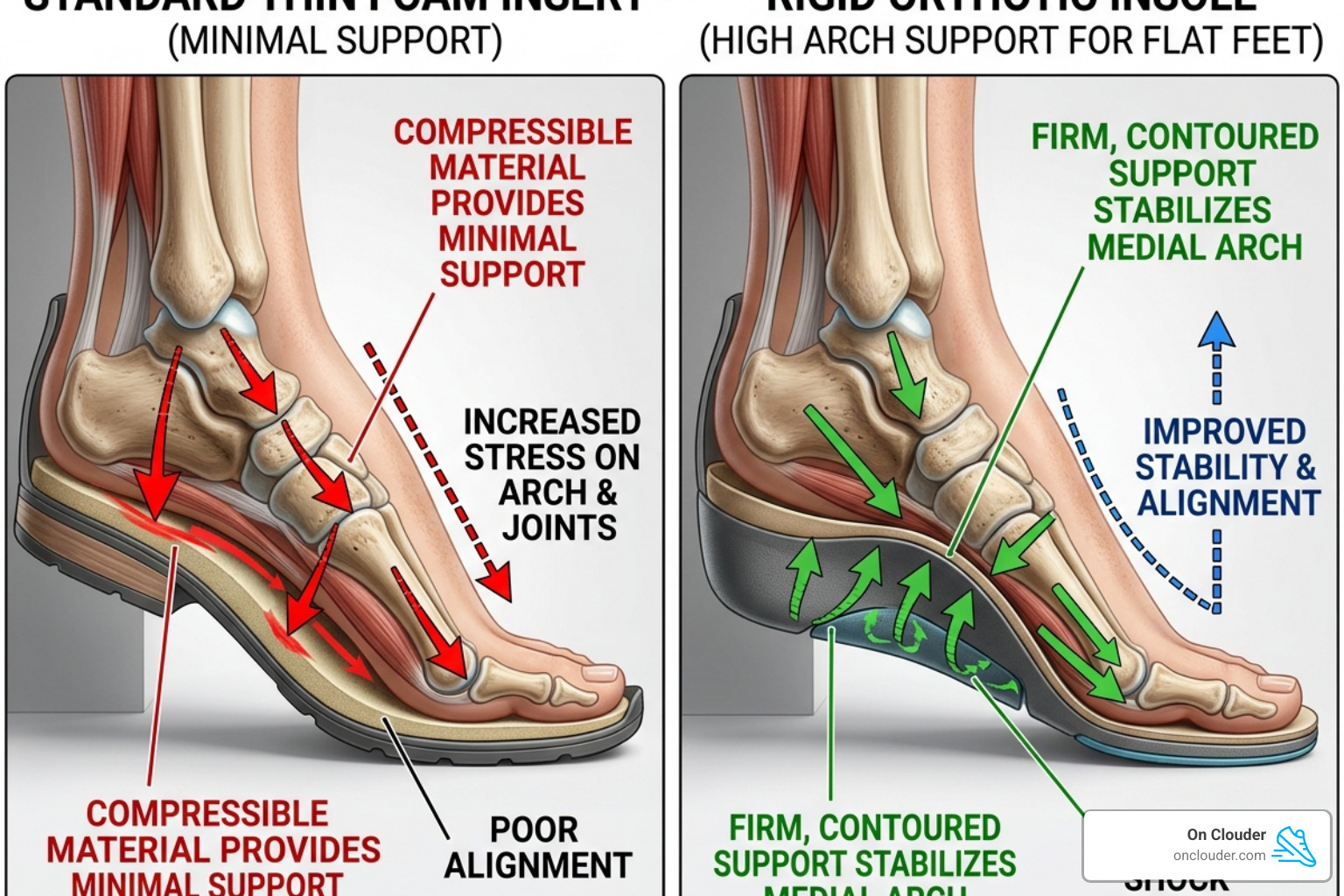
If you’ve ever wondered Why Your Flat Feet Crave These Arch Support Insoles, it comes down to shock absorption and weight distribution. Quality orthotics, like those found in the PowerStep flat feet collection, use medical-grade materials to ensure your weight isn’t just dumping into your heel and the ball of your foot.
Addressing Overpronation and Body Strain
The real danger of flat feet isn’t just “sore soles.” It’s the “kinetic chain” effect. When your arch collapses, your ankle rolls inward (overpronation). This forces your shin bone to rotate, which puts a “twist” on your knee, which then tilts your pelvis and strains your lower back. It’s a literal head-to-toe problem.
Research shows that 81% of workers reported less knee and back strain after switching to supportive insoles. By stabilizing the ankle and preventing that inward roll, you can Stop The Roll With The Best Overpronation Insoles and keep your entire skeleton in alignment.
The Difference Between Cushioning and Firm Support
There is a common myth that “softer is better.” If you’re standing on concrete all day, you might be tempted to buy the squishiest gel inserts you can find. However, soft foam often “bottoms out” within weeks—a phenomenon known as “collapse fatigue.”
True Insoles for Foot Pain And Arch Support require a firm foundation. Think of it like a mattress: a feather bed feels great for five minutes, but a supportive mattress keeps your back from hurting the next morning. For work environments, you need a semi-rigid shell that maintains its shape shift after shift.
Choosing the Best Insoles for Flat Feet in Work Environments
Not all flat feet are the same. Some people have “flexible” flat feet (an arch appears when they sit down), while others have “rigid” flat feet (the foot is flat regardless of weight). Choosing the wrong height can actually cause more pain.
Most experts recommend a Superfeet Low Arch Support for those with truly flat feet, as a high arch insert will feel like standing on a golf ball. You want a “contour match,” not a “correction” that forces your foot into an unnatural shape.
Determining Your Arch Height and Support Needs
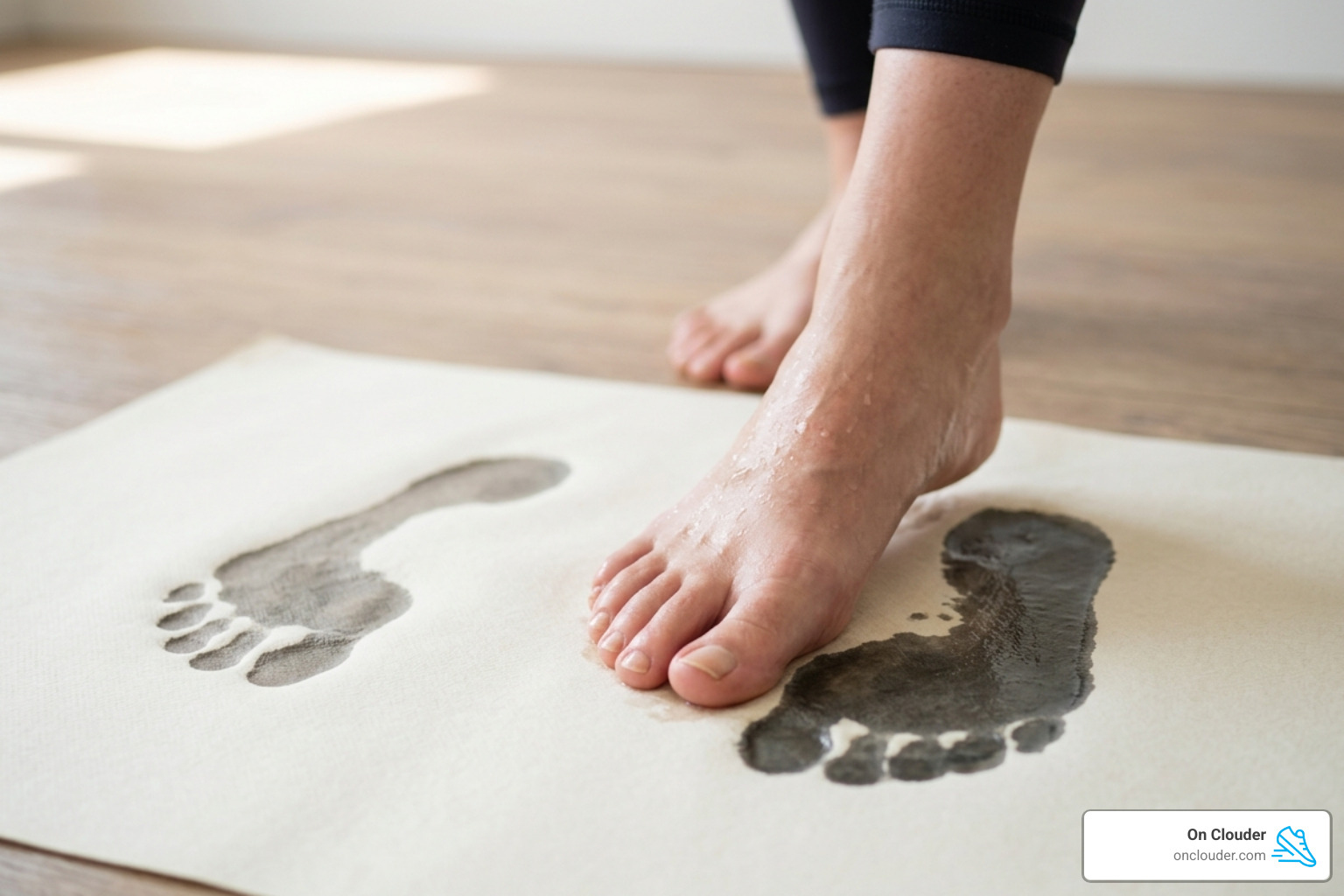
To find your perfect match, try the “Sitting vs. Standing” test. If your foot looks flat while standing but shows a slight curve when you sit and lift your foot, you likely have flexible flat feet and might benefit from a medium arch. If it’s flat in both positions, stick to low-profile, firm support.
Finding the right Orthotic Insoles For Flat Feet also means looking for a deep heel cup. This cradles the fatty pad under your heel bone, maximizing your body’s natural shock absorption.
Fitting Insoles into Work Boots and Safety Shoes
Work boots present a unique challenge. They are often high-volume (lots of space) or have steel toes that limit vertical room. To ensure a proper fit, you must almost always remove the factory liner first.
When fitting High Arch Work Boot Insoles (or low arch ones for flat feet), use the old liner as a template. Trace the toe area and trim carefully with sharp scissors. This ensures the insole doesn’t bunch up near the steel toe, which can cause blisters.
Top 10 Flat Feet Work Shoe Insoles for 2026
We’ve analyzed thousands of user experiences and technical specs to bring you this definitive list. Statistics show that 95% of workers reported less heel pain after 30 days of using quality orthotics, and 89% felt significantly less fatigue during long shifts.
If you are looking for specific European-designed options, the FootActive Workmate is a standout for its durability on hard surfaces.
Best Overall Flat Feet Work Shoe Insoles: PowerStep Pinnacle Low
The PowerStep Pinnacle Low is our gold standard. It features a semi-rigid arch support specifically calibrated for low arches. It doesn’t try to “fix” your foot into a high arch; it simply provides the stability needed to stop overpronation. It’s a top choice for Arch Support Inserts For Flat Feet because it balances medical-grade support with just enough plush cushioning for comfort.
Best for Heavy Duty Boots: VALSOLE Heavy Duty
If you weigh over 220 lbs or work in heavy-duty construction, the VALSOLE Heavy Duty is a beast. Most insoles flatten under high loads, but these use a reinforced support shell that resists “collapse fatigue.” They are specifically engineered for standing all day on concrete, providing a deep heel cradle that stabilizes the ankle in heavy boots.
Best Slim-Fit for Athletic Work Shoes: Superfeet Work Slim-Fit
Many modern workers, especially in logistics or healthcare, wear athletic-style safety shoes. These often have less internal space. The Superfeet Work Slim-Fit features a tapered forefoot and a lower profile that fits into snug shoes without making them feel tight.
Best for Nurses and Teachers: Fulton Athletic
Nurses and teachers are on their feet for 12+ hours, often moving between hard tile and carpet. The Fulton Athletic is unique because it uses a cork-based foundation. Over time, the cork molds to your specific foot shape, creating a custom fit. It’s a great way to Step Up Your Game With Arch Support Inserts while using sustainable, shock-absorbing materials.
Best Budget Option: Spenco RX Comfort
You don’t always need to spend $60 to get relief. Spenco offers a massive range—specifically 21 products for flat feet. The RX Comfort is a thin, lightweight layer that focuses on friction reduction and basic cushioning. It’s ideal for those who just need a bit of extra “oomph” in their flat feet insoles without the bulk of a rigid orthotic.
Best for All-Day Standing: SoleBrace WorkFit
The SoleBrace WorkFit is engineered for the “12-hour shift” crowd. It features “rebound pods” in the heel and forefoot that return energy with every step. Combined with a memory foam top layer and a honeycomb base for breathability, it’s designed to keep your feet cool and energized until the clock-out whistle.
Best for Plantar Fasciitis: Superfeet All-Purpose Medium Arch
If your flat feet have already led to the dreaded morning heel pain of plantar fasciitis, you need the Superfeet All-Purpose Medium Arch. Its firm foundation and sculpted heel cup work together to redistribute pressure away from the plantar fascia, giving it a chance to heal even while you’re working.
Best High-Rebound Performance: SoleAid Work III
For those who are constantly on the move—think warehouse pickers or delivery drivers—the SoleAid Work III offers a semi-rigid neutral arch. It provides excellent Insoles For Standing All Day by focusing on high-rebound materials that make each step feel lighter.
Best Custom Solution: Upstep Custom Orthotics
If off-the-shelf options haven’t worked, it might be time for a custom solution. Upstep sends an impression kit to your home, which you then send back to their lab. They use these molds to create medical-grade Arch Pads For Flat Feet And Pronation that are 100% unique to your feet. With a 180-day guarantee, it’s a “set it and forget it” investment in your health.
Best for Wide Work Footwear: Spenco Total Support Low
Workers with flat feet often have wider feet because the foot “spreads” when the arch collapses. The Spenco Total Support Low is excellent for Stopping The Slump in wide-width boots. It features a deep heel cup and a “crash pad” in the forefoot to soften the impact of every stride.
Maximizing Productivity and Foot Health
Investing in flat feet work shoe insoles isn’t just about comfort—it’s about career longevity. When your feet don’t hurt, you move faster, make fewer mistakes, and don’t end your day in a “pain fog.”
However, there is a break-in period. Don’t put a brand-new pair of rigid orthotics in your boots on a Monday morning and expect to work a double shift. Start with 2 hours on the first day, 4 on the second, and gradually build up. Most quality insoles have a lifespan of 6–12 months. If you start feeling that familiar ache again, it’s time to Get New Inserts.
Frequently Asked Questions about Flat Feet Work Shoe Insoles
How do I know if I have rigid or flexible flat feet?
Use the “Sitting vs. Standing” test. Sit on a chair and place your ankle on your opposite knee. If you see an arch, you have “flexible” flat feet, and a medium-arch insole might feel best. If your foot stays flat even when unweighted, you have “rigid” flat feet and should stick to low-profile support. For more details, check out Shoe Inserts For Flat Feet 101.
Do I need to remove the original insoles from my work boots?
Yes, in 99% of cases. Leaving the old insole in creates too much volume, which can lead to “lace bite” (pressure on the top of the foot) or heel slippage. Removing the old liner ensures the new insole sits flat against the bottom of the shoe. Learn more in our Arch Support Inserts 101 guide.
How often should I replace my work shoe insoles?
For a full-time worker, we recommend replacement every 6 months. While the top fabric might look fine, the internal support structures (the “spring”) eventually lose their resilience. A good rule of thumb: if you can see a permanent indentation of your toes in the foam, it’s time to Give Your Shoes A Lift with a fresh pair.
Conclusion
At On Clouder, we believe that no one should have to choose between their paycheck and their physical health. Flat feet don’t have to be a sentence for chronic pain. By choosing the right flat feet work shoe insoles, you can realign your body, protect your joints, and finish your shift with energy to spare.
Whether you go for the podiatrist-recommended PowerStep, the heavy-duty VALSOLE, or a custom Upstep solution, your feet will thank you. For more tips on maintaining your foot health, revisit our Shoe Inserts For Flat Feet 101 guide and start walking toward a pain-free workday.