

Why Choosing the Right Running Shoes for High Arches Matters
Finding the best running shoes for high arches can make the difference between a pain-free run and days of recovery. High arches — medically called pes cavus — affect roughly 10% of the population. For runners, they create a real problem: your foot can’t absorb shock the way a neutral arch does, loading extra stress onto your heel and the ball of your foot.
Quick answer — here are the top picks for high arches:
| Category | Top Pick | Key Feature |
|---|---|---|
| Best Overall | ASICS Novablast 5 | Balanced cushion, roomy upper |
| Best Max Cushion | HOKA Bondi 9 | Maximum shock absorption |
| Best Speed/Tempo | Saucony Endorphin Speed 4 | Responsive, relaxed fit |
| Best Racing | Nike Alphafly 3 | Carbon plate, high energy return |
| Best Budget | Nike Winflo 11 | Value daily trainer |
| Best Trail | HOKA Speedgoat 5 | Trail traction, plush ride |
The short version: neutral, well-cushioned shoes are what most high-arched runners need — not stability or motion-control shoes.
That burning, achy feeling on the bottom of your feet halfway through a run? That’s your high arches telling you your shoes aren’t doing their job. Because a high arch is typically rigid, it doesn’t flex and spring the way a normal arch does. Instead of spreading the impact of each footstrike, it passes that force straight to your joints.
The result? Runners with high arches face a higher risk of:
- Plantar fasciitis
- Stress fractures
- Ankle sprains
- Metatarsalgia (ball-of-foot pain)
- Bunions and hammertoes
The good news is that the right shoe — focused on cushioning and neutral support rather than arch correction — can reduce impact forces significantly. Research suggests cushioned neutral shoes can cut impact forces by 20–30% compared to minimalist footwear for high-arched runners.
But shoes alone aren’t the full answer. They’re a great start, though.
I’m Faisal S. Chughtai, a footwear expert with years of experience helping people find the right shoes for their specific foot needs — including guiding high-arched runners toward the best running shoes for high arches that actually work. In this guide, I’ll walk you through exactly what to look for and which models stood out in 2026.
Understanding High Arches and Running Biomechanics
To find the perfect running shoe, we first need to understand how high arches change the way your body moves. When a runner with a neutral arch lands, their foot naturally rolls slightly inward to distribute the force of the impact. This movement is called pronation.
For runners with pes cavus (high arches), the foot is structurally rigid. Because the arch remains elevated and locked, the foot does not roll inward enough to absorb the impact. Instead, the force of each stride travels straight up through the heel, the metatarsals (ball of the foot), the ankles, the shins, and even into the knees and hips.
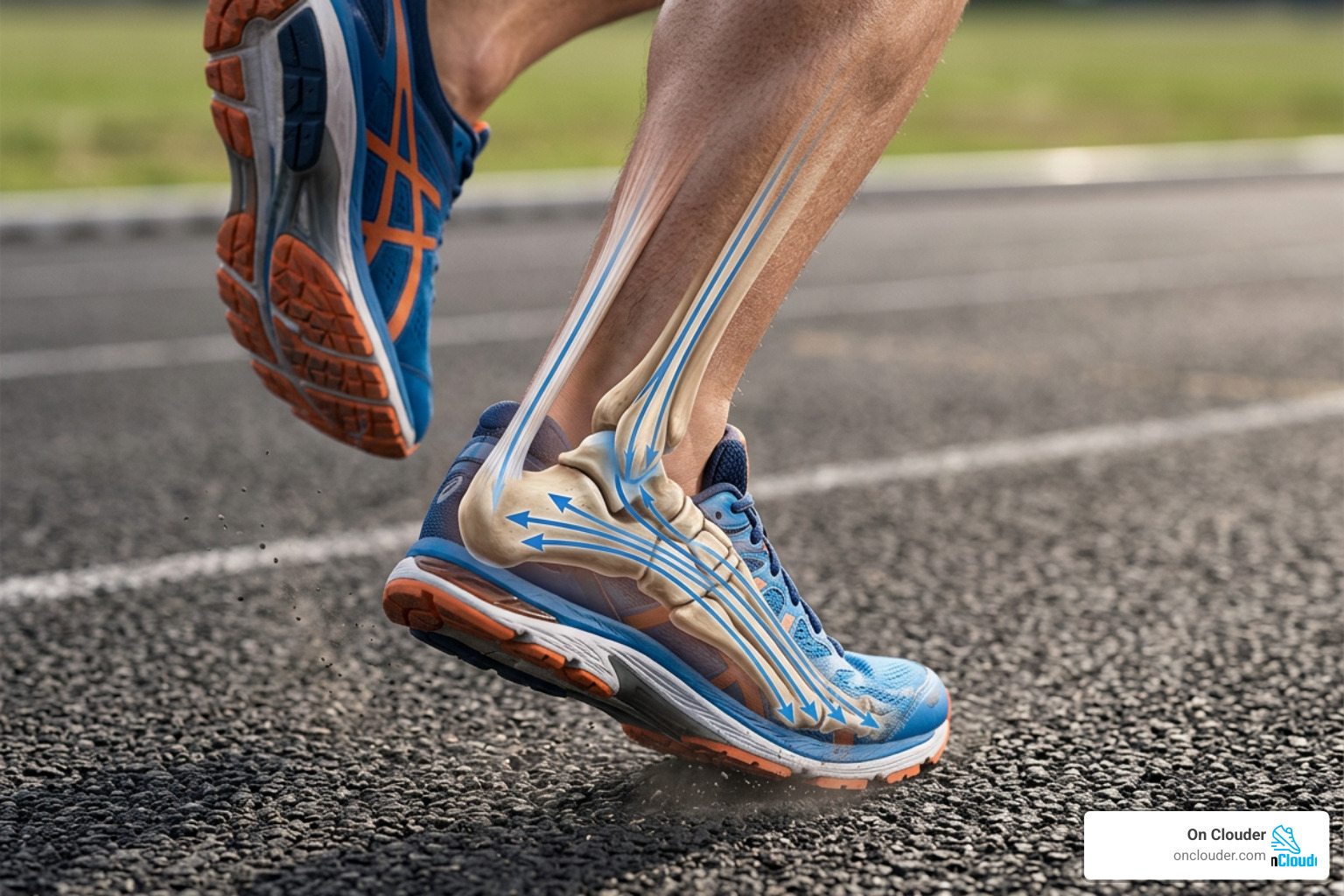
This lack of natural shock absorption means high-arched runners must rely heavily on their footwear to do the heavy lifting of cushioning the blow. To offset this biomechanical stiffness, wearing shoes with maximum impact protection is highly recommended. Check out The Ultimate Guide to Best Cushioned Running Shoes to see how cushioning acts as your body’s primary shield against ground forces.
Supination vs. Pronation in Cavus Feet
A common misconception is that all high-arched runners supinate (or underpronate). While it is true that a rigid, high-arched foot is much more likely to land on the outer edges of the foot (supination), the reality is more nuanced.
When you supinate, your foot loads laterally. This lateral loading places immense stress on the outer ankle ligaments, making high-arched runners highly susceptible to ankle sprains. Furthermore, because the plantar fascia is stretched tight like a bowstring over a high arch, it remains inflexible under load, frequently leading to plantar fasciitis.
However, biomechanical studies show that under certain conditions, a high-arched foot can actually pronate. This occurs when the ankle joint or midfoot is hypermobile despite the high arch structure, causing the foot to roll inward excessively after a rigid heel strike. Because of this complexity, you need footwear that supports the natural shape of your foot without trying to force it into a prescribed movement pattern. For a deeper look at foot alignment, read The Ultimate Guide to the Best Shoes with Arch Support.
Neutral Cushioned vs. Stability Shoes
Should high-arched runners wear stability shoes? In almost all cases, the answer is a resounding no.
Stability and motion-control shoes are specifically designed to correct overpronation (which is common in flat feet). They often feature firm medial posts or dual-density foams on the inner side of the midsole to block the foot from rolling inward. If a high-arched runner—who already struggles to pronate—wears a stability shoe, the medial posting will push their foot even further onto its outer edge. This overcorrection dramatically increases the risk of lateral ankle rolls, IT band syndrome, and stress fractures along the outer shin.
Instead, high-arched runners should opt for neutral cushioned shoes. Neutral shoes do not interfere with your natural gait; instead, they provide a thick, protective platform of foam that mimics the shock absorption your feet cannot naturally perform. To learn more about finding the right balance of support, read our guide on the Best Supportive Running Shoes for Comfort and Protection.
Key Features to Look For in the Best Running Shoes for High Arches
When shopping for the best running shoes for high arches, you cannot simply pick the softest shoe on the shelf. Too much softness can lead to instability, causing your ankles to wobble. Instead, you want a shoe that balances plush impact protection with structural integrity.
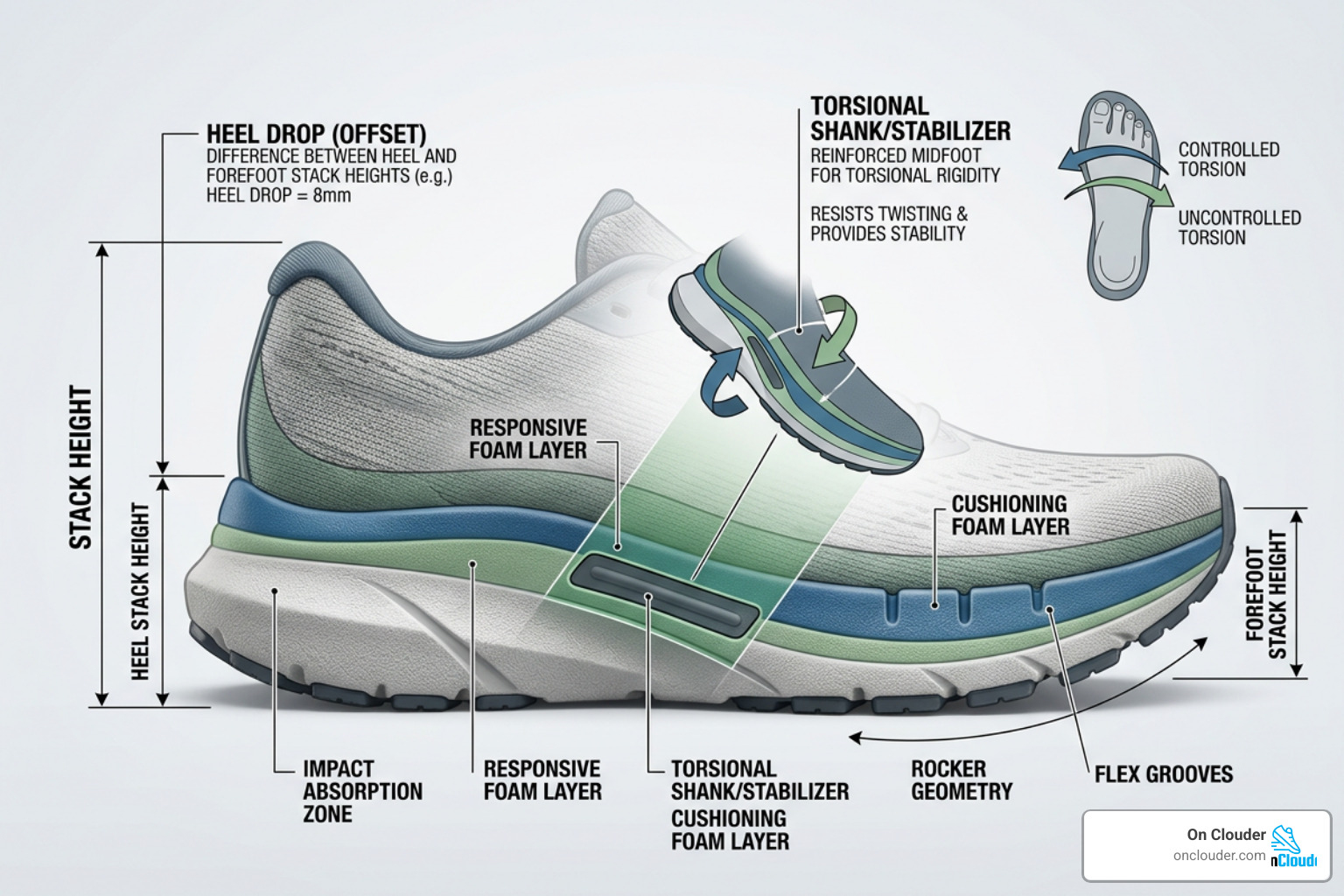
When evaluating shoes, keep these key features in mind:
- Adequate Midsole Volume: Ensure the shoe has enough depth to accommodate a high instep.
- Contoured Footbed: Look for a midsole that follows the natural curve of your foot to distribute pressure.
- Torsional Rigidity: The shoe should not twist too easily in the midfoot, providing a stable platform.
- APMA Seal of Acceptance: Many of our top picks carry this seal, indicating they are podiatrist-approved for foot health.
For a comprehensive guide on selecting footwear with built-in arch structures, refer to Expert advice on arch support and An Essential Guide to Best Shoes for Arch Support.
Midsole Cushioning and Shock Absorption
The midsole is the heart of any running shoe, especially for high arches. Because your feet struggle to disperse impact forces, you need advanced foam technologies that absorb shock while returning energy to propel you forward.
Modern running shoes utilize highly advanced foam compounds:
- PEBA Foams (Polyether Block Amide): These are ultra-lightweight, extremely bouncy, and offer incredible energy return. They are perfect for fast tempos and race days.
- Supercritical EVA/TPU Foams: These foams are infused with nitrogen or carbon dioxide during manufacturing, resulting in a plush, durable, and highly protective ride that doesn’t “bottom out” over long miles.
If you plan on spending long hours on your feet or running on hard surfaces, maximizing shock absorption is critical. For more on this, check out The Ultimate Guide to Best Walking Shoes for Long Distance on Concrete.
Upper Volume and Wide Toe Box Options
High arches almost always come hand-in-hand with a high instep (the top ridge of your foot). If a shoe has a shallow upper, the laces will press down hard on the top of your foot, compressing nerves and blood vessels, which leads to numbness and tingling.
To prevent this, look for shoes with high-volume uppers or flexible, engineered mesh that stretches to accommodate your high instep. Additionally, utilizing specific lacing techniques—such as “parallel lacing” or skipping eyelets over the highest part of your instep—can relieve pressure instantly.
Furthermore, a wide toe box is essential. Because high-arched feet are rigid, the toes often claw or splay aggressively to help find balance. A narrow toe box forces the toes together, which can cause painful bunions, hammertoes, and friction blisters. If you want to compare how upper fits differ between flat feet and high arches, see The Ultimate Guide to Best Running Shoes for Flat Feet.
Top Picks: The Best Running Shoes for High Arches in 2026
We spent months analyzing lab data, testing materials, and gathering feedback from runners to compile the absolute best options available in 2026, specifically focusing on shoes designed for underpronation.
Here is a side-by-side comparison of our top recommendations:
| Model | Weight (Men’s / Women’s) | Heel-to-Toe Drop | Best For | Standout Feature |
|---|---|---|---|---|
| ASICS Novablast 5 | 9.0 oz / 7.9 oz | 8 mm | Daily Training | Trampoline-like energy return |
| HOKA Clifton 9 | 8.7 oz / 7.3 oz | 5 mm | Daily Training | Meta-Rocker for smooth transitions |
| ASICS Gel-Nimbus 28 | 9.9 oz / 8.5 oz | 10 mm | Max Cushioning | PureGEL technology in the heel |
| HOKA Bondi 9 | 10.5 oz / 8.9 oz | 5 mm | Max Cushioning | Ultra-plush, wide-base platform |
| Puma MagMax Nitro | 10.2 oz / 8.6 oz | 8 mm | Recovery Runs | High-stack supercritical Nitro foam |
| Saucony Endorphin Speed 4 | 8.2 oz / 7.2 oz | 8 mm | Speed / Tempos | Nylon plate with PWRRUN PB foam |
| Nike Alphafly 3 | 7.1 oz / 5.6 oz | 8 mm | Marathon Racing | Carbon plate with dual Zoom Air pods |
| Brooks Hyperion Elite 5 | 7.1 oz / 6.1 oz | 8 mm | Racing / Speed | DNA Gold PEBA foam responsiveness |
| Nike Winflo 11 | 11.4 oz / 9.5 oz | 10 mm | Budget Daily | Full-length Nike Air cushioning |
| HOKA Speedgoat 5 | 10.3 oz / 8.5 oz | 4 mm | Trail Running | Vibram Megagrip outsole traction |
Best Overall Running Shoes for High Arches
1. ASICS Novablast 5
The ASICS Novablast series has quickly become a favorite for runners seeking an energetic, bouncy ride. The Novablast 5 features a generous 40.9mm heel stack of FF BLAST MAX foam, which is 17% softer than average. This high-volume midsole acts as a pillow for rigid high arches, absorbing impact effortlessly. The geometric design of the outsole creates a trampoline effect, springing you forward into your next stride. Its engineered mesh upper is highly breathable and offers excellent stretch over a high instep.
2. HOKA Clifton 9
If you prefer a lower heel drop, the HOKA Clifton 9 is a legendary choice. Featuring a 5mm drop and a lightweight, compression-molded EVA midsole, the Clifton 9 provides a balanced, protective ride. What makes it exceptional for high arches is its early-stage Meta-Rocker, which helps roll your foot forward smoothly, compensating for the lack of natural flexibility in your foot. The wide platform provides inherent stability without the need for rigid medial posts. For more real-world runner reviews and opinions on these models, see The Best Arch Support Shoes According to Reddits Most Opinionated Walkers.
Best Max-Cushion Running Shoes for High Arches
1. ASICS Gel-Nimbus 28
For runners who want to feel like they are floating, the ASICS Gel-Nimbus 28 is the gold standard of max cushion. It utilizes a massive stack of FF BLAST PLUS ECO cushioning combined with a hidden PureGEL insert in the heel. This combination dampens road vibrations by up to 20% more than traditional foams, making it an absolute lifesaver for runners prone to plantar fasciitis and heel pain. The premium engineered knit upper wraps securely around high insteps without causing hot spots.
2. HOKA Bondi 9
When maximum shock absorption is your only priority, the HOKA Bondi 9 is unmatched. It features HOKA’s thickest, most cushioned EVA midsole, providing a pillowy barrier between your feet and the pavement. The Bondi 9 also features a very wide base, ensuring that even if you supinate, your foot lands on a stable, secure platform. It has received the APMA Seal of Acceptance for promoting foot health.
3. Puma MagMax Nitro
Puma has made serious waves in the running community with its supercritical foam technology, and the MagMax Nitro is their ultimate max-cushion offering. Boasting an 8mm drop and a massive stack of Nitro foam, this shoe delivers an incredibly plush, bouncy ride. It also features PumaGrip rubber on the outsole, which is widely regarded as the best traction compound in the industry, keeping you secure on wet or slick roads. These max-cushion models stack up exceptionally well against other high-end options, offering top-tier comfort and durability.
Best Speed and Racing Shoes for High Arches
1. Saucony Endorphin Speed 4
When it’s time to pick up the pace, high-arched runners need speed shoes that don’t sacrifice protection. The Saucony Endorphin Speed 4 features a winged nylon plate embedded in ultra-responsive PWRRUN PB foam. The nylon plate provides snappy transitions without the harsh rigidity of a full carbon plate, making it highly comfortable for high-arched runners who need their shoes to flex naturally.
2. Nike Alphafly 3
For race day, the Nike Alphafly 3 is a marvel of engineering. It combines a full-length carbon fiber plate with ZoomX foam and dual Zoom Air units under the forefoot. Because high-arched runners land heavily on the forefoot and heel, the pressurized Zoom Air pods provide unmatched energy return and shock absorption at the point of impact, keeping your legs fresh over marathon distances.
3. Brooks Hyperion Elite 5
The Brooks Hyperion Elite 5 is built for runners seeking speed, lightness, and inherent stability. It features Brooks’ brand-new DNA Gold PEBA foam, which is lighter and bouncier than previous generations. It uses a customized SpeedVault+ carbon plate that is scaled to the shoe’s size, reducing the rigid feel under your arch while delivering snappy propulsion.
Best Budget and Trail Options
1. Nike Winflo 11
You don’t need to spend $200+ to get great arch support. The Nike Winflo 11 is an incredible value trainer that features a full-length Nike Air unit embedded within a soft foam midsole. It has a high-volume upper that leaves plenty of room for high insteps, and its durable rubber outsole will easily last for hundreds of miles.
2. HOKA Speedgoat 5
If your runs take you off-road, the HOKA Speedgoat 5 is the ultimate trail companion. Trail running involves navigating rocks, roots, and uneven terrain, which can be highly precarious for rigid, high-arched feet prone to rolling. The Speedgoat 5 features a protective late-stage Meta-Rocker, a plush CMEVA midsole, and a Vibram Megagrip outsole with traction lugs that hold fast on dirt, mud, and wet rock. These options ensure that runners on any budget or terrain can find the perfect level of protection and support.
Frequently Asked Questions about Running with High Arches
How do I know if I have high arches?
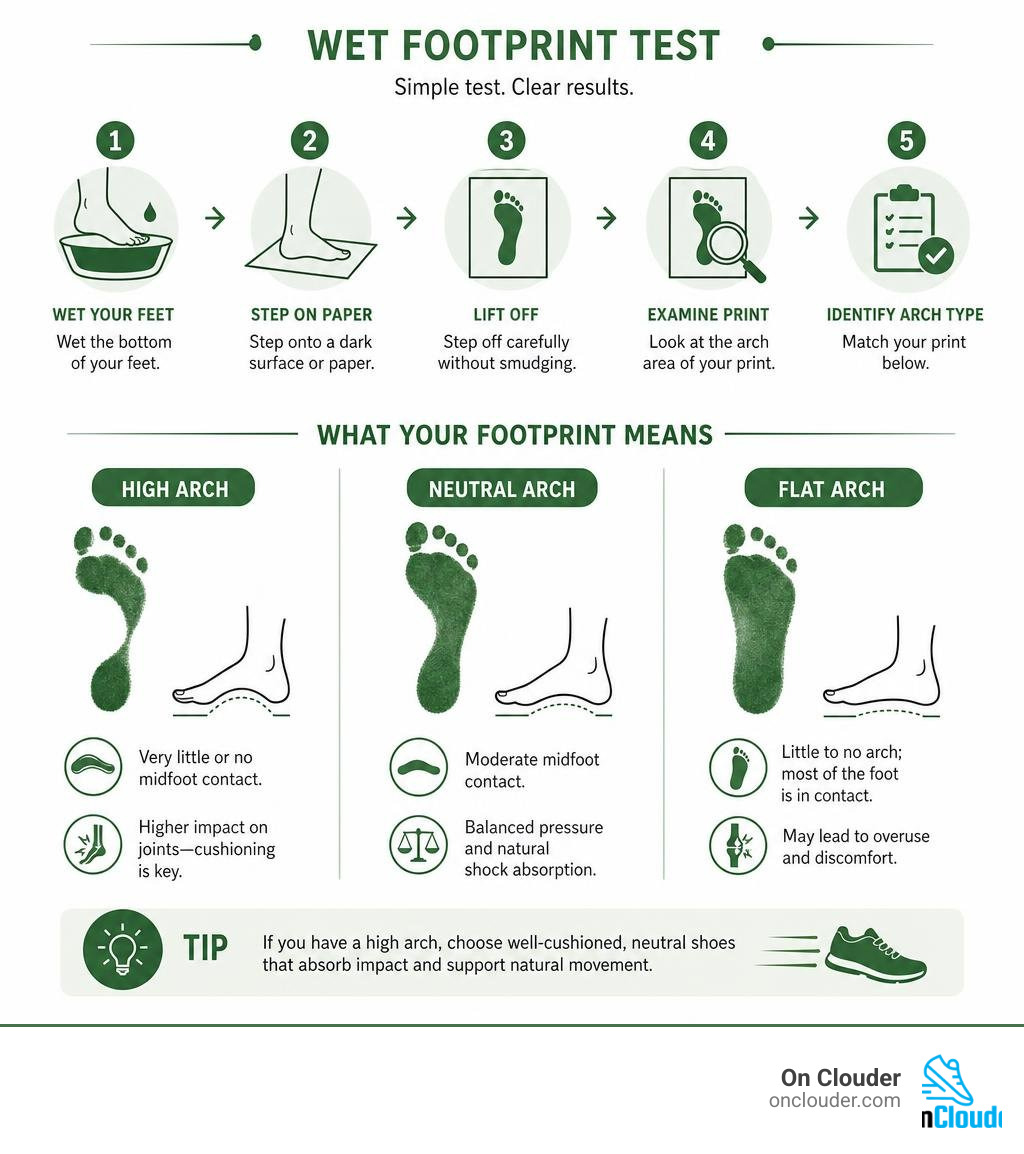
The easiest way to determine your arch height at home is by performing the Wet Test:
- Pour a thin layer of water into a shallow pan.
- Step into the water to wet the sole of your foot.
- Step firmly onto a piece of dark construction paper or a concrete surface.
- Step off and look at your footprint.
If you see a very narrow band connecting your heel and the ball of your foot—or if there is no connection at all—you have high arches (pes cavus).
Another great indicator is checking the wear patterns on your old running shoes. If the outer edges of the outsoles are significantly more worn down than the inside edges, you are supinating, which is a classic sign of rigid high arches.
Do runners with high arches need custom orthotics or insoles?
Not necessarily, but they can be incredibly beneficial. While neutral cushioned shoes provide the shock absorption you need, they don’t always touch the physical peak of a very high arch.
This is where aftermarket insoles or custom orthotics come in. High-quality insoles, like the Run Cushion High Arch Cushioned Running Insoles | Superfeet, are designed to fill the empty space beneath your arch. By providing a contoured contact point, they help distribute your body weight evenly across the entire sole of your foot, rather than letting all the pressure concentrate on your heel and forefoot.
If you are experiencing chronic pain, we highly recommend visiting a physical therapist or podiatrist to work on foot flexibility and strength. To find the right insole for your needs, take a look at The Top High Arch Support Insoles Reviewed and our Best Arch Support Shoes Insoles Guide.
How often should high-arched runners replace their shoes?
Most runners should replace their shoes every 300 to 500 miles. However, high-arched runners should replace their shoes on the earlier side of this window (around 300 to 350 miles).
Because your rigid feet rely entirely on the shoe’s midsole foam to absorb impact, any degradation in that foam will immediately transfer stress to your bones and joints. Once the foam “packs out” or loses its bounce, your risk of developing stress fractures or plantar fasciitis rises dramatically. If the outsole is worn smooth or the shoe bends effortlessly in half, it’s time for a new pair. To learn more about building a healthy shoe rotation, check out The Ultimate Guide to Every Shoe You Need.
Conclusion
At On Clouder, we believe that running should be a source of joy, not pain. Having high arches might mean your feet are naturally rigid, but with the right pair of neutral, maximum-cushion shoes, you can protect your joints, prevent injuries, and run with absolute comfort.
Remember to prioritize shoes that offer a roomy upper for your high instep, a wide base for landing stability, and plenty of plush, shock-absorbing foam. If you want to elevate your comfort even further, consider rotating between two different pairs of shoes to give the midsole foam time to fully decompress between runs.
Ready to find your perfect fit and hit the road pain-free? Use the guidance above to compare cushioning, fit, stability, and terrain needs so you can choose the best running shoes for high arches and keep your feet happy for miles to come!