

Why Flat Feet Demand the Right Orthotic Support
If you’ve been searching for mens flat foot orthotic inserts, here are the top options worth considering in 2026:
| Orthotic Insert | Best For | Key Feature |
|---|---|---|
| PowerStep Pinnacle | Everyday & athletic use | Firm arch shell, deep heel cup |
| Aetrex Men’s Customizable Posted | Overpronation control | Removable gel pods, posted heel |
| Aetrex Premium Memory Foam Posted | All-day standing | 43% extra forefoot memory foam |
| Spenco Total Support | Walking & running | Firm yet flexible arch support |
| Dr. Scholl’s Custom Fit | Budget-friendly daily use | Stabilizing arch support |
About 27% of men have flat feet — and many don’t realize it’s the root cause of their daily foot pain, knee aches, or tired legs.
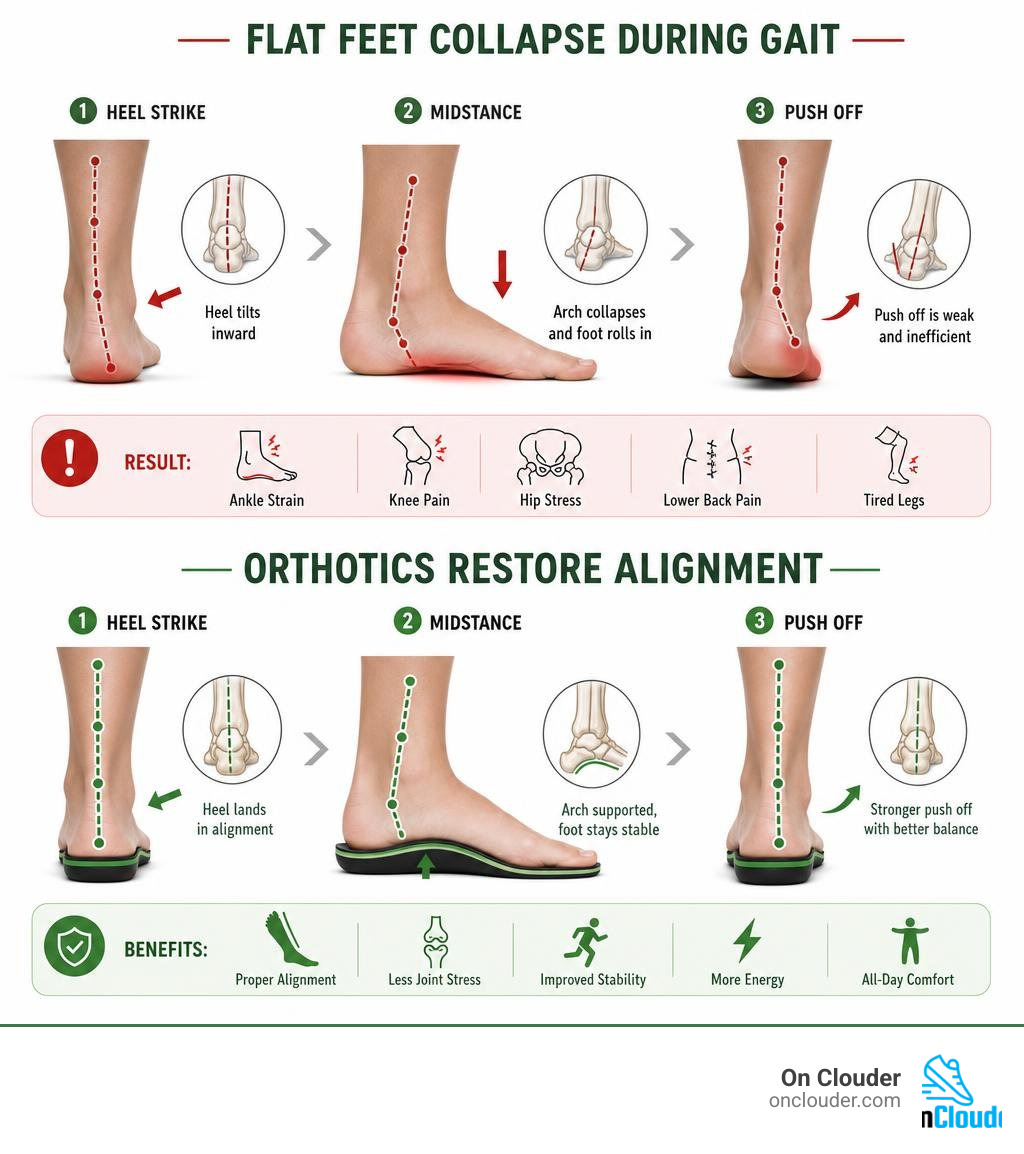
When your arch collapses during walking or running, your foot rolls inward. That’s called overpronation. Over time, that inward roll stresses your ankles, knees, hips, and lower back — not just your feet.
The right mens flat foot orthotic inserts don’t just cushion your feet. They realign your entire lower body, reduce fatigue, and help prevent conditions like plantar fasciitis before they sideline you.
Whether you’re logging miles on pavement, pulling a long shift on hard floors, or just going about your day — the wrong insole (or no insole at all) can quietly make everything worse.
I’m Faisal S. Chughtai, a footwear expert with years of hands-on experience evaluating comfort and performance gear, including mens flat foot orthotic inserts for active professionals and runners. Let’s break down exactly what to look for — and which inserts are worth your money in 2026.
Essential mens flat foot orthotic inserts terms:
- arch support flat feet insoles
- best insoles for flat feet walking
- flat feet work shoe insoles
Understanding the Need for Flat Foot Orthotics
To understand why flat feet cause so much trouble, we have to look at the structural mechanics of the human foot. Your foot is designed to act as both a shock absorber and a rigid lever. The arch is the primary suspension system of this structure. When you have flat feet or fallen arches, this built-in suspension system is compromised, transferring the impact of every single step directly up your skeletal structure.
For some men, flat feet are structural and inherited; they have simply never had a visible arch. For others, flat feet develop over time due to aging, weight gain, repetitive high-impact activities, or wear and tear on the posterior tibial tendon. Regardless of how you got them, flat feet change how your body interacts with the ground.
Without structural support, your feet must work twice as hard to stabilize your body. This constant overworking leads to rapid muscle fatigue, cramping, and structural strain. To prevent this, we need to actively manage our biomechanics. For an in-depth strategy on how to address this issue, you can read our guide to Stop the slump with the best arch support insoles for flat feet.
Biomechanical Alignment and Overpronation
When your arch collapses, your ankle is forced to roll inward and downward. This inward rolling motion is known as overpronation. Biomechanically, your feet, ankles, knees, and hips act as an interconnected kinetic chain. When the foundation of this chain (your foot) rolls inward, it forces your tibia (shinbone) and femur (thighbone) to rotate internally.
This unnatural internal rotation places immense strain on your knee joint, pulls your pelvis out of alignment, and forces your lower back muscles to compensate. This is why many men with flat feet complain of chronic knee and lower back pain, even if their feet don’t hurt.
By inserting high-quality, structured mens flat foot orthotic inserts, you introduce a firm barrier that prevents the arch from collapsing. This stabilizes the heel, controls overpronation, and ensures your entire lower body remains in neutral alignment. To explore the best options for correcting this inward roll, check out the specialized collection of Insoles for Flat Feet, Fallen Arches, & Pronation.
Relieving Plantar Fasciitis, Knee Pain, and Back Pain
Flat feet are highly correlated with plantar fasciitis—an inflammation of the thick band of tissue (the plantar fascia) that runs along the bottom of your foot. When the arch collapses, the plantar fascia is stretched excessively, leading to microscopic tears and debilitating heel pain, especially during those first steps in the morning.
Furthermore, because flat feet disrupt the natural shock-absorption process, the shock waves of walking on hard concrete are transmitted directly up the kinetic chain. This can lead to:
- Patellofemoral pain syndrome (runner’s knee)
- Hip bursitis
- Chronic lumbar muscle spasms and lower back pain
Using supportive inserts distributes your body weight evenly across the entire surface of your foot, reducing localized pressure on the heel and forefoot. It relieves tension on the plantar fascia and cushions the impact of every step, protecting your joints from repetitive trauma. If you want to dive deeper into how correct orthotics can alleviate these issues, check out our resource on Dont let flat feet keep you down with these inserts.
Key Features to Look For in Men’s Flat Foot Insoles
When shopping for mens flat foot orthotic inserts, it is incredibly easy to fall into the “cushioning trap.” Many men mistakenly buy soft, pillowy foam insoles thinking they will solve their pain. In reality, soft insoles are like walking on sand—they feel comfortable for the first five minutes but offer zero structural support, ultimately leaving your arches to collapse anyway.
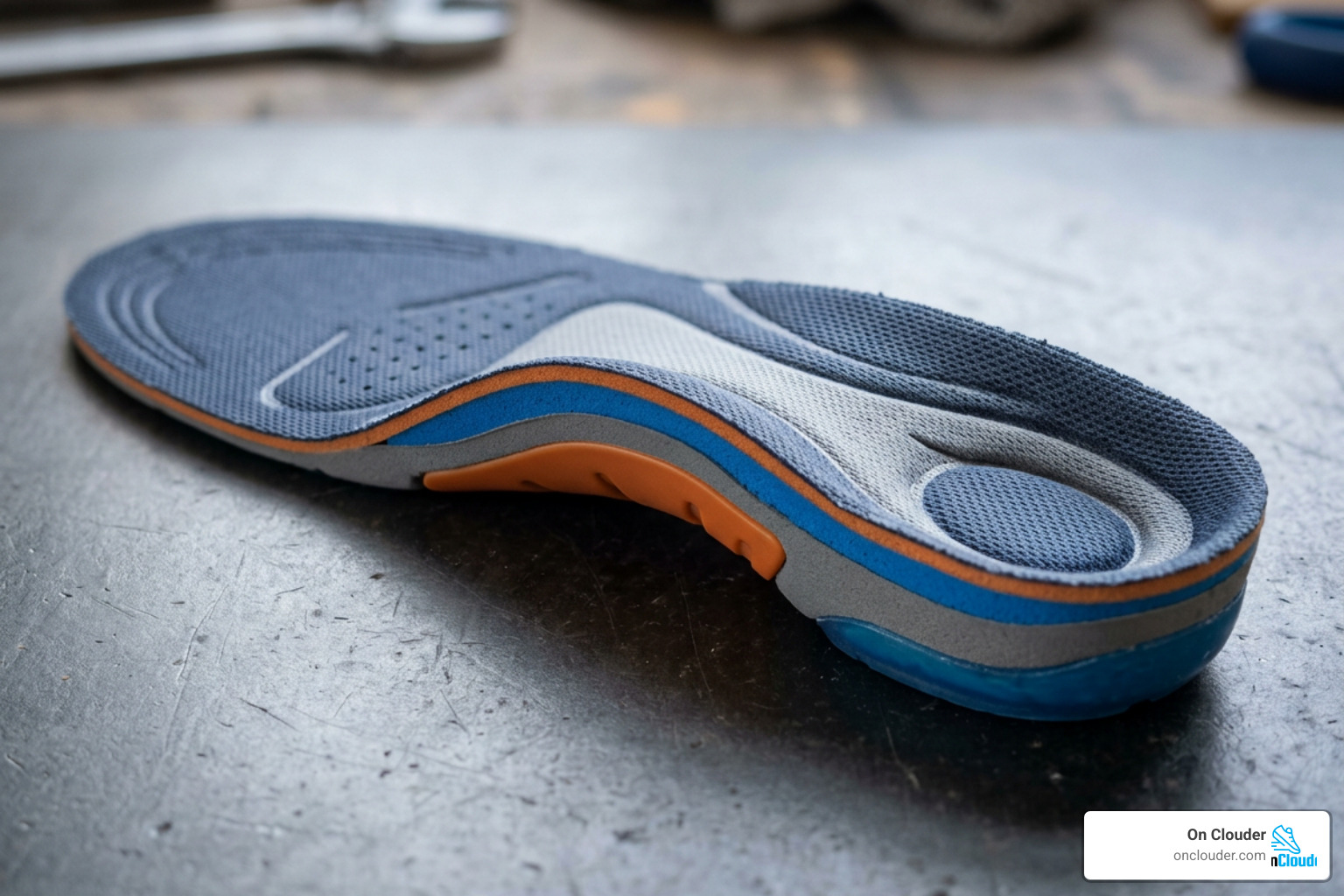
Instead, you must look for structured support. Excellent flat foot orthotics require a careful balance of rigid or semi-rigid materials, proper contouring, and shock absorption. To understand why structural integrity is so critical, read our analysis on Why your flat feet crave these arch support insoles.
Arch Support and Deep Heel Cups
The two most critical features of any flat foot insole are the arch support profile and the heel cup design:
- Low, Structured Arch Support: Men with flat feet cannot tolerate high, aggressive arches. High arches feel like walking on a hard golf ball and can cause bruising. You need a low to moderate arch profile that matches the natural contour of a flat foot while providing firm, spring-like resistance.
- Deep Heel Cup (Heel Cradle): A deep heel cup is non-negotiable. It cups the fatty pad under your heel bone, maximizing natural shock absorption. More importantly, it stabilizes the heel, preventing the lateral shifting and rolling that initiates overpronation.
Combined, these features lock your foot into a stable, neutral position. For a comprehensive guide on selecting the exact arch height for your feet, consult our Ultimate guide arch support inserts flat feet.
Stability, Motion Control, and Neutral Designs
Insoles generally fall into three design categories:
- Stability Insoles: These feature a semi-rigid arch support shell that flexes slightly as you walk. They are ideal for mild to moderate overpronation, providing a balance of structural support and comfort.
- Motion Control Insoles: These are rigid, heavy-duty inserts designed for severe overpronators or heavier men. They often feature a posted heel (an angled wedge on the medial side) to completely block the foot from rolling inward.
- Neutral Insoles: These prioritize shock absorption and cushioning with minimal structural correction. They are generally not recommended for men with flat feet unless you have rigid, pain-free flat feet and simply require shock absorption.
To figure out which design matches your specific gait pattern, read our guide to Put your best foot forward with arch support inserts for flat feet.
Matching Mens Flat Foot Orthotic Inserts to Your Footwear
The best insole in the world is useless if it doesn’t fit into your shoes. Men’s shoes vary drastically in volume (the amount of space inside the shoe):
- Athletic Shoes: These usually have removable factory insoles and plenty of volume, allowing you to easily swap in full-length, high-profile stability inserts.
- Work Boots: These require heavy-duty, durable inserts that can withstand moisture, heat, and hours of standing on concrete.
- Dress Shoes: These are notoriously low-volume and often have non-removable insoles. For these, you will need ultra-thin, low-profile, or 3/4-length orthotics.
We always recommend removing the existing factory insole before placing your new orthotic inside to avoid crowding your toes. For athletic-specific recommendations, read Dont let flat feet stop the pace with these athletic inserts.
Top Brands Compared: Best Mens Flat Foot Orthotic Inserts for 2026
To help you make an informed purchase, we have compared the top four brands in the orthotic industry for 2026 across key performance metrics:
| Brand | Primary Support Type | Key Material | Thickness | Best Suited For |
|---|---|---|---|---|
| PowerStep | Semi-Rigid Shell | Medical-Grade VCT | 0.25″ | Athletic & Daily Wear |
| Aetrex | Customizable / Posted | TPU & Memory Foam | 0.12″ – 0.25″ | Targeted Pain Relief |
| Spenco | Flexible Stability | Polysorb Polyurethane | Var. | High-Impact Activities |
| Dr. Scholl’s | Cushioned Stability | Gel & Plastic Shell | Low Profile | Budget-Friendly Comfort |
PowerStep: The Podiatrist-Recommended Choice for Mens Flat Foot Orthotic Inserts
PowerStep is widely recognized as the #1 podiatrist-recommended brand for over-the-counter orthotics. Their success lies in their patented, clinically proven semi-rigid arch support shell and deep heel cradle.
PowerStep insoles are designed to provide medical-grade support at an affordable price point. They excel at correcting overpronation and are highly durable, making them the gold standard for men suffering from plantar fasciitis or knee pain associated with flat feet. For their full lineup of flat-foot solutions, check out Insoles for Flat Feet, Fallen Arches, & Pronation.
Aetrex: Customizable Support and Premium Memory Foam
Aetrex stands out in 2026 for its highly advanced, customizable orthotic systems. If you have unique pressure points, their customizable lines are a game-changer.
- Customizable Posted Support: The First Generation Men’s Customizable Posted Orthotics W/ Metatarsal Sup – aetrex features a posted heel to control overpronation, combined with removable gel pods. This allows you to literally peel away pods from high-pressure areas (like bunions or calluses) for a custom-tailored fit.
- Premium Cushioned Support: For men who stand all day, the Men’s Premium Memory Foam Posted Orthotics W/ Metatarsal Support – aetrex features a posted rearfoot to align the body, combined with a luxurious IQ150 memory foam layer that offers 43% more foam in the forefoot than standard insoles.
Aetrex also offers high-performance variations like the First Generation Men’s Customizable Orthotics W/ Metatarsal Support – aetrex for standard athletic shoes, the ultra-thin Men’s In-Style Orthotics W/ Metatarsal Support – aetrex for tight-fitting dress shoes, the Men’s Memory Foam Orthotics – Insole for Extra Cushioning – aetrex for everyday walking, and the Men’s Extreme Comfort Orthotics – Insoles for Superior Cushioning – aetrex for maximum shock absorption.
Spenco and Dr. Scholl’s: Accessible Everyday Comfort
For men seeking affordable, highly reliable everyday comfort, Spenco and Dr. Scholl’s offer incredible value.
Spenco focuses on active lifestyles, incorporating flexible arch support, advanced cushioning, and deep heel cups that help reduce friction and heat buildup during high-impact sports or long walks. You can browse their flat-foot options at insoles for Flat Feet.
Dr. Scholl’s is the most accessible brand on the market. Their Custom Fit Orthotics and Stabilizing Support lines use targeted arch mapping to provide extra support to reduce foot fatigue without breaking the bank. Explore their budget-friendly flat-foot solutions at Flat Feet.
Custom Orthotics vs. Over-the-Counter Inserts
Many men wonder if they should skip over-the-counter (OTC) options entirely and head straight to a podiatrist for custom orthotics. Here is how they compare:
- Custom Orthotics: These are custom-molded to your exact foot shape by a medical professional. They are highly effective for severe, rigid foot deformities or chronic, unmanageable pain. However, they can cost anywhere from $400 to $800 and are rarely covered fully by insurance.
- Over-the-Counter Inserts: Modern OTC inserts (like PowerStep or Aetrex) are engineered based on thousands of foot scans. For about 85% of men with mild to moderate flat feet, a high-quality OTC insert is more than sufficient to eliminate pain and correct alignment at a fraction of the cost.
To learn more about making this decision, read our comprehensive overview: Shoe inserts for flat feet 101.
Frequently Asked Questions about Flat Feet Insoles
How long do men’s flat foot orthotics typically last?
A high-quality pair of over-the-counter orthotics typically lasts between 6 to 12 months of daily use. If you use them for high-impact running or heavy-duty work boots, they may need to be replaced closer to the 6-month mark. Signs that your insoles need replacing include visible cracking in the arch shell, compression of the foam cushioning, or a return of your original foot or joint pain.
How do I know if I have flat feet or fallen arches?
You can easily check your arch type at home using the wet footprint test:
- Wet the bottom of your foot.
- Step firmly onto a piece of cardboard or dark paper.
- Step away and look at the print.
If the footprint looks like a complete, solid foot shape with almost no curve inward on the inside edge, you have flat feet. You can also perform a visual check: sit down and look at your foot (unweighted arch), then stand up. If your arch is visible when sitting but completely collapses and touches the floor when standing, you have flexible flat feet (fallen arches).
Can I wash my orthotic inserts in a washing machine?
No! You should never machine wash or machine dry your orthotics. The high heat and agitation can warp the rigid plastic arch support shells and degrade the specialized cushioning foams. Instead, spot-clean them using a damp cloth, warm water, and a mild soap. Always let them air dry completely in a well-ventilated area away from direct heat or sunlight before placing them back into your shoes.
Conclusion
Living with flat feet doesn’t have to mean living with chronic discomfort. In 2026, the market offers incredibly sophisticated, biomechanically sound mens flat foot orthotic inserts that can keep you moving pain-free.
Whether you opt for the medical-grade stability of PowerStep, the customized precision of Aetrex, or the budget-friendly comfort of Spenco and Dr. Scholl’s, the key is to prioritize structured, low-profile support over simple, soft cushioning.
At On Clouder, we are committed to helping you find the perfect balance of comfort and performance. Take the first step toward better alignment, reduced fatigue, and healthier joints by exploring our ultimate guide: Shoe inserts for flat feet 101. Your feet—and your knees, hips, and back—will thank you!
