

When Your Feet Roll Inward: Why Finding the Best Over Pronation Shoes Matters
If you’re looking for a quick answer, here are the top picks:
| Shoe | Best For | Drop | Weight (Men’s) |
|---|---|---|---|
| Brooks Adrenaline GTS 25 | Best Overall | 10mm | 10.6 oz |
| ASICS Gel-Kayano 32 | Max Cushion | 8mm | 10.6 oz |
| Saucony Guide 19 | Lightweight | 8mm | 9.3 oz |
| New Balance Fresh Foam X 860v14 | Wide Feet | 8mm | 10.8 oz |
| Brooks Cascadia 19 | Trail Running | 8mm | 11.1 oz |
Every step you take, your foot goes through a natural rolling motion. A little inward roll is completely normal — it helps absorb shock. But when that roll goes too far, that’s overpronation.
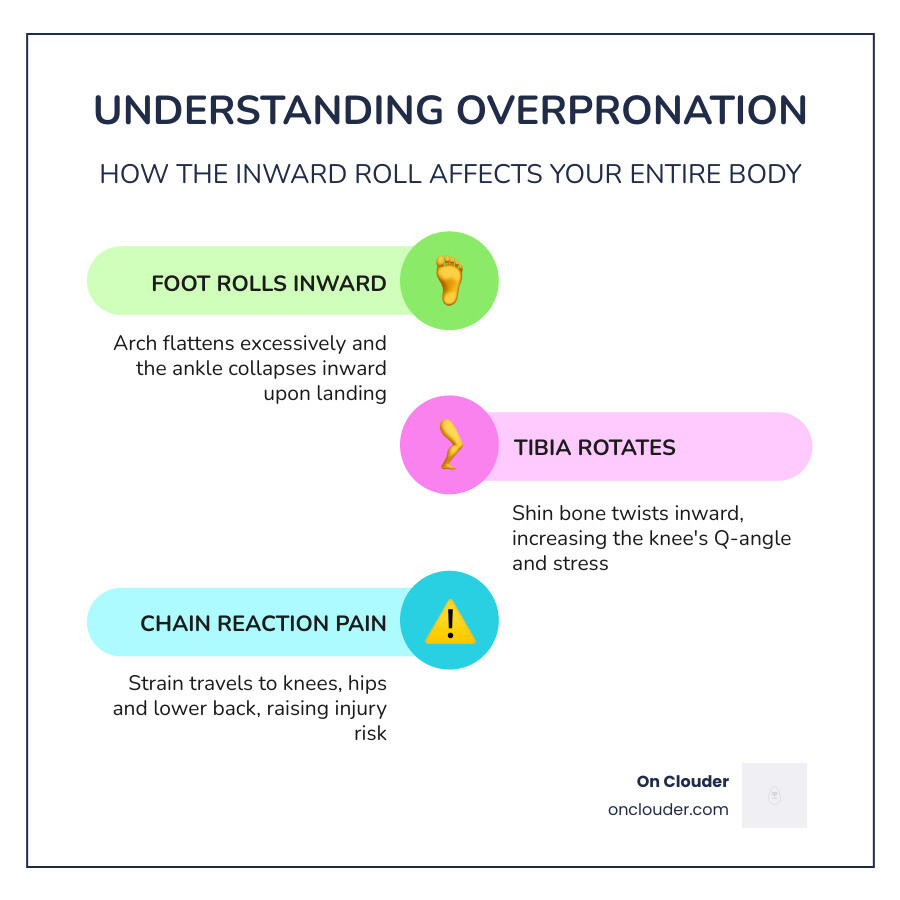
Overpronation is when your foot and ankle roll excessively inward after landing, causing your arch to flatten beyond its normal range. It doesn’t just affect your feet. That inward roll triggers a chain reaction — rotating the tibia, increasing stress on the knee, and sending strain all the way up to your hips and lower back.
Over 50% of people overpronate to some degree. Many don’t even know it until the pain shows up.
The good news? The right pair of shoes can make a real difference — reducing excess motion, improving alignment, and cutting down injury risk.
I’m Faisal S. Chughtai, a footwear expert with a career dedicated to helping people find the right shoes for their specific needs — including identifying the best over pronation shoes for runners, walkers, and professionals who are on their feet all day. In the sections below, I’ll walk you through exactly what to look for and which models stand out in 2026.
Understanding Overpronation and How to Identify It
To understand why you might need the best over pronation shoes, we have to look at the “kinetic chain.” Think of your body as a series of connected gears. When the bottom gear (your foot) rolls too far inward, it forces the gear above it (your tibia or shin bone) to rotate internally. This rotation increases the “Q-angle” of the knee, leading to patellar maltracking—where your kneecap doesn’t slide correctly. This is a primary cause of runner’s knee and IT band syndrome.
How do you know if you’re an overpronator?
You don’t always need a fancy lab to figure this out. Here are a few ways we recommend checking:
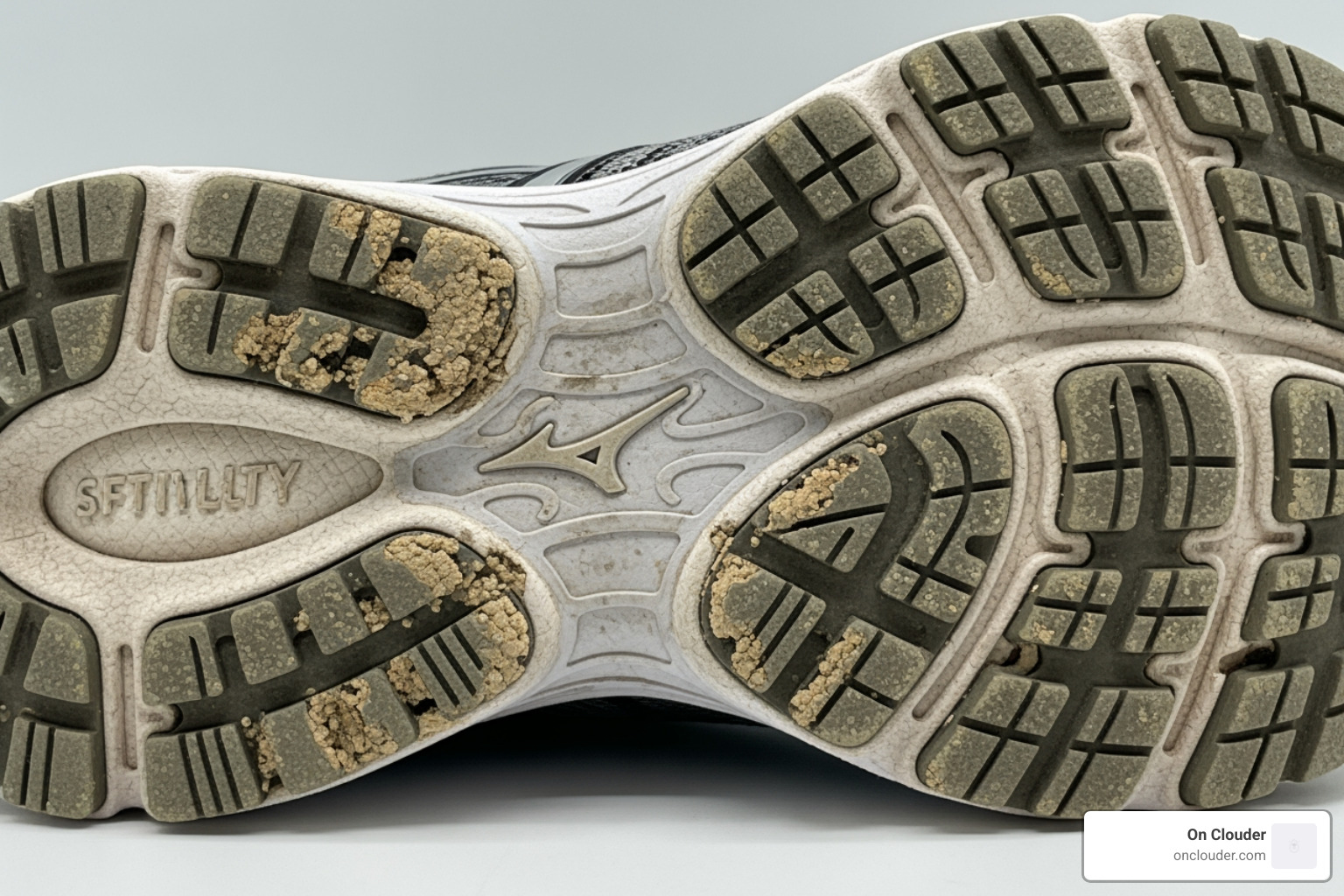
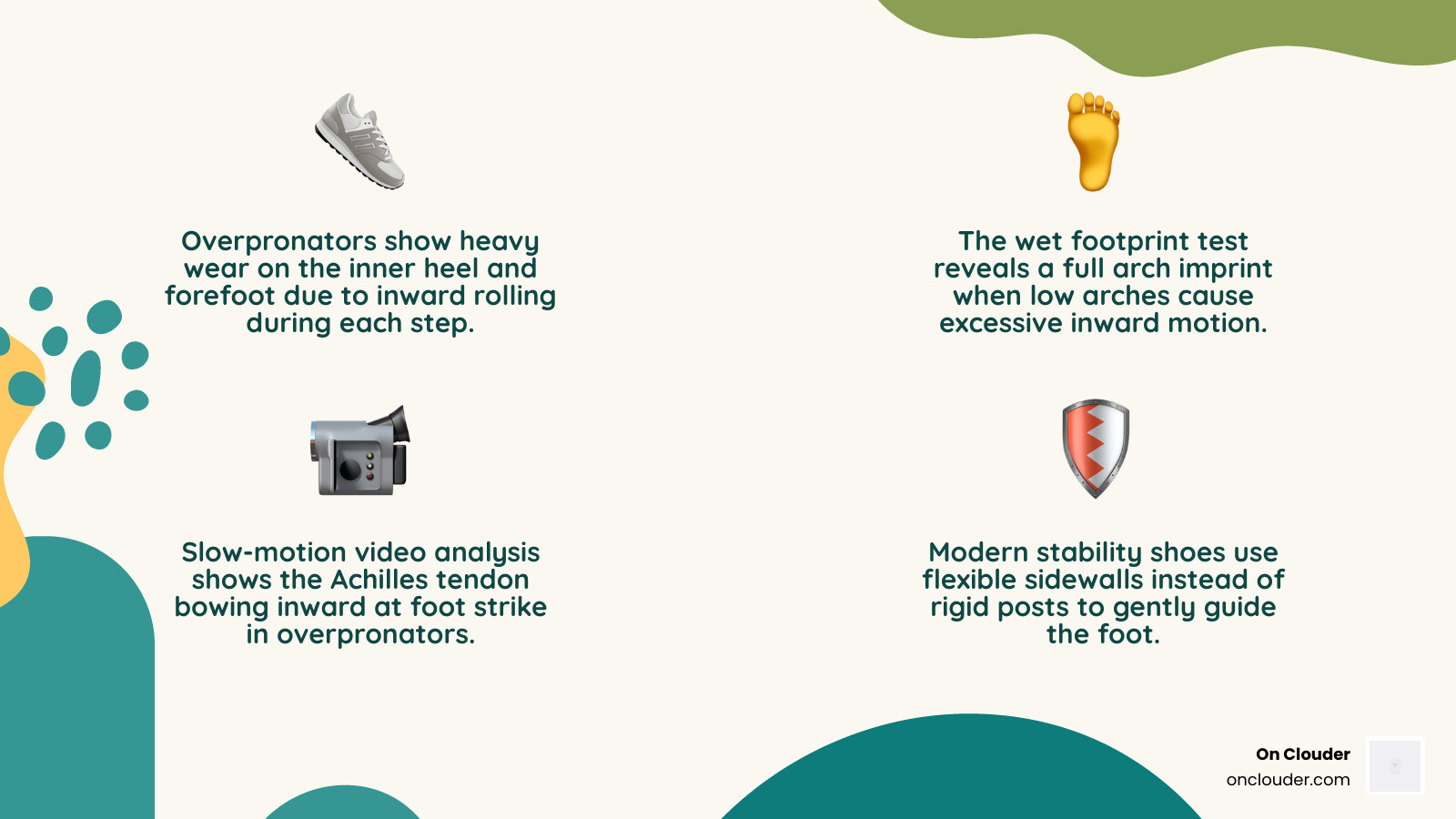
- The Shoe Wear Test: Take a look at your favorite pair of old sneakers. People who overpronate use the medial (inner) side of the sole significantly more. If the inside of the heel and the area under the big toe are worn down while the outside looks new, you’re likely overpronating.
- The Wet Test: Wet your feet and step onto a piece of cardboard or a dry concrete floor. If your footprint looks like a complete foot—meaning you can see the entire arch rather than just a thin line connecting the heel and forefoot—you likely have flat feet or low arches, which are strongly correlated with overpronation.
- Visual Gait Analysis: Have a friend video you running on a treadmill from behind in slow motion. Watch the Achilles tendon. If it bows inward toward the other foot upon landing, that’s a clear sign of an inward roll.
For a deeper dive into the mechanics, check out The Ultimate Guide to Running with Overpronation. If you’re specifically struggling with joint stress, understanding the link between Best Shoes for Overpronation & Knee Pain is a great place to start.
Key Features of High-Stability Footwear
In the past, stability shoes were like wearing bricks. They used hard plastic “medial posts” to force the foot into position. Thankfully, by 2026, technology has evolved. Modern best over pronation shoes use “guidance” rather than “correction.”
Here are the essential components we look for when ranking shoes:
- GuideRails & Sidewalls: Technologies like Brooks’ GuideRails act like bumpers on a bowling alley. They stay out of the way when your stride is neutral but engage to prevent the foot from rolling too far inward when you get tired.
- 4D Guidance Systems: Used by brands like ASICS, these involve dynamic pods that respond to load, providing stability only when the foot is actually under pressure.
- Torsional Rigidity: This is the shoe’s resistance to twisting. A stable shoe should be difficult to “wring out” like a towel. This rigidity helps maintain a platform for the arch.
- Wide Base Platforms: A broader sole provides a more stable foundation, preventing the “tippy” feeling found in narrow neutral shoes.
- Firm Heel Counters: The plastic or composite structure around the heel should be stiff to lock the rearfoot in place, preventing it from sliding inward upon impact.
- Dual-Density Foam: This involves placing firmer foam on the medial side to slow down the rate of inward rolling without making the whole shoe feel like concrete.
To understand how these parts work together, read our article on Everything You Need to Know About Stability Shoes for Runners.
Top 7 Best Over Pronation Shoes for 2026
Choosing the best over pronation shoes is a personal journey. Some runners need a “hug” for their arches, while others just need a bit of guidance when they hit the 10-mile mark.
For more detailed breakdowns, see The 9 Best Stability Shoes for Every Type of Overpronator and The Complete Guide to Running shoes for Overpronators.
Best Overall Best Over Pronation Shoes: Brooks Adrenaline GTS 25
The Adrenaline GTS (Go-To-Shoe) has been a legend for decades, and the 25th edition is the most refined yet. It balances comfort and support perfectly.
- Why it wins: It uses the GuideRails holistic support system which protects the most injury-prone part of a runner’s body: the knees.
- Key Tech: The DNA LOFT v3 nitrogen-infused cushioning is incredibly plush but doesn’t “bottom out” under the weight of an overpronator.
- The Feel: It’s a 10mm drop shoe that feels smooth from heel to toe. It’s the gold standard for Overpronation Running Shoes with Arch Support.
Best Max Cushion Best Over Pronation Shoes: ASICS Gel-Kayano 32
If you want to feel like you’re running on clouds but need the stability of a fortress, the Kayano 32 is it.
- Why it wins: The 4D Guidance System is adaptive. Instead of bracing your foot constantly, it uses a soft foam pod under the arch that compresses and rebounds to guide you back to center.
- Key Tech: PureGEL technology in the heel is 65% softer than previous versions, absorbing massive amounts of shock.
- The Feel: With a 40mm stack height, it’s a high-mileage beast. It’s also available as the GEL-KAYANO 32 WIDE for those who need extra room.
Best Lightweight Stability: Saucony Guide 19
Many stability shoes are heavy (often over 11 oz). The Guide 19 breaks that mold, coming in at a nimble 9.3 oz for men.
- Why it wins: It uses a “Hollow-Tech” frame that provides medial support without the weight of traditional plastic posts.
- Key Tech: PWRRUN foam provides a springy, energetic ride that makes this shoe suitable for tempo runs, not just slow recovery days.
Best for Wide Feet: New Balance Fresh Foam X 860v14
New Balance has always been the king of widths, and the 860v14 continues that reign.
- Why it wins: It features a “Stability Plane”—a structured layer within the Fresh Foam X midsole that prevents the foam from collapsing on the medial side.
- Key Tech: Available in 2E and 4E widths, it accommodates even the most significant “foot splay” that occurs when arches flatten.
Best for Trail Runners: Brooks Cascadia 19
Overpronation doesn’t stop when you hit the dirt. In fact, uneven terrain can make it worse.
- Why it wins: The Cascadia 19 offers a “Ballistic Rock Shield” and a wide, stable platform that prevents ankle rolls on technical trails.
- Key Tech: TrailTack Green rubber provides immense grip on wet rocks, while the lateral stability features keep your foot centered even on off-camber slopes.
Best for Daily Walking: Hoka Arahi 8
Hoka changed the game with their J-Frame technology.
- Why it wins: The J-Frame uses firmer foam in a “J” shape around the heel and inside of the shoe. It’s remarkably lightweight for how much support it offers.
- The Feel: It has a 5mm drop, which is lower than most, encouraging a more natural midfoot strike. It’s often cited as one of the best walking shoes for those who find traditional stability shoes too “clunky.”
Best “Non-Stability” Stability Shoe: Saucony Tempus 2
This is a “super trainer” for overpronators.
- Why it wins: It uses a core of super-bouncy PWRRUN PB (the stuff found in racing shoes) framed by a more stable PWRRUN material.
- The Feel: It offers incredible energy return (over 70% in lab tests) while still providing the “walls” an overpronator needs to stay aligned.
Frequently Asked Questions about Overpronation
Do stability shoes fix overpronation permanently?
No. Stability shoes are a tool, not a cure. They provide temporary correction during the gait cycle to prevent injury. To actually “fix” or reduce overpronation, we recommend strength training for the hips, glutes, and core. Often, overpronation is caused by “hip drop,” where a weak gluteus medius allows the entire leg to rotate inward. Strengthening these muscles can improve your foot’s natural stability. You can learn more about this in The 9 Best Stability Shoes for Every Type of Overpronator.
Can I use neutral shoes with custom orthotics?
Yes, and for many, this is the best approach. Custom orthotics can address specific issues like “first ray hypermobility” (where the big toe joint is too loose). If you have a high-quality custom orthotic, you might find that a neutral shoe with a deep heel cup works better than a stability shoe, as the two together might provide too much correction. If you’re looking for off-the-shelf options, check out how to Stop the Roll with the Best Overpronation Insoles.
How often should I replace my overpronation shoes?
We generally recommend replacing your best over pronation shoes every 400 to 500 miles. However, overpronators often compress the foam on the medial side faster than neutral runners. Once that foam loses its “memory” and stays compressed, the shoe will actually start to encourage your foot to roll inward. Look for visible wrinkles in the foam or a noticeable tilt when the shoes are sitting on a flat table. For more maintenance tips, see our guide on Best Supportive Running Shoes for Comfort and Protection.
Conclusion
At On Clouder, we believe that the “best” shoe is the one that lets you move without thinking about your feet. While technical specs like 4D guidance and GuideRails are important, comfort should always be your North Star. If a shoe feels like it’s “poking” your arch or forcing you to walk unnaturally, it’s probably not the right fit, regardless of how many stability awards it has won.
Combine your new footwear with a solid strength routine, and you’ll be well on your way to a pain-free 2026. Ready to make a choice? Find your perfect pair at On Clouder and stop the roll today!
