

Why Your Feet Are Begging You to Switch to Clog Work Shoes
Clog work shoes are one of the best choices for professionals who spend long hours on their feet — here’s a quick look at the top-rated options:
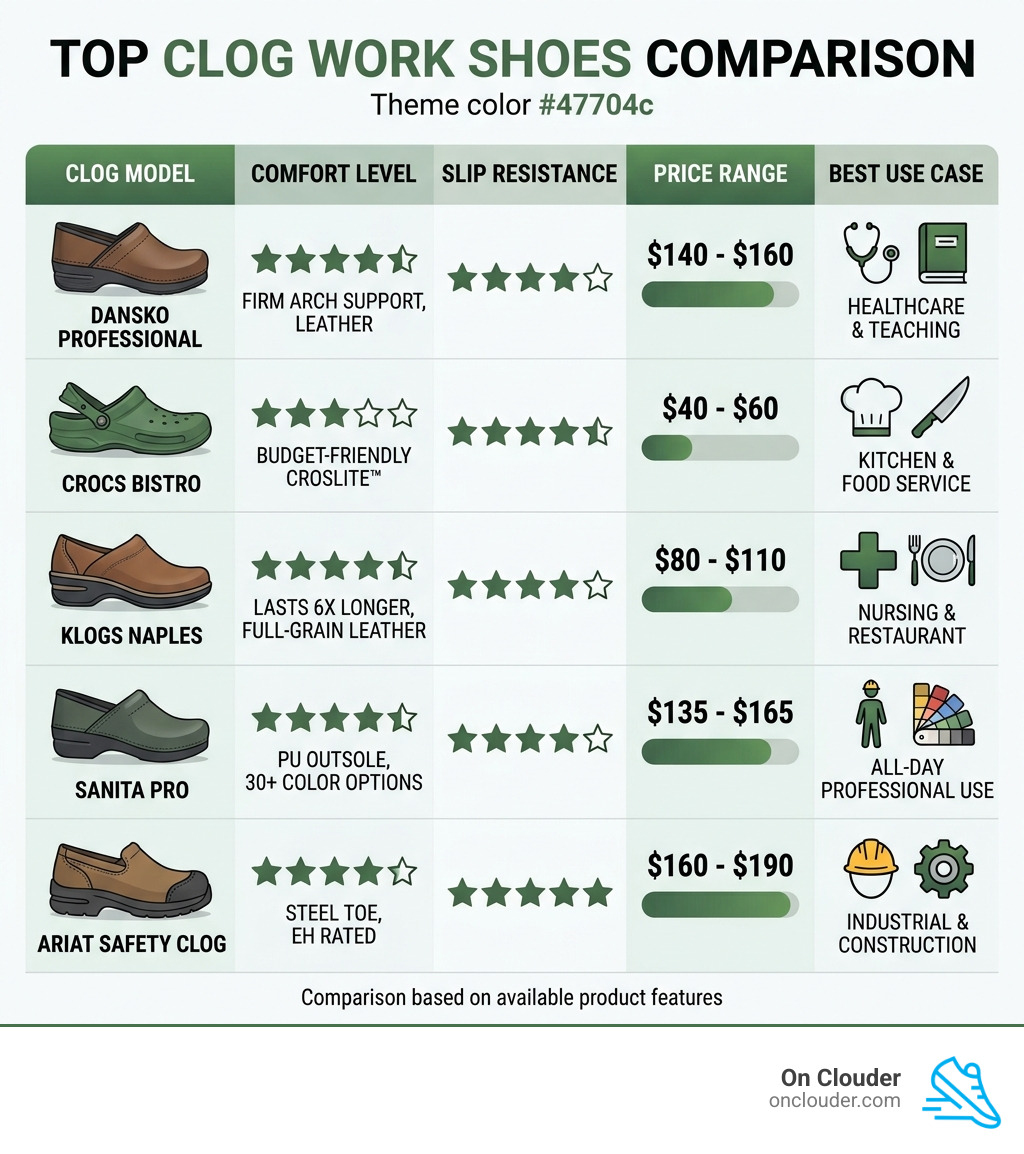
| Clog Model | Best For | Price Range | Key Feature |
|---|---|---|---|
| Dansko Professional | Healthcare, teaching | $140-$160 | Firm arch support, leather |
| Crocs Bistro | Kitchen, food service | Budget-friendly | Croslite™, slip-resistant |
| Klogs Naples | Nursing, restaurant | Mid-range | Full-grain leather, lasts 6x longer |
| Sanita Pro | All-day professional use | $135-$165 | PU outsole, 30+ color options |
| Ariat Safety Clog | Industrial, construction | Premium | Steel toe, EH rated |
If you work a long shift on hard floors, you already know the feeling — aching arches, tired legs, and a back that’s done by noon. It’s not just discomfort. Chronic foot fatigue can lead to real pain that follows you home.
The right pair of clogs can change that. Professionals in healthcare, food service, and industrial settings have trusted work clogs for decades, and for good reason. They combine slip resistance, all-day cushioning, and easy maintenance in one practical shoe.
I’m Faisal S. Chughtai, a footwear comfort specialist who has spent years researching and reviewing clog work shoes for professionals across demanding industries. In this roundup, I’ll break down the top-rated models so you can find the pair that actually fits your workday.
Why Professionals Choose Clog Work Shoes for All-Day Support
When we look at the high-stakes environments of a bustling professional kitchen or a sterile hospital ward, the choice of footwear isn’t just about fashion—it’s about survival. Clog work shoes have become the gold standard for professionals who essentially live on their feet. But why clogs specifically?
The secret lies in the unique ergonomics. Unlike standard sneakers, which might compress over an eight-hour shift, quality clogs are designed with rigid or semi-rigid support systems. This structural integrity provides superior arch support, which is critical for preventing the fallen arches and plantar fasciitis that plague many nurses and teachers. By maintaining the foot’s natural shape, these shoes help align the entire body, offering much-needed back pain relief and improving overall posture.
Shock absorption is another heavy hitter. Brands in this space often use materials like polyurethane (PU) or proprietary foam compounds that act as a buffer between your joints and the unforgiving concrete or tile floors. For a deeper dive into how these mechanics work over the long haul, check out The Ultimate Guide To Clogs That Wont Quit Before You Do.
Furthermore, the “rocker bottom” found in many professional models assists with the natural gait cycle, reducing the energy required to take each step. This means less leg fatigue at the end of a double shift. If you are struggling with the specific challenges of standing on hard surfaces, we have curated a list of the Tag/Best Clogs For Standing All Day to help narrow your search.
Top-Rated Clog Work Shoes: A Brand Comparison
Choosing the right clog work shoes often comes down to the battle of materials: Leather versus Croslite™ (or other synthetics). Each has its camp of loyalists, and the price ranges often reflect the durability and craftsmanship involved.
| Feature | Dansko Professional | Crocs Bistro | Klogs Naples |
|---|---|---|---|
| Material | Full-grain/Patent Leather | Croslite™ (Synthetic) | Full-grain Leather |
| Outsole | Polyurethane (PU) | Crocs Lock™ Rubber | Injected Polyurethane |
| Weight | Heavier/Substantial | Ultra-lightweight | Mid-weight (Klogs-Lite available) |
| Durability | High (years) | Moderate (seasonal) | Very High (6x longer than average) |
| Washable | Wipe clean only | Fully hoseable | Wipe clean/Removable footbed |
While leather offers a professional aesthetic and molds to your foot over time, synthetic options like the Klogs Footwear Dusty Slip Resistant Clog | Boot World provide a vegan-friendly, often autoclavable alternative that is exceptionally easy to sanitize.
The Gold Standard: Dansko and Sanita Professional Clogs
For many in the medical field, the silhouette of a Dansko or Sanita clog is synonymous with professional gear. These brands utilize a stapled construction and a reinforced toe box that provides protection and longevity. Dansko currently offers about 19 different variations of their professional clog, with prices typically landing between $140 and $160. They are famous for their variety of finishes, ranging from classic black oiled leather to vibrant glitters and metallic patent leathers.

Sanita, which shares a deep history with the original clog designs, offers an even wider array of customization. With over 30 color options and specialized fit categories—including narrow, regular, and wide widths—they cater to those who find standard clogs too restrictive. Both brands feature the “rocker bottom” outsole, which is engineered to propel the foot forward. If you’re looking for something that blends this classic support with a touch of Swedish design, you might also consider the Stylish and comfortable clogs at work! – Calou Stockholm .
Lightweight Versatility: Crocs Clog Work Shoes
At the other end of the spectrum, we have the lightweight champions. Crocs has revolutionized the “work shoe” by taking their iconic comfort and adding industrial-grade features. The Work Shoes & Clogs: Water Resistant & Lightweight – Crocs collection is a favorite for those who find leather clogs too heavy or hot.
The Bistro and Bistro Pro models are specifically designed for the “service industry athlete.” They feature an enclosed toe and a thicker metatarsal area to protect the top of the foot from kitchen spills. The standout feature here is the Crocs Lock™ slip-resistant tread, which consistently receives high marks in customer reviews—the Bistro model alone boasts over 70,000 reviews with a 4.5-star average. For those in healthcare, the Specialist II offers a similar lightweight feel but with a more streamlined, professional look.
Essential Safety Features: Slip Resistance and Protection
In a workplace where “wet floor” signs are a permanent fixture, slip resistance isn’t just a feature—it’s a requirement. Most clog work shoes are tested against ASTM F2913-24 standards to ensure they provide adequate traction on dry, wet, and oily surfaces.

One of the most advanced technologies we’ve seen is MaxTRAX®. This outsole design uses precision-cut 90-degree angles to channel liquids away from the bottom of the shoe, much like a high-performance tire. This prevents the “hydroplaning” effect that causes most slips. You can find a wide variety of these safety-first options at Women’s Slip-Resistant Clogs Work Shoes | SR Max , which filters shoes specifically by their slip-resistance ratings.
Beyond the sole, protection comes from the “upper” of the shoe. Many professional clogs feature waterproof or water-resistant uppers to shield feet from hot grease, chemicals, or bodily fluids. An enclosed heel and toe are often mandatory in hospital and kitchen settings to prevent injuries from falling sharp objects or heavy equipment.
Specialized Clog Work Shoes for Industrial and Healthcare Settings
Not all clogs are created equal when it’s time to head into a high-risk zone. For those in light industrial or maintenance roles, the Safety Clog Steel Toe | Ariat is a rare find. It combines the easy-on, easy-off convenience of a clog with a steel toe and an Electrical Hazard (EH) rating, meeting ASTM F2413 standards.
In the healthcare world, weight is the enemy. The Klogs Kennett Ultra Light Clog uses KLOGS-Lite material, which is 26% lighter than traditional polyurethane. This is a game-changer for nurses who might walk several miles during a single shift. These specialized models often include non-marking soles to keep hospital floors pristine and are made from materials that can withstand harsh chemical disinfectants.
Sizing and Maintenance: Getting the Most Out of Your Clogs
One of the most common mistakes we see is buyers sizing their clogs like they would a pair of sneakers. Professional clogs, particularly brands like Dansko and Klogs, are designed to have a “loose” fit.
When you try on a pair of Naples | Infield Full Grain – KLOGS Footwear , you should expect your heel to lift up and down as you walk. This is intentional. If your heel is locked in tight, you’ll likely end up with blisters. There should generally be about a pinky-finger’s width of space between your heel and the back of the shoe.
Maintenance Tips for Longevity:
- Leather Clogs: Wipe them down with a damp cloth daily. For scuffs on patent leather, a little soap and water usually does the trick. Oiled leathers benefit from occasional conditioning to keep the material from cracking.
- Polyurethane/Synthetic Clogs: These are the easiest to maintain. Many can be rinsed in a sink or even put through a professional sanitizer. The Klogs Dusty, for example, is autoclavable.
- Insoles: Most high-quality clogs feature removable, antimicrobial footbeds. We recommend replacing these every 4-6 months to maintain maximum cushioning and hygiene.
Frequently Asked Questions about Clog Work Shoes
How should professional clogs fit compared to standard shoes?
As mentioned, they should be looser. Your toes should not touch the front of the shoe, and a slight heel lift is a sign of a correct fit. If you have high arches, look for models with an elastic “v-notch” or adjustable straps to prevent the top of the shoe from pinching your instep.
Are Crocs work clogs better than leather clogs for kitchen environments?
It depends on your priority. Crocs are lighter, usually cheaper, and can be hosed off at the end of the night, making them excellent for messy environments. However, leather clogs often provide better long-term arch support and better protection against heavy falling objects.
How do I know if my clogs are certified slip-resistant?
Look for the ASTM F2913 or F3445 certification marks on the product description or the sole of the shoe. Most reputable work brands will clearly state if they meet or exceed these safety standards for wet and oily surfaces.
Conclusion
Finding the right clog work shoes is an investment in your health and your career. Whether you opt for the classic, structured support of a Dansko leather clog or the featherlight, slip-resistant ease of a Crocs Bistro, the goal is the same: finishing your shift without pain.
At On Clouder, we are committed to providing the most detailed footwear performance rankings to help you make an informed choice. Don’t let the wrong shoes slow you down. If you’re ready to upgrade your work gear, find the best footwear for long shifts on hard surfaces and give your feet the support they deserve.

2 thoughts on “Don’t Slip Up with These Top-Rated Clog Work Shoes”
Comments are closed.