

When Every Step Hurts: Finding the Right Over Pronation Walking Shoes
If you’re searching for the best over pronation walking shoes, here’s a quick answer to get you started:
Top picks at a glance:
| Shoe | Best For | Price |
|---|---|---|
| Brooks Adrenaline GTS 25 | Best Overall | ~$140 |
| ASICS Gel-Kayano 32 | Max Cushion | ~$165 |
| HOKA Arahi 8 | Lightweight | ~$150 |
| New Balance Fresh Foam X 860v14 | Wide Feet | ~$140 |
| Skechers Arch Fit 2.0 | Budget Pick | ~$90 |
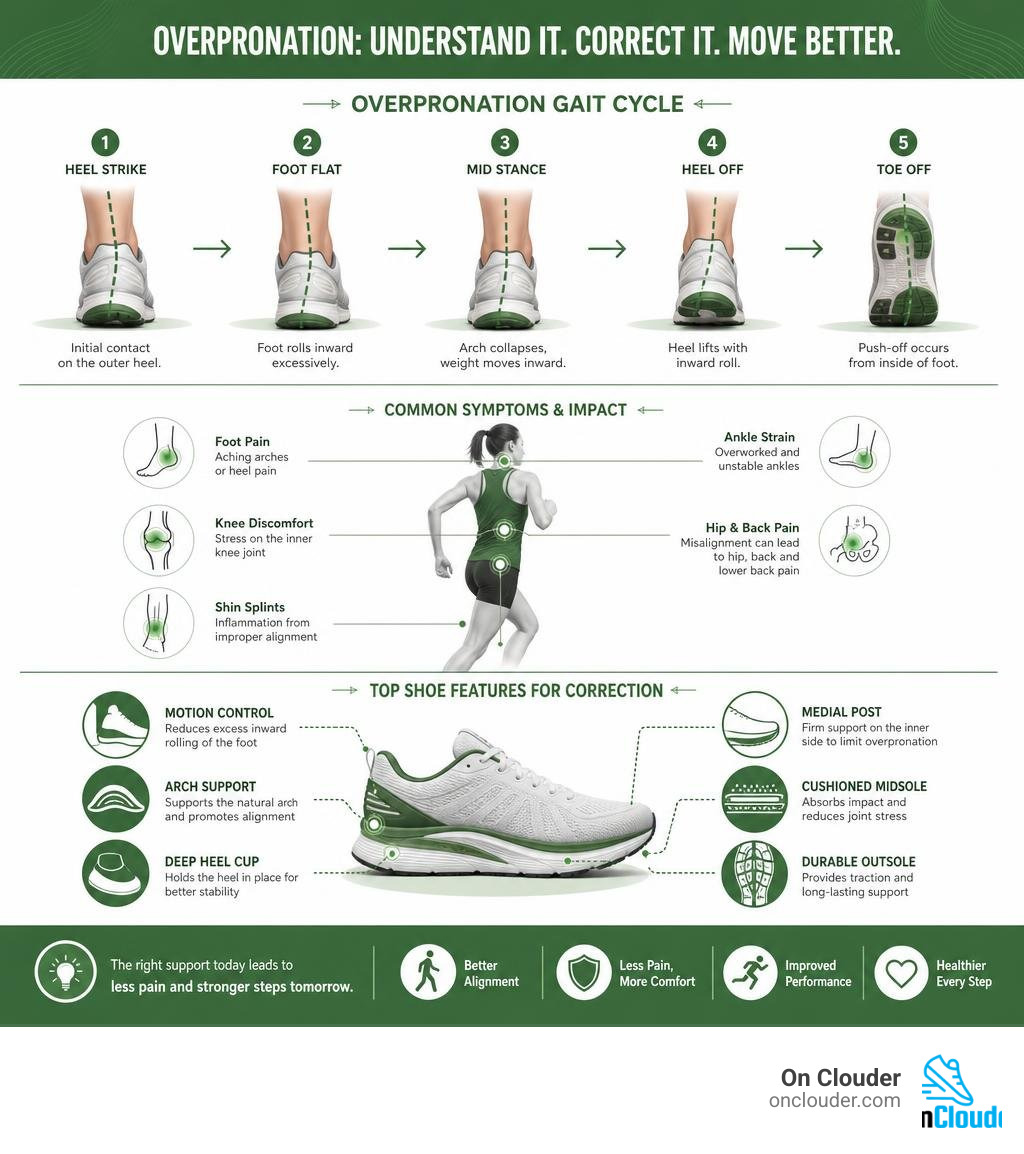
Your feet roll inward a little with every step. That’s completely normal — it’s how your body absorbs shock. But when that inward roll goes too far, it’s called overpronation. And it can quietly cause a chain reaction of pain that travels from your arches all the way up to your knees, hips, and lower back.
You’re not alone if this sounds familiar. Overpronation affects roughly 45% of runners and is one of the most common gait issues out there. What makes it tricky is that only about half of people can correctly identify their own foot type — meaning many overpronators are wearing the wrong shoes without even knowing it.
The right pair of walking shoes can make a real difference. Not just for comfort during a morning walk, but for how your whole body feels by the end of a long shift or a busy day on your feet.
I’m Faisal S. Chughtai, and I’ve spent years helping people cut through the noise to find footwear that actually works — including the best over pronation walking shoes for daily comfort and long-term foot health. In the sections below, I’ll walk you through everything you need to make a confident, well-informed choice.
Terms related to over pronation walking shoes:
- best over pronation shoes
- running over pronation
Understanding Overpronation and Its Impact on Foot Health
To understand why your feet, shins, or knees might ache after a long walk, we have to look at the biomechanics of the gait cycle. When your foot strikes the ground, it naturally rolls inward to absorb the impact. This movement is called pronation. However, when the ankle rolls too far downward and inward, exceeding approximately 15 degrees of calcaneal eversion (heel tilt), you cross over into overpronation.
This excessive inward roll is often accompanied by flat feet or fallen arches, where the structural suspension bridge of the foot collapses under the body’s weight.
When this collapse happens repeatedly over thousands of daily steps, it places immense strain on the soft tissues of the lower body. The plantar fascia is stretched to its limit, leading to the stabbing heel pain of plantar fasciitis. The tibialis posterior tendon is overworked as it tries to pull the arch back up, leading to shin splints.
Furthermore, this inward ankle rotation forces the tibia (shin bone) to twist inward, creating a kinetic domino effect that misaligns the knee, hip, and lower back.
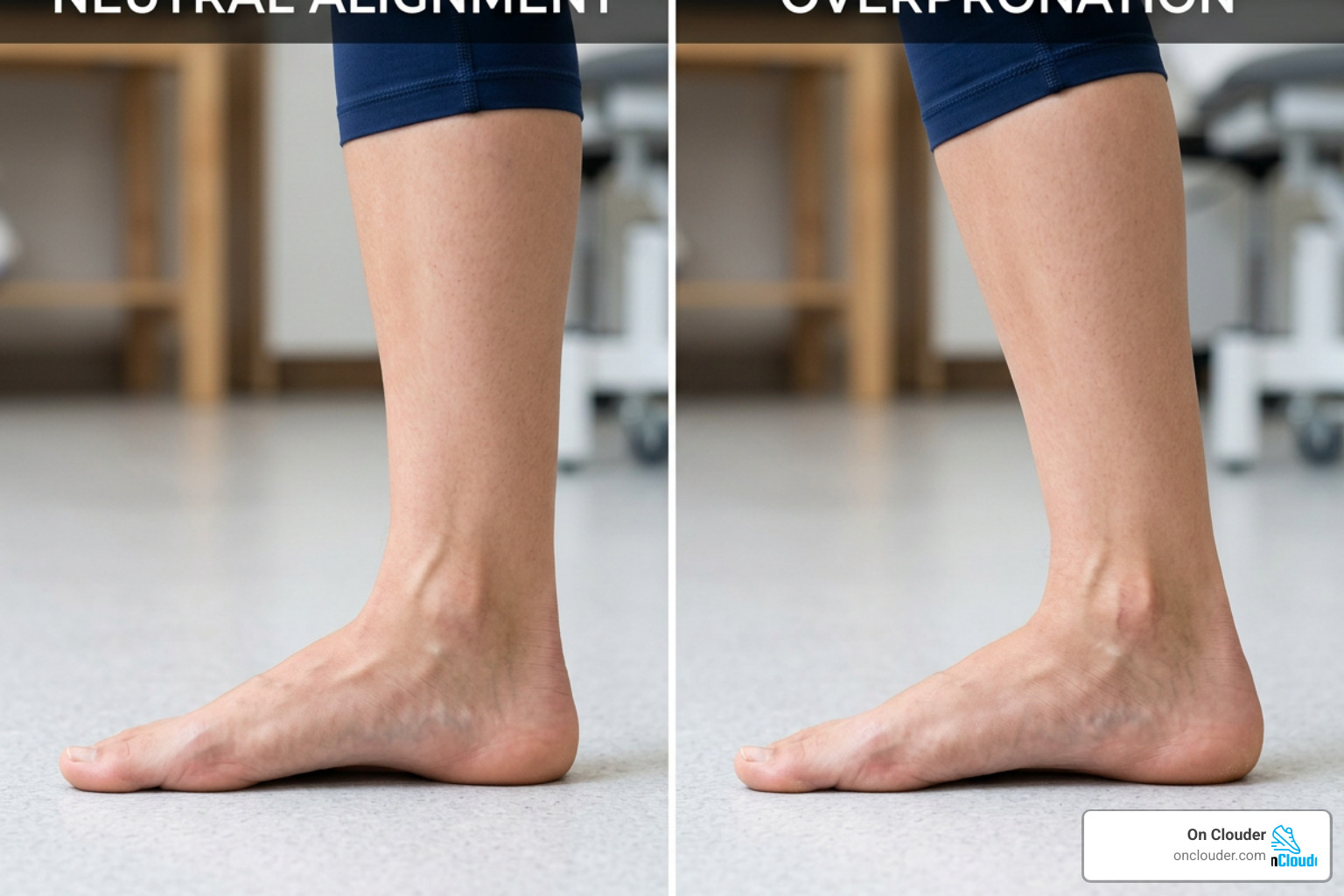
How do you know if you are one of the many overpronators walking in the wrong shoes? There are three reliable ways to check:
- The Wet Footprint Test: Wet the sole of your foot and step firmly onto a piece of cardboard or dry concrete. If your footprint looks like a complete, solid foot with little to no curve on the inside edge, you likely have flat feet and overpronate.
- The Shoe Wear Pattern: Look at the bottoms of a well-worn pair of sneakers. If you notice significant wear concentrated along the inner edge of the sole, especially near the ball of the foot and the inside of the heel, your gait is rolling inward.
- The Standing Tilt: Stand in front of a mirror and look at your ankles. If your inner ankle bones bulge prominently toward each other while your arches touch the floor, your feet are overpronating.
While these home tests are great starting points, we always recommend seeking a professional gait analysis from a podiatrist or physical therapist to understand your specific biomechanical needs.
If you want a deeper look into how stability footwear addresses these issues, check out our guide on Everything You Need to Know About Stability Shoes for Runners as well as the testing methodology found in The 10 Best Walking Shoes for Overpronation of 2026, Tested.
Key Features of Effective Over Pronation Walking Shoes
Not all walking shoes are created equal. If you struggle with overpronation, a soft, pillowy lifestyle sneaker without structural support will likely make your pain worse. To find relief, we need to focus on shoes engineered with specific stability features:
- Torsional Rigidity: A supportive shoe should resist twisting. If you grab a shoe by the heel and toe and try to wring it out like a towel, it should offer firm resistance. High torsional rigidity keeps the platform stable as your weight transitions from heel to toe.
- Firm Heel Counter: The heel counter is the cup at the back of the shoe that cradles your heel. A stiff, structured heel counter locks your calcaneus in place, preventing the heel from tilting inward (calcaneal eversion) the moment it strikes the ground.
- Wide Platform Base: A wider midsole footprint acts like an outrigger on a canoe. By broadening the surface area under the midfoot and forefoot, the shoe physically prevents your foot from spilling over the inner edge of the sole.
- Dual-Density Midsoles and Medial Posts: Historically, stability shoes relied on a “medial post” — a block of high-density, firm EVA foam placed on the inner side of the arch. This firmer foam resists compression, acting as a structural barrier that slows down the rate of inward foot collapse.
While a highly stable shoe is critical, sometimes your feet need an extra layer of structural correction. Pairing your shoes with a structured insole can dramatically improve alignment. If you want to maximize support, explore how to Stop the Roll with the Best Overpronation Insoles.
Modern Stability Technologies vs. Traditional Medial Posts
In the past, wearing a stability shoe meant walking on a stiff, uncomfortable block of hard plastic or dense grey foam. It felt less like a shoe and more like a corrective orthotic device. Fortunately, in 2026, footwear engineering has shifted from prescriptive correction to adaptive guidance.
Instead of forcing your foot into an unnatural position, modern stability technologies only engage when your stride begins to deviate. Here is how the top brands tackle overpronation today:
Brooks GuideRails Support System
Rather than placing a hard post under the arch, Brooks utilizes its holistic GuideRails technology. Think of GuideRails like the bumpers on a bowling alley. They consist of raised foam barriers on both the medial (inner) and lateral (outer) sides of the heel.
If your foot rolls too far inward, it meets the medial guide rail, which gently steers it back to center. If your foot shifts too far outward as you fatigue, the lateral rail stabilizes it. This system reduces excess rotation at the calcaneus, protecting both your ankle and your knee joint.
HOKA J-Frame and H-Frame Systems
HOKA is famous for its maximalist cushioning, but soft foam can naturally feel unstable for overpronators. To solve this, HOKA developed the J-Frame system. It uses a firmer density foam shaped like the letter “J” that wraps around the inside edge of the foot and hooks around the heel.
The J-Frame delivers support without adding heavy plastic shanks. For even greater structural integrity in their high-stack models, HOKA introduced the H-Frame, which locks the foot into a secure, dual-density cradle to prevent side-to-side wobble.
ASICS 3D and 4D Guidance Systems
ASICS has completely revolutionized stability with its 4D Guidance System. While older models used rigid medial posts, the 4D system is highly adaptive. It uses a soft, bouncy foam insert directly underneath the arch that compresses and recovers rapidly.
Instead of blocking your foot from rolling inward, it speeds up the transition phase of your gait, guiding your foot back into a neutral alignment dynamically. It provides stability only when your foot needs it, making the shoe feel incredibly natural and plush.
To compare how these technologies perform across different brands, take a look at the 7 Best Walking Shoes For Overpronation in 2026 – RunRepeat or dive deep into The Complete Guide to Running Shoes for Overpronators.
The Best Women’s Overpronation Walking Shoes of 2026
To help you find the absolute best fit for your daily walks and long hours on your feet, we have compiled and tested the top-performing stability trainers of 2026.
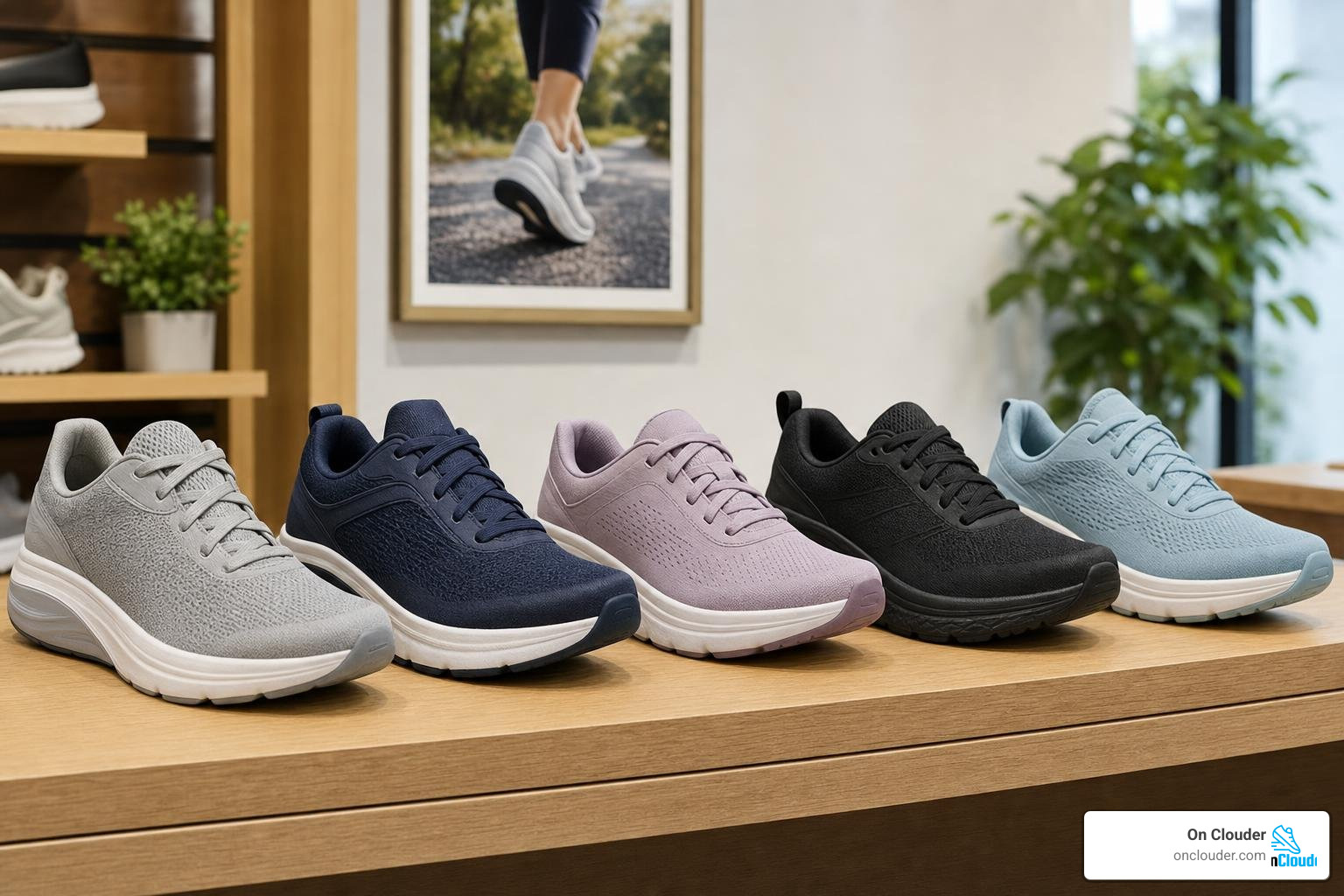
Below is a direct comparison of their key technical specifications, followed by our detailed, hands-on reviews.
| Shoe Model | Stability Tech | Stack Height | Weight (Women’s) | Heel Drop | Key Highlight |
|---|---|---|---|---|---|
| Brooks Adrenaline GTS 25 | GuideRails | 37mm | ~9.0 oz | 10mm | Best overall balance of support & comfort |
| ASICS Gel-Kayano 32 | 4D Guidance System | 40mm | ~9.2 oz | 8mm | Best max-cushion feel for severe overpronation |
| HOKA Arahi 8 | J-Frame Tech | 39mm | ~7.7 oz | 5mm | Ultra-lightweight and breathable |
| New Balance Fresh Foam X 860v14 | Stability Plane | 38mm | ~8.7 oz | 8mm | Best for wide feet and bunion relief |
| Skechers Arch Fit 2.0 | Arch Fit Insole | 39mm | ~8.5 oz | 6mm | Best budget-friendly orthopedic option |
Brooks Adrenaline GTS 25: Best Overall Over Pronation Walking Shoes
For over two decades, the Adrenaline series has been the gold standard for daily support, and the Brooks Adrenaline GTS 25 continues that legacy beautifully. In this latest version, Brooks has refined the ride by incorporating nitrogen-infused DNA LOFT cushioning throughout the midsole. This provides a highly responsive, energetic feel underfoot while maintaining the structured protection overpronators need.
The star of the show remains the GuideRails support system, which acts as a gentle alignment guide for your feet, ankles, and knees. With a comfortable 10mm drop and a highly durable rubber outsole, this shoe is built to handle hundreds of miles of concrete sidewalk. It is an incredibly balanced shoe that never feels intrusive, making it perfect for both daily fitness walks and long shifts on your feet.
Learn more about this model in the Best Stability Walking Shoes for Overpronators in 2026.
ASICS Gel-Kayano 32: Best Max Cushion Over Pronation Walking Shoes
If you have flat feet, severe overpronation, or joint pain that makes walking on hard surfaces feel like a chore, the ASICS Gel-Kayano 32 is your saving grace. Boasting a massive 40mm stack height of premium foam combined with PureGEL technology in the heel, it offers unparalleled shock absorption.
What makes the Kayano 32 truly special is its 4D Guidance System. It completely eliminates the stiff, blocky feel of traditional motion-control shoes. Instead, the adaptive arch design compresses to accommodate your foot’s natural movement, then rebounds to guide you smoothly into your next step. It is a premium, plush trainer that makes 10,000 steps feel like a breeze.
Discover how this max-cushion model stacks up in The 5 Best Running Shoes for Flat Feet Overpronation 2026 Guide.
HOKA Arahi 8: Best Lightweight Stability Option
Many stability shoes suffer from one major flaw: they are heavy. The HOKA Arahi 8 completely shatters this stereotype, weighing in at a remarkably light 7.7 oz for a women’s model.
Using HOKA’s signature J-Frame technology, the Arahi 8 provides firm support along the inside of the foot and heel without the weight of heavy plastic plates. The early-stage Meta-Rocker geometry helps roll your foot forward smoothly, reducing the effort required to push off. Covered in a highly breathable, structured mesh upper, it is the ultimate choice for warm-weather walking and speedy fitness workouts.
Read more about the Arahi’s corrective capabilities in the guide to 7 Best Walking Shoes for Overpronation Correction.
New Balance Fresh Foam X 860v14: Best for Wide Feet
Finding a shoe that accommodates wide feet, flat arches, and bunions while still providing top-tier overpronation control can be incredibly frustrating. Enter the New Balance Fresh Foam X 860v14.
This shoe features a generous toe box and is available in multiple wide (D) and extra-wide (2E) fittings. Underneath, New Balance utilizes a supportive Stability Plane nestled within a dual-density Fresh Foam X midsole. This design provides structured midfoot lockdown and prevents the foot from spilling over the edge, keeping your gait perfectly aligned without pinching or rubbing.
Explore further wide-width stability options in our breakdown of The 9 Best Stability Shoes for Every Type of Overpronator.
Skechers Arch Fit 2.0: Best Budget-Friendly Choice
At an average price of around $90, the Skechers Arch Fit 2.0 offers incredible orthopedic value without breaking the bank. It features a podiatrist-certified arch support system developed using over 20 years of foot scan data.
The removable Arch Fit insole molds directly to your foot, distributing pressure evenly across the arch and reducing the strain of overpronation. With a tall, cushioned midsole and a supportive heel counter, it is an exceptionally comfortable, budget-friendly shoe for daily errands and casual walks around the neighborhood.
Walking Shoes vs. Running Shoes for Overpronation
You might have noticed that many of our top recommendations for over pronation walking shoes are technically classified as running shoes. There is a very good reason for this.
Running shoes are the most technologically advanced footwear category on the market. Manufacturers invest millions of dollars into researching gait biomechanics, foam densities, and stability systems specifically for running shoes. Because walking and running share similar pronation patterns, these advanced stability systems translate perfectly to walking.
However, there are subtle biomechanical differences to keep in mind:
- Heel Strike Impact: Walkers strike the ground with their heel first with up to 1.5 times their body weight, whereas runners land with 2 to 3 times their body weight on the midfoot or forefoot. Therefore, walkers require exceptional heel cushioning and a secure, stiff heel counter.
- Transition and Flexibility: The walking gait is a continuous rolling motion from heel to toe. Walking shoes need to be slightly more flexible in the forefoot to allow a natural toe-off, whereas running shoes often feature stiffer soles for explosive energy return.
- Weight and Speed: Running shoes prioritize lightweight materials to help you move faster. While walking, a slightly heavier shoe (like the Brooks Addiction Walker) is perfectly acceptable if it provides maximum motion control and long-term durability.
If you are a walker who also likes to mix in light jogging or walk-run intervals, choosing a high-quality stability running shoe is highly beneficial. For a complete breakdown of how running mechanics influence shoe selection, check out The Ultimate Guide to Running with Overpronation.
Frequently Asked Questions about Overpronation Footwear
How do I know if I need mild, moderate, or severe overpronation support?
The level of support you need depends heavily on the flexibility of your arch and the severity of your inward ankle roll.
- Mild Overpronation: Your arch flattens slightly, and you feel minor fatigue in your feet after long walks. An adaptive stability shoe with light guidance (like the HOKA Arahi 8) is usually perfect.
- Moderate Overpronation: Your ankles visibly roll inward, your shoes show clear wear on the inner edges, and you frequently experience shin splints or arch strain. A structured stability shoe with guide rails or a firm midsole plane (like the Brooks Adrenaline GTS 25) is recommended.
- Severe Overpronation: Your arches collapse completely (flat feet), your inner ankle bones tilt heavily toward the ground, and you experience chronic knee or lower back pain. You require a maximum-support motion-control shoe (like the ASICS Gel-Kayano 32).
For professional guidance on selecting the right support level, consult our clinical resource on Best Running Shoes Overpronation 2026 | Podiatrist.
Can I use custom orthotics with stability walking shoes?
Yes, you absolutely can. Most high-quality stability shoes come with removable insoles, allowing you to slide in your custom podiatrist-molded orthotics or over-the-counter inserts.
However, a word of caution: pairing a highly aggressive motion-control shoe with a rigid custom orthotic can sometimes over-correct your gait, pushing your foot too far outward (supination) and causing ankle instability. If you use rigid custom orthotics, we often recommend pairing them with a structured, neutral-to-mild stability shoe.
For a curated list of orthotic-friendly models, view our guide on Top Podiatrist Approved Shoes for Overpronation.
How often should I replace my overpronation walking shoes?
As a general rule, high-quality walking shoes should be replaced every 300 to 500 miles. For the average person walking 3 miles a day, this translates to replacing your shoes every 4 to 6 months.
Even if the rubber outsole of your shoe still looks intact, the internal foam and stability structures (like medial posts or guide rails) compress and fatigue over time. Once the midsole loses its structural integrity, it will no longer prevent your foot from rolling inward, and your joint pain may quickly return.
Conclusion
Finding the right over pronation walking shoes is one of the most important investments you can make for your daily comfort and long-term health. When your feet are properly aligned, the stress on your arches, shins, knees, and lower back is dramatically reduced, allowing you to stay active, healthy, and pain-free.
Whether you prefer the balanced, time-tested support of the Brooks Adrenaline GTS 25, the plush cloud-like comfort of the ASICS Gel-Kayano 32, or the wide-toe-box relief of the New Balance 860v14, there is a perfect pair out there for your unique feet.
At On Clouder, we are dedicated to helping you find the ultimate footwear solutions for your active lifestyle. Ready to take your first pain-free step? Dive into our comprehensive An Essential Guide to Best Overpronation Shoes to find your perfect match today!
