
Why Slip-On Non-Slip Work Shoes Are a Game-Changer for Safety and Comfort
The best slip on non slip work shoes combine effortless entry with serious traction — here are the top picks for 2026:
| Shoe | Best For | Price Range | Rating |
|---|---|---|---|
| BRUNT The Ohman | Heavy-duty jobsites | Mid-range | 4.5/5 (4,112 reviews) |
| Red Wing ComfortPro | Light manufacturing, office-to-floor | Mid-range | ASTM certified |
| Rockport Works Primetime | Steel toe, oily surfaces | ~$135 | Best-rated slip outsole |
| Florsheim Fleet Work | Style + composite toe protection | $165 | ASTM F2413 approved |
| TredSafe Ethan | Budget-friendly daily wear | Under $60 | 4.2/5 (1,426 reviews) |
Every year, slips and falls on wet or oily floors cause thousands of workplace injuries. For anyone who spends long shifts on their feet — in kitchens, hospitals, warehouses, or on job sites — the wrong shoes can mean the difference between a safe day and a serious accident.
That’s where slip-on non-slip work shoes solve two problems at once.
They give you quick, hassle-free wear — no lacing up between tasks — while delivering the kind of grip that keeps you upright on the most treacherous surfaces. Whether it’s a grease-slicked kitchen floor or a rain-soaked loading dock, the right outsole technology makes all the difference.
And in April 2026, the options have never been better. Brands are combining athletic comfort tech — think memory foam insoles and lightweight builds — with industrial-grade safety certifications like ASTM F2413-24 and ASTM F3445-21.
I’m Faisal S. Chughtai, a footwear expert who has spent years helping people find the right fit for demanding, on-your-feet lifestyles — including testing and reviewing slip on non slip work shoes across industries from healthcare to construction. Let’s break down exactly what to look for so you can find the pair that keeps you safe, comfortable, and moving all shift long.
Slip on non slip work shoes word list:
Key Features of High-Performance slip on non slip work shoes
When we look for high-performance Work Footwear, the first thing we check is the outsole. A truly Slip Resistant shoe isn’t just about a “grippy” feel; it’s about engineering. Modern outsoles are designed with specific tread patterns that channel liquids (like water, oil, and soap) away from the contact point, much like a high-performance tire.
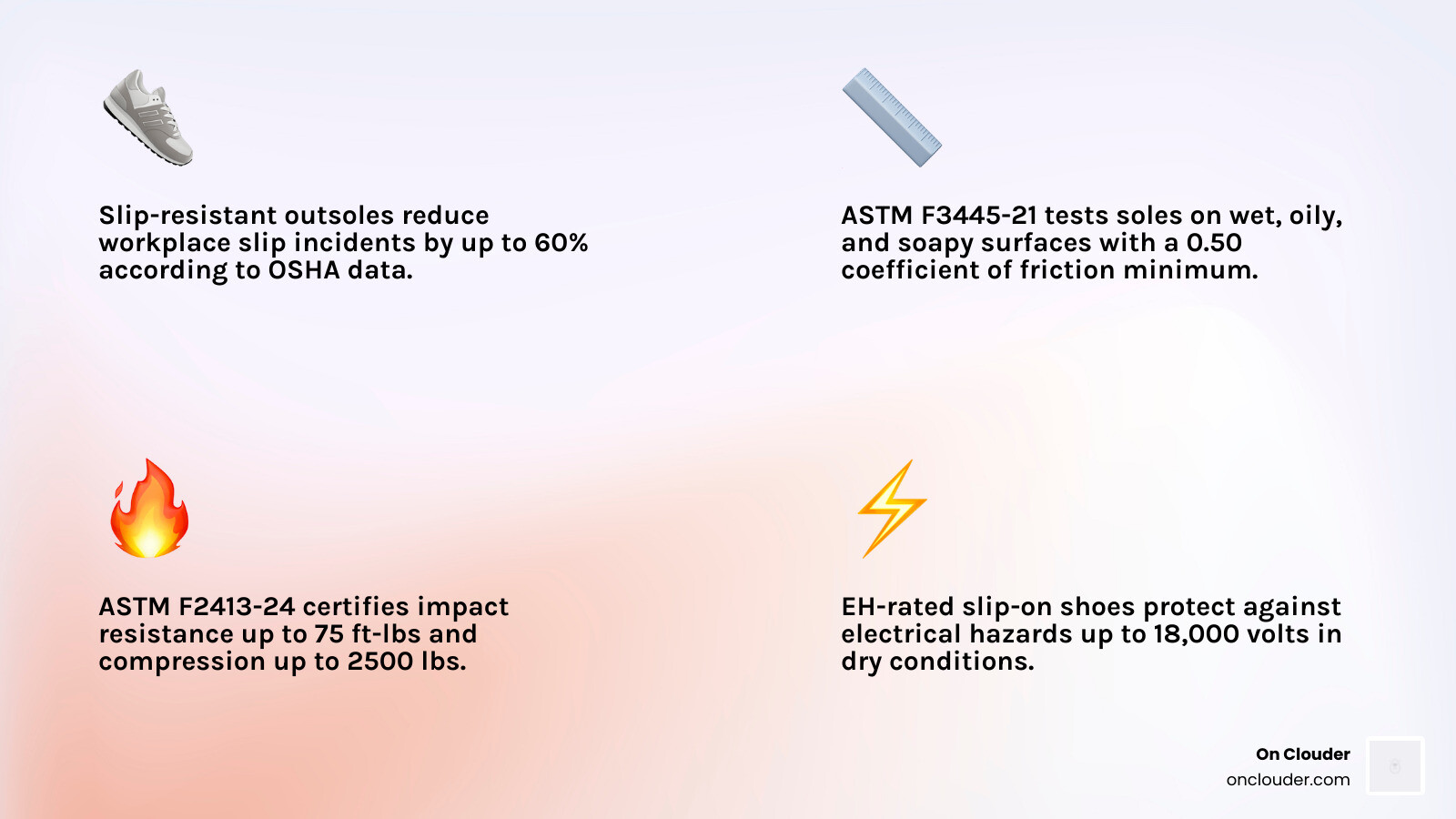
In April 2026, the gold standard for safety is compliance with ASTM F2413-24 (for safety toes) and ASTM F3445-21 (the specific standard for slip resistance). These certifications ensure that your shoes have been rigorously tested on slick surfaces. For example, some specialized outsoles are proven to exceed these standards, offering maximum traction on grease and soap, which is a lifesaver in the culinary and healthcare worlds.
Beyond the grip, you need to consider what’s protecting your toes. Depending on your job, you might need a steel toe, a composite toe, or a soft toe.
Toe Protection Comparison Table
| Toe Type | Best Use Case | Key Benefit |
|---|---|---|
| Steel Toe | Heavy industrial, construction | Maximum impact protection; classic durability. |
| Composite Toe | Security checkpoints, extreme temps | Non-metallic; won’t conduct heat or cold; lighter than steel. |
| Soft Toe | Service industry, light warehouse | Maximum agility; Lightweight Work Shoes feel. |
Comfort is the next pillar. We look for Comfortable Work Shoes that utilize dual-layer cushioning. Models like the 9645- Men’s 4″ Slip Resistant Work Sneaker [SR] – AdTecFootWear feature memory foam and PU insoles to combat fatigue during 12-hour shifts. Other technologies, such as truTECH shock absorption in the heel, help reduce the impact on your joints when walking on hard concrete all day.
Choosing the Right slip on non slip work shoes for Your Industry
Not all slip on non slip work shoes are created equal. The environment you work in dictates the features you need:
- Healthcare and Nursing: Nursing Shoes and Shoes For Nurses need to be liquid-resistant and easy to clean. Clogs are popular here because they offer arch support and a wide toe box for feet that swell during long shifts.
- Kitchens and Food Service: Here, oil resistance is king. Slip-Resistant Shoes – Chef Uniforms are designed to handle slippery animal fats and soapy dishroom floors. Look for water-repellent uppers to keep your feet dry during spills.
- Warehousing and Logistics: If you’re constantly on the move, Warehouse Shoes need to be lightweight. Many workers prefer a slip-on sneaker style that offers athletic responsiveness while still meeting safety standards.
- Industrial and Construction: In these sectors, you may need Electrical Hazard (EH) protection or Static Dissipative (SD 35) properties. These features prevent the buildup of static electricity or protect against open circuits, which is vital for electricians and manufacturing technicians.
Top-Rated Models and Brands for 2026

Finding the right Work Shoes often comes down to brand reputation and real-world performance. In 2026, several models stand out for their balance of safety and convenience.
BRUNT The Ohman has become a favorite for those who want the ruggedness of a boot with the ease of Slip On Shoes. This 6″ boot features a soft toe and high-heat-resistant outsoles (up to 572°F). It’s highly rated for its “industrial slipper” feel, making it a top choice for factory workers. You can find more details at The Ohman (Soft Toe) | 6″ Slip-On Work Boot | BRUNT Workwear .
For those in light manufacturing who need to transition from the production floor to an office setting, the Red Wing ComfortPro is a stellar choice. It offers a non-metallic safety toe and a sleek look that doesn’t scream “work boot.” It’s designed to be broken-in right out of the box, saving you from that painful first week of wear.
If you require a steel toe in a casual package, the Rockport Works Primetime delivers. It features a “Best” rated slip-resistant outsole and moisture-wicking linings to keep your feet cool. Similarly, the Florsheim Fleet Work sneaker offers a composite toe and “SupaStep” hands-free technology, allowing you to step into the shoe without even bending over—perfect for those with back pain or a busy schedule.
For those on a budget, TredSafe offers reliable options like the Ethan and the Caspian Clog. These are widely used in the service industry and hold strong ratings from thousands of verified buyers. Meanwhile, brands like Shoes For Crews continue to lead the market with proprietary outsole designs trusted by over 150,000 companies worldwide.
Maintenance and Care for Professional Footwear

To get the most out of your slip on non slip work shoes, maintenance is non-negotiable. Whether you are wearing Work Sneakers or leather boots, keeping the outsole clean is the most important step for safety. Dirt and debris trapped in the tread can “fill in” the gaps, turning your non-slip sole into a smooth, dangerous surface.
Many modern boots use specialized materials like FarmGuard leather, which is designed to resist harsh chemicals, oils, and even barnyard acids. However, even the toughest leather needs hydration. We recommend using a leather conditioner every few weeks to prevent cracking and maintain water resistance.
Inside the shoe, Mens Shoes Breathable Non Slip Work Shoes often feature moisture-wicking linings. To keep these fresh, avoid wearing the same pair two days in a row if possible; this allows the materials to dry completely, preventing odor and bacterial growth.
How to Maintain Your slip on non slip work shoes
- Clean the Outsoles: Use a small brush or a dedicated “sole cleaner” to remove rocks, grease, or food particles from the tread daily.
- Wash the Uppers: For Non Slip Sneakers, a damp cloth with mild soap usually does the trick. For leather, use a dedicated waterproof leather cleaner.
- Condition and Protect: Apply a boot cream or leather protector to shield the material from moisture and stains.
- Insole Check: Replace your insoles every 3–6 months. Even if the shoe looks new, the internal cushioning loses its ability to absorb shock over time.
- Air Dry: Never put your work shoes in the dryer or next to a heater. Let them air dry at room temperature to preserve the glues and leather integrity.
Frequently Asked Questions about Slip-Resistant Footwear
How do slip-on designs compare to laced work shoes?
Slip-on designs are all about convenience and speed. In environments like hospitals or kitchens, being able to step into your shoes and go is a huge plus. They also eliminate the trip hazard of untied laces and the “debris trap” that tongues and lace-holes can create. However, laced shoes generally offer more adjustable ankle support and a more “locked-in” feel for uneven terrain. If you are working on flat, indoor surfaces, a slip-on is usually the superior choice for comfort.
What sizing and fit factors should I consider?
When buying slip on non slip work shoes, fit is critical because you can’t tighten them with laces. Look for brands that offer wide width options if you have a broader foot. Some innovative brands, like BRUNT, use a “Switch-Fit” system where you can remove an insert to change the shoe from a regular (D) to a wide (EE) fit. Always check for “heel slip”—a tiny bit is normal in a new slip-on, but your foot shouldn’t feel like it’s coming out of the shoe entirely.
What are the benefits of composite vs steel toes in slip-ons?
Composite toes are made from materials like carbon fiber or plastic. They are significantly lighter than steel, which reduces leg fatigue over a long shift. They also don’t conduct cold or heat, making them much more comfortable in refrigerated warehouses or hot asphalt environments. Steel toes, while heavier, often have a lower profile (they look less “bulky”) and are sometimes preferred for maximum impact resistance in heavy demolition zones. Both types must meet the same ASTM safety standards to be job-site legal.
Conclusion
At On Clouder, our goal is to help you navigate the complex world of footwear with ease. Choosing the right slip on non slip work shoes is an investment in your safety and long-term health. By prioritizing ASTM-certified outsoles, appropriate toe protection, and modern comfort technologies like memory foam and shock-absorbing heels, you can ensure that your footwear works as hard as you do.
Whether you’re a nurse navigating a slick hospital corridor or a warehouse worker on a 10-hour shift, the right pair of shoes will keep you stable and pain-free. For more in-depth advice on protective footwear, check out our guide to waterproof safety shoes. Stay safe out there!
