

Why Keeping White Gym Shoes Clean Is Harder Than It Looks
How to clean white gym shoes is one of those things that sounds simple – until you’re staring at a gray, grass-stained mess wondering where you went wrong.
Here’s a quick answer to get you started:
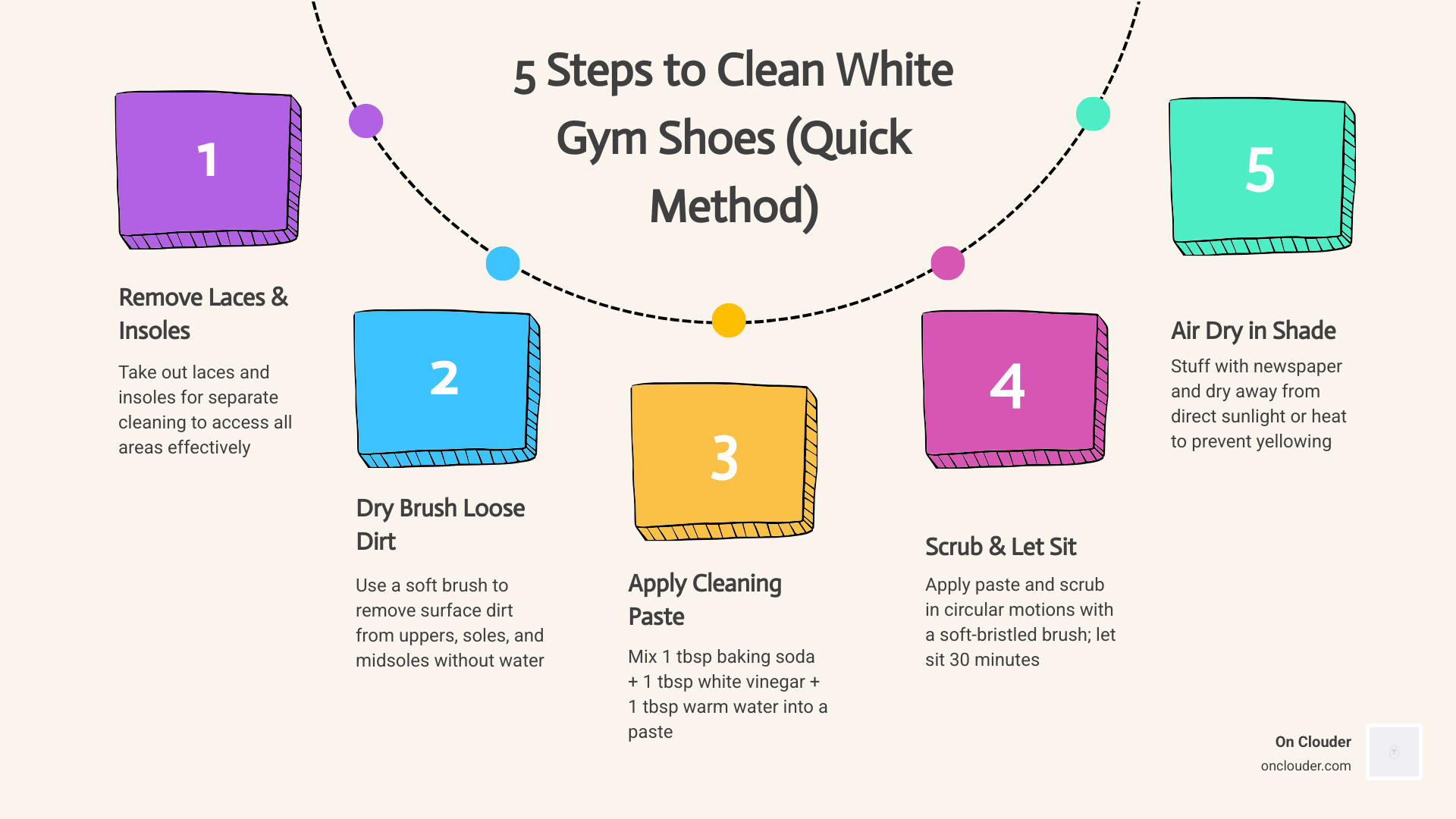
5 Steps to Clean White Gym Shoes (Quick Method)
- Remove laces and insoles – clean them separately
- Dry brush loose dirt off the upper, sole, and midsole
- Apply a cleaning paste – mix 1 tbsp baking soda + 1 tbsp white vinegar + 1 tbsp warm water
- Scrub in circular motions with a soft-bristled brush, then let sit 30 minutes
- Air dry in the shade – away from direct sunlight or heat
The right method depends on your shoe material. Mesh, leather, canvas, and suede each need a different approach – using the wrong one can cause yellowing, cracking, or damage.
White gym shoes take a beating. Sweat, mud, gym floors, and outdoor runs all leave their mark fast. And the stakes feel high – a dingy pair of white sneakers can look worse than a worn-out colored pair.
The good news? You don’t need expensive products or professional cleaning. Most effective methods use things already in your kitchen or bathroom.
I’m Faisal S. Chughtai, a footwear expert with years of hands-on experience helping runners and active professionals care for their performance shoes – including knowing exactly how to clean white gym shoes without damaging the materials that make them work. Below, I’ll walk you through five proven methods that actually deliver results.
Essential how to clean white gym shoes terms:
- best way to clean white running shoes
- best way to clean mesh sneakers
- cleaning trainers white
Essential Supplies and Material Guide
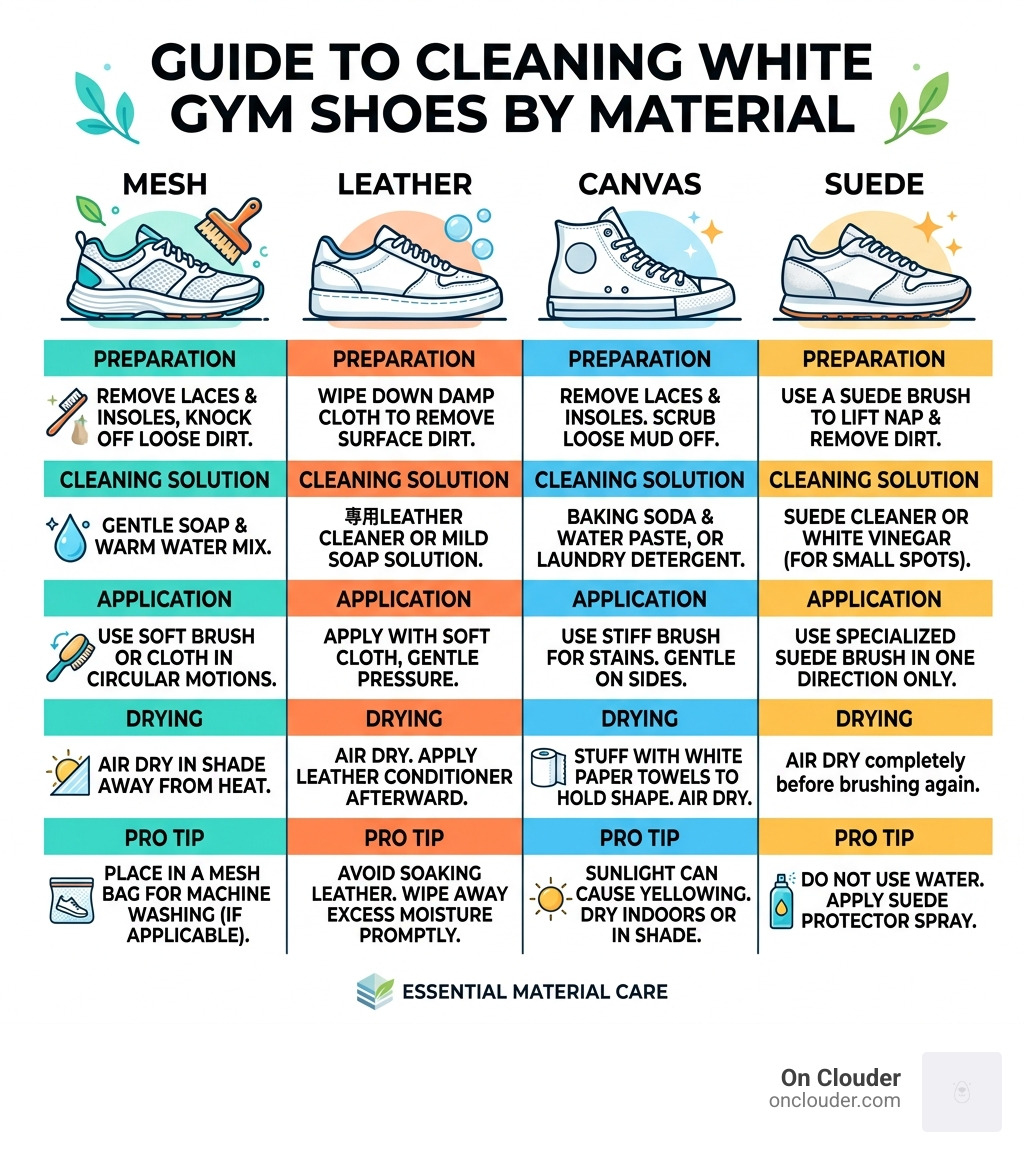
Before we dive into the scrubbing, we need to talk about what your shoes are actually made of. In April 2026, gym shoes are more high-tech than ever, blending recycled plastics, delicate knits, and specialized foams. Treating a pair of canvas sneakers the same as a pair of technical mesh performance shoes is a recipe for disaster.
Identifying Your Shoe Material
We’ve found that most white gym shoes fall into four main categories. Knowing yours is the first step in our Cleaning Guide.
- Mesh: Common in running shoes. It’s breathable but acts like a net for dirt. It requires a gentle touch to avoid snags.
- Leather: Durable and easier to wipe down, but prone to creasing and cracking if it gets too dry or is exposed to harsh chemicals.
- Canvas: Highly absorbent. Once a stain sets in canvas, it really moves into the fibers, making it one of the harder materials to restore.
- Rubber Soles: These are the “midsoles” and “outsoles.” They often yellow due to oxidation or trapped dirt in the texture.
The Ultimate Cleaning Toolkit
To master how to clean white gym shoes, you likely already have a Shoe Care kit in your pantry. Here is what we recommend keeping on hand:
- Baking Soda & White Vinegar: The classic DIY duo for lifting stains.
- Dish Soap: Use a mild, clear version to avoid dye transfer.
- Hydrogen Peroxide (3%): Excellent for whitening and disinfecting.
- Non-gel Toothpaste: Specifically for the rubber edges and small scuffs.
- Microfiber Cloths: Better than paper towels as they don’t leave lint behind.
- Soft-bristled Brush: An old toothbrush works perfectly for detail work.
- Melamine Sponge: Often called a “Magic Eraser,” these are life-savers for rubber soles.
- Micellar Water: A surprising “hack” that works wonders on White Sneakers made of leather.
How to Clean White Gym Shoes: 5 Proven Methods
Now that we are geared up, let’s get to work. Regardless of the method you choose, always start by dry brushing. Use a dry toothbrush to flick away loose dirt, dried mud, and dust. If you skip this, you’ll just be rubbing wet mud deeper into the fabric.

1. How to clean white gym shoes with baking soda and vinegar
This is our “gold standard” for canvas and mesh. The chemical reaction between the base (baking soda) and the acid (vinegar) creates a bubbling action that physically lifts dirt out of the fibers.
- The Ratio: Mix 1 tablespoon of baking soda, 1 tablespoon of white vinegar, and 1 tablespoon of hot water.
- The Process: Stir until it forms a thick paste. Dip your brush into the paste and apply it to the shoe in circular motions.
- The Secret: Let the paste dry completely on the shoe (usually 30 to 60 minutes). Once it’s “crusty,” clap the shoes together outside to shake off the dried paste, then wipe away any remaining residue with a damp cloth.
2. Using Toothpaste for Scuffs and Soles
If you have scuffs on the rubber toes or the sides of your midsoles, toothpaste is a fantastic abrasive.
- Important: Only use white, non-gel toothpaste. Colored gels or charcoal pastes will stain your white shoes!
- The Process: Dab a pea-sized amount onto the scuff. Scrub with a toothbrush using a bit of water to create a lather. Let it sit for 10-15 minutes, then wipe clean with a wet microfiber cloth. This is a favorite for Sneaker Cleaning on the go.
3. Hydrogen Peroxide for Stubborn Yellowing
Have your shoes turned that sickly shade of “old-plastic yellow”? This is often caused by oxidation. 3% hydrogen peroxide is a safe way to reverse this.
- The Mix: Combine 2 parts baking soda with 1 part hydrogen peroxide.
- The Process: Apply the paste to the yellowed areas. For an extra boost, place the shoes in indirect sunlight while the paste sits. The UV rays help activate the peroxide to brighten the fabric. Rinse thoroughly after 30 minutes.
4. How to clean white gym shoes in the washing machine
We get asked this a lot: “Is it safe?” The answer is yes, but only for fabric-based shoes (mesh, nylon, polyester, or canvas). Never put leather or suede in the Washing Machine.
- Step 1: Remove laces and insoles.
- Step 2: Place the shoes in a mesh laundry bag to prevent them from banging against the drum.
- Step 3: Use a cold, delicate cycle with a small amount of liquid detergent.
- Step 4: Throw in a few old white towels to balance the load and dampen the noise.
- Step 5: Always air dry. The heat from a dryer will melt the glues holding your soles together! Check out our Laundry Tips for more.
5. Micellar Water for Leather and Suede
This is a modern Shoecare secret. Micellar water is designed to pull oil and dirt off skin, and it does the same for leather sneakers. It’s gentle enough that it won’t crack the leather. Simply soak a cotton ball or cloth in micellar water and rub the stains away. It requires no rinsing, making it the ultimate spot-cleaning tool.
Deep Cleaning Laces, Insoles, and Tough Stains
Cleaning the “body” of the shoe is only half the battle. If you put dirty, gray laces back into a bright white shoe, the whole thing will still look old.
Whitening Shoelaces and Deodorizing Insoles
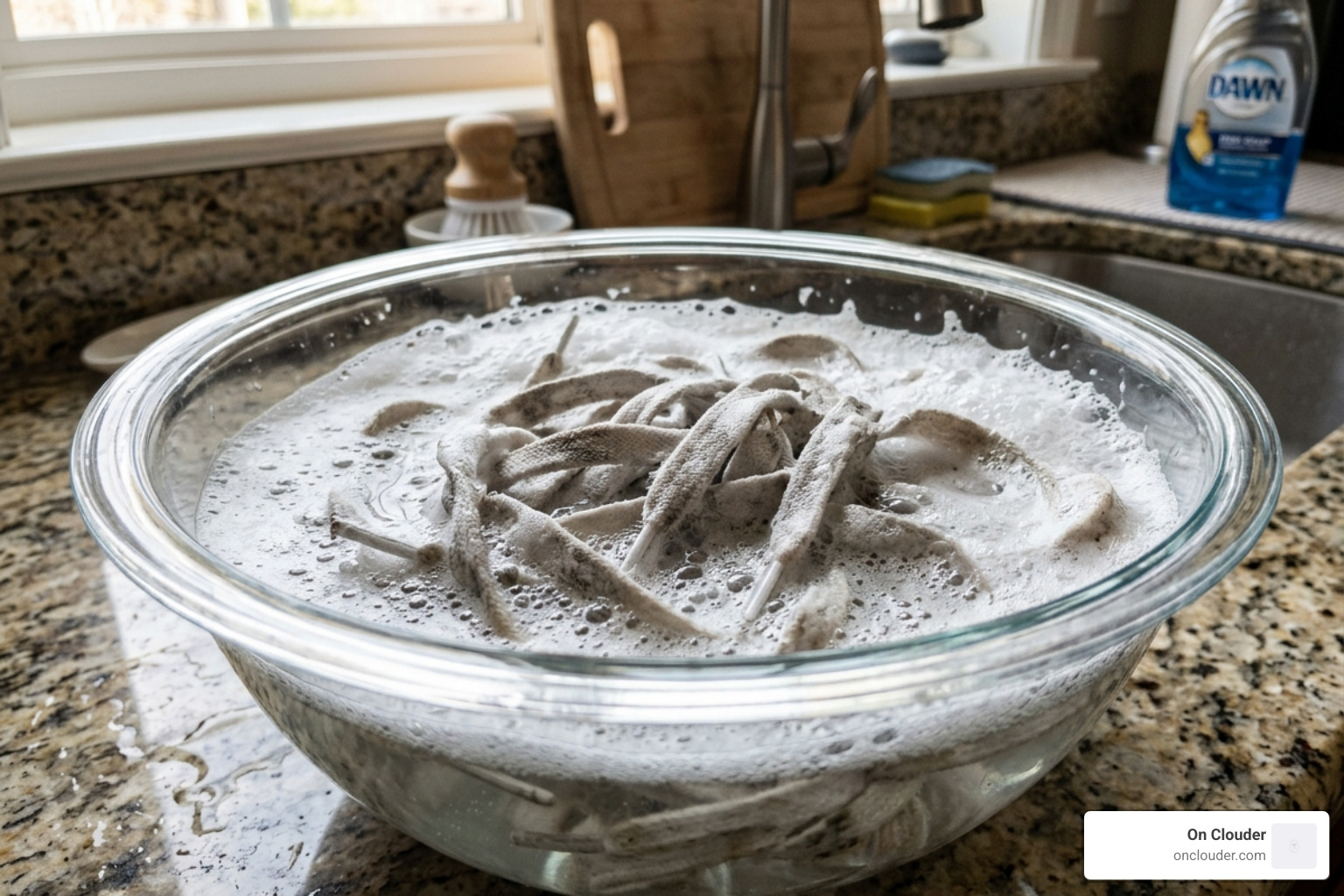
Laces act like sponges for dirt. For the best results, we recommend a separate soak.
- For Laces: Mix a solution of warm water and a splash of bleach (about 3 tablespoons per gallon). Soak them for 5 minutes—no longer, or you might weaken the fibers. If you prefer to avoid bleach, a 1-hour soak in OxiClean or a baking soda/vinegar mix works too.
- For Insoles: Don’t soak these! They are often made of foam that can lose its shape. Instead, scrub them with a soapy cloth, then sprinkle with dry baking soda while they are still damp. Let them sit overnight to neutralize odors, then shake off the powder in the morning. This is a core part of Sneaker Maintenance.
Removing Grass Stains and Mud
Grass stains are essentially dye. To remove them, you need an enzyme-based cleaner (like most liquid laundry detergents) or white vinegar.
- Apply a drop of detergent directly to the green stain.
- Agitate with a soft brush.
- Let it sit for 15 minutes before rinsing with cold water.
- For mud, always let it dry first! Brushing off dry mud is much easier than trying to wash away wet “liquid” mud, which just spreads the stain.
Drying Techniques and Brand-Specific Care
The drying process is where most people ruin their shoes. Patience is the most important tool here.
- Avoid Heat: Never use a hairdryer or a radiator. High heat makes white rubber turn yellow and can cause the uppers to shrink or warp.
- Stuff with Paper: Use white paper towels or plain packing paper to stuff the inside of the shoes. This absorbs moisture from the inside out and helps the shoe maintain its shape while drying. Avoid newspaper, as the ink can transfer onto your wet white shoes!
- Air Dry: Place them in a well-ventilated area away from direct sunlight. Direct UV rays during the drying phase can lead to Air Drying discoloration. Expect a full dry to take 8 to 12 hours.
Common Mistakes to Avoid
In our years of Shoe Maintenance, we’ve seen it all. Avoid these pitfalls:
- Using Too Much Bleach: It doesn’t just whiten; it can actually cause a chemical reaction that leaves permanent yellow streaks on canvas.
- Ignoring the Label: Always check the tongue of the shoe for care instructions.
- Hot Water: Heat can set stains permanently. Always use cold or lukewarm water.
- Scrubbing Too Hard: Especially on mesh. You can fray the delicate fibers, making the shoe look “fuzzy.”
Maintenance Tips for Lightweight Performance Sneakers
If you wear running shoes with segmented foam soles or thin engineered mesh, a little extra care goes a long way.
- The Soles: Use a dull tool or a specialized brush to clear debris from grooves and cutouts after every outdoor run.
- The Mesh: Lightweight performance mesh benefits from the micellar water or very diluted dish soap method to keep it clean without weighing it down.
- Protection: Once your shoes are clean and dry, apply a water and stain repellent spray. This creates a microscopic barrier that makes the next cleaning session much easier.
Frequently Asked Questions about White Gym Shoes
How often should I deep clean my white gym shoes?
We recommend a quick wipe-down after every wear to prevent dirt from settling. A deep clean should happen every 4 to 6 weeks depending on how often you use them. If you’re a daily runner, you might need to do it more often to manage sweat and odors.
Is it safe to use bleach on white mesh sneakers?
Generally, we advise against it. Bleach is very harsh and can degrade the synthetic fibers of mesh, leading to holes. Stick to hydrogen peroxide or baking soda for a safer whitening effect.
How do I stop my white shoes from turning yellow after washing?
Yellowing usually happens because of “alkaline residue” (leftover soap) or oxidation. To prevent this, ensure you rinse the shoes completely until the water runs clear. Adding a little white vinegar to your final rinse can help neutralize any leftover detergent.
Conclusion
Learning how to clean white gym shoes is about more than just aesthetics; it’s about protecting your investment. By using the right materials—like baking soda for canvas or micellar water for leather—you can extend the life of your favorite pair well into 2026 and beyond.
The key to a “like-new” look is regular maintenance. Don’t wait for your shoes to turn gray before you take action. A quick spot clean today saves you a massive headache tomorrow. Keep your footwear rotation looking sharp and performing at its best!
