
Why Your Feet Are Paying the Price for Long Shifts
All day standing work shoes are the single most important piece of gear for anyone who spends 8+ hours on their feet at work. Here are the top picks to consider right now:
| Shoe Type | Best For | Key Strength |
|---|---|---|
| HOKA Bondi / Clifton | Nurses, healthcare | Max cushioning |
| Brooks Ghost / Glycerin | Retail, teachers | Balanced support |
| Dansko / KLOGS clogs | Chefs, kitchen staff | Durability, slip resistance |
| New Balance 990 / 1540 | Wide feet, flat feet | Stability, arch support |
| ASICS Gel-Nimbus | Long shifts on concrete | Shock absorption |
| G-DEFY VersoShock | Plantar fasciitis, joint pain | Orthotic-grade support |
| Ariat / Red Wing boots | Warehouse, industrial | Safety ratings, durability |
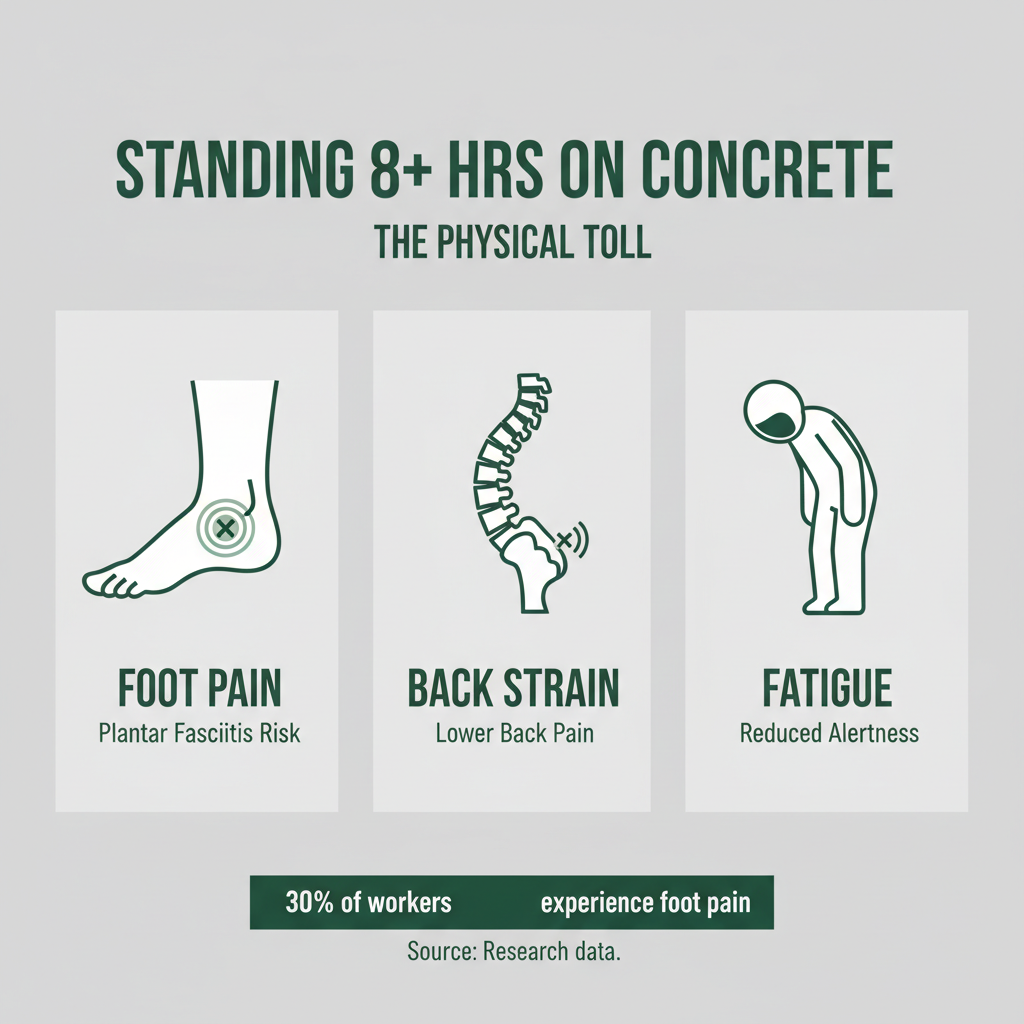
Standing all day is harder on your body than most people realize. Up to 30% of workers experience foot pain linked directly to poor footwear. Over 2 million people deal with plantar fasciitis — and prolonged standing in unsupportive shoes is one of the biggest causes. Beyond your feet, the strain travels up: lower back pain and musculoskeletal disorders are common side effects of long shifts on hard surfaces like concrete.
The right shoe doesn’t just prevent pain. Research suggests that comfortable footwear can even positively affect brain regions responsible for attention and decision-making — meaning the wrong shoes don’t just hurt your feet, they can hurt your performance too.
I’m Faisal S. Chughtai, a footwear comfort and performance expert who has spent years helping people find the right all day standing work shoes for their specific needs and professions. In this guide, I’ll walk you through exactly what to look for — and which shoes deliver.
All day standing work shoes basics:
- best black dress shoes for standing all day
- best dress shoes for standing all day men’s
- best comfortable shoes for work
Essential Features of All Day Standing Work Shoes
When we talk about all day standing work shoes, we aren’t just looking for “soft” shoes. True comfort for an 8-to-12-hour shift requires a complex balance of engineering. Think of your shoes as the foundation of a building; if the foundation is weak, the rest of the structure (your ankles, knees, and back) will eventually suffer.
The Pillars of Comfort
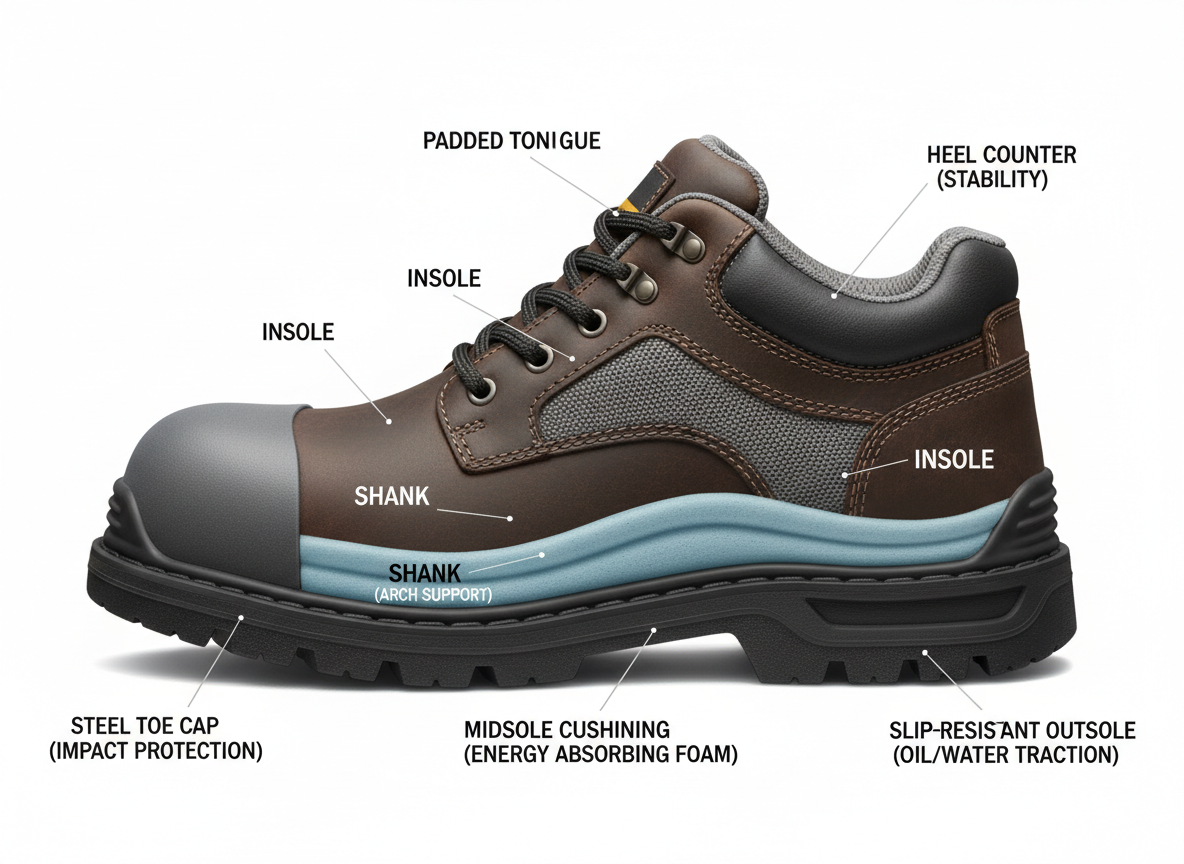
- Arch Support: This is non-negotiable. Proper support keeps your foot aligned and prevents the plantar fascia from overstretching.
- Shock Absorption: Standing on concrete floors sends micro-shocks through your joints every time you shift your weight. High-quality midsoles absorb this energy before it reaches your bones.
- Slip Resistance: In environments like kitchens or hospitals, safety is paramount. Look for shoes that meet ASTM F3445 standards for slip resistance.
- Breathability and Weight: Heavy, suffocating shoes lead to “hot spots” and fatigue. Lightweight mesh or perforated leathers help regulate temperature.
- Heel-to-Toe Drop: While runners often debate “zero drop,” many workers find a moderate drop (8-12mm) helps relieve strain on the Achilles tendon during static standing.
| Weight Category | Recommended Cushioning Level | Example Technology |
|---|---|---|
| Light (<150 lbs) | Moderate / Responsive | Brooks DNA Loft |
| Medium (150-200 lbs) | High / Balanced | ASICS FlyteFoam |
| Heavy (>200 lbs) | Maximal / Firm | HOKA Marshmallow / G-DEFY VersoShock |
Determining Adequate Shock Absorption and Stability
How do you know if a shoe actually works? Independent testing, such as that performed by Heeluxe Lab, often measures “energy return” and “torsional rigidity.” Torsional rigidity refers to how much a shoe resists twisting. For standing all day, you want a shoe that scores at least a 3 out of 5—it shouldn’t twist like a wet towel.
Stability is also driven by the “heel counter”—the plastic or stiffened fabric around the back of the heel. If you can easily squish the back of the shoe with your thumb, it likely won’t provide the stability needed for a 12-hour shift. For more technical details, check out our comprehensive standing shoe guide.
The Role of Arch Support for Different Foot Types
One size definitely does not fit all. If you have flat feet, you likely overpronate (your feet roll inward), which requires a stability shoe with a firmer medial post. If you have high arches, you need “neutral” shoes with plenty of under-arch padding to fill the gap and distribute pressure.
To find your type, we recommend the “wet foot test”: wet your sole and step on a piece of cardboard. A thick, full footprint indicates flat feet, while a very thin line connecting the heel and ball indicates high arches. Regardless of your type, finding supportive shoes is the first step in stopping the cycle of foot pain.
Top-Rated Footwear Categories for Long Shifts
Choosing between a sneaker, a clog, or a boot depends entirely on your environment.
Cushioned Running Shoes
Running shoes like the HOKA Bondi or ASICS Gel-Nimbus have become the unofficial uniform for nurses and retail workers. Why? Because they are designed for high-impact absorption. The HOKA Bondi 8, for instance, features a massive stack height that acts as a buffer between you and the concrete. However, keep in mind that running shoe foams (EVA) are designed to compress and rebound; under the constant, static load of standing, these foams can degrade faster than specialized work shoes. You can read more about top-rated cushioned runners here.
Professional Clogs
Brands like KLOGS and Dansko offer a different approach. Instead of soft foam, they use molded polyurethane. While they feel “harder” initially, they provide superior structural support that doesn’t collapse over time. KLOGS, for example, have been lab-tested to last up to six times longer than competing athletic brands. For those in healthcare or education, certain On Cloud models also offer a great hybrid of professional look and athletic feel.
Comparing Clogs vs. Sneakers for Hard Surfaces
The debate between clogs and sneakers often comes down to durability versus instant comfort.
- Sneakers: Pros include breathability and a “cloud-like” feel. Cons include faster foam breakdown (often 6-12 months) and less protection against spills.
- Clogs: Pros include extreme durability, easy-to-clean surfaces, and excellent arch support. Cons include a heavier weight and a steeper “break-in” period.
If you are walking 20,000 steps a day, a sneaker-style shoe is likely your best bet. If you are standing mostly in one spot—like a chef at a prep station—a rocker-sole clog provides better long-term fatigue reduction.
Specialized All Day Standing Work Shoes for Industrial Environments
In warehouses or factories, “comfortable” isn’t enough—you need safety. Specialized all day standing work shoes in this category often feature:
- ESD (Electrostatic Discharge) Ratings: Essential for manufacturing to prevent static buildup.
- Electrical Hazard (EH) Resistance: Protection against open circuits.
- Slip Resistance: Outsoles like the Vibram SpeedSole or Ariat Duratread are tested to resist oil and slick surfaces.
- Heat Resistance: Some outsoles (HRO rated) can resist melting at temperatures up to 475°F.
For those who need to maintain a professional appearance while standing on concrete, there are specialized black dress shoes and boots that hide heavy-duty tech inside a sleek exterior.
Professional Recommendations for All Day Standing Work Shoes
Different jobs put different stresses on your feet. Here is what the pros recommend:
Healthcare and Nursing
Nurses are the ultimate “marathoners” of standing. We consistently see high praise for the On Cloud shoes for healthcare professionals due to their lightweight nature. However, for those dealing with heavy fluid exposure, molded clogs remain the gold standard for their easy-clean properties.
Hospitality and Kitchens
Chefs and servers need “Crocs Lock” or similar high-friction outsoles. The grease and water found in kitchens make standard sneakers dangerous. Look for non-porous materials that won’t absorb food spills.
Retail and Education
Teachers and retail associates often need to balance style with comfort. A quality dress shoe for concrete or a high-end leather sneaker like the Atoms Model 001 provides the necessary support without looking like gym gear. For men specifically, we’ve curated a list of the best dress shoes for standing.
Sizing and Fit Tips for Swollen Feet
It is a biological fact: if you stand for 8 hours, your feet will swell. This is why 63–72% of people are wearing the wrong shoe size.
- The Rule of Thumb: Always have about a thumb’s width of space between your longest toe and the end of the shoe.
- Width Matters: Many all day standing work shoes come in wide (2E) or extra-wide (4E) options. Don’t try to “squeeze in” to a standard width.
- Quarter Sizes: Some brands offer quarter sizes for a more precise fit, which can significantly reduce friction and blisters.
Strategies to Enhance Comfort During Long Shifts
Even the best shoes need help. To maximize your comfort:
- Shoe Rotation: Never wear the same pair two days in a row. It takes about 24 hours for foam to fully decompress. Rotating pairs can double the lifespan of both.
- Compression Socks: These are a game-changer. They help prevent blood from pooling in your lower legs, reducing that “heavy” feeling at the end of the day.
- Insole Replacement: Most factory insoles are cheap foam. Replacing them with high-quality orthotics can turn a 6/10 shoe into a 10/10.
- Post-Shift Care: Foam rolling your calves or taking a quick ice bath for your feet can reduce inflammation. For more tips, see our ultimate all day standing guide.
Frequently Asked Questions about Standing Shoes
How often should I replace my work shoes?
Most athletic-style all day standing work shoes last between 300 to 500 miles. If you’re a nurse walking 5 miles a shift, three times a week, that’s only 6–8 months. A good rule of thumb: if you start feeling new aches in your knees or back, the internal structure has likely collapsed, even if the outside looks perfect. Check out our guide on shoe longevity for more details.
Are budget-friendly shoes under $100 worth it?
You can find reliable options under $100, such as Skechers Work or certain Dr. Scholl’s models. However, be prepared for a shorter lifespan. A $160 pair of KLOGS that lasts 18 months is often more cost-effective than three pairs of $60 shoes that die after 4 months each.
Is soft or firm cushioning better for standing all day?
This is the “Marshmallow vs. Mat” debate.
- Soft (Cloud-like): Great for immediate relief and those with joint pain.
- Firm (Supportive): Better for “static” standing (staying in one spot). Firm midsoles provide a stable platform that prevents your foot muscles from overworking to maintain balance.
Conclusion
Finding the perfect all day standing work shoes is an investment in your long-term health. Whether you choose the maximal cushioning of a HOKA, the rugged durability of a Red Wing boot, or the professional reliability of an On Cloud, the goal is the same: to finish your shift without feeling like you’re walking on broken glass.
Don’t ignore the warning signs of foot fatigue. By choosing shoes with the right arch support, shock absorption, and fit, you can protect your musculoskeletal health and stay productive. Find your perfect pair of all day standing work shoes today and give your feet the support they deserve!
