
Why Finding the Best Shoes for Overpronation Can Change How You Move
The best shoes for overpronation give your feet the support they need to stop that painful inward roll — and the right pair can make a real difference for your knees, hips, and lower back.
Here are the top picks for 2026:
| Shoe | Best For | Drop | Key Feature |
|---|---|---|---|
| Brooks Adrenaline GTS 25 | Everyday running | 10mm | GuideRails support |
| ASICS Gel-Kayano 32 | Long runs & recovery | 8mm | 4D Guidance System |
| New Balance 860 v14 | Daily training | 8mm | Dual-density Fresh Foam X |
| Saucony Guide 18 | Versatile training | 6mm | Broad base, lightweight |
| Hoka Arahi 8 | Walking & daily wear | 8mm | H-Frame stability |
| ASICS GT-2000 13 | Budget-friendly daily | 8mm | Lightweight stability |
| Saucony Omni 22 | Max cushion + control | 8mm | Stability + plush ride |
More than 50-70% of people overpronate to some degree — meaning their foot rolls too far inward with each step. For many, it goes unnoticed. But for active professionals and runners, it can quietly cause foot fatigue, shin splints, knee pain, and even hip problems over time.
The good news? The right shoe can help — without feeling like a medical device.
In this guide, we break down the top podiatrist-approved options across running, walking, and everyday wear, so you can find your best fit fast.
I’m Faisal S. Chughtai, a footwear expert with years of experience helping people find the right shoes for their specific needs, including the best shoes for overpronation across all activity levels. Read on for the full breakdown of every top pick.
Understanding Overpronation: Causes, Symptoms, and Identification
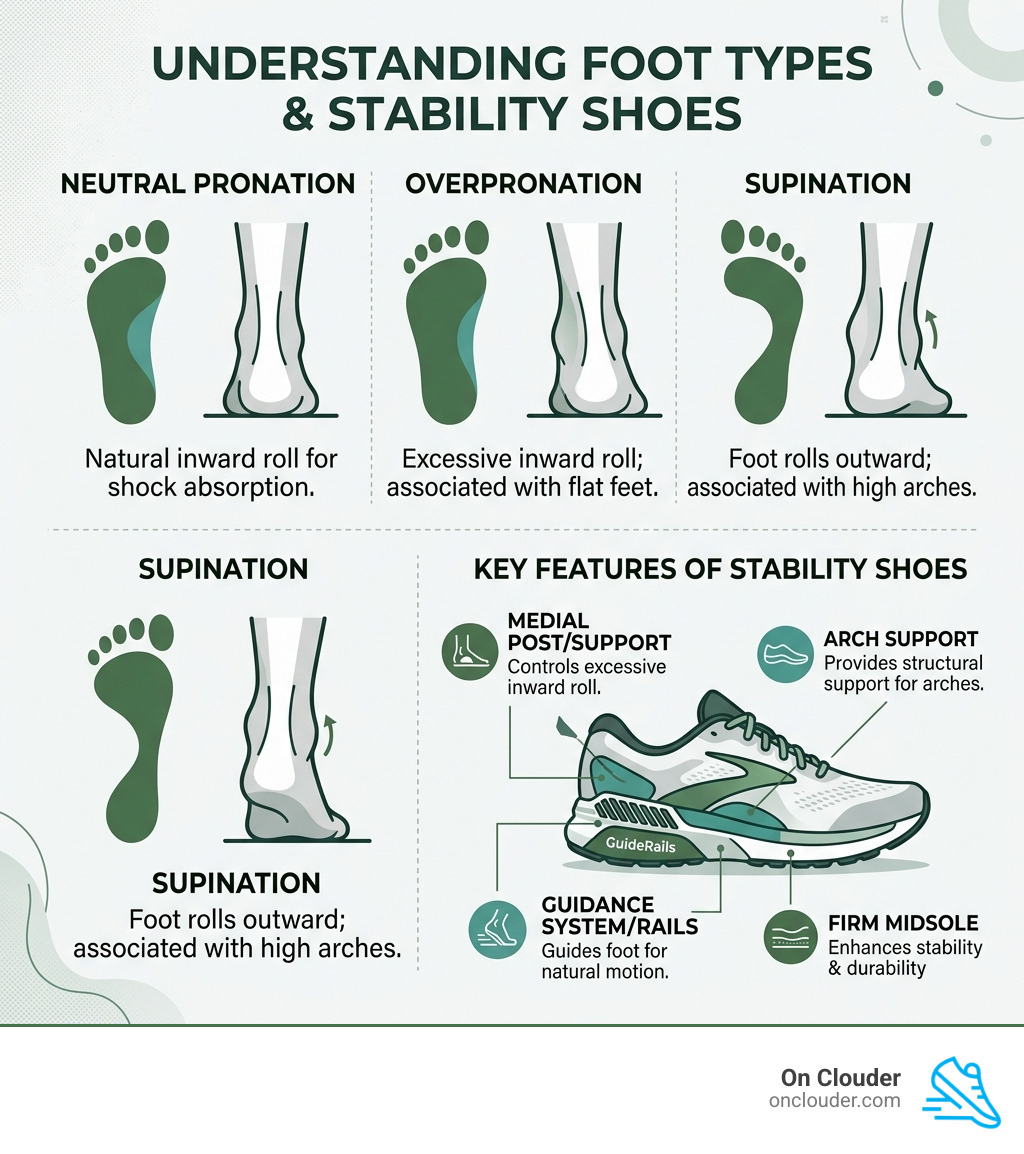
If you’ve ever felt like your ankles are collapsing inward or noticed that the inner edges of your sneakers wear out faster than the rest, you’re likely part of the 50-70% of the population that overpronates. In our The Ultimate Guide To Running With Overpronation, we explain that some pronation is actually a good thing. A natural roll of about 15% helps your body absorb the shock of hitting the pavement.
However, when that roll exceeds the healthy limit, it becomes overpronation. This is frequently linked to “flat feet” or fallen arches, where the foot’s bridge collapses upon weight-bearing. This anatomical quirk doesn’t just stay in the feet; it creates a kinetic chain reaction. When the foot rolls in excessively, it forces the tibia (shin bone) and femur (thigh bone) to rotate inward, often leading to runner’s knee, shin splints, and even lower back pain.
Identifying this early is key. Many runners start their journey with a “neutral” shoe only to find themselves sidelined by injury three months later. Popular entry-level stability models like the GT-1000 are designed specifically to provide a gateway into corrective footwear without the “clunky” feel of traditional medical shoes.
How to Identify the Best Shoes for Overpronation at Home
You don’t always need a fancy treadmill lab to figure out your foot type. Here are three quick DIY methods:
- The Wet Foot Test: Wet the sole of your foot and step onto a piece of cardboard or a dark concrete walkway. If the imprint looks like a complete foot shape without much of a curve on the inside, you likely have flat feet and overpronate.
- The Wear Pattern Analysis: Take a look at your oldest pair of work shoes or sneakers. Overpronators will see significant “scuffing” or thinning of the rubber on the inside of the heel and near the big toe.
- The Big Toe Friction Test: Does the side of your big toe often feel calloused or irritated? This often happens because the foot “pushes off” from the inner edge rather than the center.
As noted in recent Overpronation Shoe Recommendations please – Reddit threads, many users find that their stability needs can change over time, especially after taking a break from activity. If your current shoes feel “wobbly” or your ankles feel tired after just a few miles, it’s time to look for more structure.
Key Features of the Best Shoes for Overpronation
Modern footwear engineering has moved away from the “brick-on-the-foot” approach. In our Everything You Need To Know About Stability Shoes For Runners, we highlight that support is now about guidance rather than force. Here is what we look for when ranking the best shoes for overpronation:
- Torsional Rigidity: This is the shoe’s resistance to twisting. If you can grab a shoe by the heel and toe and easily wring it like a towel, it won’t support an overpronating foot. High-quality stability shoes score 4/5 or 5/5 on rigidity tests.
- Medial Posts: This is a firmer piece of foam located on the inside (medial side) of the midsole. It acts as a speed bump, slowing down the rate at which your foot rolls inward.
- GuideRails and H-Frames: Popularized by Brooks and Hoka, these act like bowling alley bumpers. They don’t push against your foot constantly; they only engage when your form starts to break down.
- Wide Base and Firm Heel Counters: A broader platform provides a more stable landing zone. Meanwhile, a stiff heel counter (the plastic cup behind your heel) prevents your foot from sliding off the footbed.
Stability Technologies by Brand (2026 Comparison)
| Brand | Signature Tech | Feel | Best For |
|---|---|---|---|
| Brooks | GuideRails | Non-intrusive | Those who want “stealth” support |
| ASICS | 4D Guidance System | Structured & Plush | Long recovery miles |
| Hoka | H-Frame / J-Frame | Rockered & Wide | Maximum cushioning |
| Saucony | CenterPath / Medial Post | Balanced & Snappy | Speed and daily training |
Top Stability Running Shoes of 2026: The Definitive List
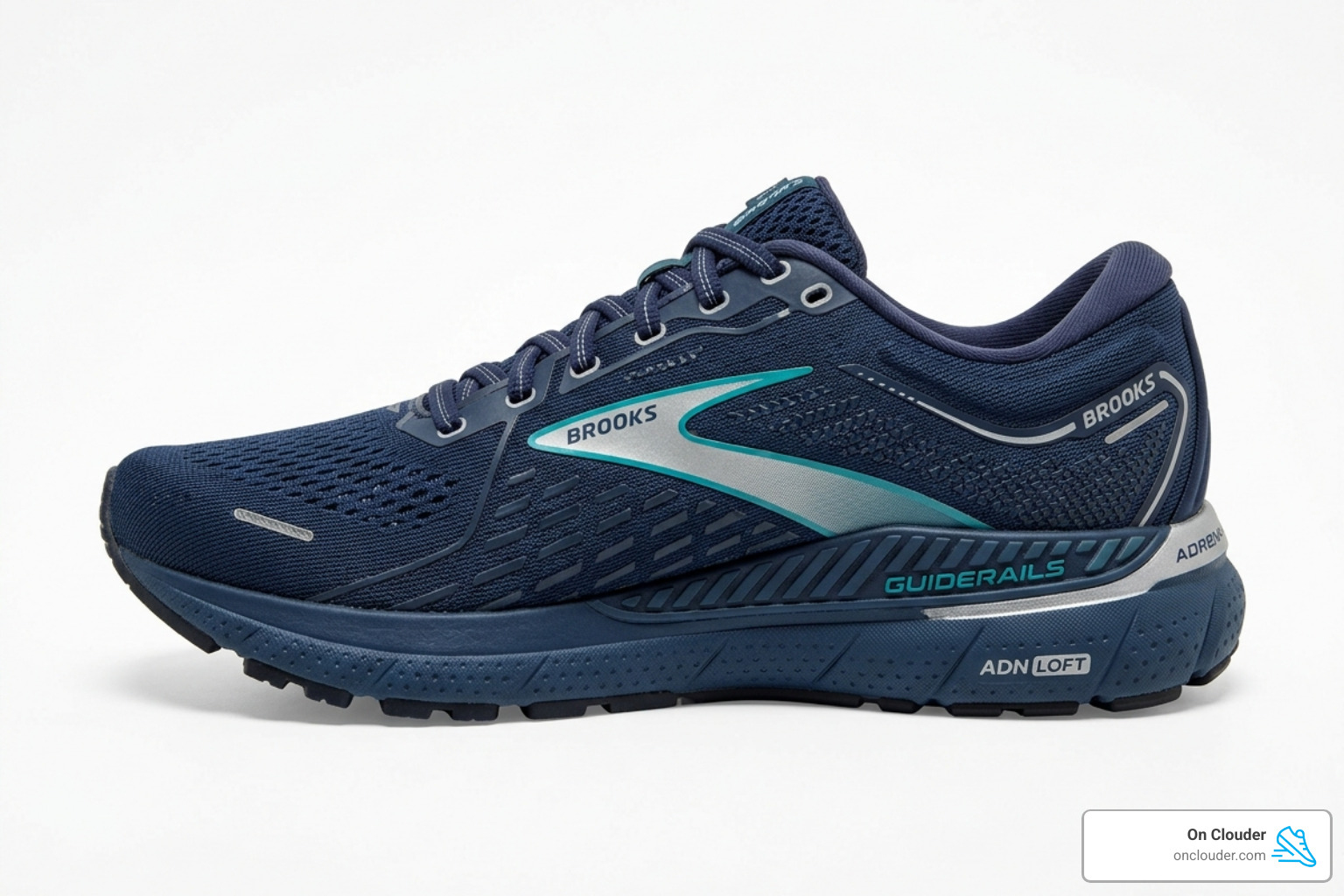
Choosing the best shoes for overpronation in 2026 is easier than ever because the shoes actually look and feel like high-performance gear. Based on our research and lab testing, here are the heavy hitters. You can find more details in our list of The 9 Best Stability Shoes For Every Type Of Overpronator.
1. Brooks Adrenaline GTS 25
The Adrenaline remains the “gold standard” for reliability. In 2026, it features a refined 10mm drop (down from the traditional 12mm) and a weight of just 269g. The GuideRails technology makes it a favorite because it doesn’t feel like a stability shoe until you actually need it. It’s the perfect marathon training “slog” shoe.
2. ASICS Gel-Kayano 32
The GEL-KAYANO is currently on its 32nd iteration, making it one of the longest-running legends in the industry. For 2026, it boasts a massive 40mm stack height in the heel. The 4D Guidance System uses a softer foam insert under the arch that actually compresses and rebounds to guide the foot back to center. It’s like having a personal coach built into your midsole.
3. New Balance Fresh Foam X 860 v14
New Balance has mastered the “dual-density” midsole. The 860 v14 uses a firmer Fresh Foam X on the medial side to prevent collapse. With an 8mm drop and a broad, stable base, it’s a top choice for those who find Brooks or ASICS a bit too narrow.
4. Saucony Guide 18
If you want something that feels fast, the Guide 18 is it. At only 245g with a 6mm drop, it’s lighter than most stability shoes. It uses Saucony’s “CenterPath” technology, which features higher sidewalls to keep the foot centered. For those needing even more correction, the Saucony US Omni 22: Stability & Cushioning for Overpronators provides a more traditional, high-support feel with an 8mm offset.
5. Hoka Arahi 8
Hoka has fixed the “tightness” issues of previous versions. The Arahi 8 uses the J-Frame (now evolving into the H-Frame) to provide stability without adding weight. It’s remarkably light for how much foam is underfoot, making it a “compliment magnet” that works just as well at a housewarming party as it does on a 10k run.
Performance Rankings for the Best Shoes for Overpronation in 2026
Not all overpronators are just doing “easy miles.” Here are our specialized picks for specific activities:
- Best for Trail Running: Brooks Cascadia 19. Trail running requires a different kind of stability—one that handles rocks and roots. The Cascadia 19 offers a lower center of gravity and a rock plate to keep your foot stable on uneven berms.
- Best for Racing: Hoka Rocket X 3. Who says stability runners can’t go fast? At only 8 oz for a men’s size 10, this carbon-plated shoe features a wider base than most racers, giving overpronators the confidence to hit corners at speed.
- Best Daily Trainer: GT-2000 13. This is the workhorse. It’s lighter than the Kayano but offers more support than the GT-1000. It’s the “Goldilocks” shoe for 2026—just right for almost every type of road run.
Best Overpronation Shoes for Walking and Casual Wear

We often get asked: “Do I need running shoes if I’m just walking?” The answer is often yes. As we discuss in our An Essential Guide To Best Overpronation Shoes, the running industry invests the most in stability technology, making running shoes the best choice for all-day standing and walking.
However, you don’t always want to wear neon-green trainers to the office. Here are the top “lifestyle” and walking options:
- Nike Air Max Plus: Surprisingly, this sneaker is a stability beast. It features a 5/5 torsional rigidity score and a massive stack height (39.8mm), providing a rigid base that prevents inward rolling while looking iconic.
- ASICS Gel NYC: This model uses a firm 59.2 AC foam durometer. It’s a “dad shoe” that actually performs, offering a wide platform that keeps your feet from losing balance during long days on your feet.
- New Balance 990 v6: The ultimate premium walking shoe. It’s built on a stable last with a firm rim of polyurethane for support. It’s expensive, but it’s the benchmark for casual comfort.
- Nike P-6000: For those on a budget, the P-6000 offers shock absorption that is 27.6% above the industry average. It’s flexible but structured enough for mild overpronation.
For more specialized walking advice, check out these 7 Best Walking Shoes for Overpronation Correction. If you are looking for specific replacements for discontinued models (like the New Balance 940), local specialists like Overpronation Shoes often carry curated selections of “motion control” shoes that are becoming harder to find in big-box stores.
Stability Shoes vs. Neutral Shoes with Insoles
One of the biggest debates in the footwear world is whether you actually need a stability-specific shoe. Can you just buy a neutral shoe you love and “fix” it?
In our guide Stop The Roll With The Best Overpronation Insoles, we explore how high-quality insoles like Superfeet or custom orthotics can transform a neutral shoe. This is a great option for people who have very specific arch shapes that standard stability shoes don’t quite match.
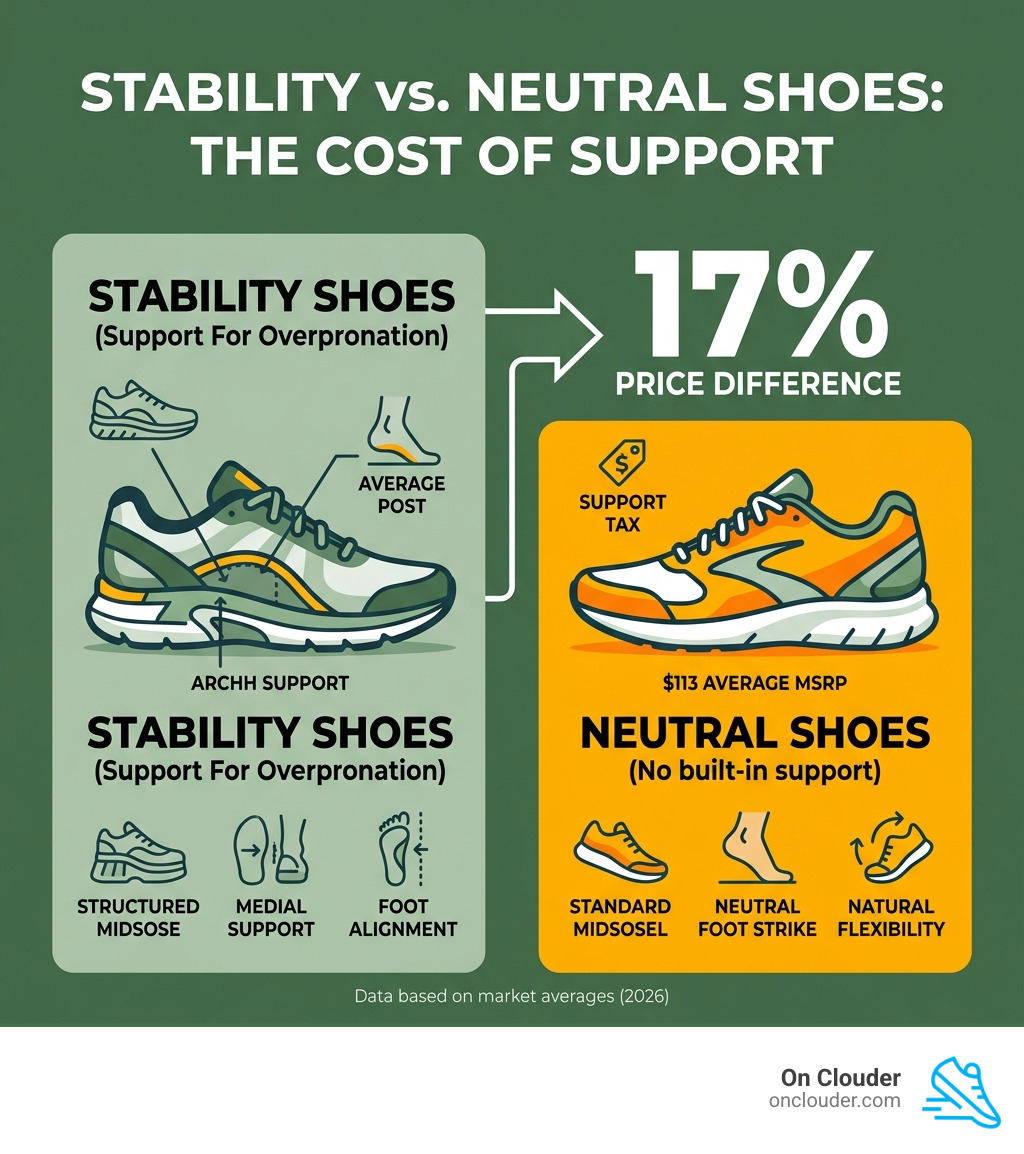
The Cost Factor: Interestingly, statistics show that stability shoes come with a “support tax.” The average MSRP for the best shoes for overpronation is roughly $130, compared to $113 for neutral sneakers—a 17% price premium. If you already have a $150 neutral shoe, adding a $50 insole might be more cost-effective in the long run than buying a new pair of stability “bricks” every 400 miles.
However, we must caution against over-reliance on gear. As we mention in The Complete Guide To Running Shoes For Overpronators, shoes often mask muscle weaknesses. If you overpronate, you should also be working on:
- Hip and Glute Strength: Weak hips allow the leg to rotate inward more easily.
- Ankle Inversions: Strengthening the muscles that pull the foot “up and in” can naturally counteract the roll.
- Short Foot Exercises: Improving the intrinsic muscles of the foot can help “rebuild” a collapsed arch over time.
Frequently Asked Questions about Overpronation Footwear
Do I always need stability shoes if I have flat feet?
Not necessarily. Some people have “anatomically” flat feet—meaning their feet are flat but strong and stable. If you aren’t experiencing pain in your knees, shins, or arches, you might be fine in neutral shoes. We always recommend a professional gait analysis or a visit to a physical therapist before making the switch to heavy stability gear.
How often should I replace my overpronation shoes?
Stability shoes often “feel” fine on the upper, but the internal support structures (like the medial post) can compress over time. A general rule is every 300–500 miles. If you notice you’re starting to feel that familiar “inward sink” again, the foam has likely reached its limit.
Can overpronation be corrected without surgery?
While you can’t usually change the bone structure of your feet, you can significantly “correct” the effects of overpronation through strength training and proper footwear. Many runners find that after a year of foot-strengthening exercises, they can move from “Maximum Support” shoes to “Mild Stability” or even neutral shoes.
Conclusion
At On Clouder, we believe that the best shoes for overpronation are the ones that allow you to move without thinking about your feet. Whether you’re training for a 2026 marathon in the Brooks Adrenaline GTS 25 or just need a supportive walking shoe like the Hoka Arahi 8 for your 12-hour nursing shift, the technology exists to keep you pain-free.
Shoes are only half the battle. Combine your new footwear with a dedicated strength routine for your hips and ankles to get the best results. If you’re still unsure which model fits your specific arch height, we recommend visiting a local running shop for a professional gait analysis.
Ready to find your next favorite pair? Visit On Clouder for more expert footwear reviews and stay ahead of the curve with our in-depth performance rankings.
