

Why Cleaning Your Runners the Right Way Actually Matters
Can you wash runners safely without wrecking them? Yes — but the method matters a lot.
Here’s a quick answer:
| Method | Safe for Most Runners? | Best For |
|---|---|---|
| Hand washing | Yes | All shoe types |
| Machine washing (cold, gentle) | Yes, for most synthetics | Mesh, nylon, canvas |
| Tumble dryer | No | Never use |
| Bleach | No | Damages fibers and glue |
| Direct sunlight drying | No | Warps shape and fades color |
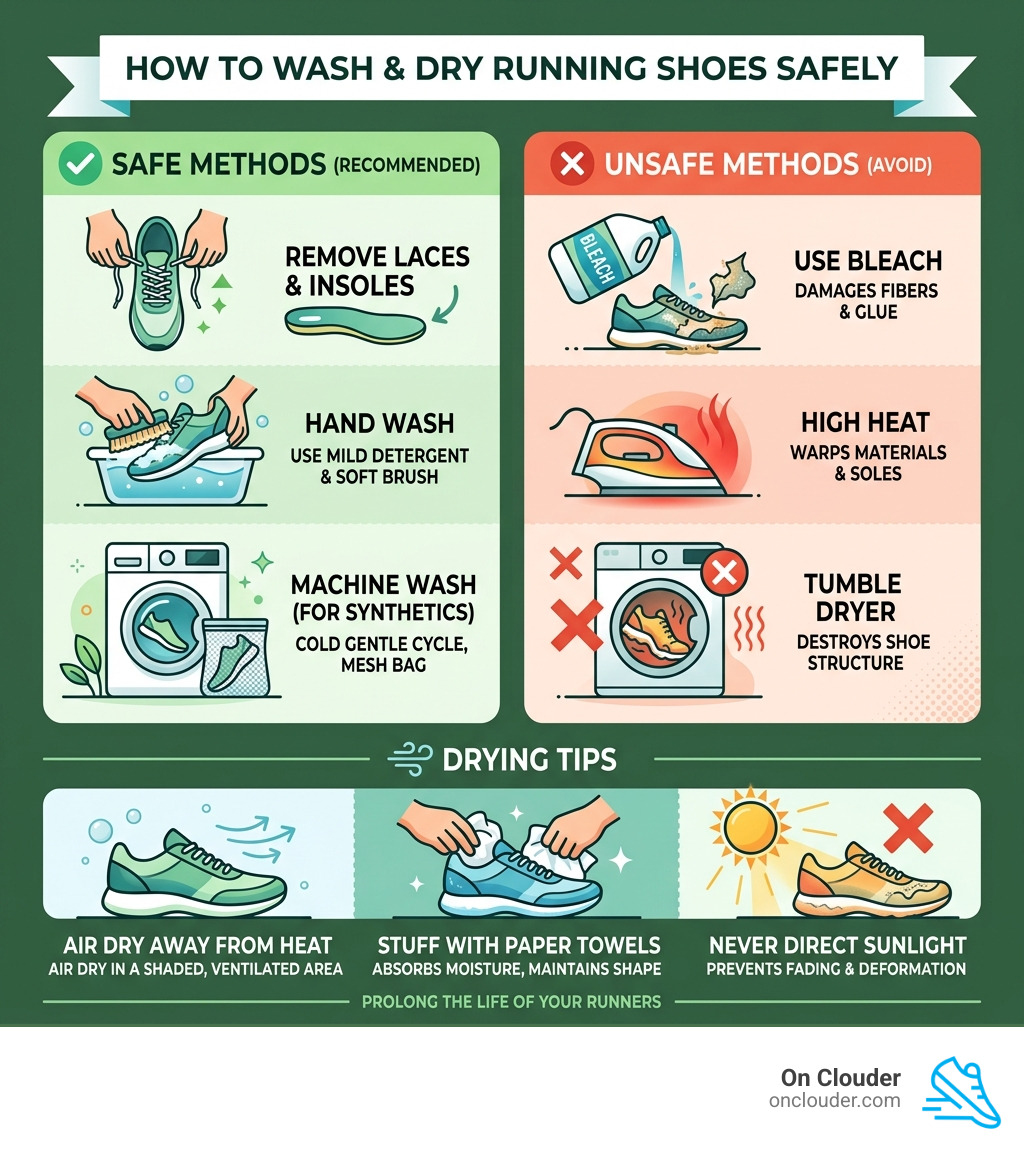
The safest approach: Hand wash with mild detergent and a soft brush, then air dry away from heat.
Running puts your shoes through a lot. Sweat, mud, grit, and moisture don’t just make your shoes look bad — they actively break down the fabric, clog the mesh, and wear away at the materials that keep your feet supported. Dirt can work into the upper like sandpaper, grinding against the fibers with every step. And if you’ve ever pulled on a pair of trainers still crusted with last week’s mud, you already know the feeling.
The good news? Cleaning your runners regularly is one of the simplest things you can do to keep them performing longer.
I’m Faisal S. Chughtai, a footwear expert with years of hands-on experience helping runners find and care for the right shoes — including answering the question can you wash runners without causing damage. Let’s walk through everything you need to know to clean your shoes the right way.
Can you wash runners terms to know:
Can You Wash Runners in the Washing Machine?
The short answer is: yes, but with a massive asterisk. While many modern athletic shoes are built from rugged synthetic materials, the washing machine is a high-stress environment. Most brands actually advise against it because the mechanical agitation can weaken the adhesives (the glue) holding your shoe together.
However, if your shoes are purely synthetic and you’re short on time, you can use the machine if you follow a strict protocol. First, always remove the laces and insoles; these should be treated separately to ensure they get clean and dry thoroughly.
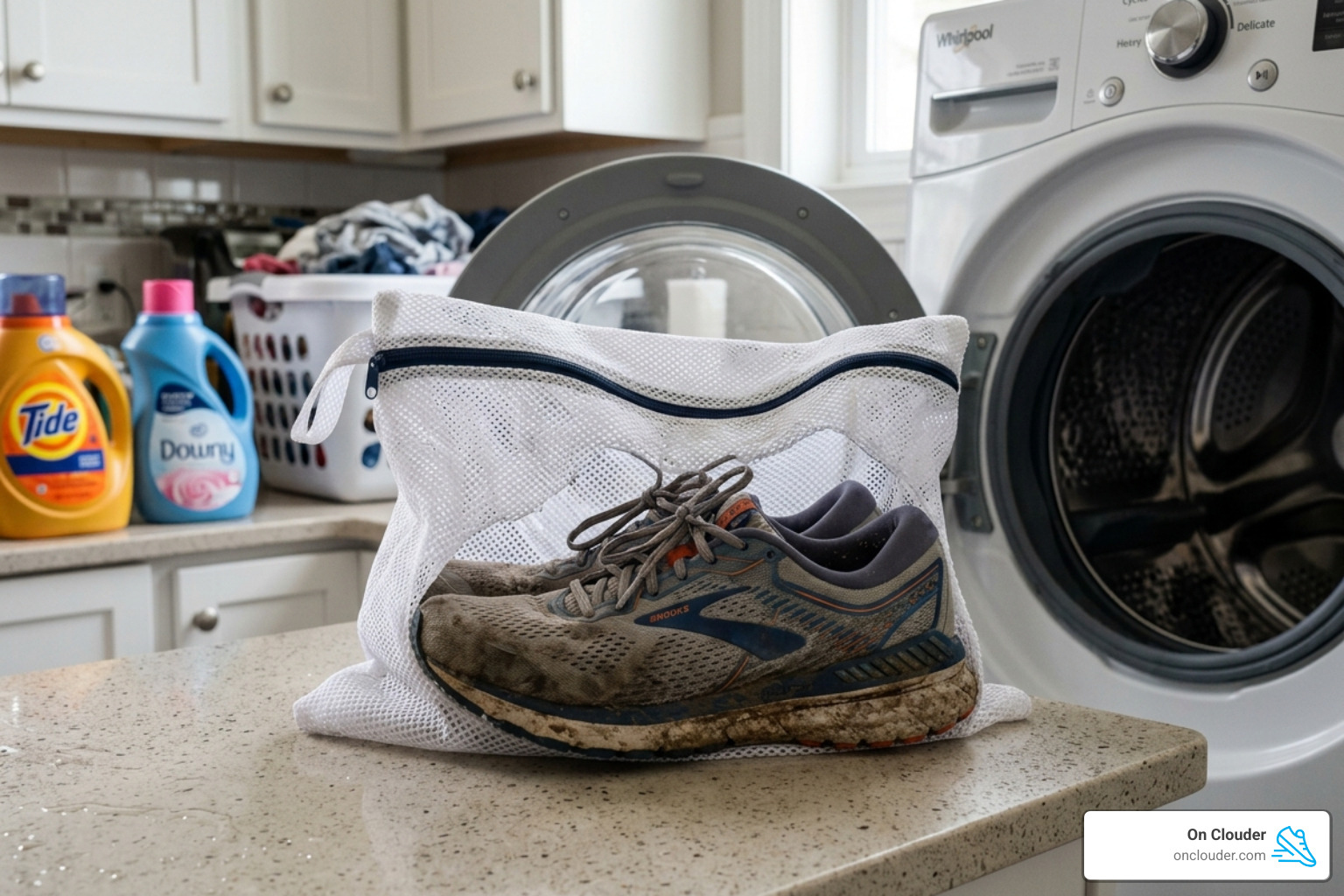
To protect your shoes and your machine, place the runners inside a mesh laundry bag or an old pillowcase. This prevents the shoes from banging against the drum, which can damage both the footwear and the appliance. Add a few old towels to the load to act as buffers and balance the weight. Always use a cold water cycle and the most delicate setting available. Heat is the ultimate enemy of running shoes, as it can shrink the fabric and warp the midsole foam, which is typically composed of Ethylene-vinyl acetate (EVA).
For a deeper dive into this method, check out the easiest way to wash runners in washing machine and our specific can you put clouds in the washing machine guide for safe cleaning.
When to Avoid the Washer for Your Runners
There are times when the question “can you wash runners in a machine?” receives a hard “no.” If your shoes feature any of the following, keep them far away from the laundry room:
- Leather Uppers: Leather can stiffen, crack, or discolor when submerged in water and tossed around.
- Suede Accents: Suede is notoriously water-sensitive and will lose its soft texture (the “nap”) if it gets too wet.
- Specialized Foam: High-performance midsoles (like some gel or advanced carbon-plated foams) can lose their “pop” or structural integrity due to the soaking and spinning.
- Adhesive-Heavy Designs: If your shoes rely heavily on bonded overlays rather than stitching, the machine can cause these parts to peel off.
Material-Specific Rules for Machine Washing
Different fabrics react differently to a spin cycle.
- Canvas: Generally the most durable in a washer, though colors may fade over time.
- Polyester/Nylon Knits: These are common in modern “sock-like” uppers. They handle the machine well but are prone to snagging, making that mesh bag essential.
- Mesh: Standard mesh is fine on a gentle cycle, but be careful of “engineered mesh” which can sometimes stretch if the spin cycle is too aggressive.
For those wearing specific brands, we have a can-on-cloud-shoes-be-washed-in-a-washing-machine-complete-guide-for-cleaning-your-sneakers to help you navigate these material nuances.
The Best Method for Hand-Washing Running Shoes
At On Clouder, we almost always recommend hand-washing. It gives you total control, allows you to spot-treat stains, and ensures you aren’t drowning the technical foams that provide your cushioning.
| Feature | Hand Washing | Machine Washing |
|---|---|---|
| Control | High – you see every stain | Low – set it and forget it |
| Safety | Maximum for all materials | Risky for glues/foams |
| Time | 15-20 minutes of effort | 45-60 minutes (passive) |
| Drying Time | Standard | Often longer due to saturation |
To get started, you’ll need a few basics: a soft-bristled brush (an old toothbrush works wonders), a mild liquid detergent or specialized shoe cleaner, and a bowl of lukewarm water. Avoid harsh chemicals or “oxygen-based” cleaners unless you’ve tested them on a small, hidden area first. You can follow our step-by-step guide to the best way to clean sports shoes for a foolproof routine.
Step-by-Step Guide to Hand-Wash Runners Safely
- Dry Brushing: Before you get the shoes wet, use a dry, stiff brush to knock off loose dirt, dried mud, and dust. If you skip this, you’ll just turn that dirt into mud once you add water.
- Remove Parts: Take out the laces and the insoles.
- Surface Grime: Dip your soft brush into the soapy water and start with the upper. Use gentle, circular motions. For stubborn spots, like those pesky green marks, see our tips on how to get grass stains out of shoes.
- The Midsole: This is where most of the visible grime lives. You can be a bit firmer here with your scrubbing.
- Rinse: Use a damp microfiber cloth to “rinse” the soap off. Avoid dunking the entire shoe under the tap if possible.
If you are cleaning specific high-performance models, we’ve tailored advice in our guide on how to wash on cloud.
Deep Cleaning for Muddy or Wet Runs
If you’ve just finished a trail run and your outsoles are caked in mud, don’t wait. Mud acts like a sponge, pulling moisture out of the materials and making them brittle.
Start by banging the soles together outdoors to dislodge the big chunks. Use a “dirt pick” (or a flathead screwdriver) to clear debris from the lugs of the outsole. Restoring that outsole traction isn’t just about looks—it’s a safety issue. Caked mud turns your high-grip runners into slick racing flats, which is a recipe for a fall on your next outing.
Essential Post-Wash Drying and Maintenance
The “wash” is only half the battle. How you dry your shoes determines whether they come out smelling fresh or feeling like cardboard.
How to Clean and Deodorize Laces and Insoles
Don’t forget the bits you removed! Laces can be soaked in a bowl of warm soapy water or tossed in a small mesh bag in the laundry. For insoles (sockliners), scrubbing them with a mixture of water and a little baking soda or vinegar is the best way to kill odor-causing bacteria.
If you’re trying to keep your light-colored gear looking crisp, check out how to clean white on cloud or our can you wash on clouds the step by step guide to cleaning your sneakers.
Why You Should Never Use a Tumble Dryer for Runners
This is the golden rule of shoe care: Stay away from the dryer. The high heat of a tumble dryer is devastating to athletic footwear. It can:
- Melt the Glue: Your soles might literally start peeling away from the upper.
- Warp the Rubber: The outsole can harden or curl, changing the way the shoe hits the ground.
- Distort the Shape: Heat causes synthetic fibers to shrink unevenly, meaning that perfect fit you loved might vanish forever.
Instead, stuff your shoes with plain paper towels or recycled newspaper (avoid pages with heavy ink that might transfer). This helps the shoe maintain its shape and “wicks” moisture from the inside out. Change the paper every few hours to speed up the process.
How Often Should You Clean Your Running Shoes?
You don’t need to deep-clean your shoes after every trot around the block, but consistency is key. A good rule of thumb is to give them a thorough cleaning once every 320 km (200 miles) or at least once every six months.
If you’re a trail runner or live in a particularly wet climate, you’ll need to do this more often. Tracking your mileage isn’t just for knowing when to buy new shoes; it’s for knowing when to maintain the ones you have. For more on why hygiene matters, read stop running in filth and learn how to wash your shoes.
Frequently Asked Questions About Cleaning Runners
Can washing running shoes extend their lifespan?
Absolutely. When you run, tiny particles of grit and sand get trapped in the mesh. These particles act like sandpaper, creating friction that eventually tears the fabric. By washing them, you remove this abrasive grit. Furthermore, keeping the foam clean and free of salt (from sweat) helps it maintain its structural bounce for longer. For more details, see can you wash sports shoes without destroying them.
What supplies do you need to wash runners effectively?
You don’t need a fancy kit. Most of these are already in your cupboard:
- Soft-bristled brush: A toothbrush or a dedicated shoe brush.
- Mild soap: Dish soap or liquid laundry detergent (avoid fabric softeners!).
- Microfiber cloth: For wiping away excess soap and water.
- Baking soda: The ultimate deodorizer for the interior.
Is it safe to use bleach on white running shoes?
We strongly advise against using chlorine bleach. It can cause a chemical reaction that turns white synthetic fibers a nasty shade of yellow. It also eats away at the stitching and glue. If you need to brighten white shoes, use an “oxygen-based” bleach or a paste made of baking soda and water.
Conclusion
At On Clouder, we believe that your gear should work as hard as you do. Knowing can you wash runners is the first step toward better gear longevity and performance optimization. A clean shoe isn’t just about aesthetics; it’s about ensuring that the technical foam, the engineered mesh, and the high-traction outsoles are all functioning exactly as the designers intended.
Take care of your shoes, and they’ll take care of your joints for many miles to come. If you’re looking for more brand-specific care, don’t miss our on-cloud-shoes-a-step-by-step-guide for the ultimate maintenance routine. Happy running!
