

Why Your Feet Are Crying Out for Arch Support Shoes Insoles
Arch support shoes insoles are one of the simplest upgrades you can make for your feet — and one of the most impactful.
Quick answer: Top arch support insoles to consider:
| Insole | Best For | Key Feature |
|---|---|---|
| PowerStep (OTC) | Plantar fasciitis, everyday use | Firm arch support + heel cradle |
| Superfeet Run Support | Running, high arches | Carbon fiber cap + dual foam layers |
| Spenco Total Support Run | Runners with overpronation | Adaptive arch, 3-POD shock system |
| Spenco Ground Control | Walking, hiking, standing all day | Decoupled heel, antimicrobial fabric |
| Run 619 MFM Performance | Zero-drop runners, ultra events | High-density EVA + TPU frame, 500+ miles |
| Custom-fitted (e.g., in-store) | Complex or severe foot issues | Personalized fit, same-day wear |
Foot pain is extremely common — and most people blame their shoes. But the real issue is often the foot inside the shoe. Poor arch support leads to strain on the plantar fascia, the band of tissue running along the bottom of your foot. That strain causes fatigue, heel pain, and over time, conditions like plantar fasciitis.
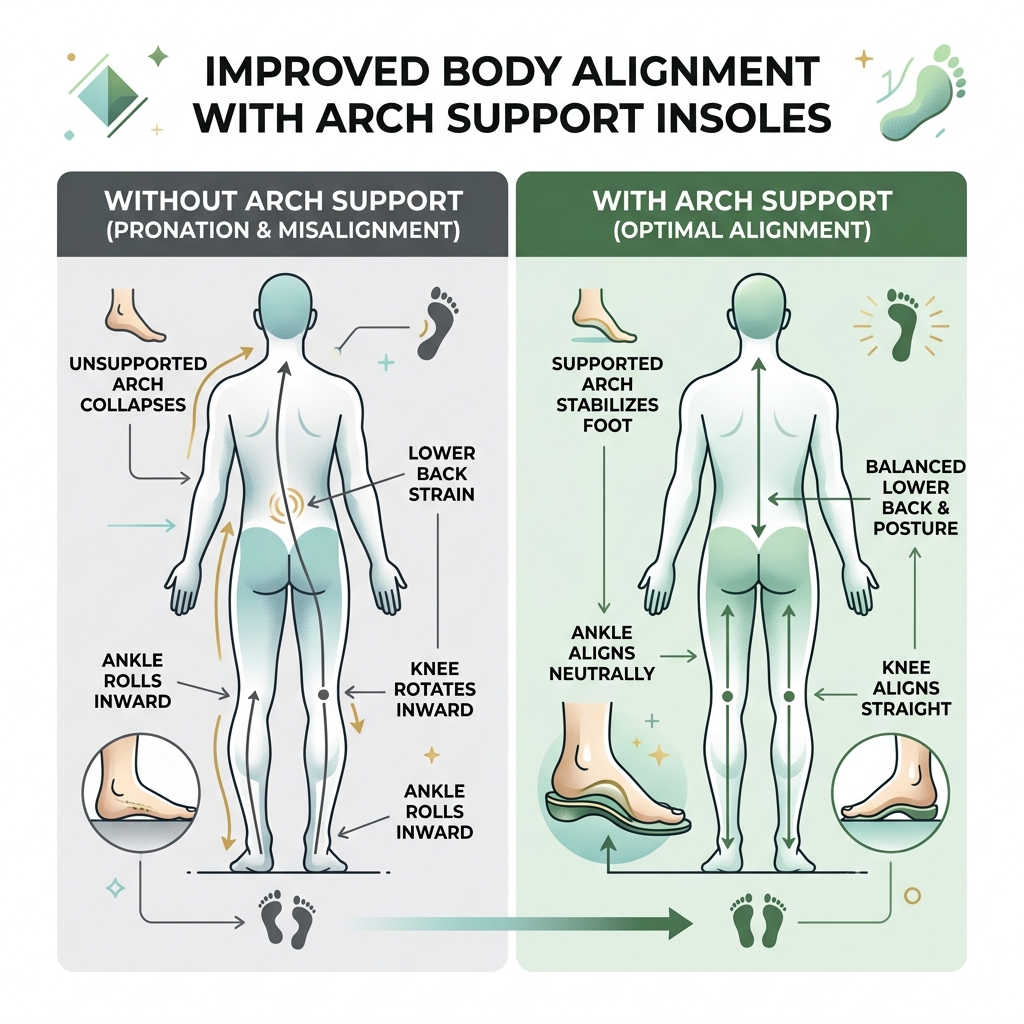
The ripple effect goes further than your feet. Misalignment at the arch can stress your knees, hips, and lower back — often without you realizing the source.
The good news? The right insole can correct this quickly. Many people feel relief within days of consistent use.
I’m Faisal S. Chughtai, a footwear comfort expert who has spent years helping people find the right fit — including the best arch support shoes insoles for running, walking, and long shifts on your feet. Below, I’ve broken down everything you need to pick the right pair without the guesswork.
Understanding Arch Support Shoes Insoles
At their core, arch support shoes insoles are biomechanical tools designed to improve how your foot interacts with the ground. While the factory liners that come in most shoes are often just thin pieces of foam, high-quality orthotic inserts provide a structured foundation.
How They Work to Relieve Pain
The primary goal of an insole is to manage the distribution of weight. When you walk, your foot naturally rolls—a process called pronation. If your arch collapses too much (over-pronation), it puts immense “tug-of-war” pressure on the plantar fascia. This leads to that dreaded first-step-in-the-morning pain known as plantar fasciitis.
High-quality insoles work by:
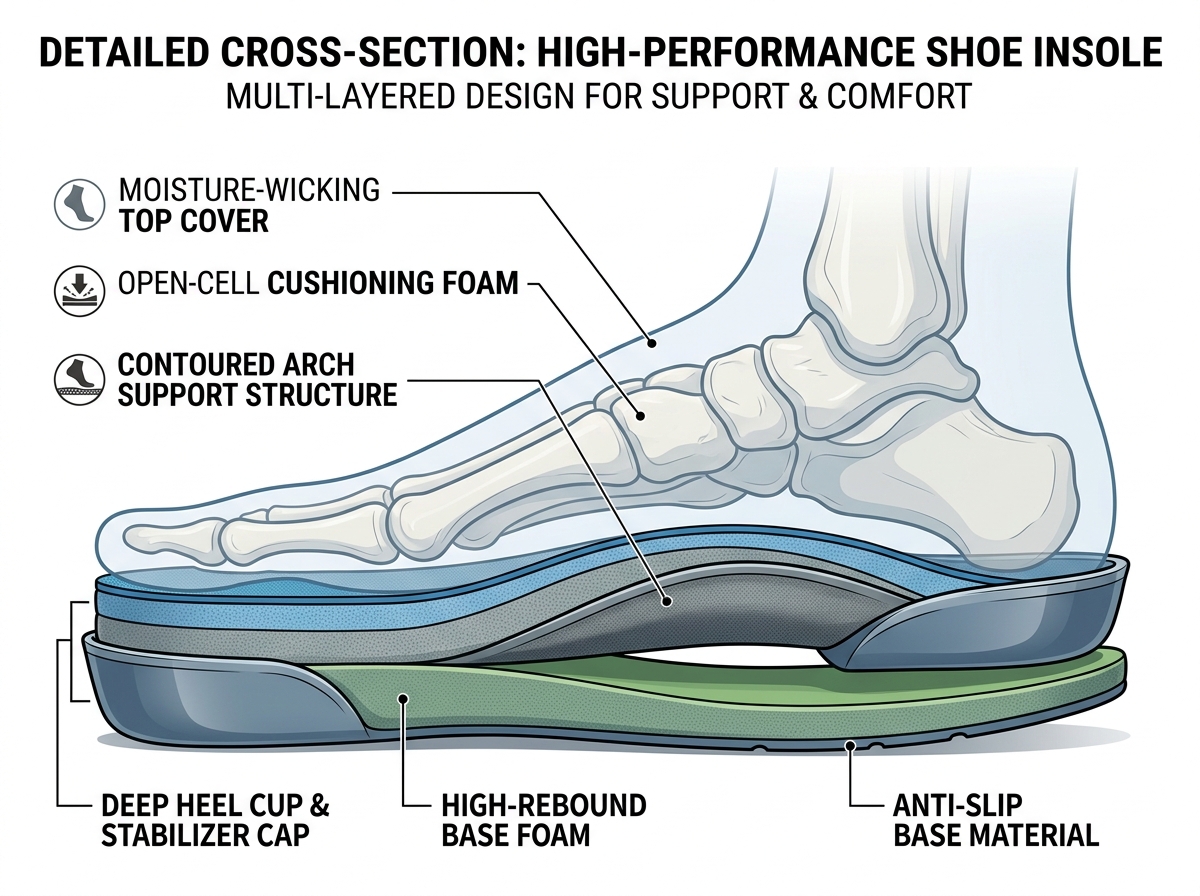
- Stabilizing the Heel: A deep heel cup centers the fatty pad under your heel bone, maximizing your body’s natural shock absorption.
- Supporting the Arch: By filling the gap between your foot and the shoe, the insole prevents the arch from over-collapsing, which reduces the stretch on the plantar fascia.
- Distributing Pressure: Instead of all the force hitting your heel or the ball of your foot, a contoured insole spreads that energy across the entire plantar surface.
Scientific Insights
Research into orthotic support shows that firm, yet flexible, arch supports are often more effective than soft, pillowy cushions. While soft foam feels good for thirty seconds in a store, it doesn’t provide the structural integrity needed to correct poor biomechanics. Leading brands like PowerStep utilize this firm-support philosophy to clinically reduce strain and promote healing.
How to Determine Your Arch Type
Before you go shopping for arch support shoes insoles, you need to know what kind of feet you’re working with. Using a high-arch insole on a flat foot can feel like standing on a golf ball, while a low-profile insole won’t do anything for a high arch.
The Three Main Arch Types
- Low Arches (Flat Feet): Your feet leave a nearly complete footprint. You are highly prone to over-pronation, where the feet roll inward excessively. You need firm, structural support to keep the foot aligned.
- Medium Arches (Neutral): You have a distinct curve along the inside of your foot. You generally need a balance of cushioning and support to maintain alignment and prevent fatigue.
- High Arches: Your footprint shows only the heel and the ball of the foot. High arches are often rigid and poor at absorbing shock, leading to strain on the joints. You need high-profile support that fills the cavity under the arch to increase the contact area.
The Wet Test
You don’t need fancy equipment to figure this out. Wet the bottom of your foot and step onto a piece of cardboard or a dark concrete floor.
- Wide, full shape? Low arch.
- Clear curve but visible middle? Medium arch.
- Thin line or nothing connecting the heel and toe? High arch.
For a deeper dive into how different footwear brands handle these shapes, check out our guide on everything you need to know about arch fit footwear.
| Arch Type | Characteristic | Primary Need |
|---|---|---|
| Low/Flat | Footprint is full; prone to rolling in | Stability & Motion Control |
| Medium | Efficient footprint; neutral gait | Balanced Support & Comfort |
| High | Minimal footprint; rigid; poor shock absorption | Volume Filling & Cushioning |
Key Features of High-Quality Inserts
When evaluating arch support shoes insoles, don’t just look at the price tag. The materials and engineering determine whether they will last 500 miles or flatten out in two weeks.
1. The Stabilizer Cap
This is the “skeleton” of the insole. High-performance options from Superfeet often use a carbon fiber or high-density plastic cap. This provides the “spring-back” effect, ensuring the insole maintains its shape even under the heavy load of running or jumping.
2. Deep Heel Cup
A quality insole should have a “cradle” for your heel. This isn’t just for comfort; it keeps your heel bone (calcaneus) vertical. If your heel is stable, the rest of your foot is much more likely to stay in a neutral position.
3. Advanced Foam Materials
Look for materials like EVA (Ethylene Vinyl Acetate) or specialized foams like AeroSpring. These materials offer “rebound,” meaning they absorb energy during the heel strike and return it during the toe-off phase of your stride.
4. Fabric and Hygiene
Because feet sweat, high-quality insoles incorporate moisture-wicking top covers. Many, like the Spenco Ground Control, use antimicrobial treatments (like Silpure) to kill odor-causing bacteria before they take over your shoes.
If you are specifically looking for ways to integrate these into your favorite sneakers, you might find our guide to arch support inserts for flat feet or our On Cloud specific arch support guide helpful.
Benefits of Arch Support for Specific Activities
One size rarely fits all when it comes to activity. A runner needs energy return, while a nurse standing for 12 hours needs consistent pressure relief.
Arch Support Shoes Insoles for Running
Running multiplies the force on your feet by up to three times your body weight. For runners, the right arch support shoes insoles act as a secret weapon for performance and recovery.
- Gait Adaptation: Products like the Spenco Total Support Run feature a 3-POD system that actually guides the foot through a more efficient stride.
- Fatigue Reduction: By supporting the arch, you prevent the small muscles in your feet from overworking, allowing you to run further with less soreness.
- Zero Drop Options: For those who prefer a natural foot position, the Run 619 MFM Performance Insoles offer arch support without adding a “heel lift,” maintaining a 0mm drop from heel to toe.
You can learn more about maximizing your athletic performance in our article on stepping up your game with the best arch support inserts.
Arch Support Shoes Insoles for All-Day Standing
If you spend your day on concrete floors, your arches are constantly under a “static load.” This can lead to “fallen arches” over time.
- Decoupled Heels: Some insoles feature a heel that is physically separated from the arch plate. This allows the heel to absorb impact independently, which is a game-changer for walking on hard surfaces.
- Work Boot Compatibility: Many heavy-duty insoles are designed with extra volume to fill out roomy work boots, providing the stability that standard boot liners lack.
For those struggling with workplace foot fatigue, we recommend reading about the best arch support pads to end foot pain.
Fitting and Maintenance Tips
Buying the insole is only half the battle; you have to fit and maintain it correctly to get your money’s worth.
How to Trim and Fit
Most arch support shoes insoles come in size ranges (e.g., Men’s 8-10). You will likely need to trim them for a perfect fit.
- Remove the old liner: Never put a new insole on top of an old one. It creates too much bulk and can cause blisters.
- Use the old liner as a template: Place the factory insole on top of the new one, aligning the heels.
- Trace and Cut: Trace the toe shape with a pen and trim the new insole with sharp scissors.
- Test the fit: Slide it into your shoe. It should lay flat without bunching at the toes.
The Break-In Period
Don’t run a marathon the day you get new insoles. Your feet and brain need time to adjust to the new alignment. Start by wearing them for 1-2 hours the first day, gradually increasing the time over a week. If you have flat feet, this transition is especially important. Check out our advice on why flat feet crave these arch support insoles for more break-in tips.
When to Replace
Even the best insoles eventually lose their structural integrity.
- The 500-Mile Rule: Most performance insoles, like those from Superfeet, are rated for about 500 miles or 12 months of use.
- Visual Signs: If the top fabric is peeling, the foam looks compressed, or you notice cracks in the plastic stabilizer cap, it’s time for a new pair.
- Pain Returns: If that old heel twinge starts coming back, your insoles have likely lost their “rebound” and need replacing.
Frequently Asked Questions about Arch Supports
Can arch support insoles help with knee, hip, or back pain?
Yes, absolutely. Your feet are the foundation of your entire skeletal structure. If your feet roll inward (over-pronation), it causes your lower leg to rotate internally. This rotation travels up to the knee and can eventually tilt the pelvis, leading to lower back strain. By correcting the foot’s alignment with arch support shoes insoles, you often resolve “mystery” pains in the knees and hips.
Are arch support insoles eligible for HSA/FSA reimbursement?
In most cases, yes! Arch supports, shoe inserts, and orthotics are generally considered eligible expenses for Health Savings Accounts (HSA) and Flexible Spending Accounts (FSA). This includes over-the-counter brands like Dr. Scholl’s and Natural Foot Orthotics. However, they are typically not eligible under Limited-Purpose FSAs or Dependent Care FSAs. Always check your specific plan details.
How long do performance arch support insoles typically last?
Durability depends on the material. High-density EVA and TPU (Thermoplastic Polyurethane) frames are engineered to last between 12 months and 500 miles. Some premium options using carbon fiber caps can maintain their shape even longer. If you are a heavy user (over 200 lbs) or walk on very hard surfaces daily, you may need to replace them every 6-8 months to maintain optimal support.
Conclusion
Investing in a pair of high-quality arch support shoes insoles is an investment in your long-term mobility. Whether you are a marathon runner looking to shave seconds off your time or a retail worker just trying to get through a shift without throbbing heels, the right support can be life-changing.
At On Clouder, we believe that comfort shouldn’t be a luxury. By understanding your arch type and choosing an insole with the right blend of stability and cushioning, you can transform almost any pair of shoes into a custom-feeling orthotic powerhouse.
Ready to take the next step? Step up your game with the best arch support for runners and find the perfect match for your active lifestyle. Your feet (and your knees, and your back) will thank you.
