
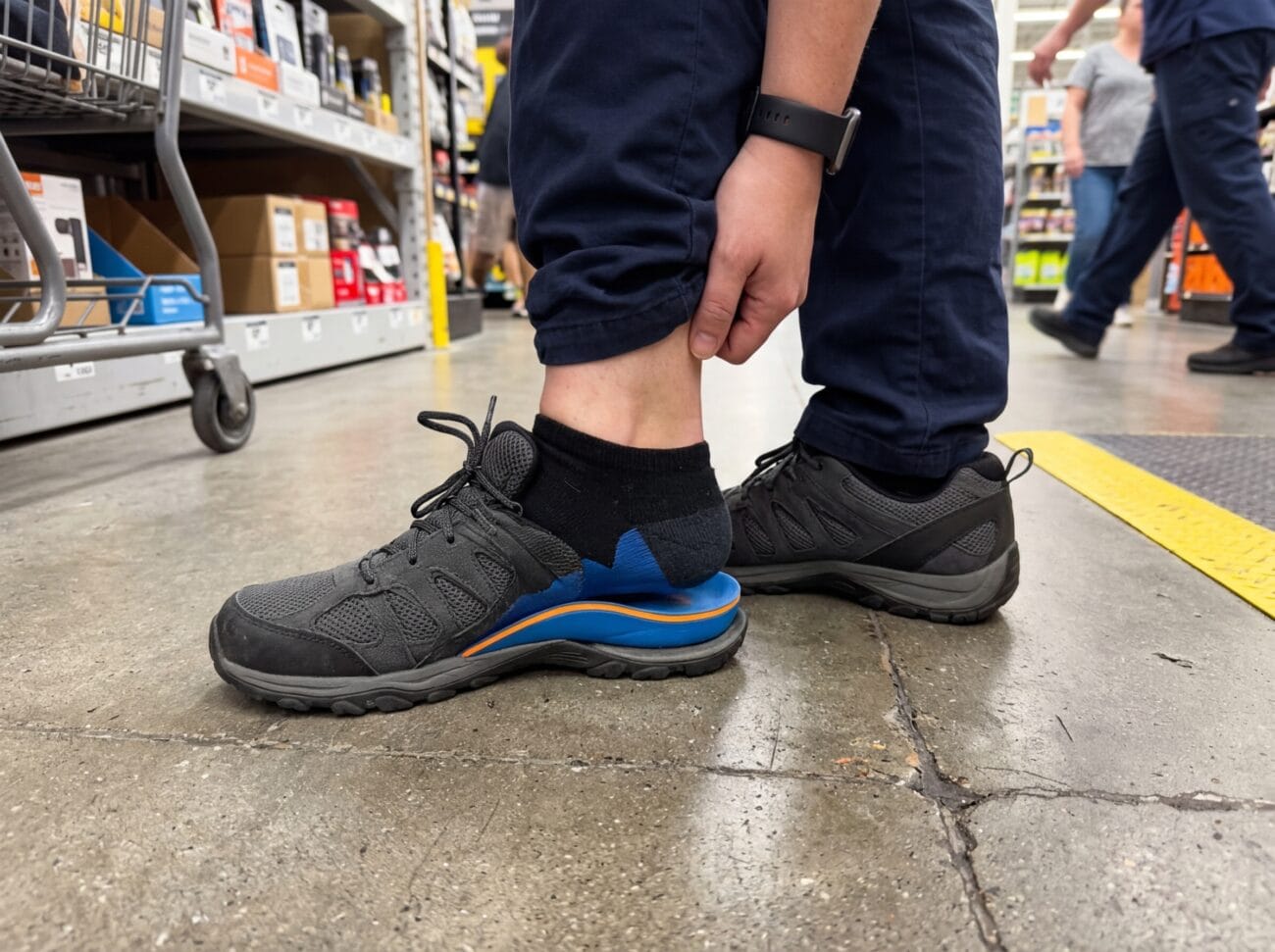
Understanding Flat Feet and All-Day Standing Pain
The best insoles for flat feet standing all day can make the difference between clocking out pain-free and limping to your car after a long shift. Here are the top picks to know before you read further:
| Insole | Best For | Price Range |
|---|---|---|
| PowerStep Pinnacle Low | Overall flat feet support | ~$30-$58 |
| Superfeet All-Purpose Support | Firm everyday stability | ~$55 |
| Tread Labs Pace | Long-haul durability | ~$80 |
| Dr. Scholl’s Work All-Day | Budget-friendly comfort | Under $15 |
| HYKLE Impact Pro | Heavy-duty standing | ~$40-$50 |
| Fulton Classic | Cork molding, all-day wear | ~$48-$60 |
When your arches are low or flat, your feet hit the ground differently than most. Instead of your arch absorbing shock, your ankles roll inward — a pattern called overpronation. Do that for eight or ten hours on a hard floor, and the stress ripples upward: heel pain, sore knees, an aching lower back.
Flat feet are more common than you might think. Most kids start out with them, and many adults develop fallen arches through aging, injury, or weight changes. The condition itself isn’t the problem — it’s what happens when you stand on unsupported flat feet all day.
The right insole can change that equation completely.
I’m Faisal S. Chughtai, a footwear comfort specialist who has spent years evaluating supportive shoes and insoles for people who live on their feet. Finding the best insoles for flat feet standing all day is one of the most common challenges I help active professionals and runners solve, and the guidance below is built on that hands-on experience.
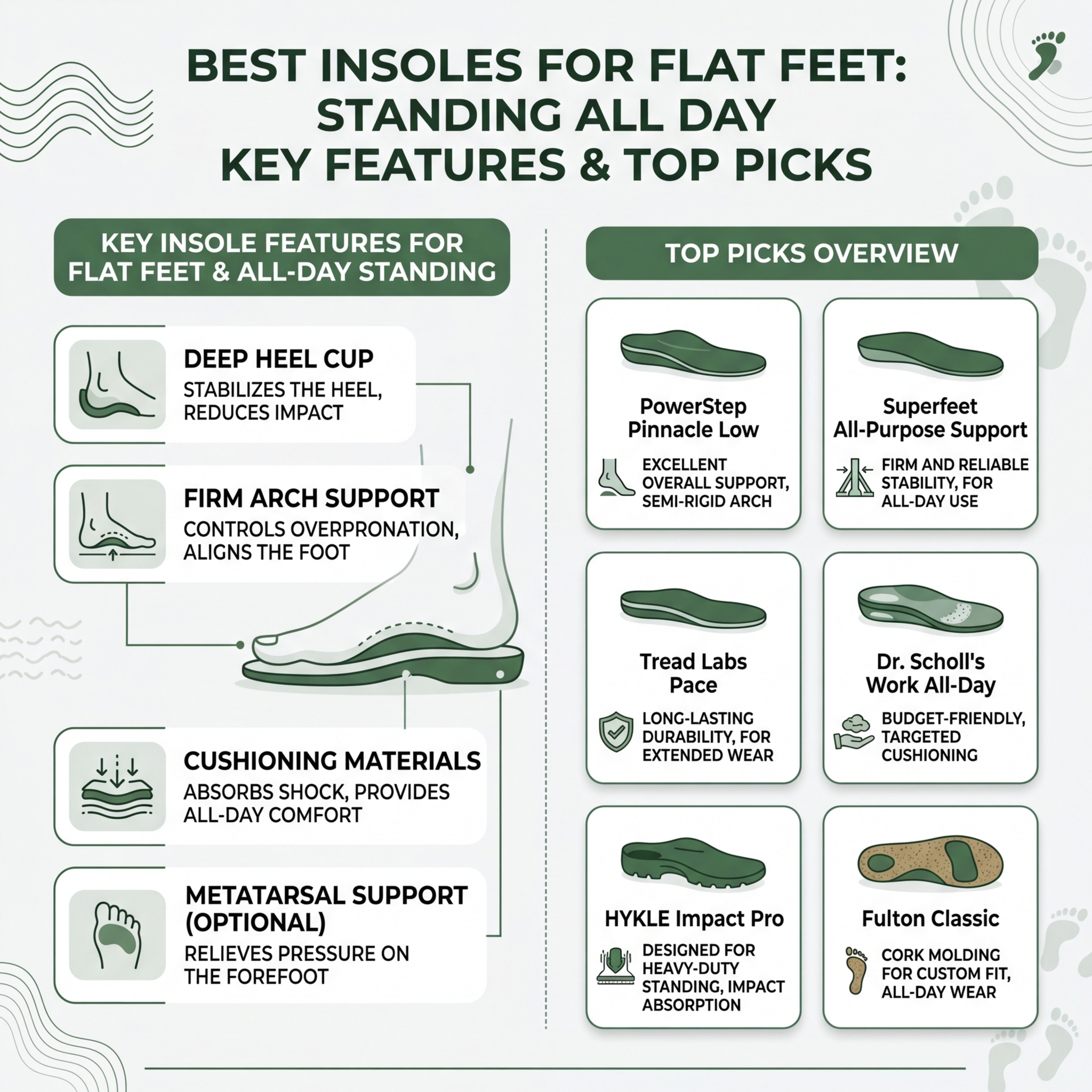
Basic best insoles for flat feet standing all day terms:
Understanding Flat Feet and All-Day Standing Pain
When we talk about flat feet—or “fallen arches”—we are describing a foot structure where the longitudinal arch is significantly lowered or entirely absent. If you stand up and the entire sole of your foot makes contact with the floor, you’re part of the flat-foot club. While some people are born with this anatomy, others develop it over time due to aging, injury, pregnancy, or even obesity.
For those of us standing all day—nurses, retail workers, construction pros, and teachers—flat feet present a unique mechanical challenge. Without a functional arch to act as a natural shock absorber, the foot tends to collapse inward. This is called overpronation. As the foot rolls in, it pulls on the plantar fascia (the tissue connecting your heel to your toes) and forces the ankles, knees, and hips out of alignment.

The result? Chronic foot fatigue and sharp pains that don’t just stay in your feet. Over time, this misalignment can lead to shin splints, bunions, and even lower back pain. This is why your flat feet crave these arch support insoles; they act as a scaffold, keeping your skeletal structure stacked correctly so your muscles don’t have to work overtime just to keep you upright.
Key Features of the Best Insoles for Flat Feet Standing All Day
Not all insoles are created equal. If you walk into a pharmacy and grab the softest, squishiest gel insert you can find, you might feel good for twenty minutes, but by hour four, your feet will likely be screaming. For flat feet, support is actually more important than pure “pillow” softness.
When searching for the best insoles for flat feet standing all day, look for these specific engineering features:
- Low Arch Support: This sounds counterintuitive, but if you have flat feet, a “high arch” insole will feel like standing on a golf ball. You need a low, structured arch that meets your foot where it is and prevents it from collapsing further.
- Deep Heel Cup: A deep, sculpted heel cradle is essential for stability. It centers the fatty pad under your heel bone (the calcaneus) and prevents the side-to-side “wobble” that leads to overpronation.
- Firm Structural Shell: Look for materials like semi-rigid plastic or molded cork. These provide the “rebound” needed to keep your foot in a neutral position throughout a 12-hour shift.
- Targeted Cushioning: While the base should be firm, the top layers should feature high-density foam or gel in high-impact zones, like the heel and the ball of the foot (metatarsal area).
- Metatarsal Pads: Some premium options include a small “bump” behind the ball of the foot. This helps spread the metatarsal bones and relieves pressure, which is a lifesaver for those of us who spend hours on hard concrete.
For a deeper dive into the mechanics, check out our shoe inserts for flat feet 101 guide.
How to Choose the Best Insoles for Flat Feet Standing All Day
Choosing the right insole requires a bit of “foot detective” work. Before you buy, we recommend a few simple tests:
- The Wet Footprint Test: Wet your foot and step onto a piece of cardboard or a dark towel. If the print looks like a solid slab with no curve on the inside, you have flat feet.
- The Unweighted Check: Sit down and look at your foot. If you see an arch while sitting that disappears the moment you stand up, you have “flexible” flat feet. This type of foot usually responds very well to OTC orthotics.
- Shoe Volume: Consider the shoes you wear most. If you wear tight-fitting dress shoes, you need a “low-profile” or “thin” insole. For work boots or athletic sneakers, you can opt for a “high-volume” insole with more cushioning.
- HSA/FSA Eligibility: Many high-quality orthotics, such as those from PowerStep and Superfeet, are HSA/FSA eligible, meaning you can use your pre-tax healthcare dollars to find relief.
Top Recommended Insoles for Flat Feet and Prolonged Standing
Based on clinical recommendations and thousands of user reviews, certain brands consistently rise to the top. PowerStep, for instance, is the #1 Podiatrist Recommended Brand, known for its patented arch shapes that are clinically proven to relieve pain by stabilizing the ankle.
If you are looking for the best insoles for flat feet standing all day, you want something that balances stability with long-term comfort.
Top-Rated Insoles for Flat Feet Standing All Day
PowerStep Pinnacle Low Specifically designed for those with low arches or completely flat feet, the Pinnacle Low features a shorter arch support shell. This provides the necessary alignment without the “poking” sensation of a standard arch support. It uses dual-layer cushioning and a deep heel cradle to protect against overpronation. Most users report adapting to these in just 1 to 3 days. PowerStep Pinnacle Low Insoles | Shoe Insoles for Flat Feet
Superfeet All-Purpose Support (Formerly Superfeet Blue) Superfeet is a legend in the industry. Their All-Purpose Support model offers a medium arch height and a firm stabilizer cap. It’s a “trim-to-fit” option that works exceptionally well in moderate-to-tight fitting footwear. It’s designed to redistribute forces across the body, reducing fatigue during long hours of standing. All-Purpose Support Medium Arch: Firm Insoles for Flat Feet & Plantar Fasciitis | Superfeet
HYKLE Impact Pro For those on the heavier side or those who carry heavy equipment all day, the HYKLE Impact Pro is a powerhouse. It is designed to support weights over 220 lbs and features a shock-absorbing metatarsal pad and a heel gel cushion. It has a high 4.83/5 rating from nearly 3,000 customers who praise its ability to eliminate the “shooting pain” often felt after a long shift. Insoles for Standing All Day and Plantar Fasciitis with High Arch Support for Flat Feet – HYKLE
Tread Labs Pace Tread Labs uses a unique two-part system: a molded arch support that is unconditionally guaranteed for life and a replaceable foam top cover. This makes them a great long-term investment. They offer multiple arch heights, so you can find a “low” version that perfectly matches your flat foot profile. How to Find the Best Insoles For High Arches & Flat Feet
Specialized Options for Work and Casual Wear
Fulton Classic If you prefer natural materials, Fulton offers a sustainable cork-based insole. Cork is a fantastic material for flat feet because it is supportive but “molds” to your unique foot shape over about 10 hours of wear. This creates a custom-like fit that provides personalized arch support. They boast a 90-day comfort guarantee and a remarkably low return rate. Top Insoles for Flat Feet: Arch Support, Stability, and All-Day Comfort
PowerStep ComfortLast For those who need maximum shock absorption, the ComfortLast model uses a dual-layer of slow-recovery foam and a gel heel relief zone. It’s ideal for work boots and athletic shoes where you have a bit more room. PowerStep ComfortLast Insoles | Cushioning Gel Insoles for Standing All Day
Form Insoles Optimum These are “heat-moldable,” meaning you can actually warm them in the oven (following specific instructions!) to get a perfect impression of your foot. This is a game-changer for people with asymmetrical flat feet. All-Purpose Orthotic Insoles for Plantar Fasciitis – Form Insoles
How to Fit, Trim, and Break In Your New Insoles
Once you’ve picked out your best insoles for flat feet standing all day, the next step is ensuring they actually fit your shoes. Most high-quality insoles are “trim-to-fit.”
Trimming Guide:
- Remove the Original Insole: Most shoes have a factory liner. Take it out! Putting a high-quality insole on top of a cheap factory foam pad usually creates too much bulk and can cause blisters.
- Use the Old Insole as a Template: Place the factory liner on top of your new orthotic, aligning the heels.
- Trace and Cut: Use a pen to trace the toe shape of the old insole onto the new one. Use sharp scissors to trim along the line.
- Test the Fit: Slide the new insole into your shoe. It should lay flat without bunching or curling at the edges.
The Break-In Period: Do not wear your new insoles for a full 12-hour shift on day one! Your feet and legs need time to adjust to the new alignment. We suggest wearing them for 2–3 hours the first day and gradually increasing the time over a week. Most people fully adapt within 1 to 3 days, but for some, it can take up to two weeks.
Lifespan: Even the best insoles for flat feet standing all day don’t last forever. Most high-quality options like PowerStep or Superfeet should be replaced every 6 to 12 months, depending on your activity level and weight. If you notice the foam is compressed or the arch support feels “mushy,” it’s time for a new pair.
For more on finding the right fit for specific shoe brands, see our finding-your-perfect-fit-a-guide-to-on-cloud-arch-support article.
Frequently Asked Questions About Flat Feet Support
Can insoles for flat feet help with knee and back pain?
Absolutely. Your feet are the foundation of your entire “kinetic chain.” When flat feet cause overpronation, your lower leg rotates inward, which puts a twisting strain on the knee and tilts the pelvis. This can lead to chronic lower back pain. By using the best insoles for flat feet standing all day, you stabilize the foundation, which helps keep your knees, hips, and spine in proper alignment. Many users find that their “back problems” actually start to resolve once their feet are properly supported.
How long do quality orthotic insoles typically last?
Quality matters here. Cheap pharmacy inserts might only last 2–3 months before they lose their shape. Premium brands like PowerStep and Tread Labs typically last 6 to 12 months. Factors that shorten lifespan include standing on hard concrete for 40+ hours a week, high body weight (over 220 lbs), and excessive moisture. If you are a heavy user, consider rotating between two pairs of insoles to let the foam “recover” between shifts.
When should I see a podiatrist instead of using OTC insoles?
While OTC (over-the-counter) insoles are a fantastic first step and solve the problem for about 80% of people, they aren’t a cure-all. You should see a professional if:
- You have sharp, localized pain that doesn’t improve after two weeks of using supportive insoles.
- You have visible foot deformities or severe swelling.
- You have a medical condition like diabetes or severe rheumatoid arthritis.
- Your flat feet are “rigid” (you don’t see an arch even when sitting down). In these cases, a podiatrist may recommend custom-molded prescription orthotics.
Conclusion
Standing all day with flat feet doesn’t have to be a daily exercise in endurance. By choosing the best insoles for flat feet standing all day, you are investing in your long-term health and productivity. Whether you opt for the podiatrist-recommended PowerStep Pinnacle Low, the durable Tread Labs Pace, or the sustainable molding of Fulton, the key is to move away from unsupportive footwear and toward structured alignment.
At On Clouder, we’ve seen how the right support can transform a person’s workday. Don’t let fallen arches keep you down—find your perfect fit and stand your ground with confidence.
Ready to take the next step? Step up your game with the best arch support for runners and daily walkers today!
