
Why Your Work Shoes Could Be Hurting You More Than Your Job
The best comfortable shoes for work can be the difference between ending a shift feeling fine and limping to your car in pain.
Here’s a quick look at the top picks if you’re in a hurry:
| Shoe | Best For | Key Strength |
|---|---|---|
| Hoka Bondi 9 | All-day standing | Maximum cushioning |
| ASICS Gel-Kayano 32 | Overpronation | Structured arch support |
| New Balance Fresh Foam X More v6 | Hard surfaces | Superior shock absorption |
| Brooks Ghost 16 | Nurses & retail workers | All-day comfort |
| Dansko Professional Clog | Healthcare | Anti-fatigue rocker bottom |
| Skechers Work Sure Track | Budget pick | Slip resistance + value |
| Hoka Bondi SR | Wet floors | High-grip slip resistance |
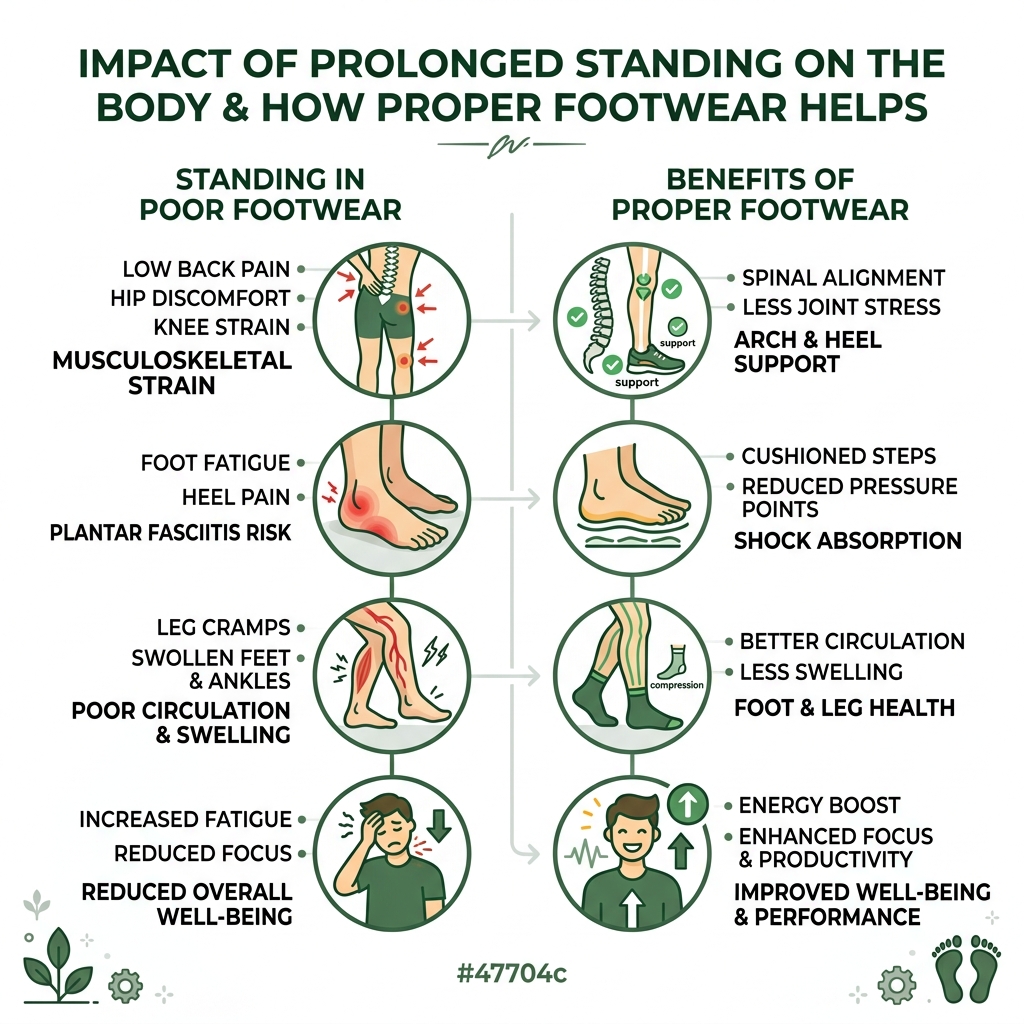
Think about this: up to 63–72% of people wear shoes that don’t properly fit their feet. And over 2 million people deal with plantar fasciitis, often triggered by standing long hours in unsupportive footwear. Up to 30% of workers experience foot pain linked directly to poor shoe choices.
That’s not just uncomfortable — it’s a real health risk. Prolonged standing in the wrong shoes can lead to musculoskeletal problems affecting your feet, lower back, hips, and knees. Research even shows that comfortable shoes positively affect the brain regions responsible for attention and decision-making — meaning the right pair doesn’t just help your feet, it helps you do your job better.
Whether you’re a nurse on a 12-hour shift, a warehouse worker covering miles of concrete, or an office professional on your feet more than you expected — your shoes matter more than most people realize.
I’m Faisal S. Chughtai, a footwear comfort expert who has spent years testing and reviewing shoes specifically for people who need the best comfortable shoes for work during long, demanding shifts. In this guide, I’ll walk you through everything you need to pick the right pair for your feet, your job, and your budget.
Related content about best comfortable shoes for work:
- Best Dress Shoes for Standing All Day (Men’s)
- Best Black Dress Shoes for Standing All Day
- Best Dress Shoes for Standing on Concrete
Essential Features of the Best Comfortable Shoes for Work
When we talk about the best comfortable shoes for work, we aren’t just talking about “pillowy” softness. Real comfort is a science. If a shoe is too soft, your foot muscles work overtime to stabilize you, leading to fatigue. If it’s too hard, your joints take the brunt of every step.
Shock Absorption and ASTM Standards
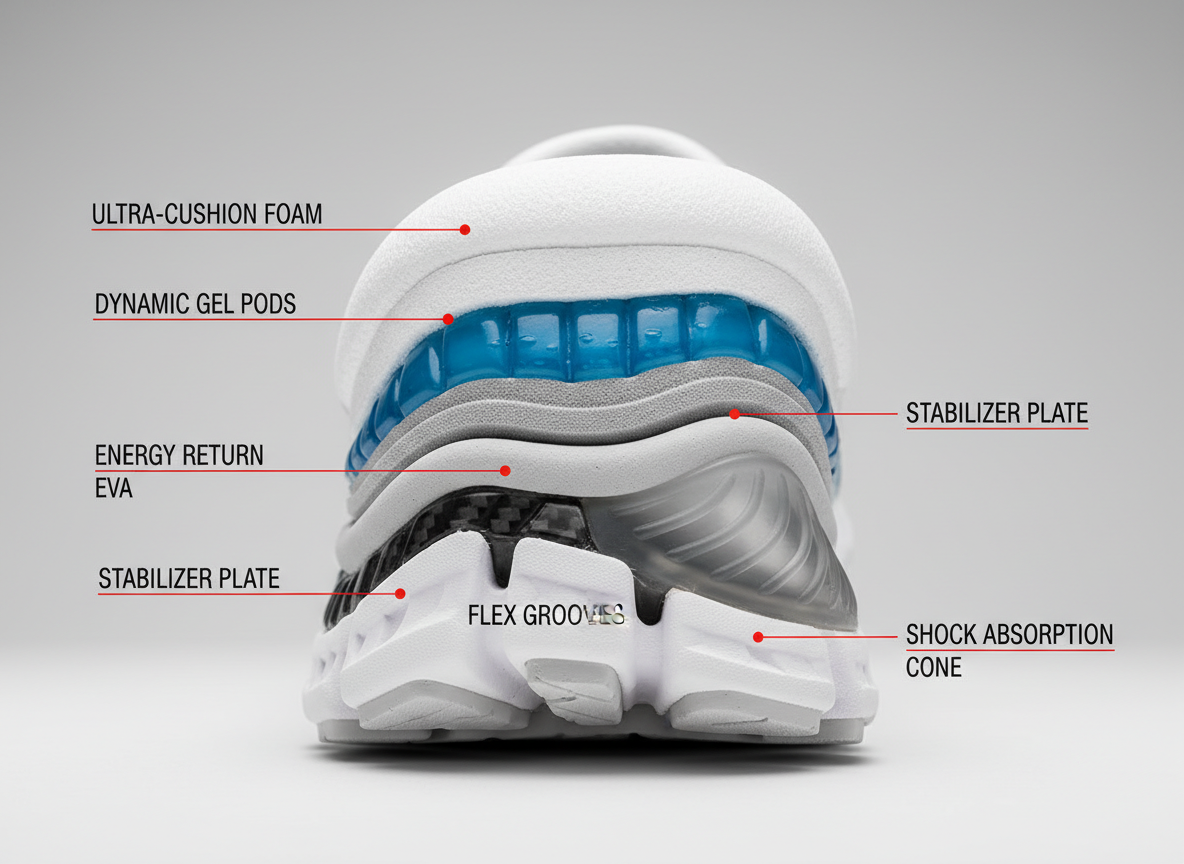
The gold standard for measuring how well a shoe protects you is the ASTM F1976 protocol. This measures shock absorption (SA). For those of us standing on concrete or tile for 8 to 12 hours, we want an SA reading of 110+ in the heel. This ensures that the foam isn’t just “squishy” but is actually dispersing energy away from your bones and tendons. Brands like New Balance and Hoka excel here, with some models offering nearly 18% better leg cushioning than the industry average.
Arch Support and Torsional Rigidity
Arch support is the backbone of foot health. It distributes your weight evenly across the foot, preventing the dreaded “collapsed arch” feeling at the end of the day. To stop the foot pain with these top-rated standing shoes, you must look for torsional rigidity.
A simple test: try to twist the shoe like a wet towel. If it twists easily, it won’t support you. You want a shoe that resists twisting (aiming for a 3/5 or higher on a rigidity scale) to keep your gait neutral and your ankles stable.
Breathability and Materials
Your feet can sweat up to half a pint a day during active shifts. The best comfortable shoes for work utilize breathable knit uppers or TENCEL™ Lyocell (tree fiber) to allow heat to escape. Some high-end work shoes even incorporate antimicrobial copper or silver linings to kill odor-causing bacteria and reduce moisture buildup, which is a major cause of blisters and fungal issues.
Top Recommendations by Profession and Environment
Not all work environments are created equal. A server in a greasy kitchen has very different needs than a teacher in a classroom or a warehouse worker on a loading dock.
The Professional Roundup: Comparing Styles
| Environment | Recommended Style | Key Feature Needed |
|---|---|---|
| Hospital/Clinic | Athletic or Clogs | Easy-clean + Rocker bottom |
| Warehouse/Industrial | Safety-toe Sneakers | Impact protection + Breathability |
| Restaurant/Service | Slip-Resistant Casuals | High friction coefficient (>=0.45) |
| Corporate/Office | Support-focused Dress | Hidden cushioning + Arch support |
Healthcare and Nursing
Nurses are the ultimate “marathoners” of the workplace. We often recommend the best On Cloud shoes for nurses and healthcare professionals because they offer high energy return, which helps with that “heavy leg” feeling during the 10th hour of a shift.
For those who prefer a traditional silhouette, the Professional Cordovan Milled – Dansko remains a staple. Its reinforced roomy toe box and anti-fatigue rocker bottom promote a natural walking motion that saves energy.
Warehouse and Industrial Floors
If you are walking miles on concrete, you need serious stack height. We’ve found the best ASICS for standing on concrete often feature Gel technology that doesn’t compress as quickly as standard EVA foam.
Safety is also paramount. Look for shoes that meet SATRA TM144 methods for slip resistance. A friction coefficient of 0.45 or higher is the benchmark for staying upright on wet or oily tiles.
Office-to-Floor Transitions
Many managers and engineers need a shoe that looks professional but performs like a sneaker. Modern “hybrid” shoes, like the Red Wing ComfortPro, are broken-in right out of the box and offer static-dissipative features while looking like a standard Oxford. This allows you to move from a board meeting to the factory floor without a shoe change.
Addressing Specific Foot Conditions at Work
If you already have foot pain, “standard” shoes won’t cut it. You need targeted support to prevent long-term damage.
Plantar Fasciitis
This is the most common complaint among workers who stand all day. It’s an inflammation of the tissue running across the bottom of your foot. To manage this, you need a firm heel counter and a structured midsole. Many users find relief with the best Brooks for standing, specifically models like the Ghost or Addiction, which provide the stability needed to keep the plantar fascia from overstretching.
Flat Feet and Overpronation
If your feet roll inward (overpronation), your knees and back will eventually pay the price. Stability shoes are your best friend. The best Hoka for standing includes models with a “J-Frame” or “Active Foot Frame” that acts like a cradle for your foot, keeping it aligned.
When shopping for flat feet, look for:
- Firm Midsoles: Avoid shoes that are too soft; you need structure.
- Wide Widths: Ensure your foot has room to splay naturally.
- Orthotic Compatibility: Look for shoes with removable insoles so you can swap in custom medical orthotics if necessary.
How to Find Your Perfect Fit and Size
You could buy the most expensive shoe in the world, but if the fit is wrong, it will still cause pain. Your feet swell throughout the day — a shoe that fits at 8:00 AM might be a torture device by 4:00 PM.
The Wet Foot Test
Before buying the best comfortable shoes for work, know your arch type. Wet the bottom of your foot and step onto a piece of cardboard:
- Full Print: You have flat feet (need stability/motion control).
- Half Print: You have a neutral arch (need moderate cushioning).
- Thin Line/Heel and Ball only: You have high arches (need maximum shock absorption).
Measuring and Sizing
Don’t just rely on “Size 10.” We recommend measuring your foot in millimeters for the most accurate brand comparisons. Some brands, like Atoms, even offer quarter sizes, which is a game-changer if one of your feet is slightly larger than the other (which is true for most people!).
The “Rule of Thumb” for Toe Boxes
You should have about a thumb’s width of space between your longest toe and the end of the shoe. Your toes should be able to wiggle freely. If they are cramped, you’ll end up with corns, calluses, or bunions. For a versatile, comfortable fit that handles daily swelling well, the Women’s Cruiser | Everyday Comfort & Style | Allbirds is a great example of a supple, accommodating upper.
For a deeper dive into sizing strategies, check out our comprehensive guide to the best shoes for standing all day.
Frequently Asked Questions about Work Footwear
Are running shoes the best comfortable shoes for work?
It depends on the job. Running shoes are designed for propulsion—moving you forward. Work shoes are often designed for stability—keeping you balanced while standing still.
However, many “daily trainer” running shoes are excellent for work because they offer high energy return. For example, the best Adidas for work use “Boost” or “Lightstrike” foam that returns energy to your feet with every step, making a long shift feel less draining. Just ensure the outsole has enough rubber for durability on abrasive work floors.
How do I choose the best comfortable shoes for work for my foot type?
Start with the wet foot test mentioned above. If you have high arches, prioritize “neutral” shoes with lots of foam. If you have flat feet, prioritize “stability” or “motion control” shoes. If you need to look professional while maintaining health, read our guide on the best dress shoes for standing (Men’s Edition) to find styles that hide orthopedic features inside a sleek leather exterior.
When should I replace my work shoes?
A general rule is every 300 to 500 miles. For a full-time worker, this usually means every 6 to 8 months. Even if the bottom of the shoe (the outsole) looks fine, the “engine” (the midsole foam) can be “dead inside.”
If you start feeling new pains in your knees or lower back, it’s a sign the cushioning has compressed and is no longer absorbing shock. For those looking for long-term value, comparing brands like Skechers vs Hey Dudes can help you decide which construction style lasts longer for your specific gait.
Conclusion
At On Clouder, we believe that nobody should have to choose between a paycheck and their long-term foot health. Finding the best comfortable shoes for work is an investment in your productivity, your mood, and your future mobility.
Whether you need the cloud-like bounce of a Hoka, the structured reliability of an ASICS, or the professional endurance of a Dansko, the right pair is out there. Don’t wait until you’re in pain to make the switch. Your feet do a lot of work for you — it’s time to return the favor.
For more specialized rankings and in-depth reviews, explore our full collection of the best shoes for standing.
