
Why the Right Arch Support Pads for Shoes Can End Your Foot Pain
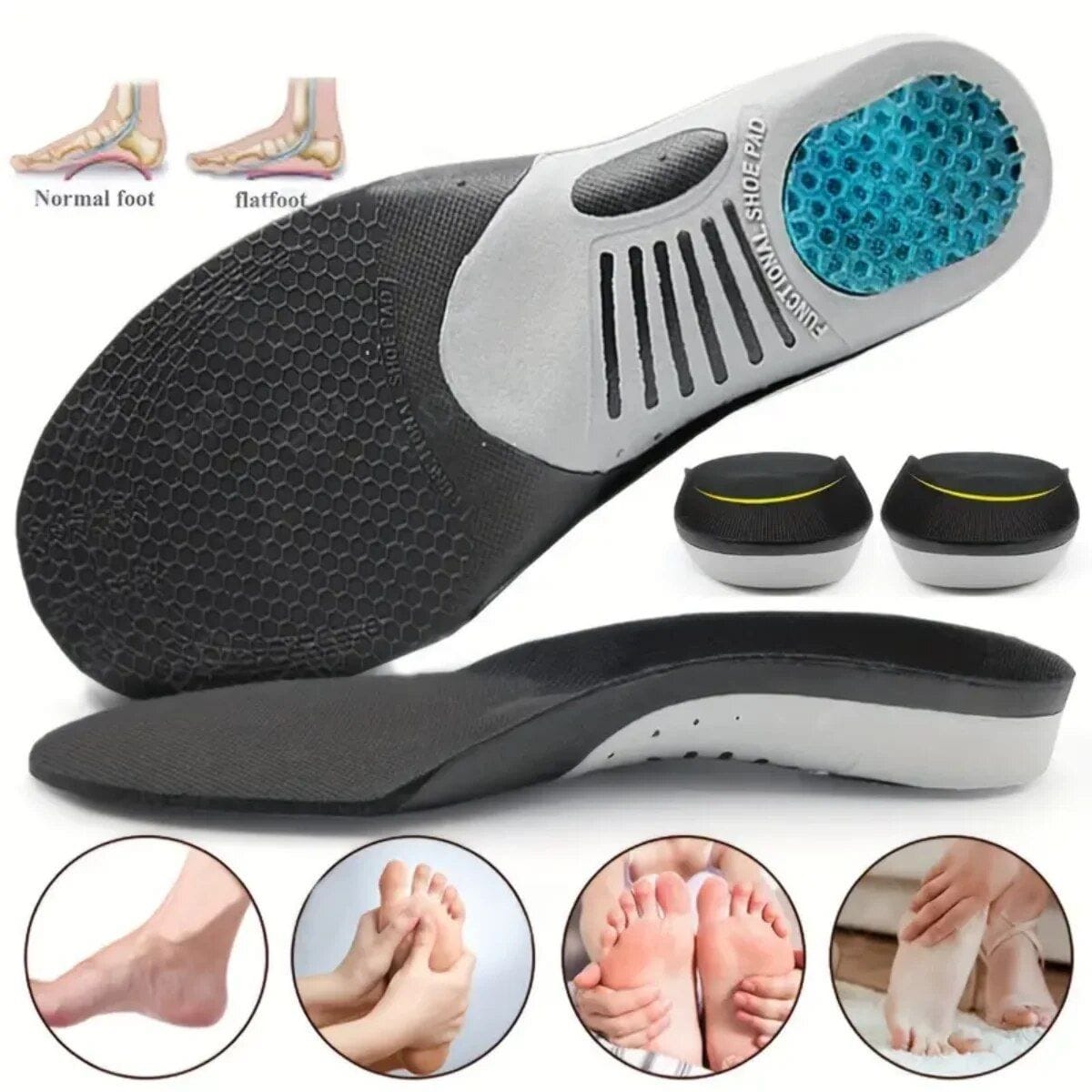
Arch support pads for shoes are one of the most effective tools for relieving foot pain, reducing fatigue, and protecting your knees, hips, and back from the ground up.
Here are the best arch support pads for shoes, based on activity and foot type:
| Best For | Top Pick | Key Benefit |
|---|---|---|
| Running & athletics | Superfeet Run Support High Arch | Energy return, moisture-wicking |
| Standing all day | Tread Labs Pace Thin Insoles | Medical-grade firm support |
| Dress shoes & heels | PowerStep SlenderFit 3/4 Insoles | Ultra-slim, metatarsal cushion |
| High arches | Superfeet All-Purpose Support High Arch | APMA-approved, firm foundation |
| All arch types | PowerStep Full Length Insoles | Podiatrist-designed, deep heel cup |
If you’re on your feet for long shifts, logging daily miles, or just tired of aching arches by noon, you’re not alone. Foot pain is often a structural problem — and the shoes you love may simply not provide enough support on their own.
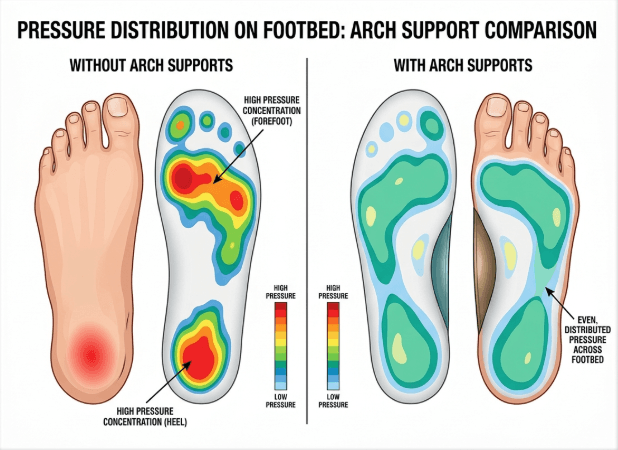
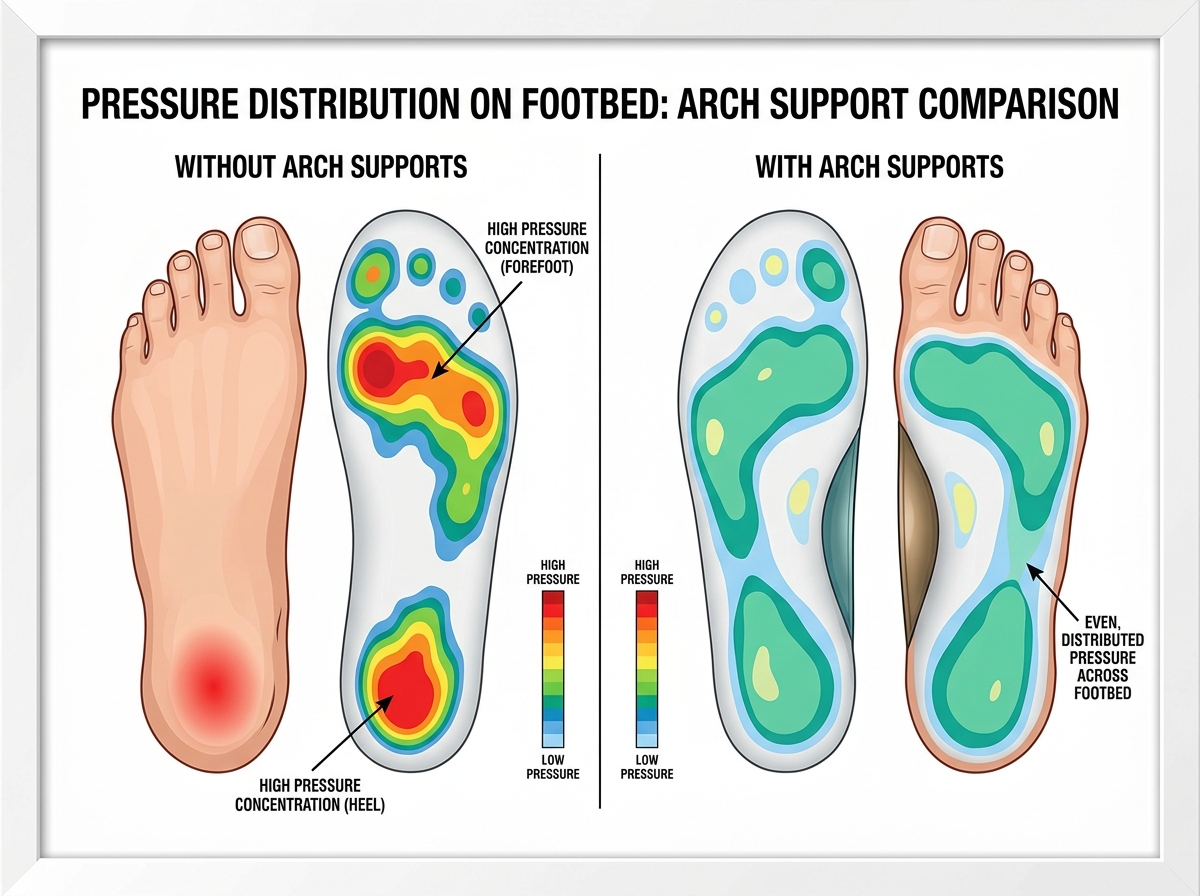
The good news? The right insole can make a dramatic difference. Arch supports work by redistributing pressure, stabilizing the heel, and correcting the way your foot contacts the ground with every step. Brands like Superfeet, PowerStep, and Tread Labs have spent decades — and in some cases over 30 years — refining this science for everyday users.
I’m Faisal S. Chughtai, a footwear comfort expert who has spent years researching and testing arch support pads for shoes to help people find the right fit for their lifestyle. In this guide, I’ll walk you through exactly what to look for so you can stop guessing and start walking pain-free.
Understanding Arch Support Pads for Shoes and How They Work
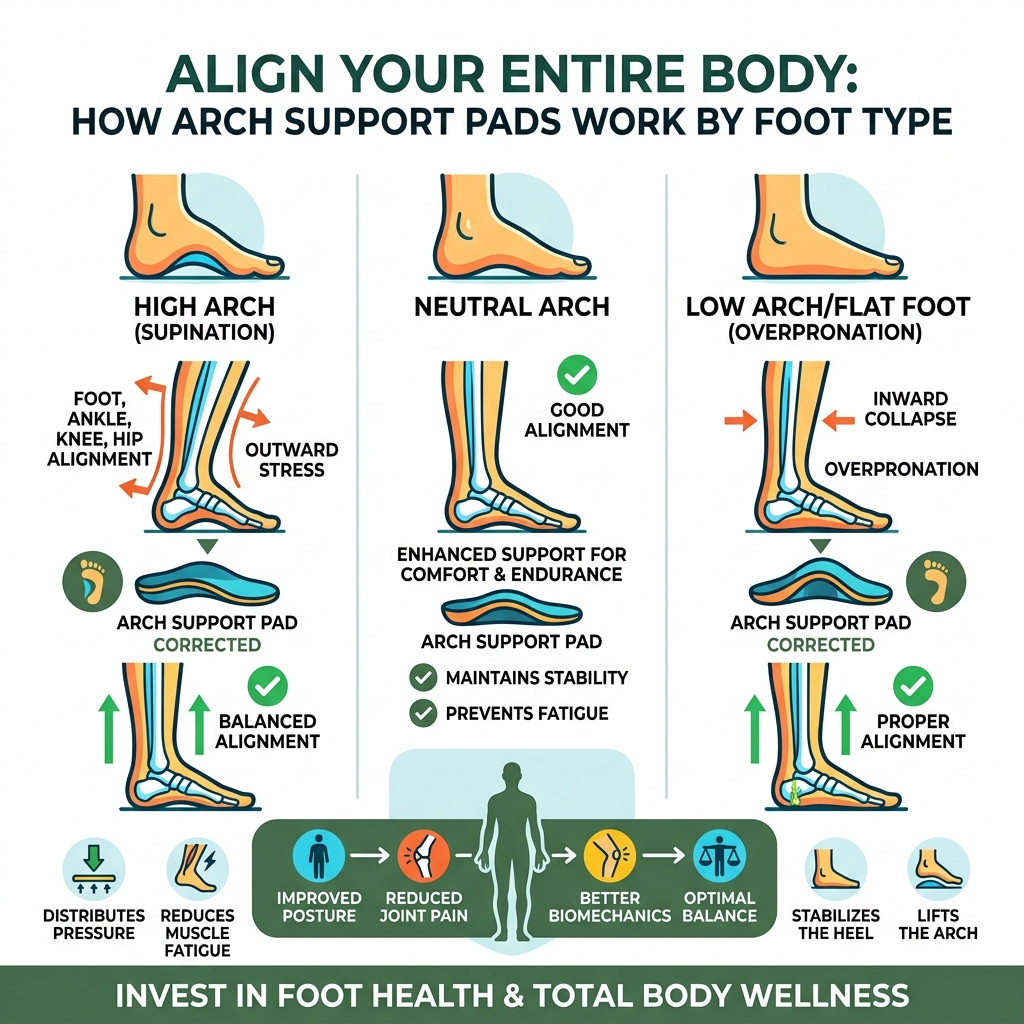
At their core, arch support pads for shoes are biomechanical tools. They aren’t just “pillows” for your feet; in fact, the best ones are often quite firm. They work by filling the gap between your foot’s arch and the flat factory insole of your shoe. This provides a “footprint” that matches your unique shape, which facilitates better shock absorption and pressure relief.
When we walk, our feet naturally roll. If they roll too far inward, it’s called overpronation (common with flat feet). If they don’t roll enough and stay on the outside edge, it’s supination (common with high arches). Quality arch supports use a contoured shape and a deep heel cup to stabilize the foot, preventing these excessive movements. This alignment doesn’t just stop at the ankle; it travels up the kinetic chain, improving the alignment of your knees, hips, and lower back.
Many of the top-tier products we recommend are podiatrist-designed and have earned the American Podiatric Medical Association (APMA) Seal of Acceptance. This means they have been reviewed by experts and found to promote good foot health. Furthermore, using these supports is often a medically recognized necessity. You can even use your flexible spending account (HSA/FSA) funds to purchase them, as they are considered eligible medical expenses for treating conditions like plantar fasciitis.
If you are a fan of specific brands like On Cloud, you might find that while the shoes are incredibly bouncy, you still need that extra structural “hug” under your arch. We’ve put together a specific guide on finding your perfect fit to help you integrate these supports into modern athletic footwear.
How to Identify Your Arch Type for the Perfect Fit
You wouldn’t buy a pair of glasses without knowing your prescription, and you shouldn’t buy arch support pads for shoes without knowing your arch type. Using a high-arch support on a flat foot can feel like walking on a golf ball, while a low-support insole won’t do anything for a high arch.
The easiest way to check is the Wet Footprint Test:
- Wet the bottom of your foot.
- Step onto a piece of cardboard or a dark paper towel.
- Look at the mark you left behind.
- Flat Feet (Low Arches): You see almost your entire footprint. This indicates your arches collapse inward, often leading to overpronation.
- Neutral Arches (Medium): You see about half of your arch. This is the most common type, but it still requires support to prevent fatigue during exercise.
- High Arches: You see only your heel and the ball of your foot, with a very thin line (or nothing) connecting them. This type is often hereditary and results in poor shock absorption.
Another pro tip is the unweighted arch check. Sit down and look at your foot. If you see an arch while sitting, but it disappears when you stand up, you have “flexible flat feet.” This usually requires a medium-height support rather than a completely flat one.
According to opinionated walkers on Reddit, finding the right match is the difference between a wasted $50 and a life-changing investment.
| Arch Type | Footprint Look | Primary Need | Recommended Firmness |
|---|---|---|---|
| Low / Flat | Full footprint | Pronation control | Firm, low-profile |
| Medium / Neutral | Half arch visible | Stability & comfort | Medium / Semi-rigid |
| High | Heel and forefoot only | Pressure distribution | Extra firm / High-profile |
Choosing Arch Support Pads for Shoes Based on Activity
Your feet behave differently when you are sprinting on a trail versus standing behind a retail counter for eight hours. That is why arch support pads for shoes are often categorized by activity.
Selecting Arch Support Pads for Shoes for Running and Athletics
Running puts up to three times your body weight in force on your feet with every stride. For runners, we look for “energy return” and “impact dispersion.”
Products like the Superfeet Run Support High Arch use a specialized carbon fiber-reinforced cap (EVOLyte) that springs back to its original shape after every step. They also feature AeroSpring rebound foam to cradle the foot. Another excellent choice is the Spenco Total Support Run Insoles, which utilize a 3-POD multi-density system. This system places different “pods” of varying hardness under the heel and arch to specifically guide your gait and improve efficiency.
If you’re a serious runner, you can dive deeper into our arch support for runners section for more gear tips.
Specialized Support for Work Boots and Standing All Day
If you work in healthcare, construction, or hospitality, you know that “tired feet” is an understatement. For these high-use scenarios, you need industrial-grade durability.
The Tread Labs Pace Thin Insoles are a standout here because their molded arch supports are guaranteed for a million miles. They provide the medical-grade, extra-firm support that podiatrists recommend for severe overpronation and heavy foot use. Similarly, the Superfeet All-Purpose Support High Arch (formerly known as the “Green” insole) provides a legendary firm foundation that has helped thousands of workers reduce fatigue.
Low-Profile Solutions for Dress Shoes and High Heels
You shouldn’t have to choose between looking professional and being in pain. Traditional full-length insoles usually won’t fit in narrow dress shoes or high heels because they take up too much “volume” in the toe box.
The solution is 3/4 length insoles. The PowerStep SlenderFit is specifically engineered for women’s fashion shoes. It features an S-shaped arch shell and a metatarsal cushion that relieves that burning sensation in the ball of the foot. Because they are 3/4 length, they don’t crowd your toes, making them perfect for pumps, wedges, and even flats.
Key Features of High-Quality Arch Support Pads for Shoes
When shopping for arch support pads for shoes, don’t be fooled by soft, squishy foam. While it feels good for the first five minutes in the store, soft foam collapses under your weight and provides zero actual support.
Essential Materials and Construction in Arch Support Pads for Shoes
Look for these high-quality components:
- Firm Shells: Usually made of polypropylene or carbon fiber. This is the “engine” of the insole that holds your arch up.
- Deep Heel Cups: These stabilize the fatty pad under your heel bone, maximizing your body’s natural shock absorption.
- Dual-Layer Foam: A combination of EVA foam for comfort and a more rigid base for structure.
- Modular Systems: Brands like Tread Labs use a 2-part system where the arch support is separate from the top cover. This allows you to replace just the fabric cover when it gets worn out, while keeping the million-mile arch support.
- Odor Control: Look for Moisturewick™ or antimicrobial top covers to keep your shoes fresh, especially if you’re wearing them for 12+ hours.
For more community-vetted options, check out the best arch support shoes on Reddit.
Proper Fitting, Trimming, and Maintenance Techniques
Most high-quality arch support pads for shoes come in size ranges (e.g., Men’s 9-11). To get a perfect fit:
- Remove the old insole: Always take out the factory liner that came with your shoes. Putting an arch support on top of an old insole makes the shoe too tight and unstable.
- Trace and Trim: Use your old insole as a template. Place it over the new one, trace the toe area with a pen, and trim with sharp scissors.
- The Break-In Period: Your feet have likely been out of alignment for years. Start by wearing your new supports for just 1 hour on the first day, adding an hour each day. Within a week, you’ll be able to wear them all day comfortably.
- Maintenance: Most insoles should be spot cleaned with mild detergent and air-dried. Never put them in the dryer!
Generally, Superfeet and PowerStep recommend replacing your insoles every 6 to 12 months, or every 500 miles. If you notice the foam is compressed or the support feels “mushy,” it’s time for a new pair.
Frequently Asked Questions about Arch Supports
How long do arch support insoles typically last?
Most high-quality insoles like Superfeet or PowerStep last between 6 to 12 months or about 500 miles. However, Tread Labs offers a “million-mile guarantee” on their molded arch shells, meaning you only ever have to replace the top fabric covers.
Can I use HSA or FSA funds to buy shoe inserts?
Yes! Arch supports, shoe inserts, and orthotics are FSA/HSA eligible. This is a great way to use your pre-tax dollars to invest in your long-term health.
Do arch supports help with knee, hip, and back pain?
Absolutely. Many people don’t realize that their back pain actually starts at their feet. When your arches collapse, it causes your legs to rotate inward, which tilts your pelvis and puts strain on your lower back. By stabilizing the foundation (your feet), you often see a “chain reaction” of relief all the way up your body.
Conclusion
Finding the right arch support pads for shoes is a journey toward a more active, pain-free life. Whether you are dealing with the sharp sting of plantar fasciitis or just looking to improve your gait efficiency, the brands we’ve discussed — Superfeet, PowerStep, Tread Labs, and Spenco — offer clinically proven solutions.
Remember to identify your arch type first, choose an insole that matches your activity, and give your feet time to adjust during the break-in period. At On Clouder, we are dedicated to helping you find the perfect balance of comfort and performance. For more tips on keeping your feet happy during your next 5K or long shift, explore our arch support for runners resources.
Stop letting foot pain dictate your day. Invest in your foundation, and your whole body will thank you.
