
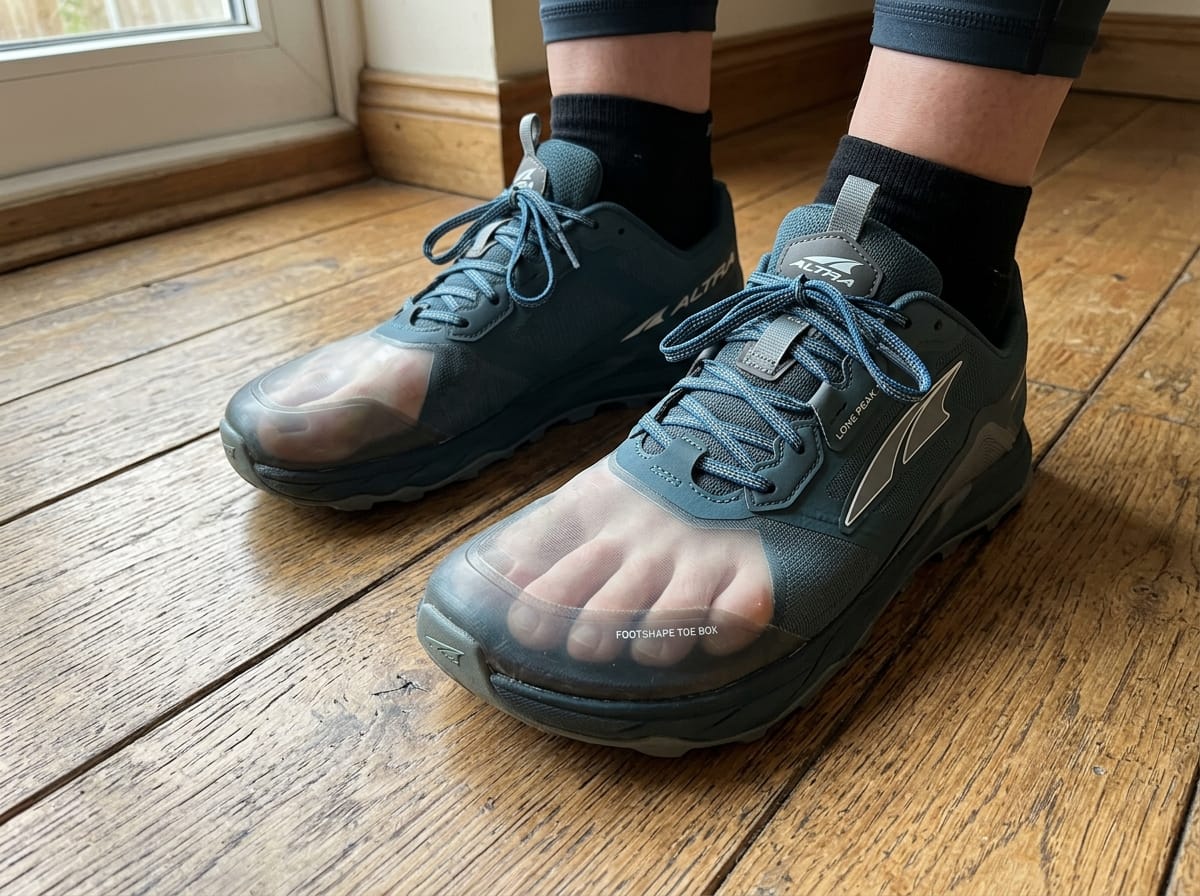
Why Shoes for Wide Toe Box Matter More Than You Think
Shoes for wide toe box are designed to let your toes spread naturally — the way feet are actually shaped — instead of squishing them into a tapered point.
Here are the best wide toe box shoe options by activity:
| Activity | Top Picks |
|---|---|
| Running | Altra, Topo Athletic, Topo Phantom 3 |
| Walking / Standing All Day | On Running Cloudrunner Wide, Hoka Gaviota 5 |
| Hiking | Merrell Moab 3 Wide, Keen WK400 |
| Casual / Everyday | Birkenstock, HEYDUDE, Lems Shoes |
| Dress / Work | Dansko, ABEO, Joe Nimble |
Most shoes narrow at the toe. That squeezes your toes together over time and can lead to real problems — bunions, hammertoes, blisters, and even nerve pain like Morton’s neuroma.
The good news? You don’t have to choose between healthy feet and great-looking shoes. There are now hundreds of wide toe box options across every style and activity.
Over 2,300 roomy toe box shoes are currently available on the market — from zero-drop minimalist runners to stylish everyday boots. Whether you run marathons, work 12-hour shifts, or just want your feet to feel better, there’s a fit for you.
I’m Faisal S. Chughtai, a footwear expert with years of experience helping people find the right shoes for wide toe box to match their comfort, performance, and lifestyle needs. In this guide, I’ll walk you through everything — from health benefits and fit tests to the best picks by activity.
Similar topics to shoes for wide toe box:
The Health Benefits of Shoes for Wide Toe Box
When we talk about shoes for wide toe box, we aren’t just talking about comfort; we’re talking about fundamental foot mechanics. Most modern footwear is designed with a “tapered” toe box that comes to a point. While this might look sleek, it forces the big toe inward and crushes the pinky toe.

Preventing Deformities
The most significant benefit of a spacious toe box is the prevention of common foot deformities. Scientific research on incorrectly fitted footwear has shown a direct link between narrow shoes and conditions like bunions (hallux valgus) and hammertoes. When your big toe is pushed toward the other toes, the joint at the base is forced outward, creating a painful bony bump. By switching to a wider shape, you can stop the squeeze on bunions and allow the joint to realign over time.
Neurological Health and Stability
Narrow shoes often compress the nerves between the metatarsal heads, leading to Morton’s neuroma—a condition that feels like walking on a marble or a hot coal. A wide toe box reduces this nerve pressure and improves circulation. Furthermore, “toe splay” (the ability of your toes to spread out) is your body’s natural kickstand. Wider spacing provides a broader base of support, which drastically improves balance and stability, especially during athletic movements or while standing on uneven terrain.
How to Determine if You Need a Roomy Toe Box
Many people wear shoes that are too narrow without even realizing it. They simply grow accustomed to the feeling of their toes being “snug.” However, your feet shouldn’t feel hugged; they should feel free.
The Insole Test
One of the easiest ways to check your current footwear is the insole test. Remove the insole from your shoe and place it on the floor. Stand on it with your full weight. If your toes spill over the edges of the insole, your shoes are too narrow. Your foot should fit entirely within the boundaries of the insole with room to spare at the front.
The Trace Test and Foot Mapping
Another expert-recommended method is the trace test. Place a piece of paper on the floor, stand on it, and trace the outline of your bare foot. Then, place your shoe over the tracing. If the outline of your foot is wider than the shoe, you are effectively “stuffing” your foot into a space that is too small.
| Feature | Standard Width Shoes | Anatomical Toe Box Shoes |
|---|---|---|
| Toe Shape | Tapered/Pointed | Wide/Rounded (Foot-Shaped) |
| Toe Splay | Restricted; toes squished together | Natural; toes can spread apart |
| Big Toe Alignment | Pushed toward the second toe | Straight alignment for better push-off |
| Common Issues | Bunions, blisters, nerve pain | Improved balance, reduced friction |
Signs You Need to Switch
- Pinky Toe Pressure: If you notice holes wearing through the mesh near your pinky toe, or if that toe feels numb after a long day.
- End-of-Day Swelling: Feet naturally swell as the day progresses. If your shoes feel fine in the morning but painful by 4:00 PM, you need more volume.
- Blisters Between Toes: This is a classic sign of toes rubbing against each other due to lack of space.
Testing for Proper Fit
When trying on shoes for wide toe box, don’t just walk—wiggle. You should have about a thumb’s width of space between your longest toe and the end of the shoe. Your midfoot should feel secure (locked down) so your foot doesn’t slide forward, but your toes should feel like they are in a “roomy cockpit.” Ensure your heel is secure in the heel cup; a wide toe box should not mean a loose, slipping heel.
Wide Toe Box vs. Barefoot Shoes: Understanding the Spectrum
There is often confusion between “wide toe box” and “barefoot” (minimalist) shoes. While almost all barefoot shoes have a wide toe box, not all wide toe box shoes are barefoot.
The Natural Footwear Spectrum
- Minimalist/Barefoot: These have a wide toe box, zero-drop (the heel and forefoot are at the same height), and a very thin sole (low stack height) to provide “ground feel.”
- Cushioned Wide Toe Box: Brands like Altra and Topo Athletic offer the same foot-shaped toe box but include significant cushioning. This is the ultimate guide to non-barefoot wide toe box shoes for those who want toe freedom without feeling every pebble on the road.
Key Terms to Know
- Zero-Drop: This means the shoe is flat from heel to toe, mimicking the natural position of a bare foot.
- Stack Height: The amount of material between your foot and the ground. High stack height equals more “marshmallow” cushion.
- Rocker Sole: A curved sole design that helps “roll” the foot forward, often helpful for those with stiff toe joints (hallux rigidus).
Transitioning to Natural Footwear
If you’ve spent decades in tapered, high-heeled shoes, your calf muscles and Achilles tendons may have shortened. Don’t switch to a zero-drop wide toe box shoe overnight. Start by wearing them for an hour a day and gradually increase the time to allow your muscles to strengthen and adapt to the natural alignment.
Top Recommendations for Different Activities
Finding the right shoes for wide toe box depends heavily on what you plan to do in them. We’ve tested over 100 pairs to find the leaders in each category.
Best Running Shoes for Wide Toe Box
For runners, a wide toe box is essential for preventing “black toenails” and blisters.
- Altra Experience Flow 2: Known for instant comfort and a stretchy mesh upper that accommodates swelling.
- Topo Athletic Phantom 3: Lab tests show the big toe area is 11.4% wider than average, making it a favorite for those with very broad feet.
- On Running Cloudsurfer Next Wide: A fantastic option for those who want a wide fit combined with the signature “cloud” cushioning.
Check out the best running shoes for blister-free miles for more performance-specific reviews.
Best Walking and Standing Shoes for Wide Toe Box
If you are a nurse, teacher, or retail worker standing on concrete all day, you need shock absorption and room for your feet to expand.
- Hoka Gaviota 5: Offers a massive base of support and a very wide forefoot.
- Dansko Paisley: Rated 4.8 stars with hundreds of reviews, these offer a professional look with a famously roomy toe area.
- Birkenstock: A classic for a reason. Their cork footbed provides rigid support that molds to your foot shape over time.
For those who need to look sharp at the office, we have more info about wide toe box dress shoes to keep you stylish and pain-free.
Best Casual Options
Sometimes you just want a shoe that feels like a slipper but looks like a sneaker.
- Lems Shoes: The Telluride or Chillum models offer a very natural shape.
- HEYDUDE: Extremely lightweight and naturally wide, making them a go-to for quick errands.
- Whitin: A top-rated budget option available on Amazon that offers a zero-drop, wide-toe experience at a fraction of the cost.
Discover more in our list of the 10 best casual shoes that don’t look orthopedic.
Essential Features to Look For
When shopping for shoes for wide toe box, don’t just look at the width; look at the construction.
Quality and Durability
Look for reinforced stitching in high-wear areas, especially around the toe box where wide feet tend to put the most pressure. High-quality rubber outsoles (like Vibram) and breathable mesh uppers will ensure your investment lasts.
Specialized Support
- Metatarsal Support: Some shoes, like those from ABEO, offer built-in metatarsal pads to help alleviate pressure on the ball of the foot.
- APMA Seal of Acceptance: The APMA Seal of Acceptance is a great indicator that the shoe has been reviewed by podiatrists and found to promote good foot health.
- Breathability: Wide feet often generate more heat. Look for mesh uppers that allow for maximum airflow to prevent hot spots.
Style and Aesthetics
Gone are the days when wide shoes looked like “clown shoes.”
- Punk/Grunge: Brands like BÄR and certain barefoot combat boots offer a Doc Martens aesthetic with double the toe room.
- Streetwear: Barebarics and Bohempia make high-top sneakers that look exactly like mainstream skate shoes.
- Boots: Duckfeet (making shoes since 1975) and Lems offer rugged, stylish boots that pair perfectly with jeans or outdoor gear.
Frequently Asked Questions about Wide Toe Box Shoes
How should wide toe box shoes fit?
They should be snug in the heel and midfoot to prevent sliding, but your toes should have enough room to splay fully without touching the front or sides of the shoe. Think “secure in the back, party in the front.”
Are wide toe box shoes the same as “wide” sizes?
No. A “Wide” (2E or 4E) shoe is often just a scaled-up version of a narrow shoe, meaning the heel and midfoot are also wider. A “wide toe box” shoe is specifically shaped like a foot—narrower at the heel and widest at the toes.
Can I wear orthotics in wide toe box shoes?
Absolutely. In fact, many people find that orthotics work better in wide toe box shoes because there is actually enough room for both the insert and the foot without causing compression.
Conclusion
At On Clouder, we believe that your shoes should adapt to your feet, not the other way around. Choosing shoes for wide toe box is more than a fashion choice; it’s a commitment to long-term wellness and natural movement. Whether you are recovering from a bunion, training for a marathon, or simply tired of sore feet at the end of the day, there is a spacious, stylish solution waiting for you.
Ready to find your perfect fit? Shop the best women’s wide toe box shoes and start your journey toward happier, healthier feet today. Let your toes breathe—they’ll thank you for it!
