
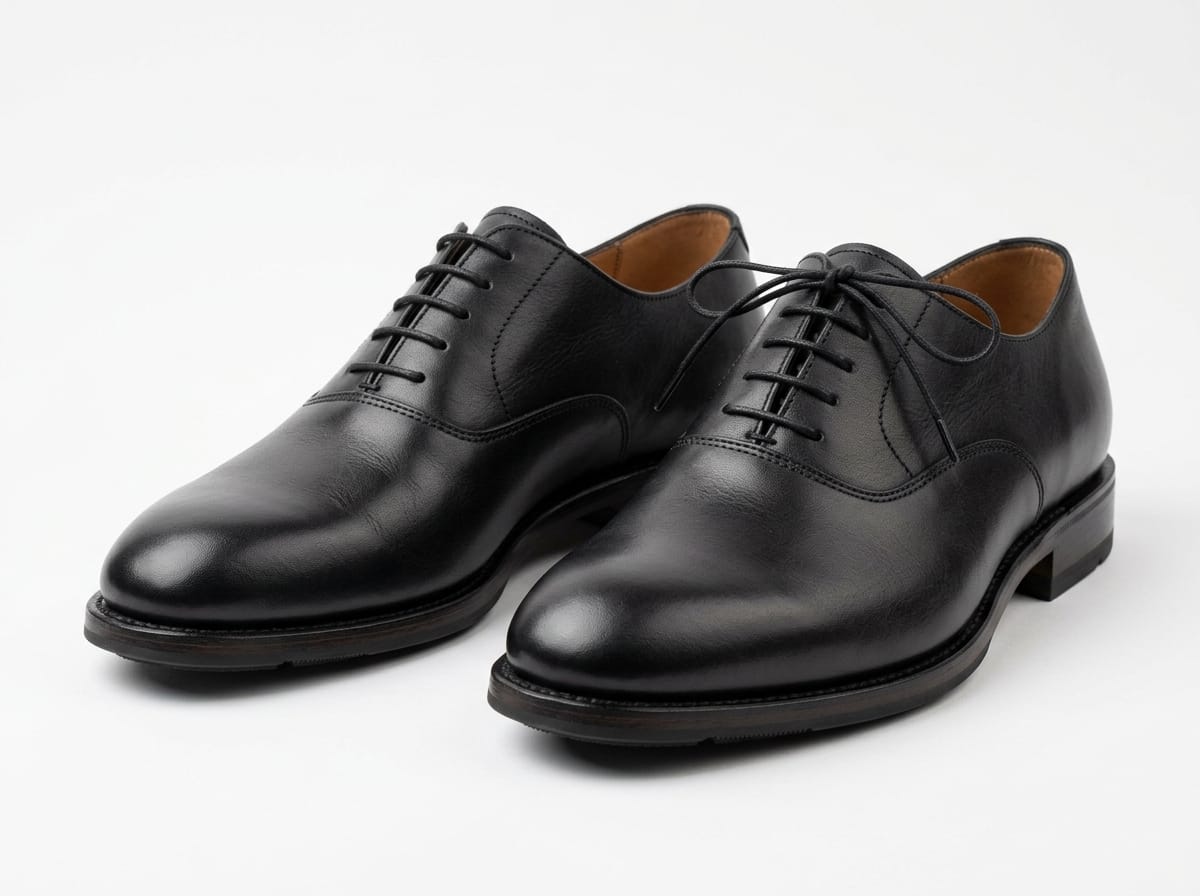
Why Your Feet Deserve Better Than Traditional Dress Shoes
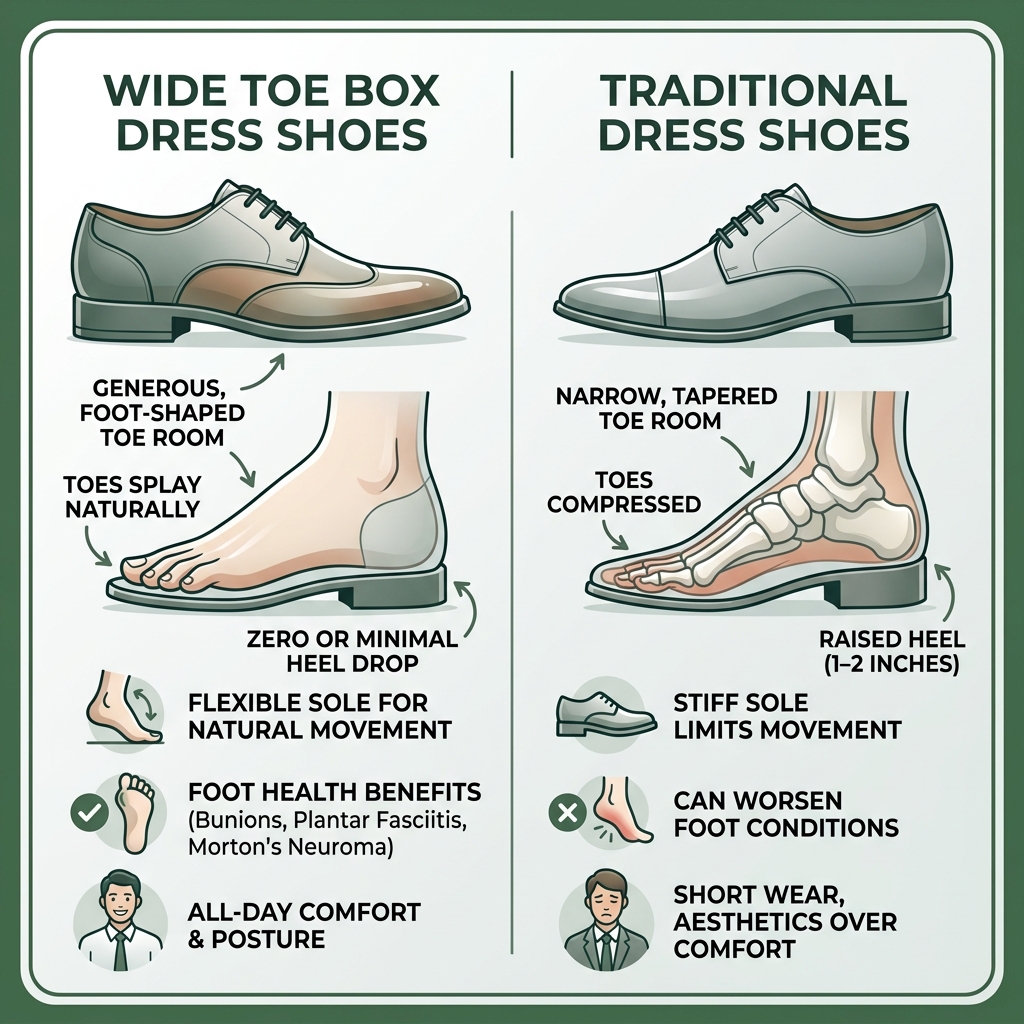
Dress shoes with a wide toe box are formal footwear designed to give your toes room to spread naturally — instead of squishing them into a narrow, pointed tip.
Here’s a quick breakdown of what makes them different and who they’re for:
| Feature | Wide Toe Box Dress Shoes | Traditional Dress Shoes |
|---|---|---|
| Toe room | Generous, foot-shaped | Narrow, tapered |
| Heel drop | Zero or minimal | Raised (1–2 inches) |
| Sole flexibility | Flexible or semi-flexible | Stiff |
| Best for | All-day comfort, foot health | Short wear, aesthetics |
| Foot conditions helped | Bunions, plantar fasciitis, Morton’s neuroma | Can worsen these conditions |
Who should wear them:
- Professionals on their feet all day
- Anyone with bunions, wide feet, or toe pain
- People transitioning from traditional dress shoes to minimalist footwear
- Those wanting formal style without the foot damage
Most people assume dress shoes are supposed to hurt. They kick them off the moment they get home, endure aching feet through weddings and long workdays, and chalk it up to “just how dress shoes are.”
But that’s not how it has to be.
Traditional dress shoes are built around a tapered, triangle-shaped toe box — great for aesthetics, terrible for your feet. Your foot is not shaped like a triangle. When your toes are compressed for hours, it can lead to bunions, nerve pain, and poor posture over time.
Wide toe box dress shoes solve this by matching the actual shape of your foot — letting your toes splay naturally while still looking sharp in a professional setting.
I’m Faisal S. Chughtai, a footwear comfort specialist with years of experience helping people find the right shoes — including navigating the growing world of dress shoes with a wide toe box. Whether you’re standing through a full shift or heading to a black-tie event, I’ll help you find a pair that works for your feet, not against them.
Basic dress shoes wide toe box terms:
The Health Benefits of dress shoes wide toe box
When we talk about dress shoes wide toe box, we aren’t just talking about fashion; we are talking about functional medicine for your feet. Traditional “tapered” dress shoes act like a vice, forcing the hallux (big toe) toward the other toes. Over years, this “triangle” shape becomes the new normal for your foot, leading to structural damage.
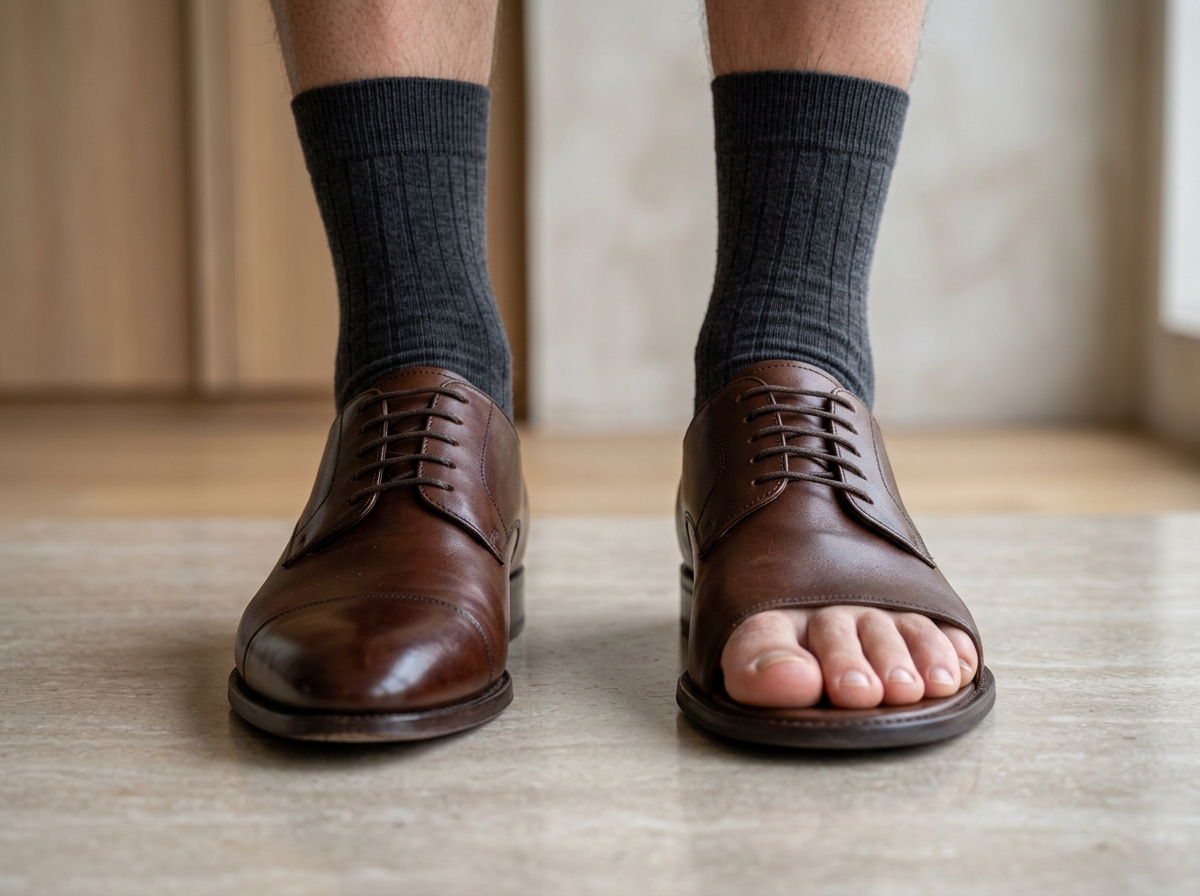
By switching to a wider silhouette, you allow for “toe splay.” This is the natural spreading of your toes that occurs when you walk or stand. When your toes can splay, your weight is distributed evenly across the entire forefoot, which reduces pressure points.
Alleviating Common Foot Conditions
If you suffer from specific ailments, the right footwear is your first line of defense. Here is how a wide toe box helps:
- Bunions: Traditional shoes push the big toe inward, aggravating the joint. A wide toe box allows the big toe to stay straight, reducing inflammation.
- Plantar Fasciitis: Many wide toe box shoes are also “zero-drop,” meaning the heel and forefoot are at the same height. This aligns the heel and arch naturally, reducing the strain on the plantar fascia ligament. For more on this, check out the best dress shoes for standing all day mens edition.
- Morton’s Neuroma: This involves a thickening of the tissue around the nerves leading to the toes. Squishing these nerves in narrow shoes causes sharp, burning pain. Extra width provides the “breathing room” necessary to stop the nerve compression.
- Natural Posture: When your toes are squished and your heel is raised (as in traditional oxfords), your pelvis tilts forward, putting stress on your lower back. Dress shoes wide toe box options help keep your spine neutral.
Key Design Elements of dress shoes wide toe box
Not all wide shoes are created equal. To get the full health benefit, we look for specific engineering features that separate a truly healthy shoe from a basic “wide” size.
- Zero-Drop: This means the sole is flat from heel to toe. Traditional dress shoes have a 1/2 to 1-inch heel, which shortens the Achilles tendon over time and shifts your center of gravity.
- Flexible Soles: Your foot has 26 bones and dozens of joints designed to move. A stiff, board-like sole prevents this. Brands like Baer Shoes or Vivobarefoot use soles that allow the foot to twist and bend naturally.
- High-Quality Materials: Look for full-grain leather or high-end vegan synthetics. These materials are breathable and eventually mold to the unique shape of your foot.
- Vibram Soles: Many premium barefoot dress shoes, such as the Baer Freiheit Barfuß, utilize Vibram outsoles. These provide incredible grip and durability without adding unnecessary weight or stiffness.
If you’re looking for something a bit less formal but still office-appropriate, see our list of the 10-best-casual-shoes-with-a-wide-toe-box-that-dont-look-like-orthopedic-shoes.
How to Style dress shoes wide toe box for Black-Tie Events
A common fear is that “foot-shaped” shoes look like clown shoes. Thankfully, modern design has caught up. You can now find dress shoes wide toe box models that are indistinguishable from high-end Italian oxfords at a glance.
- Oxford Styles: For the most formal events (weddings, black-tie), look for a “closed-lacing” Oxford. Brands like Carets or Zaqq offer models with a “disguised” heel—the shoe looks like it has a heel from the outside, but your foot is actually sitting flat inside.
- Derby Flexibility: For business casual or “office elegance,” a Derby (open-lacing) is ideal. The open lacing system is particularly great for those with “high-volume” feet or high arches, as it allows for more adjustment across the top of the foot.
- Cap-Toe Design: The cap-toe is a timeless aesthetic. Models like the Johnston & Murphy Upton or the Florsheim Rucci offer wide and extra-wide widths (up to 3E or even 6E in some orthopedic brands) while maintaining a polished, professional look.
When you’re attending a wedding on a hard surface, refer to our ultimate dress shoes guide standing concrete to ensure your style doesn’t come at the cost of your comfort.
Barefoot vs. Traditional: Understanding the Difference
It is important to distinguish between “wide-width” traditional shoes and “barefoot/minimalist” dress shoes. While both offer more room, the philosophy behind them is different.
The Barefoot Philosophy
Barefoot dress shoes (like Vivobarefoot Ra, Xero Glenn, or Groundies) aim to mimic the experience of being unshod. They feature:
- Ground Feel: Thin soles (often 3mm to 6mm) that allow your brain to receive sensory feedback from the floor (proprioception).
- Total Flexibility: You can literally roll these shoes into a ball.
- Anatomical Shape: The toe box is widest at the tips of the toes, not the ball of the foot.
The Traditional “Wide” Philosophy
Traditional brands (like Clarks, Rockport, or Bruno Marc) offer “Wide (W)” or “Extra Wide (EEE)” versions of their standard shoes. These are great for people who just have large feet but still want traditional cushioning and a slight heel lift.
| Feature | Barefoot Dress Shoes | Traditional Wide Dress Shoes |
|---|---|---|
| Sole Thickness | 3mm – 8mm (Very Thin) | 10mm – 30mm (Cushioned) |
| Heel Lift | 0mm (Zero-Drop) | 10mm – 25mm (Standard Heel) |
| Weight | Feather-light | Moderate |
| Arch Support | None (Relies on foot strength) | Built-in or removable inserts |
| Toe Box Shape | Foot-shaped (widest at toes) | Tapered but voluminous |
How to Find the Perfect Fit for Wide and High-Volume Feet
Finding the right dress shoes wide toe box is more than just picking a size. You need to understand your foot’s “volume” and “width profile.”
Measuring for Success
Don’t rely on your size from five years ago. Feet change as we age or if we’ve been wearing unsupportive shoes.
- Measure in the Afternoon: Your feet swell throughout the day. Always measure when they are at their largest.
- The Toe Wiggle Test: When you put the shoe on, you should be able to wiggle all ten toes freely. If your pinky toe feels pressed against the side, the shoe is too narrow.
- Check for “Volume”: If you have a high instep (the top part of your foot), look for “high-volume” brands like Carets or Tadeevo. If you have “low-volume” (flat) feet, you might need an insole to take up extra space.
Sizing Hacks for Different Brands
Research shows that sizing is inconsistent across the industry:
- Carets: These tend to run big and are high-volume. Many users recommend sizing down a full size.
- Lems: These often run small. We suggest going up a half size for their dressier models like the Nine2Five.
- Oaka Studio: These run about a half size large; consider sizing down.
- Extra Wide Needs: If you need extreme widths, brands like Drew and Apex offer sizes up to 6E, accommodating conditions like edema or severe bunions.
Transitioning to Minimalist Formal Footwear
If you have spent 20 years in traditional oxfords with a 1-inch heel, you cannot switch to a zero-drop, thin-soled barefoot shoe overnight. Your calf muscles and Achilles tendons have likely shortened, and your foot muscles may have atrophied.
The Transition Timeline
- Phase 1 (Weeks 1-2): Wear your new dress shoes wide toe box for only 1-2 hours a day around the office.
- Phase 2 (Weeks 3-4): Increase to half-days. Perform foot strengthening exercises like “toe curls” (using your toes to scrunch up a towel on the floor).
- Phase 3 (Month 2+): Full-day wear. If you feel “tired” feet, this is normal—it’s your muscles finally working! If you feel sharp pain, back off and use a transitional insole.
Pro Tip: Brands like Lems or Freet are excellent “transitional” shoes because they offer a wide toe box but include a bit more cushioning than a hardcore barefoot shoe. This protects your heels while you adjust to the zero-drop platform.
Frequently Asked Questions about Wide Toe Box Dress Shoes
Are wide toe box dress shoes suitable for formal weddings?
Absolutely. Modern brands like Zaqq, Carets, and Peerko specialize in high-polish leather that looks exactly like a traditional formal shoe. As long as the leather is high quality and the laces are kept clean, they are perfectly appropriate for black-tie events.
Do these shoes look like “clown shoes” or orthopedic footwear?
This is the most common misconception. While “foot-shaped” shoes are naturally wider at the front, clever design tricks—like elongated toe caps or specific stitching patterns—can camouflage the width. Brands like Carets use a patented “hollow” toe design that looks pointed from the outside but is wide on the inside.
How do I know if I need a wide or extra-wide (EEE) fit?
If you frequently experience “hot spots” on the sides of your feet, or if you see your pinky toe wearing a hole through the side of your shoes, you need a wider fit. You can use a Brannock device at any shoe store to measure your width. If your foot measures wider than a “D” (standard), you should look into E or EEE options.
Conclusion
At On Clouder, we believe that style should never come at the expense of your health. Choosing dress shoes wide toe box is an investment in your long-term mobility. Whether you’re a groom standing at the altar or an executive navigating a 12-hour workday, your feet deserve a foundation that supports their natural shape.
From the high-tech “disguised” heels of minimalist brands to the tried-and-true extra-wide offerings from orthopedic specialists, there has never been a better time to make the switch. Your bunions will thank you, your back will feel better, and you’ll finally be able to focus on your work instead of your aching toes.
Ready to explore more options? Don’t forget the ladies in your life—check out our guide to the Womens wide toe box for stylish, foot-healthy options for her.
