

Why the Right Shoes Make or Break Long-Distance Walking on Concrete
The best walking shoes for long-distance on concrete can mean the difference between finishing your day feeling fine and ending it with aching knees, sore heels, and burning feet.
Here’s a quick answer if you’re in a hurry:
| Shoe | Best For | Stack Height | Key Strength |
|---|---|---|---|
| Hoka Bondi 9 | Maximum cushioning | 44 mm | Plush, joint-protecting ride |
| Hoka Clifton 10 | All-day wear | 44.4 mm | Lightweight with high shock absorption |
| Brooks Ghost 17 | Balanced everyday walking | ~30 mm | APMA-accepted, 9 oz, 10 mm drop |
| Nike Motiva | Shock absorption | 34.9 mm | 19.8% above-average impact protection |
| Brooks Addiction Walker 2 | Durability and stability | ~30 mm | 40% less outsole wear than average |
| KEEN WK400 | Effortless long strides | 45.7 mm | Highest stack tested, 21.4 mm drop |
| On Cloudtilt | Energy return | 35.5 mm | 58.1% energy return, 13.9% bouncier than average |
Concrete is one of the hardest surfaces your feet can walk on. Unlike asphalt or packed dirt, it has almost zero give. That means every step sends impact straight up through your heels, ankles, knees, and hips.
For active professionals clocking long work shifts or walkers covering several miles a day, the wrong shoe makes that impact cumulative and painful. The right shoe absorbs it, redistributes it, and keeps you moving comfortably mile after mile.
This guide cuts through the noise with lab-tested data, podiatrist-backed insights, and real-world performance results — so you pick the right shoe for your feet and your routine.
I’m Faisal S. Chughtai, a footwear expert who has spent years testing and evaluating shoes specifically for comfort and performance on hard surfaces — including helping people find the best walking shoes for long-distance on concrete. Whether you’re a nurse on a 12-hour shift or a city walker logging daily miles, I’ll help you find the right fit.
Essential Features of the Best Walking Shoes for Long-Distance on Concrete
When we talk about walking on concrete, we aren’t just talking about “soft” shoes. We are talking about mechanical protection. Concrete is a rigid, unforgiving surface that increases pressure on the heels and balls of the feet. Without the right gear, this leads to common issues like plantar fasciitis, shin splints, and joint fatigue.
As Timothy Oldani, D.P.M., F.A.C.F.A.S. explains, walking on concrete—especially for those who do it daily for work—leads to a significant increase in pressure. To combat this, we look for specific technical specs.
The Magic Numbers: Stack Height and Foam
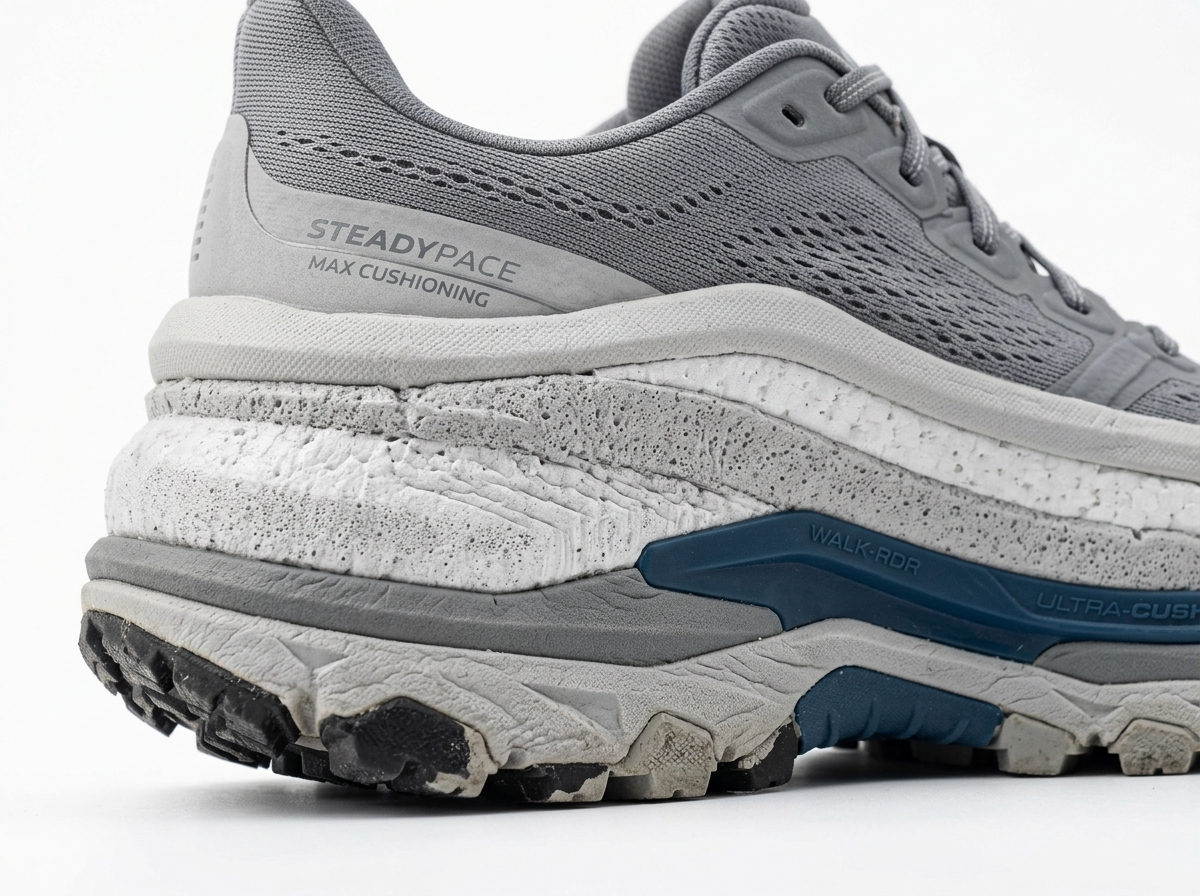
The “stack height” refers to the amount of material between your foot and the ground. For the best walking shoes for long-distance on concrete, experts generally recommend a stack height of at least 25-30mm. High-stack midsoles often utilize EVA foam, gel, or air pockets to create a buffer.
Rocker Geometry and Energy Return
Rocker geometry—a curved sole design—helps roll the foot forward naturally. This reduces the work your calf muscles and ankles have to do, effectively reducing fatigue during those 10,000+ step days. Furthermore, torsional rigidity (how much the shoe resists twisting) and a proper heel-to-toe drop (the height difference between the heel and the forefoot) ensure your gait remains stable.
To understand more about the biomechanics of a good stride, check out our web-story on what makes a good walking shoe.
Maximum Cushioning: The Best Walking Shoes for Long-Distance on Concrete
If your primary goal is to feel like you are “walking on clouds,” maximum cushioning is the answer.
- Hoka Bondi 9: This is often cited as the gold standard for plushness. With a massive 44 mm heel stack height and a 5 mm drop, it provides a “marshmallow” feel that testers say erases the harshness of city sidewalks.
- Nike Motiva: This shoe was specifically engineered for the unique pace of walking. It features a 34.9 mm heel stack and a 133 Shock Absorption (SA) rating, which is nearly 20% higher than the industry average. Its unique rocker shape makes every step feel assisted.
- Brooks Ghost 17: A more balanced option, the Ghost 17 weighs in at just 9 oz and carries the APMA (American Podiatric Medical Association) Seal of Acceptance. It’s ideal for those who want cushioning without the “oversized” look.
Stability and Support: Best Walking Shoes for Long-Distance on Concrete for Overpronation
Not everyone has a neutral gait. If your feet roll inward (overpronation) or you have flat feet, maximum cushion alone might make you feel “mushy” or unstable. You need structure.
- Brooks Addiction Walker 2: This is a powerhouse for stability. It features a supportive sole with an outsole hardness of 84.5 HC, meaning it won’t compress unevenly under heavy use.
- Saucony Guide 18: This model uses medial support and a wider base to keep the foot aligned. It’s a favorite for those who need a “guided” stride on hard pavement.
For a deeper dive into how different brands handle support, see our comparison of On Cloud vs. Brooks for walking.
Technical Performance and Durability Metrics
We don’t just rely on “feel.” At On Clouder, we look at the data. Concrete acts like sandpaper on shoe outsoles, meaning durability is just as important as comfort.
Outsole Longevity on Abrasive Surfaces
A shoe that feels great on day one is useless if the tread disappears by day thirty. The best walking shoes for long-distance on concrete feature outsoles made of high-density rubber.
- Hoka Transport: This shoe is a durability beast. Its outsole measures 81.0 HC in hardness and is 3.4 mm thick. In lab tests, it showed 33.3% less wear damage than the average walking shoe when exposed to abrasive surfaces.
- Vibram Soles: Many top-tier walking shoes incorporate Vibram rubber. Originally engineered for mountaineering, this material offers superior grip on wet concrete, which is vital for safety. You can read more about the history of Vibram technology here.
Midsole Compression and Fatigue Reduction
Energy return is a metric that tells us how much “bounce” a shoe gives back. On a long walk, a shoe with high energy return (like the On Cloudtilt at 58.1%) helps you maintain your pace even when your legs feel heavy.
The KEEN WK400 is another standout, featuring one of the tallest stacks we’ve ever measured at 45.7 mm. Its 21.4 mm drop creates an almost effortless forward lean, making it one of the best choices for sustained long-distance walking. If your day involves more standing than walking, you might also want to look at the best shoes for standing on concrete all day.
Expert Tips for Fit, Maintenance, and Replacement
Even the most expensive shoe will fail you if it doesn’t fit correctly or if you wear it past its expiration date.
Proper Fitting to Prevent Blisters
When you’re walking long distances, your feet will naturally swell. If your shoes are “perfectly snug” in the morning, they will be “painfully tight” by mile five.
- The Thumb’s Width Rule: There should be a thumb’s width of space between your longest toe and the end of the shoe.
- Toe Wiggle Room: You should be able to wiggle your toes freely without feeling cramped.
- Heel Lockdown: Your heel should stay firmly in place without sliding up and down, which is the primary cause of blisters.
- Width Options: Brands like Hoka and New Balance are excellent for offering wide and extra-wide versions to accommodate bunions or naturally broad feet.
For a curated list of our most comfortable picks, check out our Top 10 sneakers for walking comfort.
Signs Your Shoes Need Replacing
Midsole foam is like a sponge; eventually, it loses its ability to “spring back.”
- The 500-Mile Rule: Most walking shoes should be replaced every 500 miles. For a daily walker doing 3 miles a day, that’s about every 6 months.
- Visible Creasing: If the side of your midsole looks heavily wrinkled or compressed even when you aren’t wearing the shoe, the foam is likely dead.
- New Aches: If you suddenly start feeling pain in your arches, shins, or knees that wasn’t there before, your shoes have likely lost their shock-absorbing properties.
- Traction Loss: Smooth spots on the outsole are a sign that the rubber has worn down, increasing your risk of slips on wet pavement.
For those in high-impact professions, we have a specific guide for nurses and teachers on the best shoes for standing all day.
Frequently Asked Questions about Concrete Walking
Are running shoes suitable for long-distance walking on concrete?
Yes, absolutely! In fact, many of the best walking shoes for long-distance on concrete are actually classified as “road running” shoes. Running shoes are designed to handle much higher impact forces than walking, so they often provide superior cushioning and technical foam. However, avoid “racing flats” or “super shoes” with carbon plates, as these are often too stiff and unstable for a walking gait.
How often should I replace walking shoes used on pavement?
Pavement and concrete are abrasive. We recommend replacing your shoes every 500 miles or every 6 to 12 months. If you are a heavy walker or use the shoes for work shifts on concrete floors, you may need to replace them closer to the 6-month mark to maintain joint protection.
What stack height do podiatrists recommend for hard surfaces?
Most podiatrists recommend a stack height of at least 25-30 mm for concrete. This provides enough material to effectively dissipate shock before it reaches your bones and joints. Shoes like the Hoka Bondi 9 (44 mm) go well beyond this, offering maximum protection for those with existing foot pain.
Conclusion
Finding the best walking shoes for long-distance on concrete isn’t just about style—it’s an investment in your long-term health. By prioritizing high stack heights, durable outsoles, and a proper fit, you can turn a grueling walk on hard pavement into a comfortable, energizing experience.
At On Clouder, we are dedicated to helping you find that perfect match. Whether you need the marshmallow plushness of a Hoka or the structured support of a Brooks, the right shoe is out there waiting to protect your feet. Don’t wait for the pain to start—upgrade your gear today and feel the difference that 40+ mm of premium foam can make.
For more reviews and performance rankings, visit us at OnClouder.com.
