
The Best Running Shoes Women Can Buy in 2026
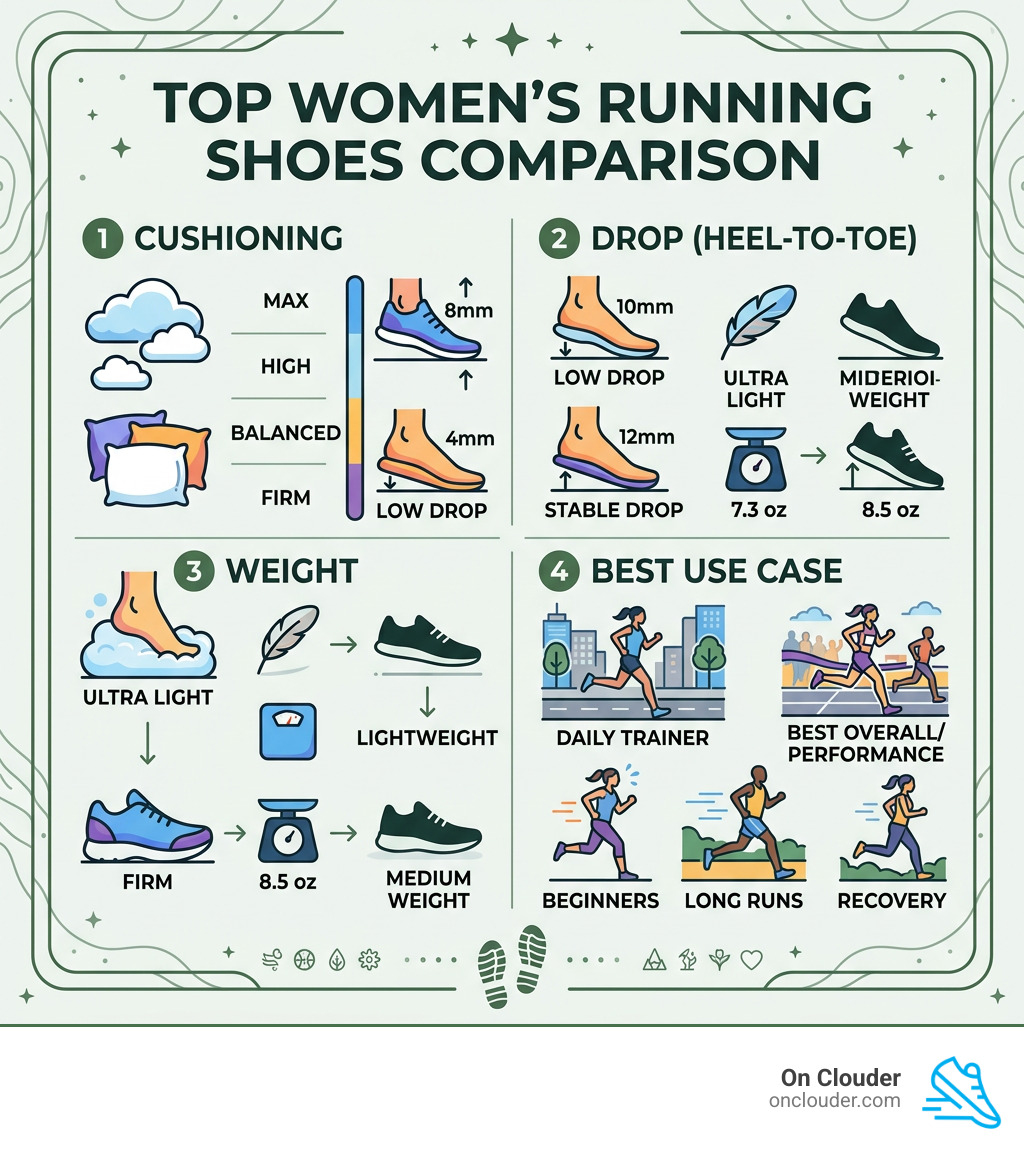
The best running shoes women can choose right now — based on expert testing and real-world performance:
| Shoe | Best For | Drop | Weight |
|---|---|---|---|
| ASICS Novablast 5 | Best Overall | 8-9mm | 7.3 oz |
| Saucony Ride 18 | Best for Beginners | 8mm | 7.5 oz |
| New Balance Fresh Foam X 1080v15 | Best Cushioning | 6mm | 7.7 oz |
| Brooks Ghost 17 | Best Daily Trainer | 10mm | 8.5 oz |
| HOKA Clifton 10 | Best for New Runners | 5mm | 7.5 oz |
Finding the right pair of running shoes can feel overwhelming — there are hundreds of options, and the wrong choice can mean foot fatigue, soreness, or even injury. Whether you’re logging daily miles, pulling long work shifts on hard floors, or training for your first 5K, your shoes matter more than most people realize.
Research consistently shows that proper running footwear can significantly reduce injury risk. Yet most women end up choosing based on looks or price alone — missing the factors that actually make a shoe work for their body and running style.
This guide cuts through the noise. You’ll find clear, tested recommendations for every type of runner — from beginners to marathon trainers — along with the key specs and fit tips you need to choose confidently.
I’m Faisal S. Chughtai, a footwear expert dedicated to helping people find the perfect shoe for comfort and performance — and I’ve spent years researching and reviewing the best running shoes women can wear for everything from daily training to recovery. Let’s find your perfect pair.
Understanding the Science of Women’s Footwear
When we talk about the best running shoes women use, it’s easy to assume that the only difference between a men’s and women’s model is the colorway. While “shrink it and pink it” used to be the industry standard, modern biomechanics has taught us that women’s feet have distinct needs.
Properly designed footwear acts as the foundation for your entire kinetic chain. When your shoes match your foot’s natural mechanics, they help prevent injuries by distributing impact forces more effectively. At On Clouder, we believe that understanding the “why” behind shoe design helps you make a better investment in your health. You can explore more about women’s running shoes to see how brands are evolving their designs.
Why the Best Running Shoes Women Use a Narrower Last
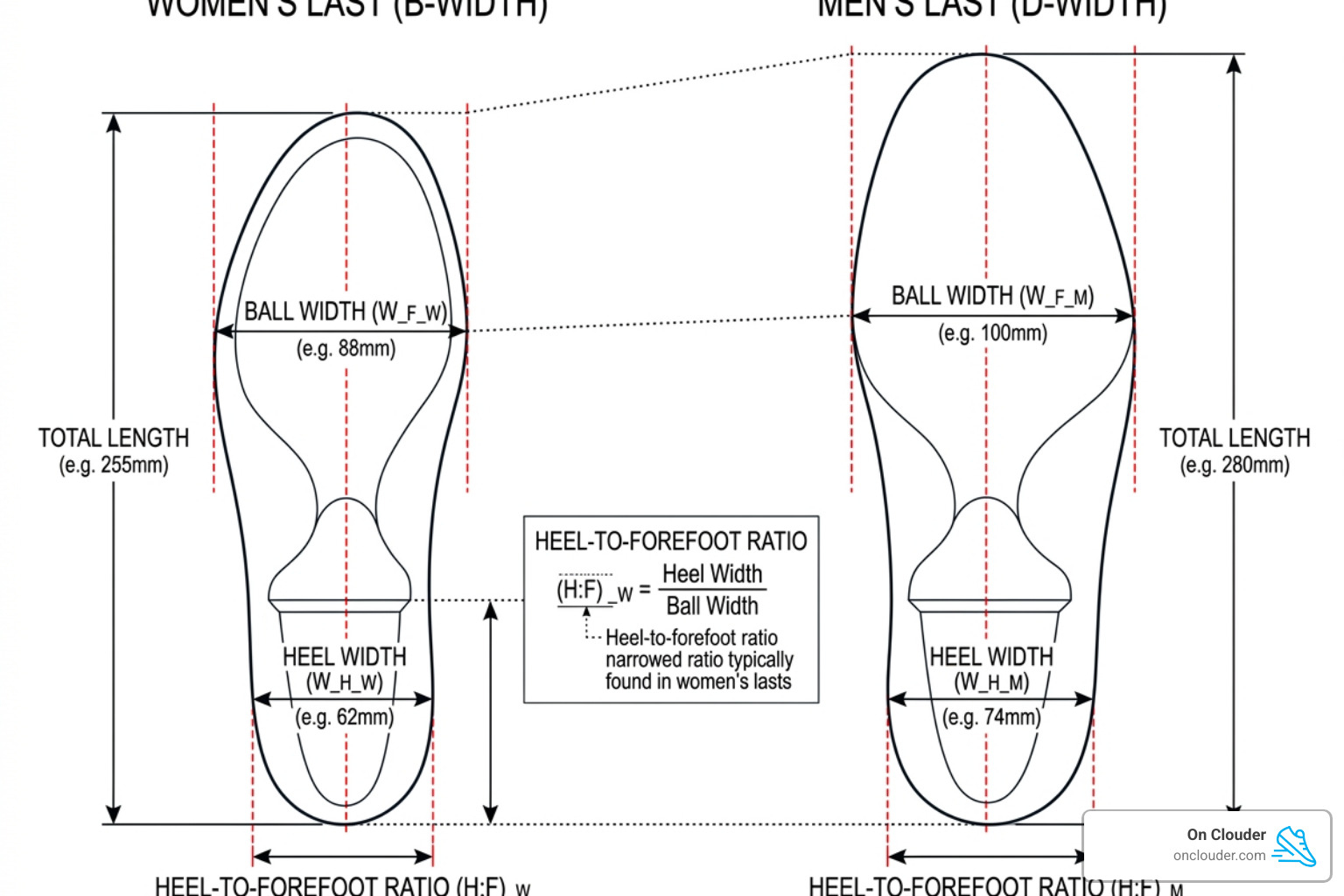
The most significant technical difference in women’s footwear is the “last”—the 3D foot model used to shape the shoe. Most major brands utilize a B width last for women, compared to a D width for men.
Why does this matter? Women generally have a narrower heel-to-forefoot ratio. If you wear a shoe that is too wide in the heel, your foot will slide, leading to blisters and instability. The best running shoes women prefer, such as the Hoka Mach 6, are praised for their snug, secure fit that locks the midfoot in place without crushing the toes. This specialized shaping ensures that the shoe moves with you rather than against you.
Weight and Stack Height Variations
Weight is a critical factor in running economy. On average, women’s models are lighter—often hovering around 225g (7.9 oz) for a standard size. This isn’t just about making the shoe easier to lift; it’s about matching the shoe’s mass to the runner’s power output.
Stack height—the amount of material between your foot and the ground—is also a key consideration. Many of the best running shoes women choose in 2026 feature stack heights exceeding 30mm. For example, the Adidas Adizero Evo SL offers a high stack for incredible impact protection while remaining remarkably light (approx. 6.6 oz for women). This combination allows for maximum cushioning during long miles without the “clunky” feel of older maximalist shoes.
Key Factors for Choosing Your Perfect Pair
Before you click “buy,” we need to talk about your specific feet. There is no such thing as a “perfect shoe” that works for everyone; there is only the perfect shoe for your foot shape and gait. We always recommend getting a gait analysis if possible, but you can learn a lot by looking at your current shoes and arch height. If you’re looking for more depth, check out our running shoe reviews for detailed breakdowns.
Pronation and Support Levels
Pronation is the natural inward rolling of your foot as it hits the ground.
- Neutral: Your foot rolls inward slightly to absorb shock.
- Overpronation: Your foot rolls too far inward, often associated with flat feet. For those dealing with this, we have a guide on running shoes for flat feet.
- Supination: Your foot rolls outward (less common).
The best running shoes women with overpronation needs use features like “GuideRails” or “medial posts” to gently steer the foot into a neutral alignment. The Brooks Adrenaline GTS 25 is a gold standard here, providing stability that feels supportive rather than stiff.
Cushioning and Energy Return
Cushioning has come a long way from basic foam. Today, we see high-tech materials like PEBA (Polyether Block Amide) and Supercritical foams (infused with nitrogen or CO2). These materials don’t just “squish”—they bounce back, returning energy to your stride.
- FF BLAST MAX (ASICS): Ultra-soft landing with a springy take-off.
- ZoomX (Nike): Nike’s highest energy return foam, found in the Pegasus Plus.
- ReactX: A more sustainable foam that reduces carbon footprints while increasing responsiveness.
- Bio-based foams: Shoes like the Saucony Triumph RFG use corn-based materials, proving the best running shoes women want can be eco-friendly and high-performing.
The Top-Rated Best Running Shoes Women for 2026
We’ve analyzed the data from expert lab tests and hundreds of miles of wear-testing. Here is how the heavy hitters stack up for the current season. For a look ahead, you can also see our thoughts on the best running shoes of 2026.
Best Overall Performance: ASICS Novablast 5
The ASICS Novablast 5 has taken the top spot in many expert rankings for good reason. It is the ultimate “do-it-all” shoe.
- Weight: ~7.3 oz (Women’s 6.5)
- Drop: 8-9mm
- Ride: Energetic and versatile. It’s light enough for speed intervals but cushioned enough for a half-marathon. The new FF BLAST MAX foam provides a plush feel that doesn’t feel “mushy” when you want to pick up the pace.
Best Max Cushioning: New Balance Fresh Foam X More v5
If your priority is joint protection and a “walking on clouds” sensation, this is your shoe. With a massive 43mm heel stack, the More v5 provides a level of impact absorption that is hard to beat. Despite the height, the 4mm drop keeps you stable. It’s a favorite for nurses, walkers, and runners recovering from injury who need to minimize stress on their knees and ankles.
Specialized Picks for Every Type of Runner
As your running journey evolves, you might find that one shoe isn’t enough. Many women find success in a “shoe rotation”—using different shoes for different types of runs to keep their legs fresh and improve women’s fitness levels.
Finding the Best Running Shoes Women for Beginners
For those just starting out, reliability is king. You want a shoe that is “invisible”—meaning you don’t notice it while you’re running. The Saucony Ride 18 is a fantastic entry point. It’s often described as the “Honda Civic” of running shoes: dependable, comfortable, and built to last. It offers a balanced feel that works for almost any foot strike. If you are just starting your journey, check out our updated guide for the best running shoes for beginners.
Speed Training and Racing
When the goal is a Personal Best (PB), you need tech that assists your turnover.
- Adidas Adizero Adios Pro 4: This is a “super shoe” featuring carbon-fiber EnergyRods that mimic the bones of the foot to provide a snappy, propulsive feel.
- Asics Metaspeed Edge Tokyo: Specifically designed for “cadence” runners who increase their speed by taking more steps. At just 4.4 oz, it feels almost weightless.
Trail and Hybrid Options
Don’t take your road shoes onto technical trails! You’ll lack the grip and protection needed for rocks and mud.
- Brooks Cascadia 19: A legend in the trail world. It features a rock plate to protect your feet from sharp stones and “TrailTack” rubber for superior grip on wet surfaces.
- Brooks Divide 4: The perfect “hybrid” or road-to-trail shoe. If your run starts on pavement and ends on a gravel path, this shoe handles both beautifully.
- New Balance Hierro v9: Known for its comfort over long off-road distances, using Fresh Foam X to keep you comfortable even on rugged terrain.
Frequently Asked Questions
How often should I replace my running shoes?
We generally recommend replacing your trainers every 300 to 500 miles. However, this isn’t a hard rule. If you are a heavier runner or run primarily on harsh concrete, the foam may compress sooner.
- Signs to replace: Visible smoothing of the outsole tread, “flat” feeling in the cushioning, or new aches in your feet or knees after a run.
- Pro Tip: If you don’t track mileage, a good rule of thumb is to replace them every six months if you run 3-4 times a week.
Do I need a different shoe for trail running?
Yes, if you’re doing more than just flat park paths. Trail shoes offer three things road shoes don’t:
- Traction: Deeper “lugs” on the bottom to grip mud and loose dirt.
- Protection: Reinforced toe caps and rock plates.
- Stability: A lower center of gravity to prevent ankle rolls on uneven ground. Learn more about the variety of running shoes available for different terrains.
How much space should be in the toe box?
The “Rule of Thumb” is your best friend here. When standing, there should be about a thumb-width of space between your longest toe and the end of the shoe. Your feet swell when you run (and when you’re on your feet all day at work!), so buying shoes that fit perfectly in the store often leads to black toenails and blisters later. You want enough room for your toes to splay out naturally.
Conclusion
At On Clouder, we know that the best running shoes women choose can make the difference between a workout you dread and one you love. Whether you lean toward the versatility of the ASICS Novablast 5 or the plush protection of a New Balance 1080, the most important factor is how the shoe feels on your foot.
Don’t be afraid to try a few pairs and take advantage of modern return policies to find your perfect match. If you’re still torn between two models, our shoe comparisons can help you dive deeper into the technical differences. Happy running!
