
Why the Best Cushioned Running Shoes Matter More Ever
The best cushioned running shoes can be the difference between finishing a long run feeling strong — or stopping early with aching joints and tired legs.
Here’s a quick look at the top picks:
| Shoe | Best For | Stack Height | Drop | Weight (Men’s) |
|---|---|---|---|---|
| Brooks Glycerin 23 | Overall daily trainer | 38mm heel | 8mm | 10.6 oz |
| Nike Vomero 18 | Max cushioning | 46mm heel | 10mm | 10.5 oz |
| Asics Novablast 5 | Value + versatility | 41mm heel | 9mm | 9.5 oz |
| New Balance 1080v15 | Lightweight cushion | 38mm heel | 6mm | 9.2 oz |
| Hoka Arahi 8 | Stability + cushion | High stack | Low drop | ~9 oz |
| Puma Velocity Nitro 4 | Budget pick | Moderate | 10mm | 8.7 oz |
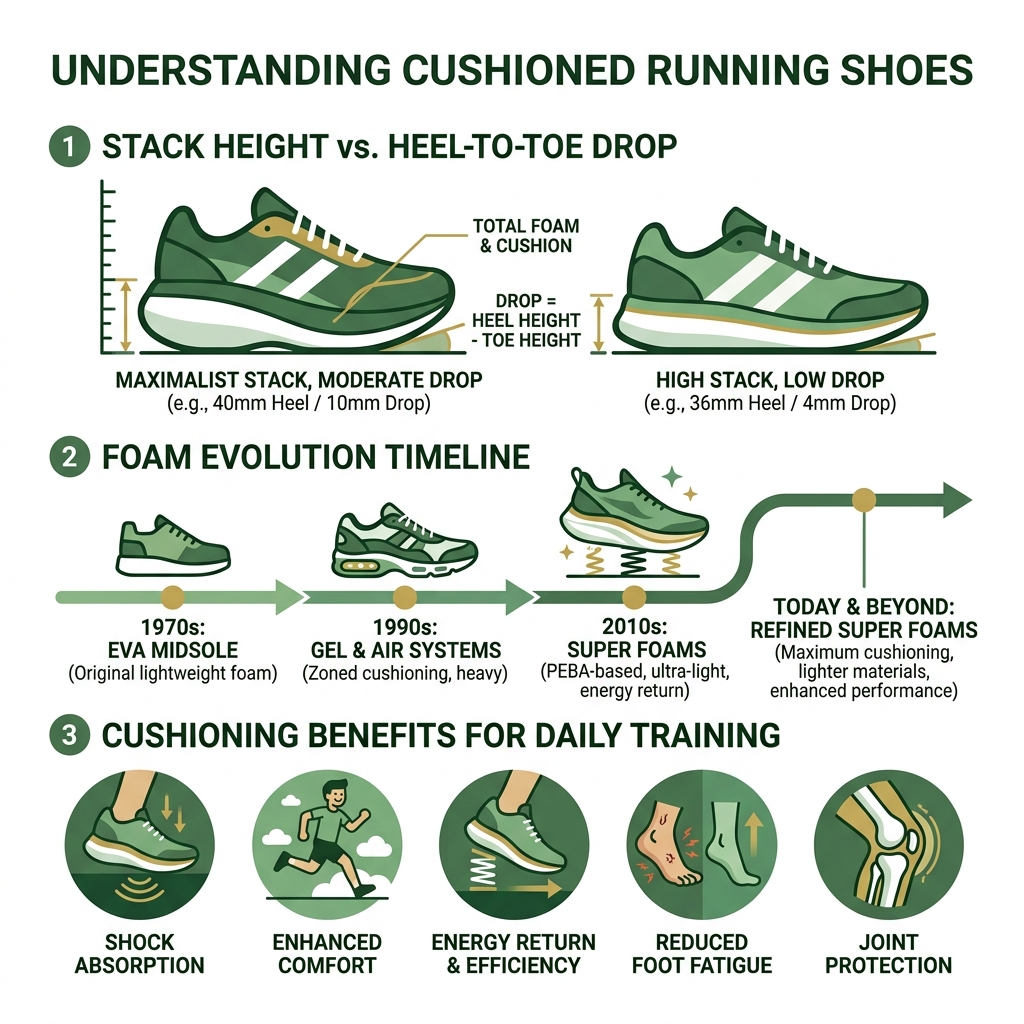
Cushioned running shoes have come a long way. Back in 1975, Brooks introduced the first EVA midsole — a lightweight foam that changed running footwear forever. Today, brands use advanced supercritical and PEBA-based foams that are lighter, springier, and taller than anything runners could have imagined back then.
For active professionals and runners dealing with foot fatigue, hard surfaces, or long shifts on their feet, the right pair of cushioned shoes isn’t a luxury — it’s a necessity.
I’m Faisal S. Chughtai, a footwear expert with years of hands-on experience helping runners find their perfect fit, and I’ve spent considerable time testing and researching the best cushioned running shoes across every major brand and category. Read on for everything you need to make a confident, well-informed choice.
Best cushioned running shoes terms at a glance:
- Best running shoes for beginners
- Best running shoes women
- Running shoes for overpronators
What Defines the Best Cushioned Running Shoes?
When we talk about the best cushioned running shoes, we aren’t just talking about “pillows for your feet”—though that’s a nice way to describe the feeling. Technically, cushioning is defined by the midsole technology, specifically the foam’s ability to compress and rebound.
Midsole Technology and Stack Height
Stack height refers to the total amount of material between your foot and the pavement. In the modern era, “maximalist” shoes often feature stack heights exceeding 35mm. Some “super trainers” even push past the 40mm mark, which is the limit set by World Athletics for competitive racing shoes. However, for those of us training for health, fun, or a local 5K, these high-stack shoes offer incredible joint protection and impact reduction.
Supercritical Foams: PEBA vs. EVA
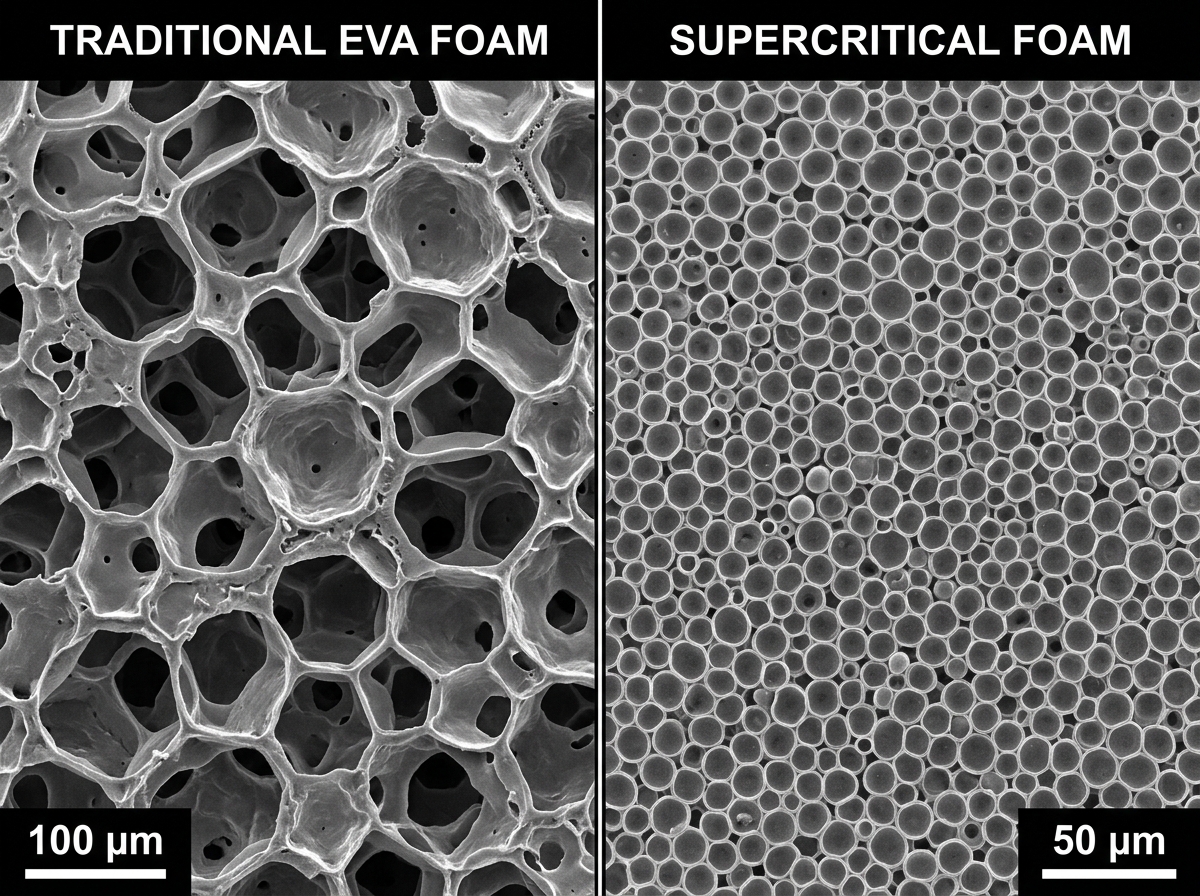
The industry has moved beyond basic EVA (ethylene vinyl acetate). We now see “supercritical” foams—midsoles infused with nitrogen or CO2 during the manufacturing process to create a more uniform cell structure.
- PEBA (Polyether Block Amide): Typically used in high-end racing shoes, it is incredibly light and offers massive energy return.
- Supercritical EVA: A more durable, refined version of traditional foam that provides a balanced, soft-yet-stable ride.
Gendered Biomechanics
One fascinating area of Scientific research on gendered shoe biomechanics suggests that while brands often market women-specific lasts, the biomechanical differences between genders often don’t require drastically different shoe structures. Instead, the priority should always be individual fit and comfort for miles.
Durability and Compression Set
The “shelf life” of a cushioned shoe is determined by its compression set—how long the foam can be squashed before it stops bouncing back. High-quality cushioned shoes typically last between 300 to 500 miles. If you start noticing new aches in your knees or arches, it’s likely a sign that the foam has lost its life.
Top-Rated Models for Daily Training and Long Runs
Daily trainers are the workhorses of the running world. They need to be durable enough for Tuesday morning miles and soft enough for Sunday’s long haul. Here are the models currently leading the pack.
Brooks Glycerin 23
The Glycerin series is a legend in the best cushioned running shoes. The 23rd edition uses DNA LOFT v3, a nitrogen-infused foam that provides a “Goldilocks” ride—not too soft, not too firm. It features a wider base than previous versions, adding a touch of natural stability without the need for intrusive medial posts.
Nike Vomero 18
If you want the absolute maximum amount of foam Nike offers for training, the Vomero 18 is it. With a massive 46mm heel stack, it utilizes a combination of ZoomX (their premium racing foam) and ReactX. This “triple stack” approach ensures that even as you pile on the miles, the shoe feels energetic rather than mushy.
New Balance 1080v15
New Balance has mastered the art of “Fresh Foam X.” The 1080v15 is surprisingly light for its size, weighing in at just 9.2 oz for a Men’s size 9. It’s a versatile choice that works just as well for a recovery jog as it does for a brisk daily training session.
Asics Novablast 5
The Novablast has quickly become a cult favorite. It features a unique “trampoline” effect in the outsole and midsole geometry. It’s one of the few shoes that provides maximalist cushioning while still feeling fast enough for tempo runs.
Comparing the Stats
| Metric | New Balance 1080v15 | Nike Vomero 18 | Asics Novablast 5 |
|---|---|---|---|
| Weight | 9.2 oz | 10.5 oz | 9.5 oz |
| Heel Stack | 38mm | 46mm | 41mm |
| Drop | 6mm | 10mm | 9mm |
For those looking for something a bit more playful, we often recommend looking at the Cloudmonster vs Cloudsurfer comparison to see how different cushioning geometries can change the “feel” of your run.
Specialized Picks: Stability, Trail, and Value
Not every runner has a neutral gait, and not every run happens on smooth asphalt. Sometimes, you need a shoe that can handle a rocky trail or a budget that needs to stretch.
Best Cushioned Running Shoes for Stability
For overpronators, finding the best cushioned running shoes can be tricky. You want the softness, but you don’t want your ankles rolling inward.
- Hoka Arahi 8: Known for its J-Frame technology, it provides support on the medial side without the stiffness of old-school stability shoes.
- Nike Structure Plus: This model makes the older Structure 26 feel obsolete. It uses a wider midsole geometry and arch support to keep you aligned.
- Saucony Hurricane 25: A max-cushioned stability shoe that is so smooth, even neutral runners often enjoy it for recovery days.
If you’re torn between a classic neutral shoe and a stability powerhouse, check out our breakdown of the On Cloudmonster vs Brooks Glycerin.
Best Cushioned Running Shoes for Trail and Off-Road
Trail running requires protection from sharp rocks and roots, but a little “squish” goes a long way on a long mountain descent.
- Hoka Speedgoat 6: The “GOAT” of trail shoes. It features 5mm lugs and a Vibram Megagrip outsole, paired with a lively supercritical foam.
- Brooks Caldera 8: This shoe is a tank. It has a massive surface area, making it incredibly stable on uneven ground. It might feel “clunky” for the first mile, but your legs will thank you at mile 20.
- Altra Olympus 6: For the zero-drop fans. It offers a wide, foot-shaped toebox and maximal cushioning that rolls over obstacles like an “armored hovercraft.”
Before heading off-road, it’s worth comparing On Cloud vs Hoka trail options to see which lug pattern suits your local terrain.
Best Value and Beginner Options
You don’t always have to spend $200 to get a great ride.
- Anta PG7: A rising star in the US market, this shoe offers a bouncy, nitrogen-infused ride at a fraction of the cost of big-name brands.
- Puma Velocity Nitro 4: Often cited as the best “bang for your buck” shoe. It’s versatile, durable, and uses high-end Nitro foam.
- Kiprun Kipride Max: A fantastic entry-level shoe for those just starting their journey.
For more advice on starting out, see our guide on the best running shoes for beginners 2026 and learn about Cloudtec cushioning benefits.
Key Features to Consider Before Buying
Before you hit the “buy” button, there are a few technical specs you should understand to ensure the shoe matches your body’s needs.
- Heel-to-Toe Drop: This is the difference in height between the heel and the forefoot. A high drop (10-12mm) is great for heel strikers or those with Achilles issues. A low drop (0-5mm) encourages a more midfoot or forefoot strike.
- Rocker Geometry: Many of the best cushioned running shoes use a curved sole (a rocker). This helps “roll” the foot forward, reducing the work your calf muscles and ankles have to do.
- Upper Breathability: Cushioning adds weight. To compensate, brands use engineered mesh or circular knits. If you run in hot climates, look for shoes with large perforations in the toebox.
- Lockdown Fit: With a high stack height, you are further from the ground, which can feel unstable. A good lockdown—where the midfoot and heel feel “bolted” into the shoe—is essential.
For a deeper dive into how these features compare across brands, check out our On Cloud vs Brooks Ghost comparison or read about ultra-light cushioning technology.
Frequently Asked Questions
How long do the best cushioned running shoes last?
We generally recommend replacing your shoes every 300 to 500 miles. While the outsole (the rubber on the bottom) might still look okay, the midsole foam eventually loses its resiliency. You’ll know it’s time for a new pair if you start feeling “grounded” or if you experience unusual soreness after a standard run.
Are max cushioned shoes good for beginners?
Absolutely. Beginners often have muscles and tendons that aren’t yet adapted to the repetitive impact of running. The extra protection can reduce muscle fatigue and lower the “perceived exertion” of a run, making it more likely that you’ll stick with your new habit. Many runners find On Cloud shoes for comfort to be a great starting point.
What is the difference between stack height and drop?
Think of stack height as the “thickness” of the mattress and drop as the “incline.”
- Stack Height: Total millimeters of foam.
- Drop: The difference between the heel height and the toe height. You can have a very thick shoe (high stack) that is completely flat (zero drop), like many Altra models.
Conclusion
Finding the best cushioned running shoes is a journey, not a destination. As foam technology continues to evolve, the shoes we wear will only get lighter and more protective. Whether you choose the reliable bounce of the Brooks Glycerin 23, the massive stack of the Nike Vomero 18, or the versatile value of the Asics Novablast 5, the most important factor is how the shoe feels on your foot.
We always recommend a shoe rotation strategy: use your max-cushioned shoes for recovery days and long runs, and keep a lighter, firmer shoe for speed work. This not only helps prevent injury but also extends the life of your favorite pair.
At On Clouder, we’re dedicated to helping you navigate the complex world of footwear. If you’re still undecided, explore more shoe comparisons to find your perfect match. Happy running!
