
Why Finding the Right Running Shoes for Overpronators Matters
Running shoes for overpronators are specifically designed to control the excessive inward roll of the foot that happens with each stride — and if you overpronate, wearing the wrong shoes can lead to real pain and injury over time.
Here are the best running shoes for overpronators at a glance:
| Shoe | Best For | Drop | Weight (Women’s) |
|---|---|---|---|
| Brooks Adrenaline GTS 25 | Everyday training | 10mm | 269g |
| ASICS Gel-Kayano 32 | Long runs & max support | 8mm | 260g |
| Saucony Guide 18 | Best value | 6mm | 245g |
| New Balance Fresh Foam X 860v14 | Dynamic daily trainer | 8mm | 250g |
| HOKA Arahi 8 | Lightweight stability | 8mm | 219g |
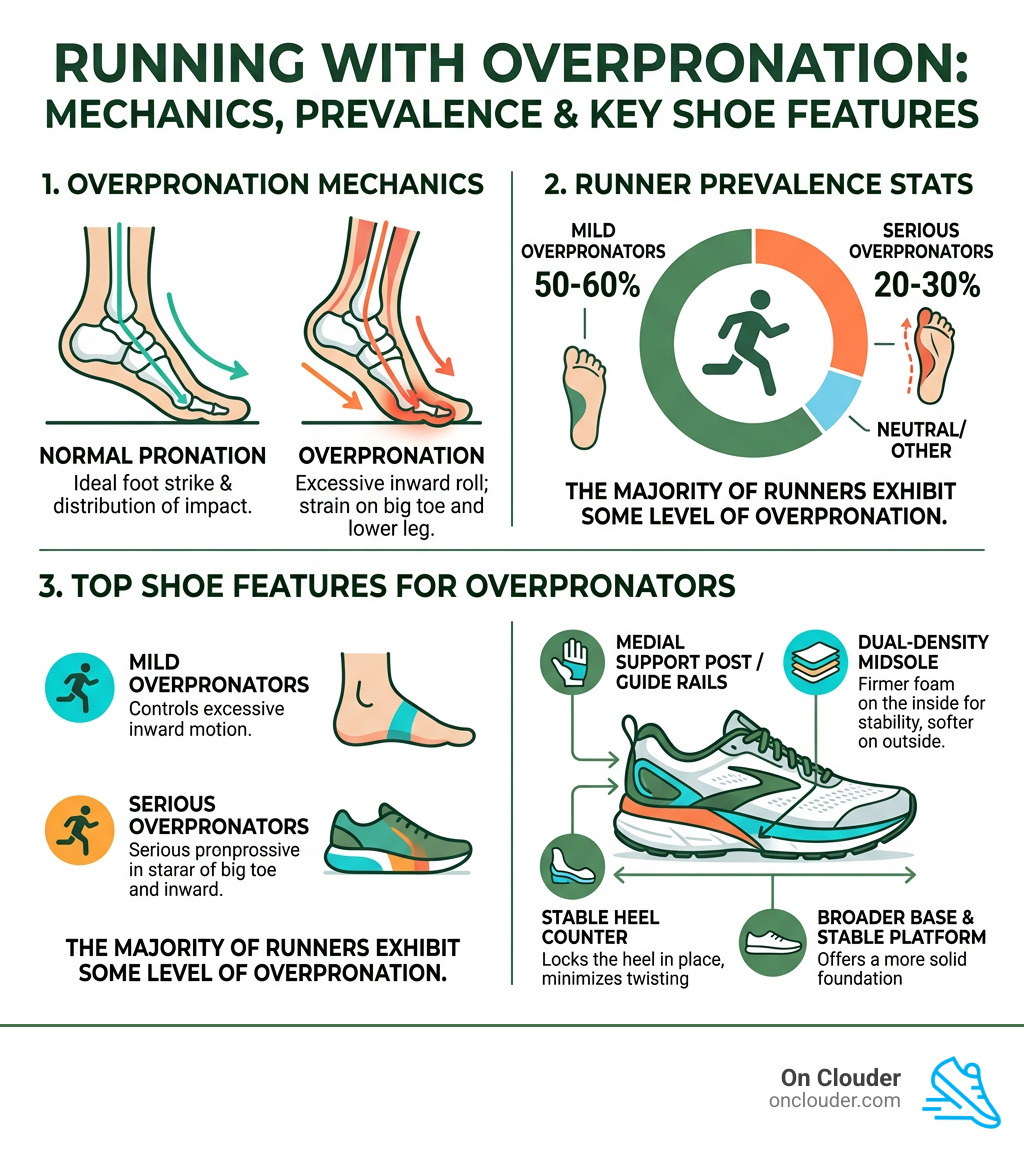
Overpronation is more common than most runners realize. According to data from ASICS, between 50-60% of runners are mild overpronators, while another 20-30% are serious overpronators. That means the majority of people lacing up for a run could benefit from some level of stability support.
The good news? Stability shoe technology has come a long way. Modern shoes no longer feel stiff or clunky. They guide your foot naturally — without forcing it into an unnatural position.
But with dozens of options on the market, knowing which shoe is right for your level of overpronation, your run type, and your foot shape takes a bit of know-how.
That’s exactly what this guide covers.
I’m Faisal S. Chughtai, a footwear expert with years of hands-on experience helping runners find the right fit — including those navigating running shoes for overpronators. In this guide, I’ll walk you through everything from identifying your pronation type to choosing the best shoe for your specific needs.
Understanding Gait and Your Need for Stability
Before we dive into the foam and rubber, we need to talk about what’s actually happening under your ankles. Pronation isn’t a “bad” word; it’s a natural movement where your foot rolls slightly inward to distribute the impact of landing. However, overpronation occurs when that roll is excessive. Instead of the weight transferring to the ball of the foot, it stays on the inner edge, putting strain on the big toe and the structures of the lower leg.
The prevalence of this is significant. According to ASICS, the vast majority of runners in the USA exhibit some level of overpronation. If you fall into this category, finding the right pronation support is the first step toward a pain-free running career.
How to Identify if You Need Running Shoes for Overpronators
You don’t necessarily need a lab to figure out if you’re an overpronator. There are several DIY methods we recommend to get a baseline understanding of your gait.
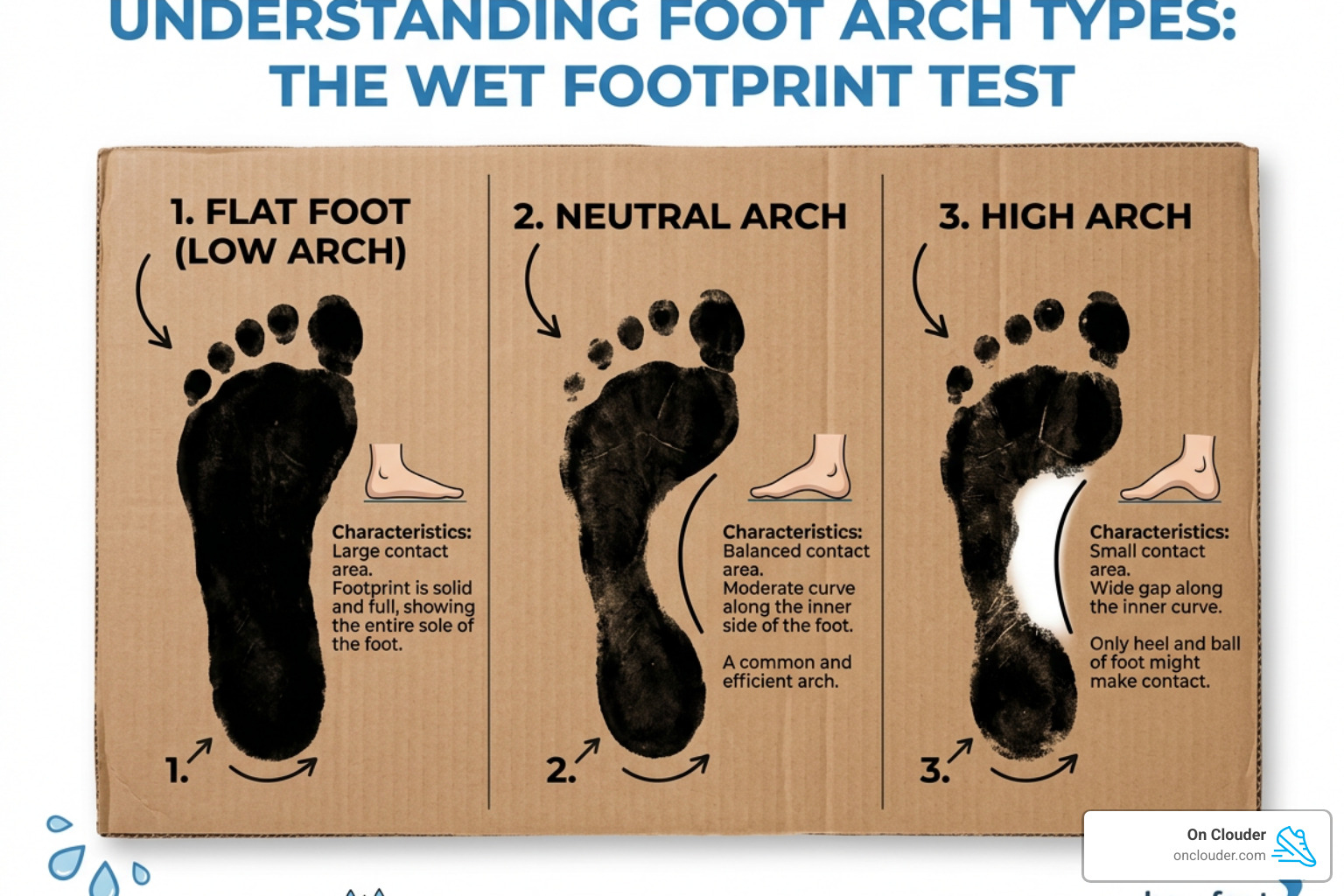
- The Wet Test: This is the classic home method. Wet the sole of your foot and step onto a piece of cardboard or dark paper. If your footprint looks like a complete foot with almost no curve where the arch should be, you likely have flat feet and are a prime candidate for hoka vs brooks for flat feet comparisons.
- Shoe Wear Inspection: Flip over your old running shoes. Overpronators typically see heavy wear on the inside of the heel and near the big toe.
- Video Analysis: Have a friend film you running on a treadmill from behind. If you see your ankles collapsing inward significantly upon impact, you’re likely an overpronator.
- Professional Gait Analysis: While DIY tests are a great start, they aren’t 100% accurate. We always suggest visiting a dedicated running store or a podiatrist for a professional assessment to ensure you get the right overpronation shoes.
The Difference Between Neutral, Stability, and Motion Control
In footwear, shoes are generally grouped into three buckets:
- Neutral Shoes: Designed for runners with a “normal” arch who land on the outside of the heel and roll slightly inward. These focus on impact absorption and cushioning.
- Stability Shoes: These are the “sweet spot” for most overpronators. They offer stability through features like firmer foam on the medial (inner) side or guide rails to keep the foot centered.
- Motion Control Shoes: These are for severe overpronators or those with very flat feet. They are built on a straighter, stiffer last to prevent almost any inward roll.
Modern Technology in Running Shoes for Overpronators
Forget the heavy, plastic-laden shoes of the 90s. Today, stability running technology is about “guidance” rather than “correction.” The goal is to let your foot move naturally until it starts to move too much.
Scientific research on injury risk has shown that wearing shoes tailored to your pronation level can actually improve rearfoot eversion and lower the risk of common ailments like shin splints or plantar fasciitis.
Key Features to Look for in Running Shoes for Overpronators
When shopping for running shoes for overpronators, keep an eye out for these specific design elements:
- Dual-Density Midsoles: This is often a firmer piece of foam (sometimes called a medial post) on the inner side of the shoe that resists compression, slowing down the inward roll.
- GuideRails: Brands like Brooks use these “bumpers” on the sides of the heel. They only engage when your foot deviates from its natural path—think of them like training wheels for your gait.
- H-Frame/4D Guidance Systems: Modern designs like the H-Frame in HOKAs or ASICS’ 4D Guidance System use geometry and responsive foam to “spring” the foot back into a neutral position.
- Wide Base and Sole Flare: A wider platform provides a more stable “landing pad,” reducing the chance of the ankle tipping inward.
- Stiff Heel Counter: A firm cup around the heel helps lock the foot in place, preventing it from sliding around inside the shoe.
When comparing brands, you’ll often find yourself looking at hoka vs brooks stability features, as both brands have pioneered very different ways to solve the same problem.
How Stack Height and Drop Affect Stability
“Stack height” refers to the amount of foam between your foot and the ground, while “drop” is the height difference between the heel and the forefoot.
For overpronators, a high stack height (like in the hoka-arahi) provides excellent cushioning for long miles, but it can sometimes feel less stable if the base isn’t wide enough. Most stability shoes maintain a drop of 8mm to 12mm, which is generally more comfortable for heel strikers—a common landing pattern for overpronators. However, if you are a midfoot or forefoot striker, you might prefer a lower drop (around 4-6mm) to encourage a more natural foot strike.
The Best Running Shoes for Overpronators by Category
Finding the best stability running shoes 2026 requires matching the shoe to the specific type of running you do. You wouldn’t wear a heavy-duty work boot to a sprint, and the same logic applies here.
Top Performance Running Shoes for Overpronators
Here are our top picks for the current year based on testing and consumer feedback:
- ASICS Gel-Kayano 32 (Best Overall): A legend in the category. It has moved away from rigid posts toward a “4D Guidance System” that feels incredibly smooth while providing top-tier support.
- Brooks Adrenaline GTS 25 (Best Daily Trainer): Known as the “Go-To Shoe,” it uses GuideRails technology. It’s reliable, durable, and perfect for those who need consistent support every day.
- Saucony Guide 18 (Best Value): A lighter option that uses midsole geometry to provide guidance. It feels more like a neutral shoe but offers the support overpronators need.
- New Balance Fresh Foam X 860v14 (Best for Severe Overpronation): This shoe sticks to a more traditional medial post combined with modern, soft Fresh Foam, making it a powerhouse for those who need maximum control.
- HOKA Arahi 8 (Best Lightweight Stability): If you hate the weight of traditional stability shoes, the hoka-arahi-8 is your answer. It uses a J-Frame of firmer foam to guide the foot without adding bulk.
Choosing Stability Based on Run Type and Comfort
Your needs change depending on the day’s workout. We often recommend a “shoe rotation” to our readers.
- Everyday Training: Look for a balanced shoe like the Adrenaline GTS or the 860. These are the workhorses of your closet.
- Tempo/Speedwork: You want something lighter and more responsive. The hoka vs brooks podiatrist recommendation for speed often points toward shoes like the Brooks Hyperion GTS or the HOKA Arahi.
- Long/Recovery Runs: Max cushioning is king here. The ASICS Gel-Kayano or the Brooks Glycerin GTS are designed to keep your feet happy when fatigue sets in and your form starts to break down.
Do Stability Shoes Actually Prevent Injuries?
This is the million-dollar question. While no shoe can guarantee you’ll never get hurt, research on overpronation shoes indicates they significantly reduce rearfoot eversion (the rolling motion), which is a primary contributor to stress-related injuries.
Furthermore, a study on shoe rotation and injury (Malisoux et al., 2015) found that runners who used multiple pairs of different shoes had a lower risk of injury. This is likely because different shoes stress the muscles and joints in slightly different ways, preventing “overuse” of a single path.
The Role of Comfort in Shoe Selection
While the tech specs are important, science actually tells us that comfort comes first. If a shoe feels “wrong” or intrusive against your arch, it doesn’t matter how much stability it promises—it’s likely not the right shoe for you. Your body is excellent at signaling what works; listen to it. A good stability shoe should feel like a supportive hug, not a rigid corrective brace.
When to Consult a Professional
If you find yourself constantly battling “niggles” like shin splints, knee pain, or plantar fasciitis despite wearing stability shoes, it’s time to see a pro. A physical therapist or podiatrist can determine if you need custom orthotics or if your issues stem from muscle weaknesses that no shoe can fix.
Frequently Asked Questions about Stability Footwear
Can neutral runners wear stability shoes?
Yes, but with caution. Some neutral runners experience “late-onset overpronation,” where their form breaks down as they get tired during long runs. In these cases, a mild stability shoe with GuideRails can be helpful. However, a “stable neutral” shoe is usually a better first step to avoid overcorrecting.
How do I know if I have severe overpronation?
If your shoes wear out on the inner side within a few months, or if you can visibly see your arches collapse to the floor when standing, you likely have severe overpronation. These runners often benefit from “Motion Control” shoes or custom orthotics.
Do stability shoes change your natural gait?
Modern stability shoes are designed to support your gait, not change it. They act as a safety net, allowing your foot to move naturally but preventing it from rolling into a range of motion that could cause injury.
Conclusion
Choosing the right running shoes for overpronators doesn’t have to be a headache. By understanding your arch type, recognizing the signs of overpronation, and matching your shoe to your specific run type, you can stay on the road (or trail) longer and with less pain.
The “best” shoe is the one that feels most comfortable to you. We always encourage you to get a professional gait analysis if you’re unsure where to start. At On Clouder, we are dedicated to helping you find that perfect fit so you can focus on the miles ahead rather than the aches in your feet.
For more deep dives into how different brands stack up, check out our more shoe comparisons and rankings. Happy running!
