
Why Finding the Best Arch Support Inserts Can Change How You Move
The best arch support inserts can make a real difference if you’re dealing with foot fatigue, heel pain, or aching arches after a long run or shift on your feet.
Here’s a quick look at the top options to know about:
| Insole | Best For | Rating |
|---|---|---|
| PowerStep Pinnacle | High arches, supination | 4.5/5 (27,000+ reviews) |
| Superfeet Green | All-purpose, high arch | 4.4/5 (31,000+ reviews) |
| Dr. Scholl’s Work All-Day | Standing all day, work boots | 4.5/5 (53,000+ reviews) |
| Dr. Scholl’s Heavy Duty | Heavy-duty support (200lbs+) | 4.4/5 (81,000+ reviews) |
| Spenco RX Orthotic | Flat feet, overpronation | 90% satisfaction (129 reviews) |
Your arch type – low, medium, or high – plays a huge role in which insert will actually help you. The wrong one can leave you just as uncomfortable as no insert at all.
That’s why this guide cuts through the noise. Whether you’re a runner logging daily miles, a nurse on a 12-hour shift, or someone who just wants to stop limping by 3 p.m., there’s an insert built for your specific needs.
I’m Faisal S. Chughtai, a footwear comfort specialist who has spent years researching and testing the best arch support inserts for active people who refuse to compromise on performance or comfort. In this guide, I’ll walk you through exactly what to look for and which options are worth your money.
Simple guide to best arch support inserts:
Understanding Your Foot Profile: Arch Types and Alignment
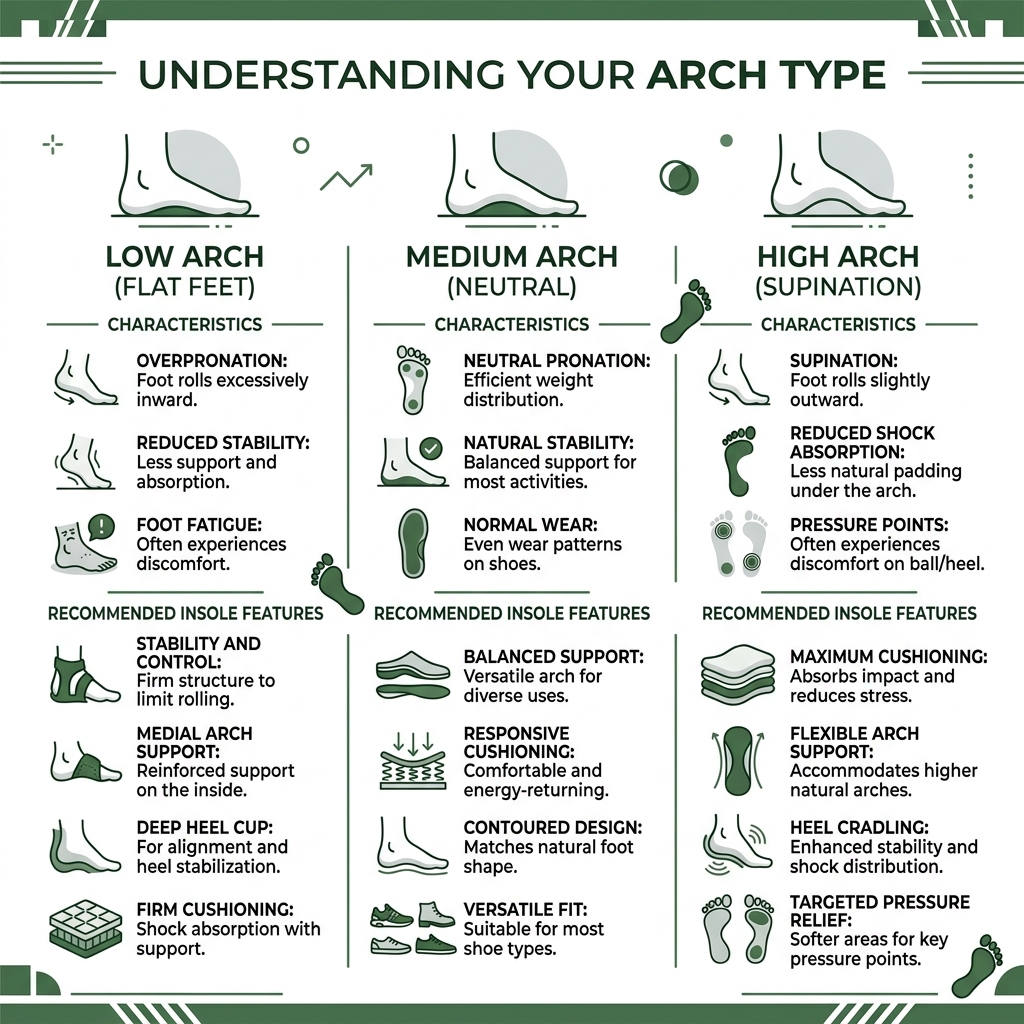
Before you hit “buy” on a pair of inserts, we need to talk about your “footprint.” Not all feet are created equal, and wearing a high-arch insert on a flat foot is a recipe for a very bad day.
To find the best arch support inserts for your unique anatomy, we recommend the “Wet Footprint Test.” Simply wet the sole of your foot and step onto a flat piece of cardboard or a dark towel.
- Low Arches (Flat Feet): If your footprint looks like a complete foot with very little curve inward, you likely have flat feet. This often leads to overpronation, where your foot rolls too far inward, putting stress on your knees and hips.
- Medium Arches (Neutral): If there is a distinct curve along the inside of your foot, you have a medium arch. This is the most common type, but it still requires support to prevent fatigue during long days.
- High Arches: If you only see your heel and the ball of your foot with a very thin line (or nothing at all) connecting them, you have high arches. This often leads to supination, where the foot rolls outward, concentrating pressure on the outer edges.
Understanding your profile is about achieving “subtalar neutral”—a fancy way of saying we want your ankle and heel aligned. Achieving proper hindfoot control is the secret to moving without pain. For those with significant height under the midfoot, specialized High Arch Orthotic Insoles are essential to fill that gap and distribute weight evenly.
Key Features of the Best Arch Support Inserts
When we evaluate the best arch support inserts, we look at more than just a piece of foam. A quality orthotic is a piece of engineering designed to manage the thousands of pounds of pressure your feet endure daily.
1. Rigidity Levels
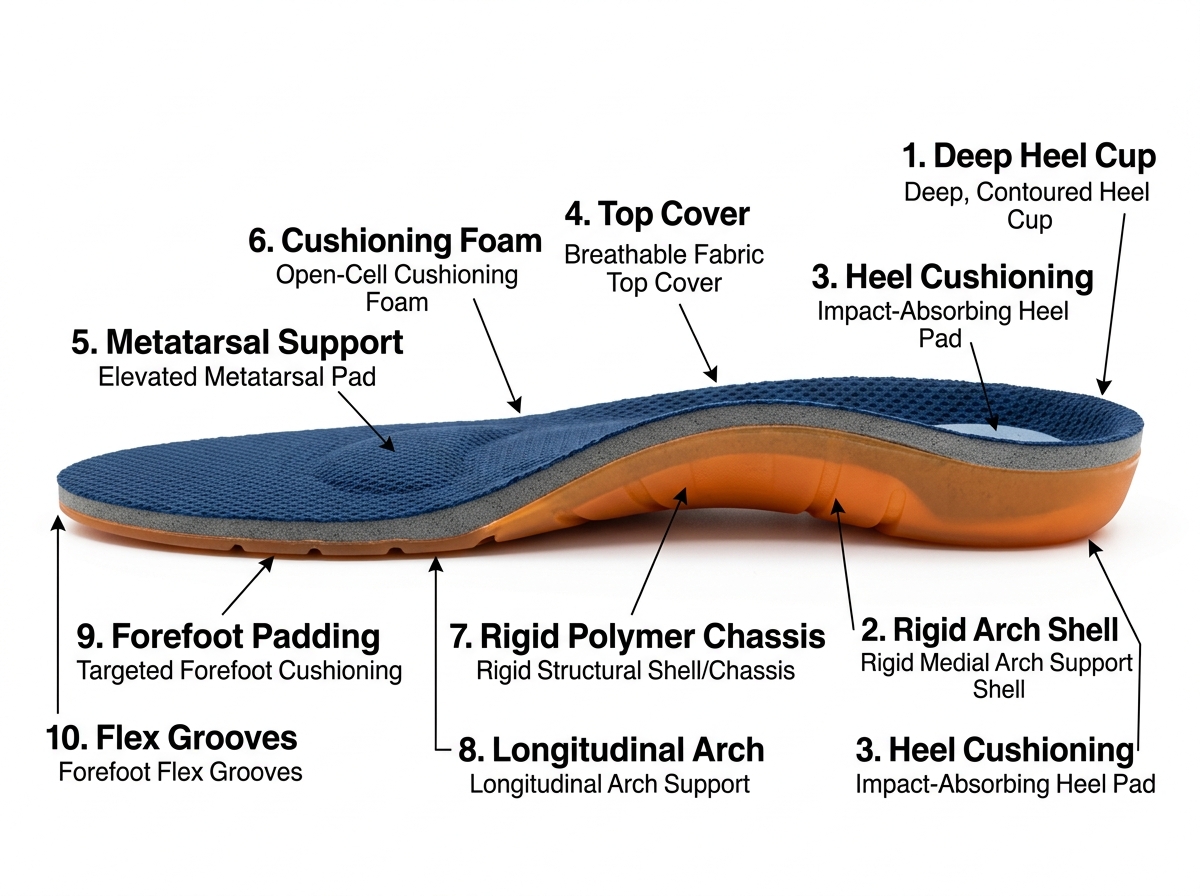
- Rigid Supports: These offer maximum support and are often made of hard plastic or carbon fiber. They mimic custom podiatrist orthotics and are best for severe overpronation.
- Semi-Rigid Supports: These are the “Goldilocks” of inserts—firm yet flexible. They provide excellent stability while still allowing for a natural gait. Most people find these to be the most comfortable for daily wear.
- Flexible/Cushioned: These prioritize comfort and shock absorption. While they feel great initially, they may not provide enough structural support for those with chronic arch pain.
2. The Deep Heel Cradle
A deep heel cup is non-negotiable. It stabilizes the heel, preventing it from sliding around, which in turn keeps your arch aligned over the support. This feature is a cornerstone of Thick Insoles for Maximum Support & Pain Relief, as it maximizes natural shock absorption.
3. Materials and Comfort
The top layer of your insole matters. Look for moisture-wicking fabrics and antimicrobial top covers to keep odors at bay. Some high-end options even include metatarsal pads to relieve pressure on the ball of the foot, which is a lifesaver for those who spend 12+ hours standing.
Top Recommendations for Specific Activities and Conditions
We know that a nurse standing on a hard hospital floor needs different support than a trail runner tackling technical terrain. The best arch support inserts are often activity-specific.
If you are dealing with Plantar Fasciitis, you need an insert that reduces the strain on the plantar fascia ligament. This usually requires a firm arch and a stabilizing heel. Many users on forums like Reddit’s most opinionated walkers swear by combining quality inserts with supportive shoes to end the cycle of heel spurs and morning foot pain.
For those struggling with the outward roll of the foot, High Arch & Supination Insoles provide the necessary height to prevent ankle instability and shin splints.
Best Arch Support Inserts for Running and High-Impact Sports
Running puts up to five times your body weight through your feet. The best arch support inserts for runners often feature:
- EVOLyte Carbon Fiber Caps: These spring back to their original shape, providing energy transfer through your gait.
- AeroSpring Rebound Foam: This dual-layer foam helps disperse impact at heel strike.
- Durability: Quality running inserts like those found in our arch support for runners tag should last up to 500 miles or 12 months.
Best Arch Support Inserts for Flat Feet and Overpronation
If your arches have collapsed, you don’t need a massive hump in your shoe; you need structural correction. The RX Orthotic Arch Insole is a standout here. It uses a firm, moldable plastic arch to guide the foot into a neutral position. With a 90% customer satisfaction rating, it proves that you don’t need to spend hundreds on custom orthotics to get medical-grade relief.
Fitting, Maintenance, and Longevity
Buying the best arch support inserts is only half the battle; you have to fit them correctly.
The Trim-to-Fit Process
Most high-quality inserts are “trim-to-fit.” Here is our pro tip: Do not guess.
- Remove the original factory liner from your shoe.
- Place it on top of your new arch support insert, aligning the heels.
- Trace the toe of the factory liner onto the new insert with a pen.
- Use sharp scissors to trim along the line.
- Slide the new insert into your shoe—it should lie flat without bunching.
Breaking Them In
Don’t run a marathon in new inserts on day one. Your feet and muscles need time to adjust to the new alignment. We recommend wearing them for 2 hours the first day, 4 hours the second, and gradually increasing until they feel like a natural part of your footwear. If you’re looking for extra help, check out our guide on arch support pads for shoes.
When to Replace
Even the best arch support inserts have a lifespan.
- Daily Wear/Work: Replace every 6 months.
- Running/High Impact: Replace every 300–500 miles.
- Signs of Wear: If the foam has flattened, the arch feels “mushy,” or the top fabric is peeling, it’s time for a new pair. Many brands offer a 60-day comfort guarantee, so don’t be afraid to swap them if they don’t feel right after the break-in period.
Frequently Asked Questions about Foot Supports
How do I know if I need rigid or flexible arch supports?
Rigid supports are best if you have severe overpronation or flat feet and need significant correction. Flexible or semi-rigid supports are better for most people, especially runners and those with medium arches, as they provide a balance of support and natural foot movement. If it’s your first time using inserts, a semi-rigid option is usually the safest bet.
Can insoles really help with plantar fasciitis pain?
Absolutely. Plantar fasciitis is often caused by the arch collapsing and stretching the plantar fascia ligament. A firm arch support prevents this collapse, allowing the ligament to heal. Many users feel relief within 1 to 3 days of consistent use.
How often should I replace my shoe inserts?
While some heavy-duty models can last a year, most experts recommend replacing them every 6 months if you use them daily. For runners, the 500-mile mark is the standard “retirement” age for an insole.
Conclusion
Investing in the best arch support inserts is one of the most effective ways to improve your long-term foot health. Whether you choose the podiatrist-recommended stability of a firm shell or the high-tech energy return of carbon fiber, the goal remains the same: keeping you moving without pain.
At On Clouder, we’ve seen how the right support can turn a grueling workday into a breeze and help runners smash their personal bests. Don’t wait for the pain to become chronic. Step up your performance with the best arch support for runners today and give your feet the foundation they deserve.
