
Why the Right Shoe Inserts for Flat Feet Can Change How You Move
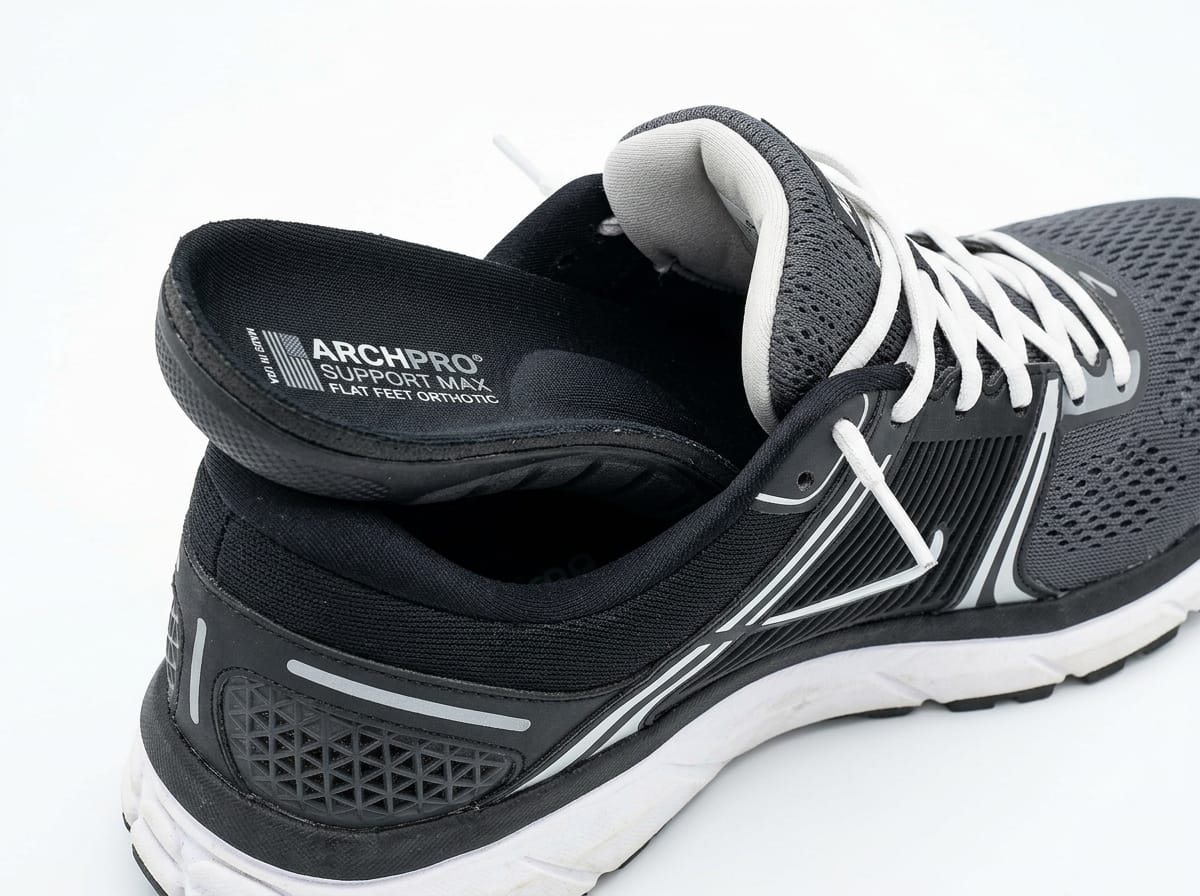
Shoe inserts for flat feet are specially designed insoles that support low or absent arches, reduce overpronation, and relieve pain in the feet, knees, hips, and lower back.
Quick answer — what to look for:
- Firm arch support (not just soft foam or gel) for long-term relief
- Low arch height to match flat or fallen arches
- Deep heel cup to stabilize the ankle and improve alignment
- Dual-layer cushioning for shock absorption during walking or running
- Moisture-wicking top cover for all-day comfort
If you have flat feet, you are not alone. Flat feet — sometimes called fallen arches — occur when the arch of the foot collapses, causing the entire sole to make contact with the ground. This puts stress not just on your feet, but on your ankles, shins, knees, hips, and lower back too.
For active professionals and runners, that stress adds up fast. A long shift on hard floors or a morning run can leave you with aching feet and tired legs by midday.
The good news? The right shoe insert can make a real difference — without a prescription or a trip to a specialist.
I’m Faisal S. Chughtai, a footwear comfort expert who has spent years helping people navigate the overwhelming world of shoe inserts for flat feet and find solutions that actually work. I’ll walk you through everything you need to know to make a confident, informed choice.
Shoe inserts for flat feet terms to remember:
Understanding Flat Feet and Fallen Arches
At its simplest, having flat feet means the longitudinal arches in your feet have little to no curvature. When you stand, the entire sole of your foot touches the floor. While some people are born this way due to genetic factors, many others develop “fallen arches” over time.
One of the primary biological culprits is the posterior tibial tendon. This tendon is the main support structure for your arch; if it becomes inflamed or overstretched due to age, weight, or repetitive stress, the arch can begin to collapse. This often leads to significant foot fatigue, especially after long periods of standing or walking.
Symptoms of flat feet aren’t always limited to the bottom of the foot. You might experience:
- Pain or tenderness in the arch and heel.
- Swelling along the inner ankle.
- A “rolling in” of the foot (overpronation).
- Achey legs or knee pain after exercise.
Identifying your specific needs is the first step toward relief. We recommend checking out our guide to arch support to see how different foot shapes interact with modern footwear. Understanding the mechanics of your flat feet helps you move from generic comfort to targeted correction.
How Shoe Inserts for Flat Feet Provide Relief
Many people mistakenly believe that the softest, squishiest gel insert is the best choice for foot pain. In reality, shoe inserts for flat feet need to provide structural integrity. Think of an insole like a bridge support; it needs to be firm enough to hold weight while being flexible enough to move with you.
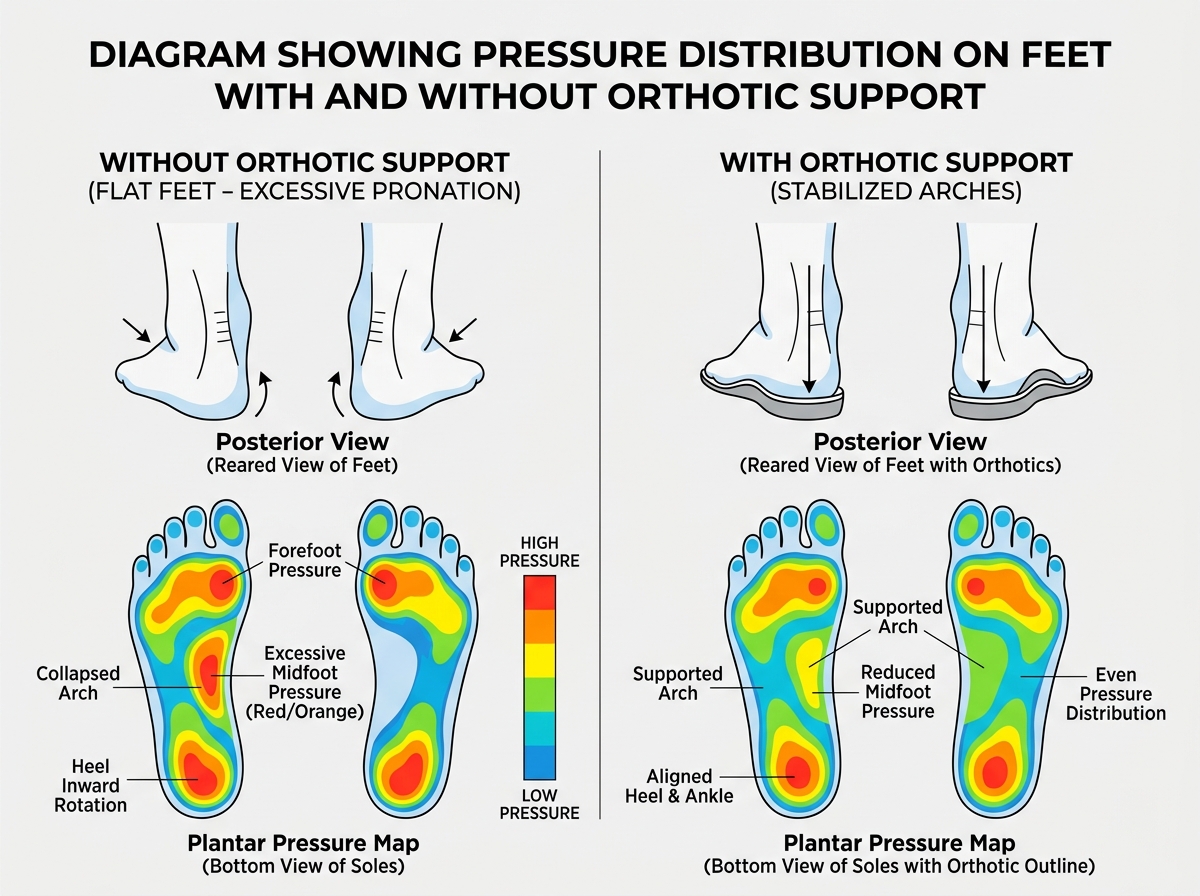
Quality insoles for flat feet work by redistributing pressure across the entire foot rather than letting it concentrate on the heel and forefoot. By filling the gap where an arch should be, the insert prevents the foot from collapsing inward. This stabilization doesn’t just help the feet—it realigns the entire kinetic chain, meaning your ankles, knees, and hips stay in a neutral position.
Many top-tier brands carry the American Podiatric Medical Association (APMA) Seal of Acceptance, which indicates the product has been reviewed by podiatrists and found to promote good foot health.
Addressing Overpronation with Shoe Inserts for Flat Feet
Overpronation is the technical term for the foot rolling too far inward during a stride. For those with flat feet, this is a common occurrence because there is no arch to “catch” the weight and distribute it outward. This inward roll puts immense stress on the inner ankle and can lead to shin splints or bunions.
Using firm insoles for flat feet helps stabilize the heel and midfoot. By providing a “stop” for that inward roll, these inserts improve overall alignment and significantly reduce joint stress. We often discuss this in our articles on pronation support, as it is the foundation of injury prevention for walkers and runners alike.
Selecting Shoe Inserts for Flat Feet for High-Impact Activities
If you are a runner or play sports like basketball, the forces acting on your feet are multiplied by up to three times your body weight. For the flat-footed athlete, this makes the right insert essential.
When looking for arch support for runners, you want a mix of stability and energy return. Products like high impact insoles feature specialized forefoot cushioning and reinforced stabilizer caps to handle these intense forces. For more on footwear specifically designed for these needs, see our guide on the best running shoes for flat feet.
Essential Features of Flat Feet Orthotics
When shopping for shoe inserts for flat feet, you’ll encounter a variety of materials and designs. It’s important to match the feature to your specific lifestyle.
| Feature | Why It Matters for Flat Feet | Recommended Material |
|---|---|---|
| Support Type | Flat feet need structure to prevent arch collapse. | Firm polypropylene or Carbon Fiber |
| Arch Height | High arches in an insole can cause pain for flat feet. | Low to Medium Arch Profile |
| Heel Cup | Stabilizes the heel to prevent overpronation. | Deep, Sculpted Heel Cradle |
| Cushioning | Absorbs shock on hard surfaces. | Dual-layer EVA or Memory Foam |
| Top Cover | Reduces friction and prevents blisters. | Moisture-wicking fabric |
While some users prefer the personalized feel of custom fit orthotics, others find that a high-quality arch support insert offers the perfect balance of durability and cost-effectiveness.
Advanced materials like carbon fiber offer a “spring-back” effect that is excellent for performance, while memory foam is often preferred for casual wear or those standing all day on hard floors.
Fitting, Breaking In, and Maintaining Your Insoles
Buying the right shoe inserts for flat feet is only half the battle; you also have to fit them correctly. Most high-quality insoles are designed to be trimmed.
The Trimming Process
- Remove the factory liner: Always take out the flimsy foam piece that came with your shoes.
- Trace: Use the old liner as a template, placing it over your new insole.
- Trim: Use sharp household scissors to cut along the trace line. Trimming your insoles correctly is vital—aim for a 1-2mm gap at the toe to allow the insole to move slightly as the shoe flexes.
The Break-In Period
Your feet have likely been “misaligned” for a long time. Introducing a supportive insert can feel strange at first. We recommend a gradual break-in:
- Day 1-2: Wear them for 1-2 hours.
- Day 3-5: Increase to 3-4 hours.
- Week 2: You should be ready for full-day use.
If you want to give your favorite shoes a lift, maintenance is key. Hand-wash your insoles with mild soap and air dry them—never put them in the washing machine or dryer, as high heat can warp the supportive plastic shells.
When to Consult a Professional
While over-the-counter shoe inserts for flat feet are highly effective for most people (with over 20 million users finding relief through brands like Dr. Scholl’s), they aren’t a universal cure.
You should see a podiatrist if:
- Your flat feet are “rigid” (the arch doesn’t reappear even when you lift your foot).
- You experience severe, sharp pain that prevents walking.
- You have numbness or tingling in the feet.
- You have diabetes, which requires specialized foot care.
A professional can provide a gait analysis or prescribe custom-molded orthotics if your condition is severe. They may also recommend physical therapy to strengthen the tendons supporting your arch. For more basic information on clinical definitions, you can explore the Dr. Scholl’s flat feet resource.
Frequently Asked Questions about Flat Feet Support
How do I determine my arch type at home?
The easiest way is the “Wet Test.” Wet the sole of your foot and step onto a piece of cardboard or a dark paper bag.
- Flat Arch: You will see a complete footprint that looks like a solid oval.
- Medium Arch: You will see about half of your arch width.
- High Arch: You will see only the heel and the ball of the foot with a thin line connecting them.
Do flat feet insoles help with knee and back pain?
Yes! Because flat feet cause the ankles to roll inward (overpronation), this forces the knees to turn inward as well. This misalignment travels up the body, often resulting in lower back strain. By stabilizing the foundation (the feet), you often see a “trickle-up” effect of pain relief.
How long do over-the-counter shoe inserts typically last?
Most quality shoe inserts for flat feet last between 6 to 12 months. If you are a heavy runner or spend 12 hours a day on your feet (like a nurse or construction worker), you may need to replace them every 6 months. Once the cushioning feels flat or the plastic support feels “mushy,” it’s time for a new pair.
Conclusion
Finding the right shoe inserts for flat feet doesn’t have to be a chore. By focusing on firm support, proper arch height, and a gradual break-in period, you can reclaim your comfort and stay active without the constant nag of foot fatigue.
At On Clouder, we are dedicated to helping you find the perfect marriage between high-performance footwear and personalized support. Whether you’re hitting the pavement for a marathon or just trying to get through a long workday, your feet deserve a solid foundation.
Ready to take the next step? Step up your performance with the best arch support for runners and find the perfect fit for your lifestyle today.
