
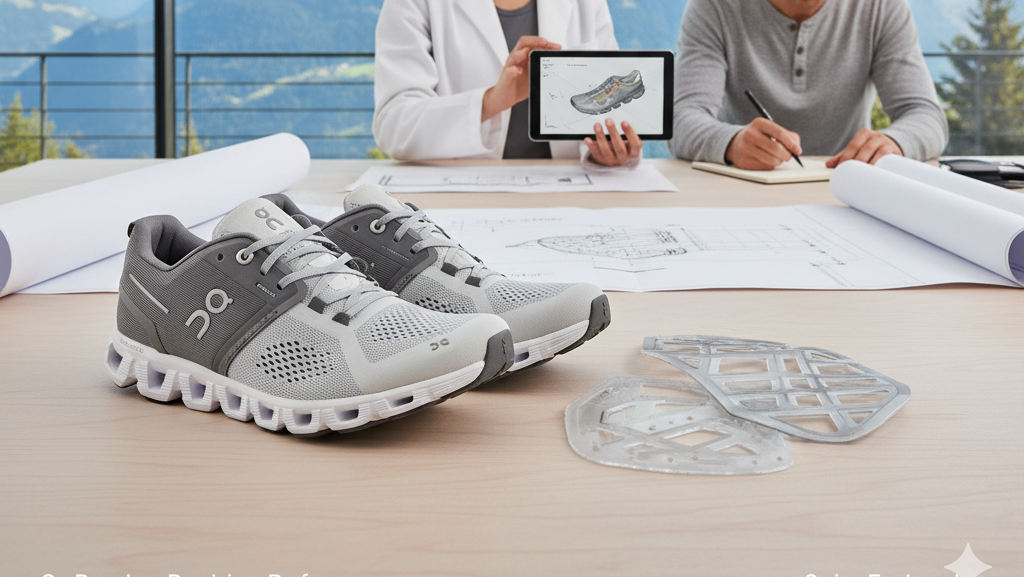
The running world is currently obsessed with one feeling: floating. If you walk into any local 5K or a bustling city marathon in 2026, you’ll see the starting line dominated by two distinct philosophies of “cloud” comfort. On one side, you have the Swiss-engineered On, with its iconic hollow pods and futuristic aesthetic. On the other, the Japanese giant ASICS, a legacy brand that has recently reinvented its “GEL” heritage into something far more ethereal and “cloud-like.”
But when we look at On Cloud vs. ASICS, we aren’t just looking at foam and rubber. We are looking at a fundamental shift in how we move. For years, the gold standard for speed was the “racing flat”—a thin, harsh, and punishingly light shoe. Today, both brands claim their cloud-inspired technologies can provide that same speed without the skeletal trauma.
Can these cushioned giants truly replace your racing flats? Let’s dive into the mechanics of the “cloud” and see which brand reigns supreme.
The Architecture of Air: Understanding On Cloud vs. ASICS Technology
To understand the On Cloud vs. ASICS debate, you have to look at the “engine” under the foot. Both brands use the word “cloud” in their marketing, but they achieve the sensation through vastly different engineering.
On: The CloudTec® Revolution
On’s signature technology is CloudTec®. These are the visible, hollow “clouds” or pods on the outsole. The magic here is multi-directional cushioning. Most foams only compress vertically (downward). CloudTec® pods compress both vertically and horizontally.
When your foot hits the pavement, the pods collapse to absorb the impact. As you transition to your toe-off, the pods lock firm, creating a solid platform for propulsion. This is often paired with a Speedboard®, a rigid plate that acts like a bow, loading with energy and “firing” you forward.
ASICS: The PureGEL™ and FF Blast™ Evolution
ASICS has moved far beyond the heavy silicone gel of the 1990s. In their modern lineup—like the Gel-Nimbus 28 or the Novablast 5—they utilize PureGEL™ and FF Blast™ Plus ECO foam.
Unlike the hollow pods of On, ASICS creates a “cloud” sensation through material density. PureGEL™ is 65% softer than previous iterations and is integrated internally, so you don’t actually see it. It works in tandem with high-stack, pressurized foam to create a “sink-in” feeling that immediately bounces back. If On is about “mechanical” suspension, ASICS is about “material” bounce.
Performance on the Road: On Cloud vs. ASICS for Daily Miles
When it comes to daily training, the On Cloud vs. ASICS choice often comes down to how much “ground feel” you prefer.
The On Experience: Shoes like the Cloudmonster 2 or the Cloudsurfer offer a unique, rolling sensation. Because of the pods, there is a distinct “click-clack” rhythm to the run. They tend to feel firmer than they look, providing a responsive, sporty ride that rewards a quicker turnover.
The ASICS Experience: Models like the Gel-Nimbus 28 are the gold standard for protection. It’s a “maximalist” experience where you feel almost entirely disconnected from the harshness of the road. For runners recovering from injury or those who log 40+ miles a week, the ASICS “cloud” is often more forgiving on the joints.
Pro Tip: If you run on gravel paths, be wary of older On models. The hollow “clouds” are notorious for picking up stones. However, 2025 and 2026 designs (like the Cloudsurfer Max) have moved toward filled-in channels to solve this.
The Big Question: Can They Replace Your Racing Flats?
For decades, if you wanted to go fast, you wore racing flats. These were essentially slippers with a sliver of rubber. They were light ($5.0$ to $7.0$ oz) but offered zero protection.
In the modern On Cloud vs. ASICS landscape, the “racing flat” is effectively dead, replaced by “Super Shoes.”
ASICS Metaspeed Series: The Flat-Killer
The ASICS Metaspeed Sky Tokyo and Metaspeed Edge Tokyo are the direct descendants of the racing flat, but on steroids. By using a full-length carbon plate and ultra-lightweight FF Turbo+ foam, ASICS has created a shoe that weighs as little as a racing flat ($4.8$ oz in some versions) but offers a stack height of nearly $40$mm.
Why it replaces the flat: You get the same “snap” and aggressive turnover of a flat, but your legs don’t feel like they’ve been hammered by a mallet at mile 20.
On Cloudboom Strike: The Swiss Speedster
On’s answer is the Cloudboom Strike. It utilizes a “drop-in” midsole construction and a heavy-rocker geometry. While racing flats required strong calves to handle the impact, the Cloudboom Strike uses its “cloud” elements to do the work for you.
Why it replaces the flat: It offers a more stable, wider platform than a traditional flat, making it safer for late-race fatigue when your form starts to crumble.
Durability and Value: On Cloud vs. ASICS
A common critique in the On Cloud vs. ASICS rivalry is how long that “cloud” feeling actually lasts.
| Feature | On Running | ASICS |
| Typical Lifespan | 300–450 miles | 450–500 miles |
| Outsole Grip | Excellent on dry road, can be slick on wet wood/metal | High-durability AHAR+ rubber, great in rain |
| Price Range | $140 – $290 | $110 – $300 |
| Best For | Style, HIIT, and Tempo runs | Marathons, Recovery, and Long walks |
ASICS generally wins the durability battle. Their AHAR (ASICS High Abrasion Rubber) is legendary for its longevity. On shoes, while incredibly stylish and versatile for the gym, can sometimes see the “cloud” pods wear down or lose their spring a bit earlier due to the mechanical nature of the compression.
Style vs. Substance: The “Atheleisure” Factor
We can’t talk about On Cloud vs. ASICS without mentioning the “cool” factor. On has successfully bridged the gap between elite performance and high-end fashion. You are just as likely to see an On Cloud shoe in a boardroom or a trendy brunch spot as you are on a track. Their minimalist Swiss design is undeniably sleek.
ASICS, while making massive strides with the “Sportstyle” trend (the GEL-Kayano 14 is a streetwear icon), still feels a bit more “traditional runner.” However, their latest neon colorways and aggressive silhouettes in the Metaspeed and Novablast lines are quickly closing the gap.
Verdict: Which Cloud Should You Chase?
In the battle of On Cloud vs. ASICS, the “winner” depends on your mission:
Choose On Cloud if: You value a responsive, firm-to-active ride, you want a shoe that transitions perfectly from the treadmill to the coffee shop, and you prefer a “rolling” sensation over a “sinking” one.
Choose ASICS if: You want maximum impact protection, you’re training for long distances (Half or Full Marathons), and you want the most durable “cloud” technology on the market.
As for replacing your racing flats? The answer is a resounding yes. Whether you choose the mechanical snap of On or the explosive bounce of ASICS, your feet—and your finish times—will thank you for making the switch. The era of the punishingly thin flat is over; the era of the cloud has truly arrived.
Would you like me to compare specific models, such as the On Cloudmonster 2 versus the ASICS Novablast 5, to help you decide on your next pair?
Asics Superblast 2 vs On Cloudmonster 2 This video provides a direct comparison between two of the most popular maximalist trainers from both brands, highlighting how their respective “cloud” foams perform during actual runs.

One thought on “On Cloud vs. ASICS: Comparing the “Cloud” Tech in Modern Running Shoes”