
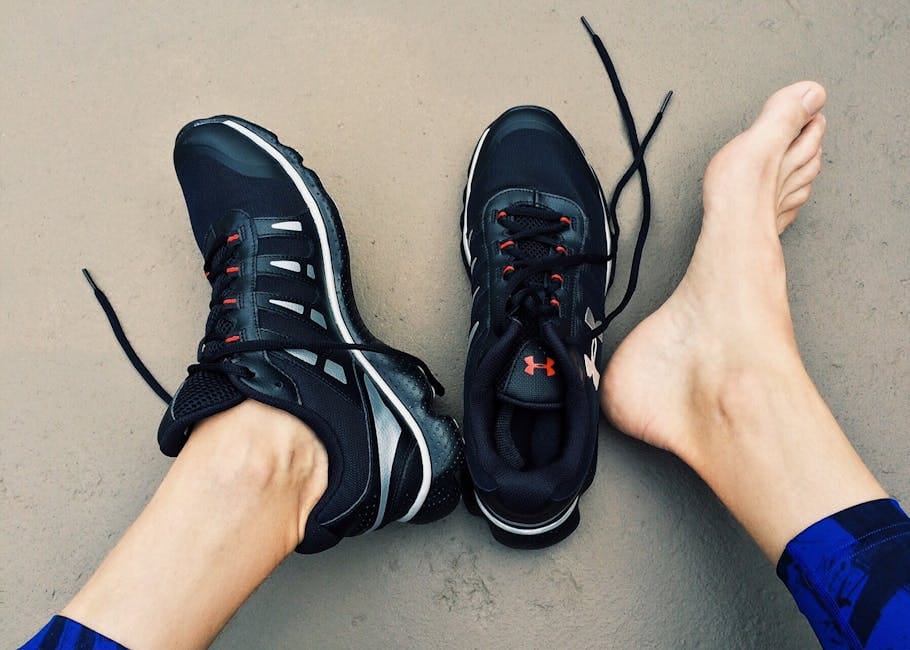
Why Finding the Right Shoe Matters When You Have Flat Feet
The best flat feet running shoes give your feet the support and stability they need to run longer, feel better, and avoid injury. Here are the top picks at a glance:
| Shoe | Best For | Key Feature |
|---|---|---|
| Brooks Adrenaline GTS 25 | Overall stability | GuideRails support, 10mm drop |
| Hoka Gaviota 6 | Max cushioning | H-Frame tech, plush CMEVA foam |
| Hoka Arahi 8 | Daily training | Lightweight, J-Frame support |
| ASICS GT-2000 14 | Walk/run combo | FF Blast Max, 8mm drop |
| New Balance 860 v14 | Medial wedge support | Built-in wedge offloads arch stress |
| Saucony Guide 19 | Balanced support | Structured, smooth ride |
If you have flat feet, you already know the struggle. Every run can bring arch fatigue, heel pain, or sore shins. You’re not alone — flat feet affect 20% to 30% of the general population, and they’re especially common in women over 40 and people who carry extra weight.
The root issue is overpronation — your foot rolls inward more than it should with each stride. Over time, that puts stress on your arches, ankles, and knees.
The good news? The right shoe changes everything.
I’m Faisal S. Chughtai, a footwear expert who has spent years researching and testing the best flat feet running shoes to help people find real comfort and performance. In this guide, I’ll walk you through exactly what to look for and which shoes deliver.
Know your best flat feet running shoes terms:
Understanding Your Arches: Flexible vs. Rigid Flat Feet
Before we dive into the gear, we need to talk about what’s actually happening under your socks. Not all flat feet are created equal. Identifying which type you have is the first step in choosing the best flat feet running shoes.
The Two Main Types
- Flexible Flat Feet: This is the most common type. If you look at your foot while sitting down, you might see an arch. However, the moment you stand up and put weight on it, that arch disappears or “collapses.”
- Rigid Flat Feet: In this case, the arch is absent whether you are standing or sitting. This type is often more prone to pain because the bone structure itself is flat.
How to Test Your Feet at Home
You don’t necessarily need an expensive gait analysis to get started. Here are three simple ways to check:
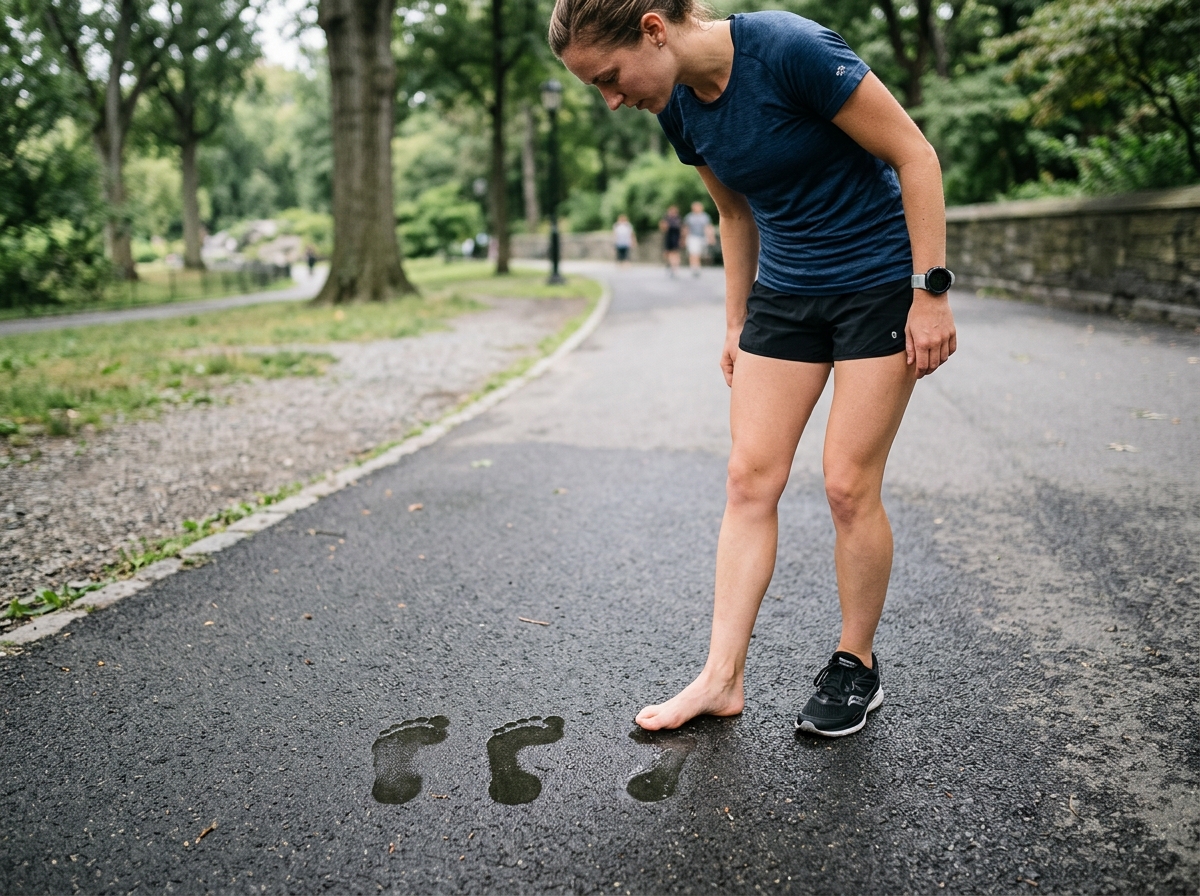
- The Wet Foot Test: Wet the bottom of your foot and step onto a piece of cardboard or dark pavement. If the footprint looks like a solid blob without a curve on the inside, you likely have flat feet.
- The Tiptoe Test: Stand on your tiptoes. If an arch appears while you’re up on your toes but disappears when flat, you have flexible flat feet.
- Jack’s Test: While standing flat, have someone lift your big toe upward. If an arch forms, your feet are flexible.
Why It Matters for Runners
Flat feet are closely linked to posterior tibial tendonitis, where the tendon that supports the arch becomes strained. According to scientific research on flat feet prevalence, this condition is more common in the over 40 population and those dealing with obesity factors. When the medial longitudinal arch collapses, it triggers overpronation. Without the right support, this leads to a chain reaction of pain from your heel up to your lower back. You can find more info about flat feet on our dedicated resource page.
Key Features of the Best Flat Feet Running Shoes
Modern shoe technology has moved far beyond the “clunky” motion control shoes of the past. Today, the best flat feet running shoes use “intelligent” stability. Instead of forcing your foot into a specific position, they provide guidance when you need it.
Stability Technologies Explained
Manufacturers use different “engines” to keep your feet aligned. Here is a breakdown of what you’ll see on the spec sheets:
| Technology | How it Works | Found In |
|---|---|---|
| Medial Posts | A firmer piece of foam on the inside of the shoe to prevent inward rolling. | New Balance 860 v14 |
| GuideRails | Like bowling alley bumpers; they support the foot only when it shifts too far. | Brooks Adrenaline GTS 25 |
| H-Frame | A literal H-shaped frame of firmer foam that centers the foot. | Hoka Gaviota 6 |
| 4D Guidance | Adaptive foam that adjusts to your stride as you fatigue. | ASICS Gel Kayano 31 |
Anatomy of a Supportive Shoe
Beyond the “stability engine,” look for these structural elements:
- Wide Platforms: A wider base (sole flares) creates a more stable landing zone.
- Stiff Heel Counters: The plastic “cup” at the back of the shoe should be firm to keep your heel from sliding.
- Midsole Firmness: Extremely soft shoes can be unstable for flat feet. A balanced durometer (firmness) is usually better.
- Full-Contact Midsoles: Shoes that have constant contact with the ground (no gap under the arch) provide better proprioception.
- Stack Height: Higher stack heights (like 40mm) offer better shock absorption, which is vital if your arches aren’t naturally absorbing impact.
For a deeper dive into how these features interact, check out our guide to flat feet and overpronation.
Top Picks: Best Flat Feet Running Shoes for 2025/2026
We’ve tested dozens of models to find the top performers. Whether you need a soft ride or a fast one, these are the best flat feet running shoes currently on the market.
Best Overall Best Flat Feet Running Shoes: Brooks Adrenaline GTS 25
The Adrenaline has been a staple for decades, and the GTS 25 version is the most refined yet. It uses GuideRails support, which is fantastic because it doesn’t “poke” your arch if you don’t need it; it only kicks in when your form starts to break down.
- Drop: 10mm (great for heel strikers).
- Cushioning: DNA LOFT v3 nitrogen-infused foam—it’s soft but incredibly resilient.
- Why we love it: It offers reliable stability without feeling like a “medical” shoe. It’s the gold standard for a reason.
Best Max Cushioning: Hoka Gaviota 6
If you want to feel like you’re running on clouds but still need a “safety net” for your arches, the Gaviota 6 is your winner. It features H-Frame technology, which cradles the foot rather than pushing against it.
- Cushioning: Plush CMEVA foam.
- The Ride: It uses a late-stage MetaRocker to help roll you forward, which takes the pressure off your midfoot.
- Drop: 6mm, providing a more natural foot position.
Best Daily Trainer: Hoka Arahi 8
Not everyone wants a heavy, bulky shoe. The Arahi 8 proves that stability can be light. At just 9.1 oz, it’s significantly lighter than the average stability shoe (which usually clocks in around 10 oz).
- Support: J-Frame support uses firmer foam in a “J” shape around the heel and inside of the foot.
- Upper: Highly breathable mesh that keeps your feet cool on long summer runs.
- Verdict: Perfect for everyday versatility, from the gym to a 10k.
If you find that your feet are flat but you have high-volume needs, you might want to see our list of the best shoes for flat feet and high arches.
Performance Categories for Flat-Footed Runners
Flat feet shouldn’t stop you from hitting the trails or doing speedwork. You just need the right tool for the job.
Best for Speedwork and Racing
Traditionally, racing shoes were neutral and unstable. That’s changing.
- ASICS Magic Speed 5: Features FF Leap foam, which is 33% lighter and 13% more responsive than standard foams. It includes a carbon plate but maintains enough width in the midfoot to support flat-footed runners.
- Hoka Rocket X 3: A race-day beast with PEBA foam and a carbon-fiber plate. It provides massive energy return while keeping a wider base than most “super shoes.”
Best Trail Best Flat Feet Running Shoes: Brooks Cascadia 19
Trail running with flat feet can be tricky because of the uneven terrain. The Brooks Cascadia 19 is built like a tank.
- Trail Stability: It features a protective rock shield and a very stable platform that prevents your foot from twisting on roots and rocks.
- Traction: Multi-directional lugs provide grip on dry, muddy, or slick technical terrain.
- Durability: The outsole is designed to withstand hundreds of miles of abrasion.
Frequently Asked Questions about Flat Feet Shoes
Do I need orthotics with stability shoes?
This is a common point of confusion. Many of the best flat feet running shoes are designed to replace the need for an over-the-counter insole. However, if you have custom insoles from a podiatrist, you should look for shoes with a “neutral-to-stable” profile or a deep heel cup to accommodate the extra height. Be careful not to “over-correct”—pairing a heavy-duty stability shoe with a rigid orthotic can sometimes cause more pain than it solves.
Can flat-footed runners wear neutral shoes?
Yes, but with caveats. If you have “anatomical” flat feet (your feet are flat but you have a strong, neutral gait without excessive rolling), you might thrive in a neutral shoe with a wide base. Neutral shoes can help with foot strengthening and proprioception. However, if you experience pain, stick to the running shoes for flat feet we’ve recommended here.
How often should I replace my stability shoes?
Stability shoes often look fine on the outside even when the internal support has collapsed.
- The 300-500 Mile Rule: Most midsoles lose their “rebound” and support after 400 miles.
- Signs of Degradation: If you notice the foam on the inside of the heel looks “compressed” or wrinkled compared to the outside, it’s time for a new pair.
- Outsole Wear: If the tread is gone, your traction (and stability) is compromised.
Conclusion
Having flat feet isn’t a “defect”—it’s just a foot shape that requires a specific type of engineering. Whether you choose the reliable Brooks Adrenaline GTS 25 or the plush Hoka Gaviota 6, the goal is the same: to keep you moving without pain.
At On Clouder, we pride ourselves on providing the most in-depth expert shoe rankings and gait analysis insights to help you stay injury-free. Don’t let arch fatigue hold you back from your next PR.
Ready to find your perfect fit? Shop arch support for runners and take the first step toward a more comfortable run today.
