
Why Knowing How to Wash ASICS Shoes the Right Way Matters
Can ASICS shoes be washed? Yes — but the method matters a lot.
Here’s the quick answer:
- Hand washing is the safest and recommended method
- Machine washing is not recommended by ASICS — it can damage adhesives, foam, and shape
- Heat drying (dryers, radiators, direct sun) should always be avoided
- Mild soap, a soft brush, and air drying are all you need
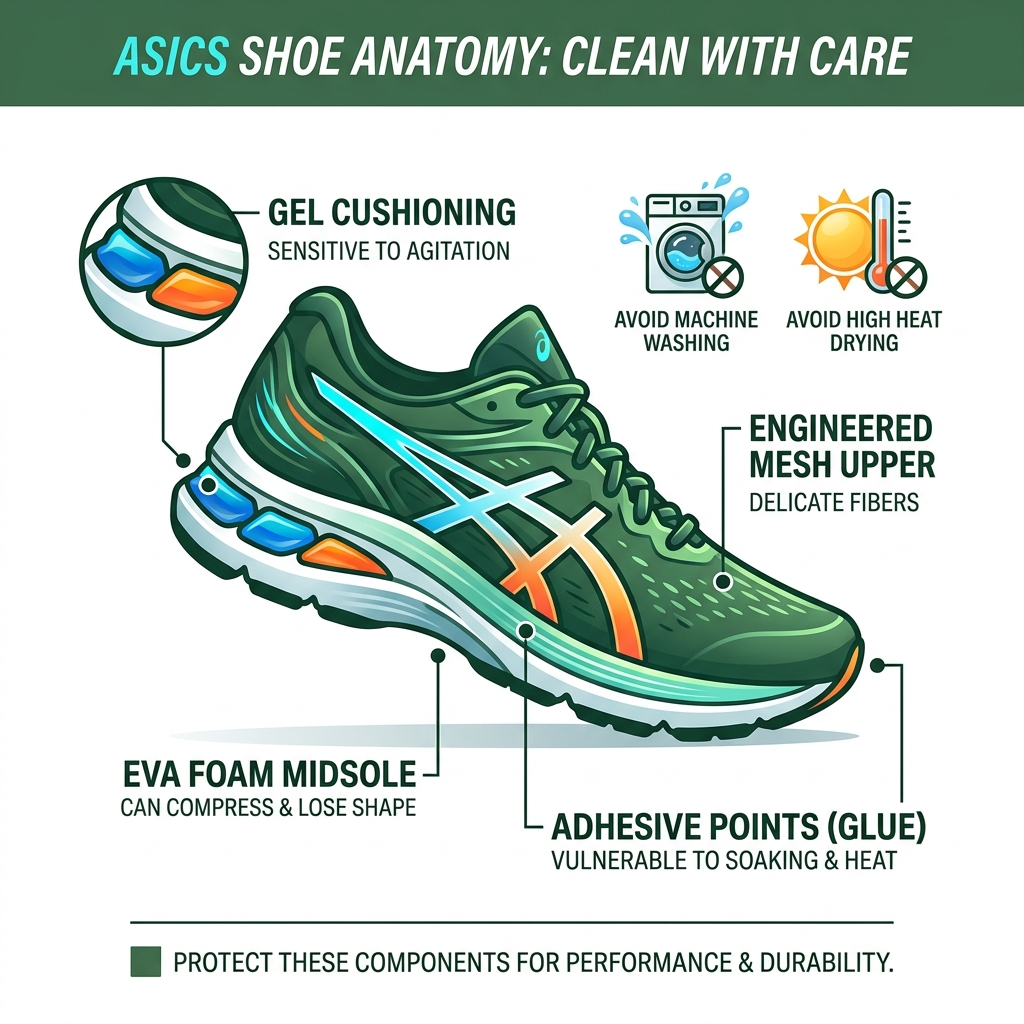
ASICS builds their running shoes with engineered synthetic fibers, gel cushioning, foam midsoles, and precision gluing. These materials perform brilliantly on the road — but they’re surprisingly delicate when it comes to cleaning. As ASICS puts it, think of your running shoes like a cashmere sweater: you wouldn’t throw that in the washing machine.
Get the cleaning wrong, and you risk breaking down the very materials that keep your feet supported mile after mile.
I’m Faisal S. Chughtai, a footwear comfort and performance expert who has spent years helping runners and active professionals care for their shoes — including answering the question of can ASICS shoes be washed the right way to preserve fit, cushioning, and longevity. In this guide, I’ll walk you through everything you need to know to clean your ASICS safely and effectively.
Can ASICS Shoes Be Washed in a Washing Machine?
It is the age-old question for runners: can I just toss these in the wash? While approximately 70% of shoe owners prefer machine washing for its sheer efficiency, the reality for high-performance footwear like ASICS is much more complicated.

Most experts, and ASICS themselves, strongly advise against using a washing machine. The primary reason is that ASICS shoes are technical marvels held together by specialized adhesives and comprised of sensitive materials like EVA foam and GEL technology. When these are subjected to the mechanical agitation of a wash cycle—even a gentle one—the structural integrity of the shoe is at risk.
Research indicates that over 30% of warranty claims for footwear are declined because the shoes were machine-washed. The manufacturer can often tell when a shoe has been through a machine because the “last” (the internal shape) becomes distorted and the technical fabrics show premature fraying.
| Feature | Hand Washing | Machine Washing |
|---|---|---|
| Safety | High (Recommended) | Low (Risky) |
| Material Preservation | Excellent | Poor (Breaks down glue/foam) |
| Cushioning Retention | 100% | Potential loss of GEL/Foam bounce |
| Drying Time | 24-48 hours | 24-48 hours (Air dry only) |
| Warranty Status | Protected | Often Voided |
Potential Risks of Machine Washing ASICS Shoes
If you are still tempted to hit that “Start” button, consider the statistics. About 50% of shoe damage occurs during washes where protective measures aren’t taken, but even with a laundry bag, the risks remain high:
- Midsole Separation: The heat and water saturation in a machine can cause the specialized glues to fail, leading to the outsole peeling away from the midsole.
- Loss of Cushioning: The EVA foam and GEL inserts are designed to absorb the impact of your stride, not the mechanical thumping of a washing machine drum. This can lead to a “dead” feeling in the shoes much sooner than the 300-500 mile expected lifespan.
- Water Repellency Loss: Machine washing can diminish water repellency by approximately 30%. If you have a GORE-TEX or water-resistant model, a machine wash can strip away those protective coatings.
- Color Bleeding: The synthetic dyes used in the mesh and overlays can bleed into white midsoles or laces when fully submerged and agitated.
The Step-by-Step Guide to Hand-Washing ASICS
Since we have established that the machine is a “no-go” for preserving your investment, let’s look at the gold standard: hand-washing. This method allows you to target the dirt without drowning the shoe’s technical components.
Before you start, gather your supplies. You don’t need expensive chemicals; in fact, mildness is your best friend here.
Required Cleaning Supplies:
- Mild Detergent: A clothing-safe liquid soap or specialized sneaker cleaner.
- Soft-Bristled Brush: An old toothbrush or a dedicated soft shoe brush.
- Lukewarm Water: Never use boiling or hot water.
- Microfiber Cloth or Sponge: For wiping down delicate uppers.
- Paper Towels or Newspaper: For the drying phase.
For a deeper look at general athletic footwear care, you can also check out our step by step guide to the best way to clean sports shoes.
Preparing Your ASICS Shoes to Be Washed
Preparation is half the battle. You should never start scrubbing a shoe that is still fully assembled.
- Remove Laces and Insoles: These need to be cleaned separately. Removing them also opens up the “throat” of the shoe, allowing for better airflow and access to the interior.
- Dry Brushing: Before getting the shoe wet, use a dry, soft-bristled brush to whisk away loose mud, dust, and gravel. If you wet the shoe while it’s covered in dry dirt, you’ll just create a “mud paint” that pushes grime deeper into the mesh fibers.
- Vacuum the Interior: It sounds strange, but vacuuming the inside of your shoes helps remove the grit and sand that acts like sandpaper against your socks and the shoe’s inner lining.
- Check the Official Advice: For specific brand insights, How to Clean Your Running Shoes provides excellent foundational tips on why these steps are vital for performance maintenance.
Cleaning Different Materials: Mesh, Leather, and Suede
Not all ASICS are created equal. A Gel-Kayano with engineered mesh requires a different touch than a lifestyle model with suede overlays.
- Engineered Mesh: This material is breathable but acts like a net for dirt. Use a circular scrubbing motion with your soft brush and a small amount of soapy water (about 15-30ml of detergent mixed into a bowl of water). Be gentle; aggressive scrubbing can “fuzz” the mesh.
- Synthetic Leather: These areas are much more durable. You can usually wipe these clean with a damp cloth or sponge.
- Suede and Nubuck: Warning! Do not use soap and water on genuine suede. Use a dedicated suede brush to “erase” stains. If the suede gets wet, it can harden and lose its texture.
- The Outsoles: This is the one part of the shoe where you can be a bit more aggressive. Use a stiffer brush to get into the tread patterns. Keeping outsoles clean isn’t just about looks—it maintains traction and prevents the spread of invasive plant species from trails to your local parks.
How to Dry ASICS Shoes Safely After Cleaning
If there is one part of the process where most people fail, it’s the drying. Approximately 80% of shoe damage occurs from excess heat during the drying phase.
The Golden Rule: Never use a tumble dryer, radiator, or direct sunlight. High heat will shrink the mesh and melt the adhesives, effectively ruining the fit of your shoe.
Instead, follow these data-backed drying tips:
- Airflow is King: Airflow can reduce drying time by up to 50%. Place your shoes in a well-ventilated area with a fan nearby.
- The Newspaper Method: Stuffing your shoes with recycled paper or paper towels helps maintain the shoe’s shape and enhances moisture absorption by 30%. Replace the paper every few hours as it becomes saturated.
- Room Temperature: The ideal drying temperature is between 68°F and 77°F (20°C to 25°C).
- Patience: Expect the process to take 24 to 48 hours. Putting on a damp shoe can lead to stretching and the growth of bacteria.
For more official tips on the drying process, see the ASICS guide on How to Clean Running Shoes.
Maintenance Tips to Extend the Lifespan of Your ASICS
Proper care isn’t just about the occasional deep clean; it’s about daily habits. ASICS generally recommends replacing running shoes every 300-500 miles, but you can stay on the higher end of that range with good maintenance.
- Protective Sprays: Treating new or clean shoes with a water and stain repellent spray can increase their lifespan by 30%. These sprays create a barrier that prevents dirt from bonding with the fibers.
- Shoe Rotation: If you run every day, don’t wear the same pair of ASICS two days in a row. It takes about 24 hours for the foam to fully decompress and for moisture to evaporate. Rotating between two pairs can actually extend the total life of both pairs significantly.
- Odor Control: To keep things fresh, sprinkle a little baking soda inside the shoes overnight to absorb moisture and neutralize odors. Just remember to shake it out before your next run!
How Often Can ASICS Shoes Be Washed?
You don’t need to do a full deep clean every week. In fact, over-washing can eventually wear down the materials.
- Frequent Runners: If you are hitting the pavement 4-5 times a week, a deep clean every 4-6 weeks is usually sufficient.
- Trail Runners: If you are running in mud or through puddles, you should at least rinse off the exterior mud immediately after your run.
- The 50-100 Mile Rule: Some experts suggest a light cleaning every 50-100 miles to prevent grit from settling into the mesh, which can act as an abrasive and cause holes.
Frequently Asked Questions about ASICS Care
Can I use bleach on white ASICS shoes?
No! Bleach is far too harsh for the synthetic fibers and glues used in ASICS. It can cause the materials to turn a sickly yellow and will eventually make the mesh brittle, leading to cracks and tears. Stick to mild soap or a baking soda and vinegar paste for whitening.
Is it okay to use a hair dryer to speed up drying?
We strongly advise against this. While a “cool” setting on a hair dryer might seem safe, the concentrated airflow can still cause uneven drying and warping of the shoe’s internal structure. Natural airflow from a standard floor fan is much safer.
Should I wash the insoles separately?
Yes, always. Insoles are the primary breeding ground for bacteria because they absorb the most sweat. Scrub them lightly with a toothbrush and soapy water. If they are particularly “funky,” you can soak them in a mixture of water and white distilled vinegar (with a drop of tea tree oil) for a few hours to kill bacteria without damaging the foam.
Conclusion
So, can ASICS shoes be washed? Absolutely, provided you skip the machine and stick to the gentle, hand-washing methods we’ve outlined. By taking the time to remove the laces, scrub the mesh with a soft brush, and allow for a slow, natural air-dry, you protect the GEL technology and engineered foam that makes ASICS so comfortable.
At On Clouder, we know that your shoes are an investment in your health and performance. Whether you’re a marathoner or a nurse on a 12-hour shift, treating your shoes with a little “cashmere sweater” level of care will ensure they support you for every one of those 500 miles. Keep them clean, keep them dry, and they’ll keep you moving!
