
Can You Wash Sports Shoes Without Ruining Them?
Can you wash sports shoes safely? Yes — but how you wash them makes all the difference.
Here’s the quick answer:
| Method | Safe For | Avoid For |
|---|---|---|
| Machine wash (cold, gentle) | Mesh, canvas, nylon, polyester | Leather, suede, rubber, cleated boots |
| Hand wash | All sports shoes | Nothing — it’s always safe |
| Dryer | Never recommended | All sports shoes |
| Air dry | All sports shoes | — |
The safest approach for almost any sports shoe is hand washing. Machine washing can work for certain materials, but it carries real risks — weakened adhesives, warped midsoles, and damaged fabrics. Brands like Nike and ASICS recommend skipping the machine entirely to protect the engineered materials that keep your shoes performing at their best.
Dirty shoes aren’t just an aesthetic problem. Dirt particles trapped in mesh uppers grind against the fabric like sandpaper. Mud-caked soles lose traction. Sweat-soaked insoles breed bacteria. Regular, correct cleaning protects your investment and keeps your feet comfortable mile after mile.
I’m Faisal S. Chughtai, a footwear expert with a deep focus on performance and comfort shoes, and I’ve spent years researching how to get the most out of athletic footwear — including answering the question of can you wash sports shoes without shortening their lifespan. In this guide, I’ll walk you through every method, material, and mistake so your shoes stay fresh and functional for the long haul.
Can You Wash Sports Shoes in the Washing Machine?
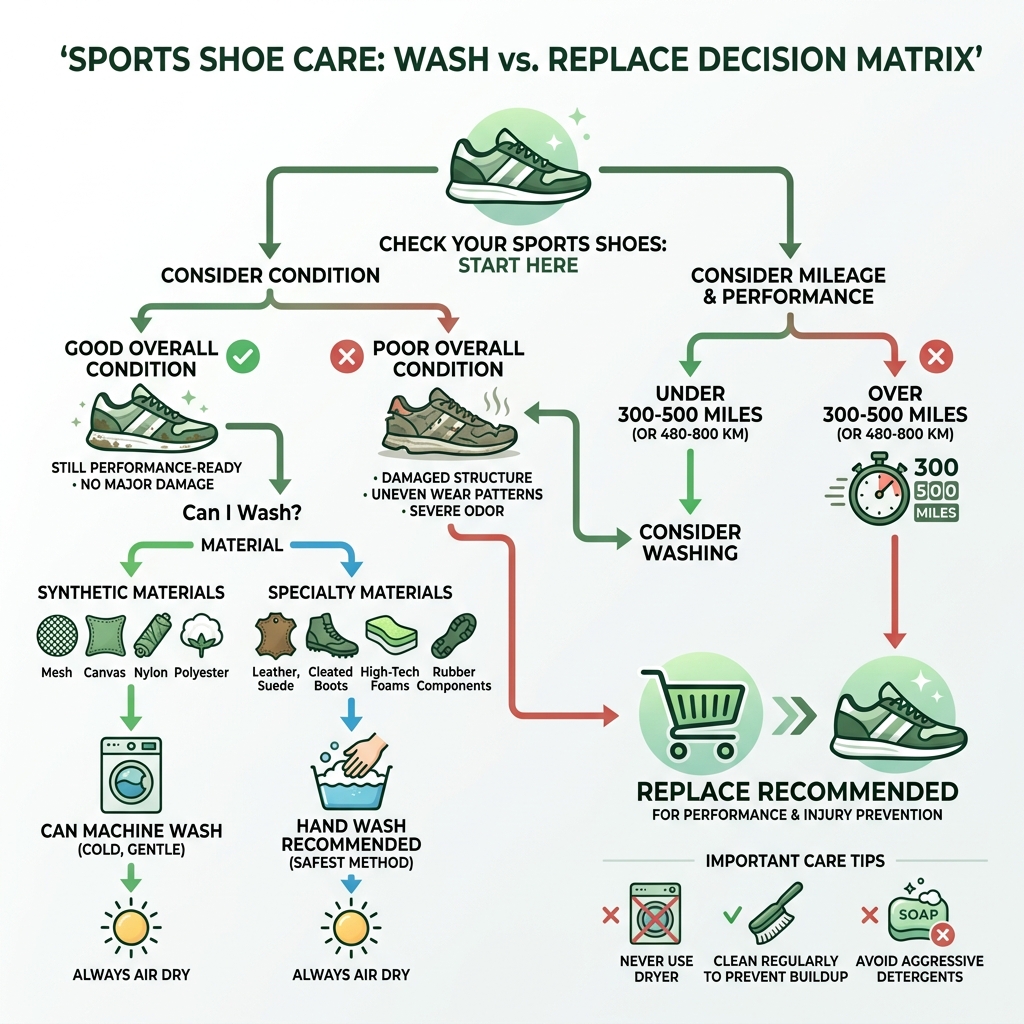
The short answer is: sometimes. While many of us have been tempted to just toss our funky trainers into the wash and hope for the best, the “set it and forget it” approach can be a gamble. Whether or not can you wash sports shoes in a machine depends entirely on what they are made of.
Generally, shoes made from synthetic materials like canvas, nylon, cotton, and polyester are the best candidates for a machine cycle. These materials are durable enough to withstand the tumbling action of a washer without falling apart. However, even with these “safe” materials, you should never just throw them in with your jeans.
To keep things safe, always use a cold water cycle and a gentle or delicate setting. Hot water is the enemy of shoe glue; it can melt the adhesives holding your sole to the upper, leading to a “talking shoe” situation where the front of the sole flaps open. Stick to liquid detergent, as powder detergents can sometimes fail to dissolve completely in cold water, leaving gritty residue inside the mesh or cushioning.
If you are wondering about specific high-performance brands, we have put together a can you put clouds in the washing machine guide for safe cleaning to help you navigate those premium materials. For more general appliance safety, you can also check out this resource on how to wash shoes in the washing machine.
Preparing to Wash Sports Shoes Safely
Before the shoes ever touch the water, preparation is key. You can’t just throw a muddy pair of trail runners in and expect a miracle. Here is our pre-wash checklist:
- Remove the Laces: Laces often get tangled or wrapped around the agitator. Pull them out and wash them separately. You can put them in a small mesh bag or hand-wash them with a bit of dish soap.
- Extract the Insoles: This is a big one. Insoles act like sponges. If you leave them in, they can become waterlogged and take days to dry, which is a recipe for mold. Most experts recommend hand-washing insoles to preserve their foam structure.
- Brush Off Debris: Use a dry, soft-bristled brush (an old toothbrush works great) to knock off loose dirt, dried mud, and small stones. If you skip this, you’re basically turning your washing machine into a mud bath.
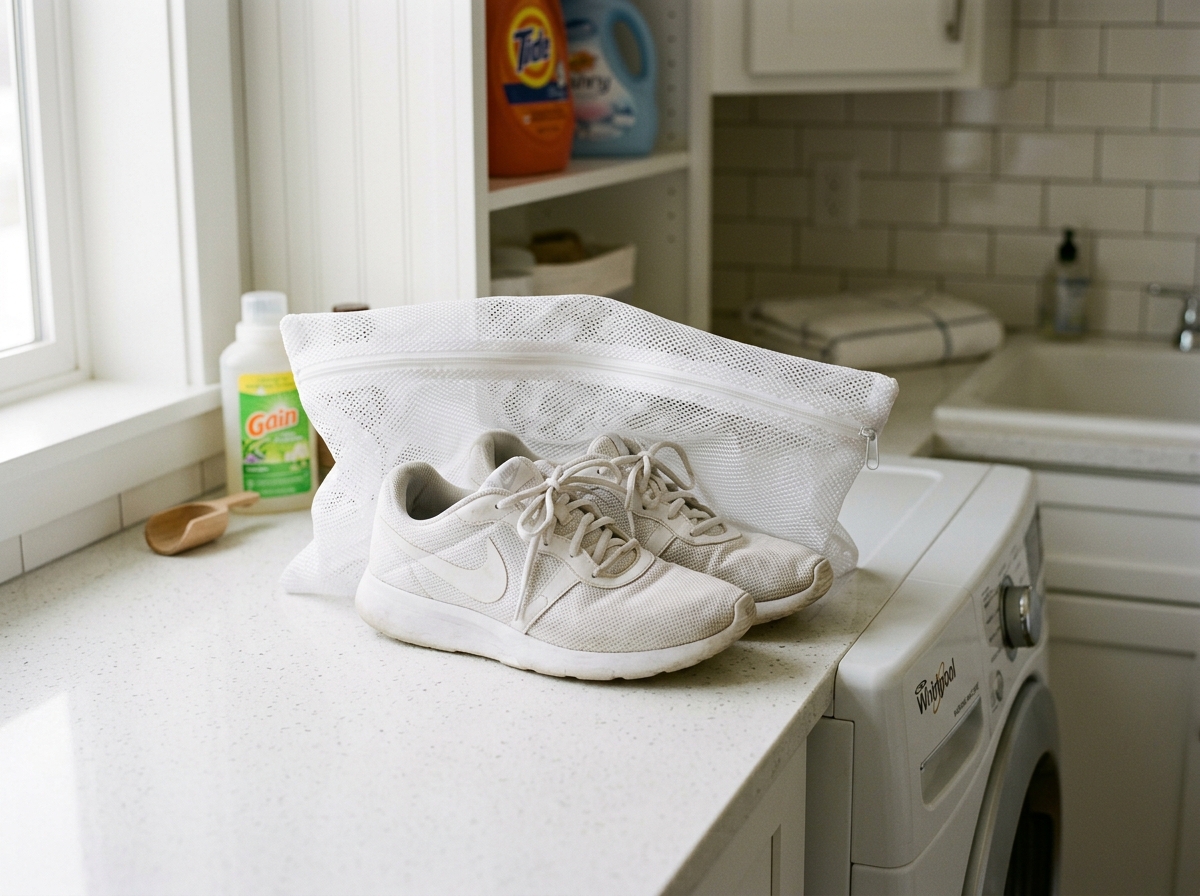
- Use a Mesh Garment Bag: To prevent your shoes from banging against the drum like a drum set in a dryer, place each shoe in a mesh laundry bag or an old pillowcase. This acts as a buffer and protects both the shoes and your machine.
For those wearing specific Swiss-engineered footwear, we’ve detailed the process in our complete guide for cleaning your sneakers.
The Best Way to Hand-Wash Sports Shoes
If you want to play it 100% safe, hand washing is the gold standard. It allows you to target specific stains without subjecting the entire shoe to the mechanical stress of a machine cycle. Plus, for many high-end running shoes, the heat and agitation of a washer can degrade the specialized foams used for cushioning.
To start, you’ll need a few basic supplies:
- A bowl of warm water.
- A mild cleaning solution (liquid laundry detergent or dish soap).
- A soft-bristle brush (for the uppers).
- A stiff-bristle brush or toothbrush (for the soles).
- Microfiber cloths for blotting.
Start by dipping your brush into the soapy water and gently scrubbing the uppers in a circular motion. If you’re working with knit fabrics, always brush in the direction of the knit to avoid snagging the fibers. Once the uppers are clean, use a damp cloth to “rinse” the soap away—don’t submerge the shoe in water unless it’s absolutely necessary. For a deeper dive into this process, see our step-by-step guide to the best way to clean sports shoes.
When Can You Wash Sports Shoes by Hand?
Hand washing isn’t just a “nice to have”—for some shoes, it’s the only option.
- Trail Runners: These often come home caked in mud. A machine won’t get into the deep lugs of the outsole. You need a stiff brush and some elbow grease to restore that traction.
- Basketball Shoes: Court shoes rely on “sticky” rubber for grip. Harsh detergents and machine heat can dry out that rubber, making you slip during a crossover. Hand washing ensures the traction stays elite.
- Football Boots: Cleats are often made of synthetic blends or K-leather that can shrink or warp in a machine. Furthermore, the metal or hard plastic studs can damage your washing machine drum.
- Delicate Mesh: High-performance mesh is designed for breathability, not durability against a washing machine agitator.
If you are specifically looking after your “Clouds,” we have a dedicated article on how to wash on cloud shoes that focuses on preserving that signature sole technology.
Material-Specific Care: Mesh, Leather, and Suede
Different materials require different levels of “tough love.” Treating leather like canvas is a quick way to end up with cracked, ruined shoes. Use the table below as a guide for your specific pair.
| Material | Cleaning Tool | Solution | Pro Tip |
|---|---|---|---|
| Mesh/Knit | Soft brush / Microfiber | Mild detergent + water | Blot, don’t rub, to prevent pilling. |
| Leather | Soft cloth / Magic eraser | Leather cleaner or mild soap | Apply leather conditioner after drying to prevent cracking. |
| Suede | Suede brush / Eraser | Suede-specific cleaner ONLY | Never use water; it will stain and “flatten” the nap. |
| Canvas | Stiff brush | Baking soda paste or detergent | Safe for the washing machine in most cases. |
For white shoes, which are notoriously difficult to keep pristine, we recommend using a paste of baking soda and water for the midsole. You can find more tips in our guide on how to clean white on cloud shoes.
Suede is the “diva” of shoe materials. If you get it wet, the texture can change permanently. Always use a dedicated suede brush to lift the nap and a specialized eraser for scuffs. If you’re dealing with leather, it is a natural skin—it needs moisture. Using a leather conditioner once or twice a year keeps the material supple and prevents it from drying out after a cleaning session.
Drying and Deodorizing Your Footwear
The cleaning is only half the battle; how you dry your shoes is where most people go wrong. The number one rule? Keep them away from heat. This means no radiators, no hair dryers, and definitely no clothes dryer.
The best way to dry sports shoes is to stuff them with plain white paper towels or newspaper (avoiding pages with lots of ink that might bleed) and let them air-dry in a well-ventilated area. The paper absorbs moisture from the inside while helping the shoe maintain its shape. Change the paper every few hours if the shoes are particularly soaked. This process can take anywhere from 8 to 24 hours, so be patient!
If your shoes have developed a “mojo” that even a wash can’t fix, it’s time to look at deodorizers. Bacteria thrive in damp, dark environments (like the inside of a gym bag).
To tackle odors effectively:
- Insoles: Clean them with a mixture of vinegar and water (1:2 ratio) or a baking soda paste.
- Sprays: Products like Poo-Pourri Shoe Odor Eliminating Spray can neutralize smells rather than just masking them.
- Inserts: For a natural approach, Woodlore Cedar Shoe Fresh Inserts are fantastic. Cedar naturally absorbs moisture and leaves a fresh scent.
- Baking Soda: A classic move—sprinkle a little inside the shoe overnight and shake it out in the morning.
Frequently Asked Questions about Washing Sports Shoes
Should you ever put sports shoes in the dryer?
In a word: No. The high heat of a dryer is the fastest way to ruin a pair of athletic shoes. It can cause the rubber outsoles to warp or shrink, and it can weaken the chemical bonds of the glue. Furthermore, the tumbling action can damage the internal structure of the heel counter, leading to a loss of support. If you’re in a rush, use a fan to circulate air around the shoes, but never use heat.
How often should you clean your sports shoes?
We recommend a “little and often” approach. Give your shoes a quick wipe-down or dry brush every two weeks if you’re a daily runner. If you’ve been trail running and your shoes are caked in mud, clean them immediately. Mud dries out and pulls moisture from the materials, which can lead to premature cracking. Plus, letting mud sit on the soles reduces traction, which could lead to a slip or injury on your next run.
What common mistakes should you avoid when cleaning?
- Using Bleach: Unless you have plain white canvas shoes (and even then, be careful), bleach is too harsh. It can yellow the soles and weaken synthetic fibers.
- Hot Water: As mentioned, it melts glue. Always stay cool.
- Direct Sunlight: While it seems like a good way to dry shoes, intense UV rays can fade colors and make materials brittle.
- Washing Leather in a Machine: This will almost certainly cause the leather to shrink and crack once it dries. Always hand-wash leather.
Conclusion
At On Clouder, we believe that taking care of your gear is just as important as the workout itself. Knowing can you wash sports shoes correctly is the difference between a pair that lasts 500 miles and a pair that falls apart after two months. Whether you choose the convenience of a gentle machine cycle for your mesh trainers or the precision of a hand-wash for your basketball kicks, the key is to be gentle and avoid heat.
By following these steps, you’ll preserve the performance technology you paid for and keep your feet feeling fresh. For more specific brand advice and deep dives into footwear maintenance, check out our step-by-step guide to On Cloud shoes. Happy running!
