
The Gravity-Defying Aesthetic: Revolution or Retouch?
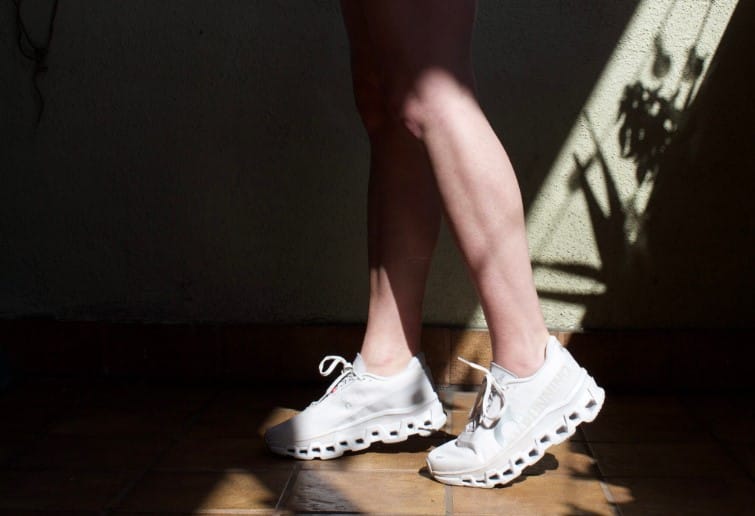
Walk into any local run club, hospital ward, or airport terminal, and the visual evidence is staggering. You will see them: those distinct, hollow pods lining the midsole like a futuristic ribcage. Since their Swiss inception in 2010, On has transitioned from a niche triathlon experiment into a global footwear juggernaut. But popularity is a fickle metric for performance. Does the sensation of “running on clouds” actually translate to better splits and fewer injuries, or are we simply witnessing a masterclass in minimalist marketing?
For the dedicated marathoner, the calculus is simple: efficiency versus impact. For the nursing student pulling a double shift or the traveler navigating terminal 4, the requirements shift toward static comfort and aesthetic versatility. On cloud shoes have managed to capture all these demographics simultaneously, a feat rarely achieved by legacy brands like Brooks or Asics. Yet, beneath the clean lines and Swiss engineering lies a polarizing ride that demands a closer look.
The Anatomy of the Void: Why On Cloud Shoes Look Different
To understand the hype, we must dissect the “CloudTec” system. Most running shoes rely on a solid slab of EVA or PEBAX foam to dampen impact. On took a different route. By using hollow circular elements, they engineered a midsole that compresses both vertically and horizontally.
The theory is elegant. When your foot strikes the pavement, the clouds collapse to absorb the shearing forces—the “braking” friction that often leads to shin splints—and then lock into a firm platform for a powerful takeoff. It is a dual-stage transition. Soft landing, hard departure. This is why many first-time wearers describe the sensation as “firm but bouncy.” If you are expecting the marshmallow-like sink of a Hoka, you are in for a surprise. On shoes are built for responsiveness, not just mindless dampening.
The Speedboard: The Secret Catalyst
Tucked just above those hollow pods is the Speedboard, a liquid-injected plate that acts like a bow being drawn. As the Cloud elements compress, the Speedboard flexes, storing energy that snaps back as you push off. This creates a rhythmic, propulsive gait. It is technical. It is snappy. And for some, it is exactly what was missing from the sluggish feel of traditional daily trainers.
Performance Under Pressure: The Runner’s Verdict
Running is a high-impact repetitive motion, a relentless negotiation between bone and asphalt. When we evaluate on cloud shoes for serious mileage, we have to talk about the “ride.”
For tempo runs and intervals, models like the Cloudflow or the Cloudboom Echo are formidable. The lightweight construction and high energy return favor a midfoot or forefoot strike. You feel fast because the shoe doesn’t get in your way. However, high-mileage cruisers often find the classic Cloud models a bit too communicative. If you crave a sensory disconnect from the ground, the original Cloud configuration might feel sparse.
Then there is the debris issue. Any runner who has taken the older Cloudsurfer or Cloudflyer onto a gravel path knows the “hitchhiker” problem. Those signature gaps in the sole are magnets for pebbles. While On has updated newer models—like the Cloudmonster—with closed-channel bottoms to mitigate this, it remains a quirk of the geometry that off-road enthusiasts should note.
The Occupational Athlete: Why Nurses and Students are Buying In
While runners debate gait cycles, another massive contingency has adopted the brand: the “occupational athletes.” Nurses, medical students, and hospitality workers spend twelve hours a day on their feet. For them, the “hype” isn’t about PRs; it’s about spinal alignment and the prevention of plantar fasciitis.
The appeal here is twofold:
Weightlessness: When you are ten hours into a shift, every extra ounce on your feet feels like a lead weight. On shoes are notoriously light.
Style Neutrality: Let’s be honest. Most high-performance running shoes look like a neon explosion in a paint factory. On utilizes a sophisticated, muted palette that pairs as easily with scrubs or jeans as it does with running tights.
For a student trekking across a sprawling campus, the versatility is the selling point. You can go from a lecture hall to the gym without looking like you forgot to change your shoes. The “Speed Lacing” system—a signature of the original Cloud model—is a particular favorite for people on the go. Slip them on, kick them off. No knots, no fuss.
Durability and the “Swiss Engineering” Tax
Luxury comes at a price. On shoes generally sit at a higher price point than their counterparts. This leads to the inevitable question of longevity.
The hollow nature of CloudTec means there is less material to wear down, but also less material to lose its structural integrity over time. Most users report a lifespan of 300 to 500 miles, which is standard for the industry. However, the upper materials are where the brand truly shines. The Swiss obsess over textiles. The engineered mesh is breathable, durable, and often utilizes recycled polyester, appealing to the eco-conscious consumer.
If there is a critique to be made, it is that the “pop” of the Cloud elements can diminish before the tread wears out. Like a high-performance sports car, the tuning is precise; once the foam loses its specific elasticity, the shoe feels markedly different.
Comparison: On vs. The Titans
| Feature | On Cloud Series | Traditional Maximalist (Hoka/New Balance) |
| Feel | Firm, responsive, “snappy” | Plush, soft, “sink-in” |
| Weight | Exceptionally light | Moderate to Heavy |
| Aesthetic | Minimalist, architectural | Bulky, vibrant |
| Best For | Speed work, daily wear, travel | Recovery runs, long distance |
The Traveler’s Best Friend: The Ultimate One-Shoe Quiver?
Travelers are the ultimate skeptics. Space in a carry-on is sacred. Carrying a pair of “gym shoes” and a pair of “walking shoes” is a luxury many forgo. This is where on cloud shoes have carved out a dominant niche.
They compress well in a suitcase. They are breathable enough for a humid day in Tokyo but structured enough for a walking tour in Rome. The brand’s expansion into waterproof versions (the “Waterproof” line) has further solidified them as the go-to for travelers who refuse to let a rainy forecast ruin their itinerary.
But beyond the utility, there is the social currency. Wearing On has become a bit of a “if you know, you know” signal among the global elite and the fitness-conscious. It suggests you value both form and function. It suggests you might just go for a 5k run before your 9:00 AM meeting.
The Subjective Reality of Comfort
Comfort is a slippery concept. What one runner calls “ground feel,” another calls “harsh.” What one traveler calls “support,” another calls “stiff.”
The reality is that on cloud shoes are not a monolithic experience. The brand has diversified significantly.
The Cloudmonster: For those who want maximum cushion.
The Cloudrunner: For those who need stability and arch support.
The Cloud 5: For the casual wearer who prioritizes ease and style.
If you tried a pair five years ago and hated them, the current lineup might surprise you. They have moved away from the ultra-firm sensation of their early iterations toward a more balanced, “Goldilocks” zone of cushioning.
Conclusion: So, Are They Worth It?
The answer isn’t a simple yes or no; it is a “for whom?”
If you are a runner seeking a hyper-responsive, lightweight trainer that encourages a faster turnover, On is absolutely worth the investment. If you are a professional who spends the daylight hours upright and demands a shoe that won’t clash with your professional attire, the value proposition is high.
However, if you are looking for a pillowy, cloud-like sink that erases all sensation of the ground, the name “Cloud” might be slightly misleading. These shoes are built for movement, not just stagnation. They are tools for the active, designed with a Swiss precision that favors mechanical efficiency over sheer softness.
The hype is real, but it is rooted in a specific philosophy of movement. On doesn’t want to cushion your foot; it wants to transform the way your foot interacts with the earth. Whether you’re sprinting toward a finish line or rushing to catch a flight, that transformation is a sensation worth experiencing at least once.
Would you like me to dive deeper into a specific model comparison, such as the Cloudmonster versus the Cloudrunner, to help you find your perfect fit?
