
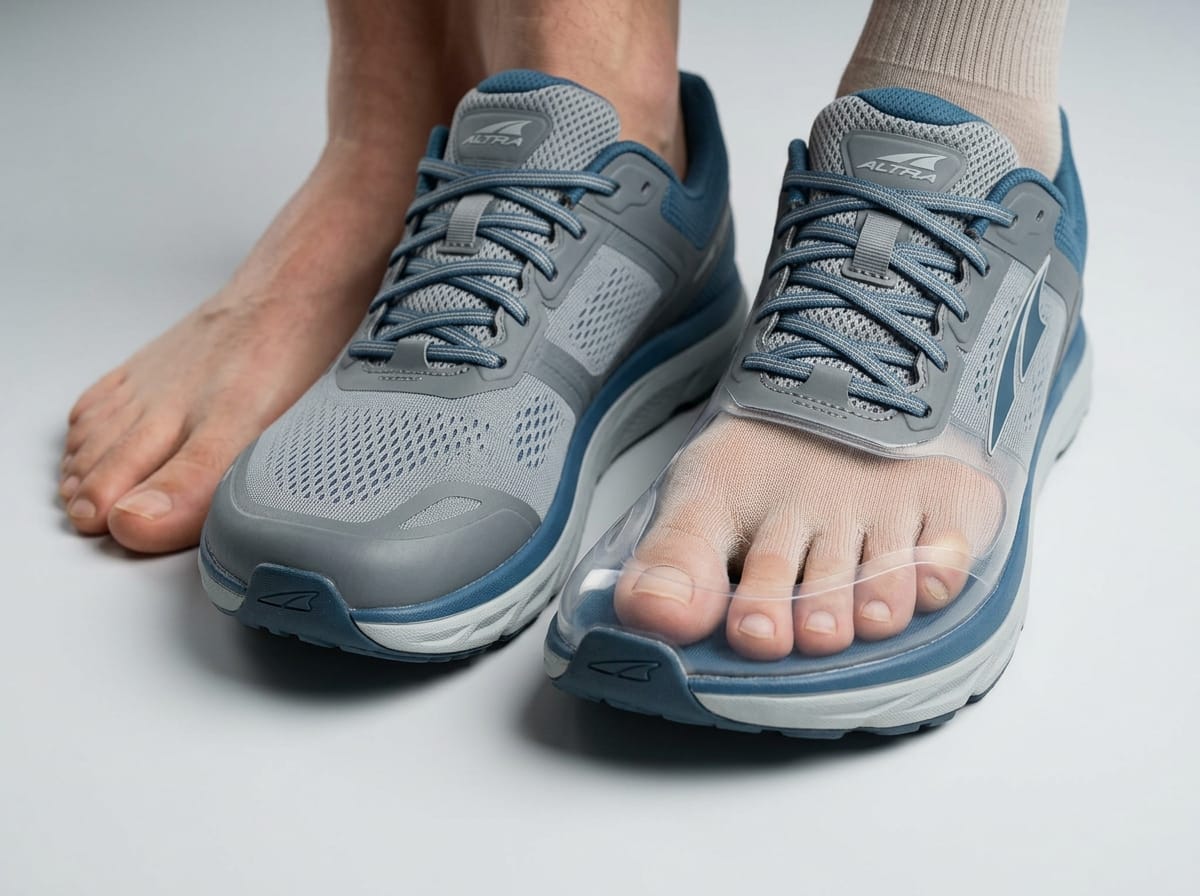
Why So Many People Are Switching to Shoes with a Wide Toe Box
Shoes with a wide toe box are exactly what they sound like — footwear designed to give your toes room to spread naturally, rather than squeezing them into a tapered point.
Here’s a quick look at the top picks by activity:
| Activity | Top Pick | Drop | Weight |
|---|---|---|---|
| Running | Topo Athletic Ultrafly 5 | Low | 8–9.9 oz |
| Running (cushioned) | Altra Experience Flow 2 | 4mm | 7.1–8.2 oz |
| Walking/Standing | The Walking Company Balboa | Moderate | Varies |
| Casual/Everyday | Birkenstock, Duckfeet | Low | Varies |
| Budget | WHITIN Wide Toe Box | 0mm | Varies |
Most shoes on the market are designed with very little room at the front — and that’s a problem. When your toes are cramped together for hours, it can lead to pain, deformities, and fatigue that builds up over time.
A wider toe box lets your toes splay naturally with every step. That improves your balance, reduces pressure on the ball of your foot, and can make a real difference if you’re on your feet all day — whether you’re running miles or working a long shift.
I’m Faisal S. Chughtai, a footwear comfort and performance specialist with years of experience helping people find the right fit — including the best shoes with a wide toe box for their specific lifestyle and foot type. Read on for everything you need to make a confident, informed choice.
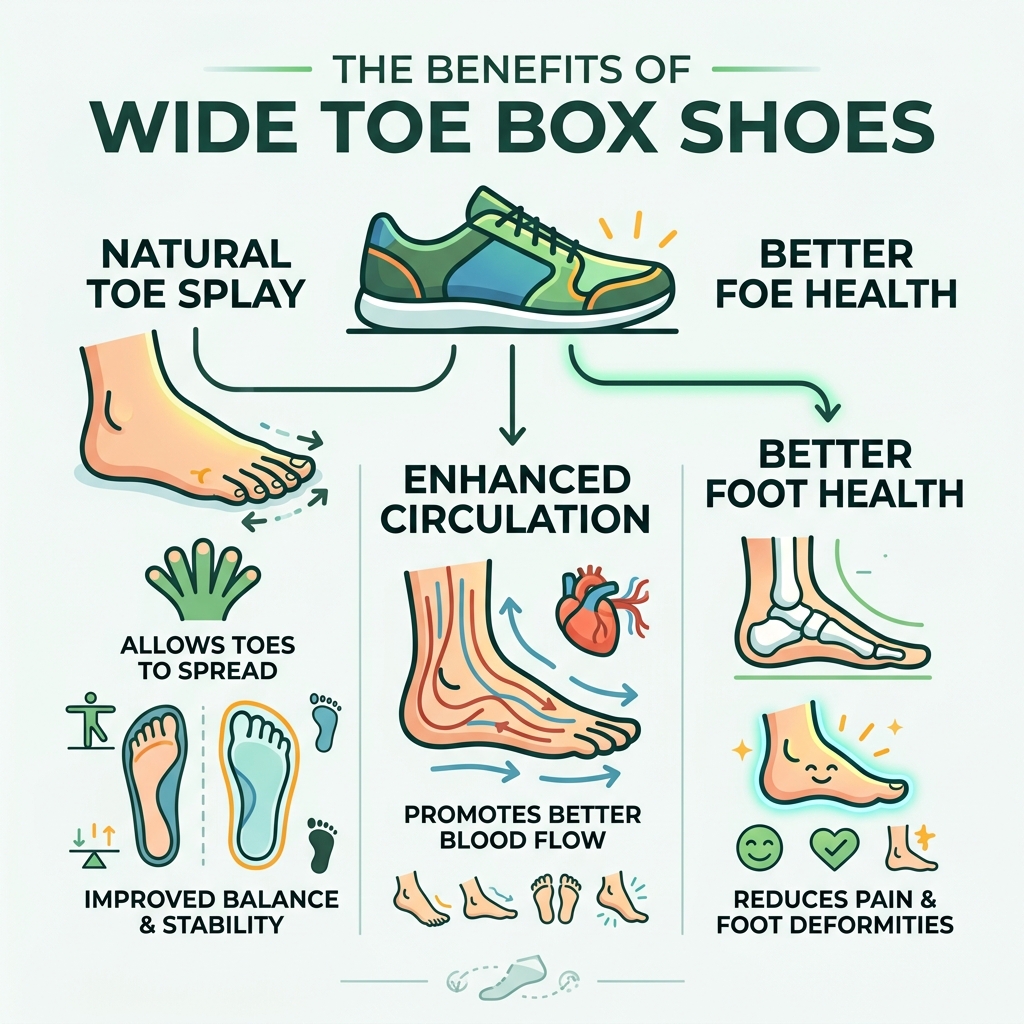
Shoes with a wide toe box terms to remember:
Why You Should Switch to Shoes with a Wide Toe Box
When we look at the history of footwear, it’s a bit of a mystery why we started making shoes shaped like triangles when our feet are shaped like… well, feet. Most modern shoes taper at the front, forcing the big toe inward and the pinky toe into a claustrophobic squeeze. Switching to shoes with a wide toe box isn’t just a fashion statement; it’s a return to biological common sense.
From a foot anatomy perspective, your toes are designed to act as stabilizers. When you walk or run, your toes naturally splay (spread out) to provide a wide base of support. If that splay is restricted, your stability takes a hit. We’ve found that a wider toe box improves balance significantly, especially on uneven terrain or during high-impact activities.
Circulation is another huge factor. Narrow shoes can compress the digital nerves and blood vessels in the forefoot. This often leads to that annoying “pins and needles” feeling or numbness after a long walk. By giving your feet room to breathe, you promote better blood flow and nerve health.
The health implications are backed by science. Research on incorrectly fitted footwear and foot pain has shown a clear link between tight shoes and chronic foot disorders. If you’ve been struggling with bunions, you know the struggle is real. We’ve explored how you can stop the squeeze and help your bunions by simply changing the shape of your footwear.
Beyond bunions, shoes with a wide toe box are a game-changer for several common conditions:
- Morton’s Neuroma: A thickening of the tissue around the nerves leading to the toes. Extra width reduces the pressure that causes this sharp, stinging pain.
- Hammertoes: When toes are cramped, they can become permanently bent. A roomy toe box allows them to lay flat.
- Plantar Fasciitis: While the toe box isn’t the only factor here, proper toe alignment helps the entire arch function more efficiently, reducing strain on the plantar fascia.
The Difference Between Wide Width and a Wide Toe Box
A common point of confusion we see is the difference between a “wide” shoe and a “wide toe box” shoe. They are not the same thing!
A traditional wide width shoe (like a 2E or 4E) is usually wider throughout the entire shoe — from the heel to the midfoot to the forefoot. If you have a narrow heel but wide toes, a standard wide shoe might slip off your foot at the back while still feeling okay in the front.
In contrast, shoes with a wide toe box are often designed with an “anatomical” shape. This means the heel and midfoot stay snug and secure to prevent sliding, but the front of the shoe opens up to follow the natural curve of the human foot. This provides the necessary forefoot room without sacrificing a secure fit. For the ladies out there, we have a specific guide to wide toe box shoes for women that dives deeper into these fit nuances.
How to Measure Your Foot for Shoes with a Wide Toe Box
How do you know if you actually need more room? Your feet might be screaming at you, but let’s get technical.
- The Tracing Method: Place a piece of paper on the floor. Stand on it with your full weight (ideally at the end of the day when your feet are at their largest). Trace the outline of your foot. Now, place your current shoe over that tracing. If your foot outline spills over the sides of the shoe’s sole, you’re essentially “muffin-topping” your footwear. You need more room!
- The Toe Wiggle Test: When you put on a shoe, you should be able to wiggle all your toes freely. There should be about a thumb’s width of space between your longest toe and the end of the shoe.
- End-of-Day Swelling: Your feet can expand by up to 5-10% throughout the day. Always measure and try on shoes in the late afternoon or evening to ensure they won’t become torture devices by 3 PM.

Top Recommended Shoes with a Wide Toe Box for Every Activity
Choosing the right pair depends heavily on what you’re doing. A shoe that’s great for a 5K run might not be the best choice for a 12-hour nursing shift. We’ve tested dozens of models to find the top performers across the board.
| Model | Primary Use | Key Feature | User Rating |
|---|---|---|---|
| Topo Athletic Ultrafly 5 | Road Running | 5mm drop, 9.9oz (Men’s) | 4.8/5 |
| Altra Experience Flow 2 | Daily Training | 4mm drop, Breathable mesh | 4.7/5 |
| ABEO MXV Shift | Walking | Metatarsal support | 4.9/5 |
| The Walking Company Balboa | Standing All Day | High impact absorption | 4.9/5 |
| WHITIN Zero Drop | Budget Running | Affordable, wide fit | 4.5/5 |
| Dansko Paisley | Casual/Work | Waterproof leather | 4.8/5 |
Best for Running and Athletics
For runners, the “big toe” is the most important part of the foot for power and push-off. If it’s shoved inward, you lose efficiency.
The Altra Experience Flow 2 is a standout because it breaks away from Altra’s traditional zero-drop roots by offering a 4mm drop. This makes it more accessible for runners who aren’t ready for a completely flat shoe but still want that signature FootShape™ toe box. It’s lightweight (7.1 oz for women) and offers regular cushioning that feels responsive.
The Topo Athletic Ultrafly 5 is another favorite in our testing. It features a slightly firmer feel which provides excellent stability. If you’re looking for best running shoes for blister-free miles, Topo’s design is top-tier because it prevents the toes from rubbing against each other or the sides of the shoe.
Best for Walking and Standing All Day
If your job involves standing on hard concrete for 8+ hours, you need more than just space — you need serious impact absorption.
The ABEO MXV Shift has garnered a 4.9-star rating from over 300 reviews, and for good reason. It often includes metatarsal support options which help redistribute pressure away from the ball of the foot. Similarly, The Walking Company Balboa is a heavy hitter in the comfort category, with 503 reviews backing its 4.9-star status. It’s designed specifically to make “effortless steps” a reality.
For a more rugged option, the Dansko Paisley offers a wide toe box in a waterproof sneaker-clog hybrid that is perfect for those who need durability and support in less-than-ideal weather.
Stylish and Casual Options
You don’t have to look like you’re heading to the gym just to give your toes some room. There are plenty of shoes with a wide toe box that pair well with jeans or even business casual attire.
Birkenstock is perhaps the most famous name here. Their cork footbeds are naturally foot-shaped, though they do require a break-in period. Duckfeet is a fantastic premium option for those who like a more “earthy” or vintage look; their shoes are made from high-quality terracare® leather and are designed to last a lifetime.
If you want a boot that feels like a sneaker, we highly recommend the Lems Telluride. It offers non-barefoot comfort with a thick enough sole to protect you from the ground while maintaining a very wide front. For more ideas, check out our list of the 10 best casual shoes that don’t look orthopedic.
Key Features to Look for in Wide Toe Box Footwear
When shopping for shoes with a wide toe box, don’t just look at the width. Several other technical features will determine if the shoe is right for you:
- Stack Height: This refers to how much material is between your foot and the ground. High stack height (maximalist) offers more cushion but less “ground feel.”
- Heel-to-Toe Drop: This is the difference in height between the heel and the forefoot. Traditional shoes have a 10-12mm drop. Many wide toe box brands use a “zero-drop” (0mm) or “low-drop” (4-5mm) design to encourage a more natural gait.
- Breathable Mesh: A soft, stretchy upper (like on the Topo Ultrafly) can accommodate foot swelling better than stiff leather.
- Reinforced Stitching: Look for extra reinforcement in high-wear areas, especially around the pinky toe, where wider feet tend to put the most pressure.
Understanding the Natural Footwear Spectrum
Wide toe box shoes exist on a spectrum. On one end, you have Minimalist/Barefoot shoes (like Xero or Vivobarefoot). These have very thin soles, no arch support, and are extremely flexible. They are great for strengthening foot muscles but can be a shock to the system if you’re used to “marshmallow” cushions.
On the other end, you have Maximalist shoes (like certain Altra or Topo models). These provide the wide toe box but keep the thick, protective cushioning of a traditional sneaker. If you work on concrete all day or have joint issues, the maximalist side of the spectrum is usually the better starting point. If you’re curious about the thinner side of things, we have a list of 15 barefoot sneakers to consider.
Budget vs. Premium Options
You don’t always have to spend $170 to get a good fit. WHITIN has become a cult favorite on platforms like Amazon because they offer a surprisingly durable wide toe box and zero-drop sole for a fraction of the price of premium brands.
However, premium options like Baer Shoes or Joe Nimble often use higher-quality materials like vegetable-tanned leathers and more advanced foam technologies that retain their “bounce” longer. If you do go for a premium pair, make sure you know how to wash your shoes to last longer — keeping the materials clean prevents them from breaking down prematurely.
Frequently Asked Questions about Wide Toe Box Shoes
Are wide toe box shoes the same as barefoot shoes?
Not necessarily! While almost all barefoot shoes have a wide toe box, not all shoes with a wide toe box are barefoot. Brands like Topo Athletic and ABEO provide the wide front but include cushioning, arch support, and a heel drop. We’ve put together the ultimate guide to wide toe box shoes that aren’t barefoot to help you navigate this distinction.
Can I wear wide toe box shoes if I have narrow heels?
Yes! In fact, this is one of the best reasons to choose an anatomically shaped shoe. Many people with “duck-shaped” feet (wide at the front, narrow at the back) struggle with traditional wide-width shoes because their heels slip out. Look for brands that emphasize a “secure midfoot and heel” alongside their wide toe box. You can also use a “heel lock” lacing technique to extra-secure the back of the shoe.
Do wide toe box shoes help with plantar fasciitis?
They can certainly help as part of a broader treatment plan. By allowing the big toe to sit straight (rather than being pushed inward), the muscles and tendons that support your arch can work more effectively. This reduces the “tug-of-war” on the plantar fascia. However, if you have severe plantar fasciitis, you may still need a shoe with some cushioning or a slight heel drop rather than a flat, barefoot model.
Conclusion
Switching to shoes with a wide toe box is one of the kindest things you can do for your body. The long-term benefits include stronger intrinsic foot muscles, better balance, and a significant reduction in the risk of developing painful deformities like bunions or hammertoes.
At On Clouder, we’ve logged thousands of miles testing these shoes to ensure they live up to the hype. Whether you’re a marathon runner, a busy nurse, or just someone tired of having sore feet at the end of the day, there is a wide toe box option out there for you.
Ready to make the switch? Shop women’s wide toe box shoes and give your toes the freedom they deserve!
