
Clean On Running Shoes Gently to Protect Their Cushioning
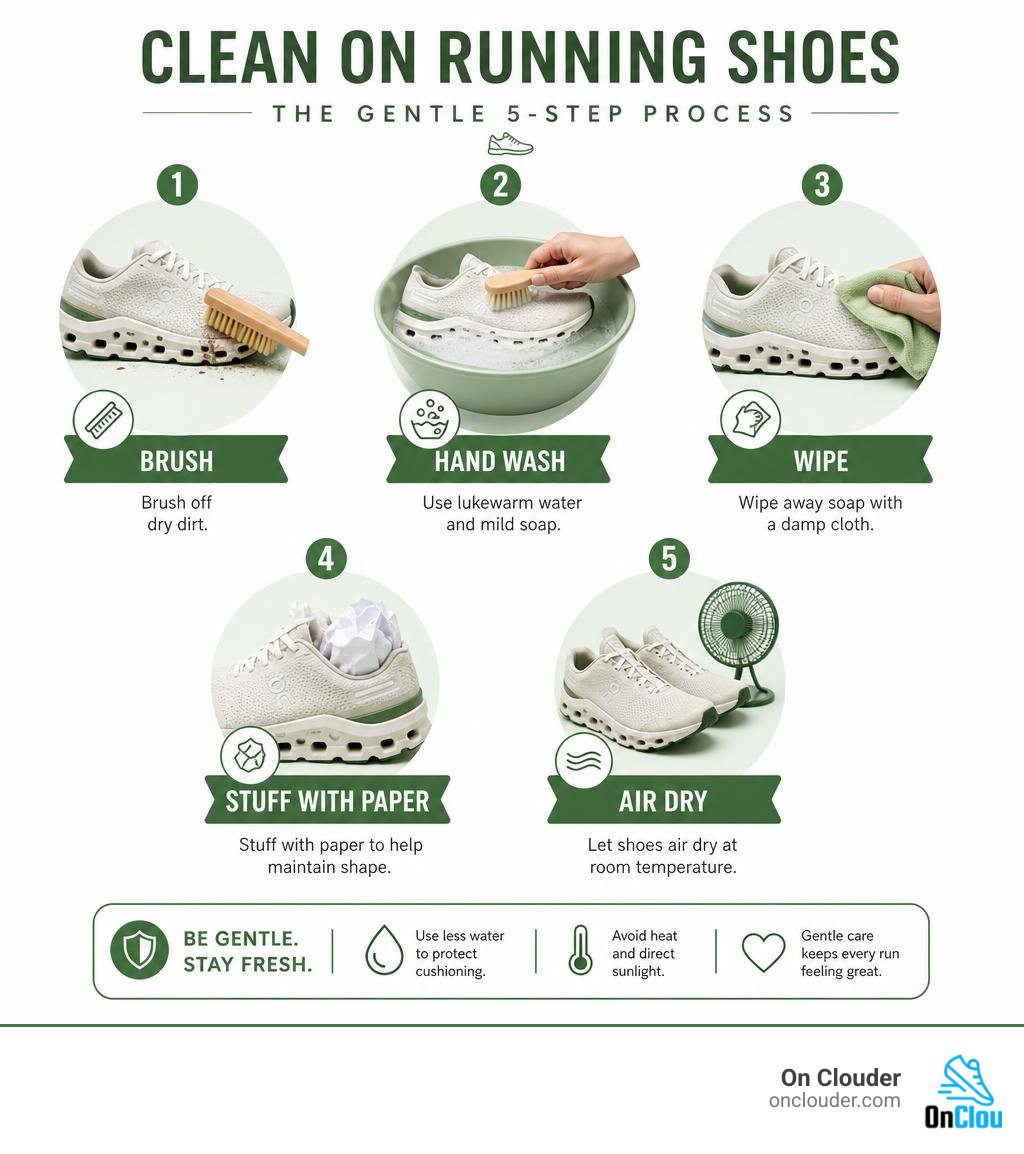
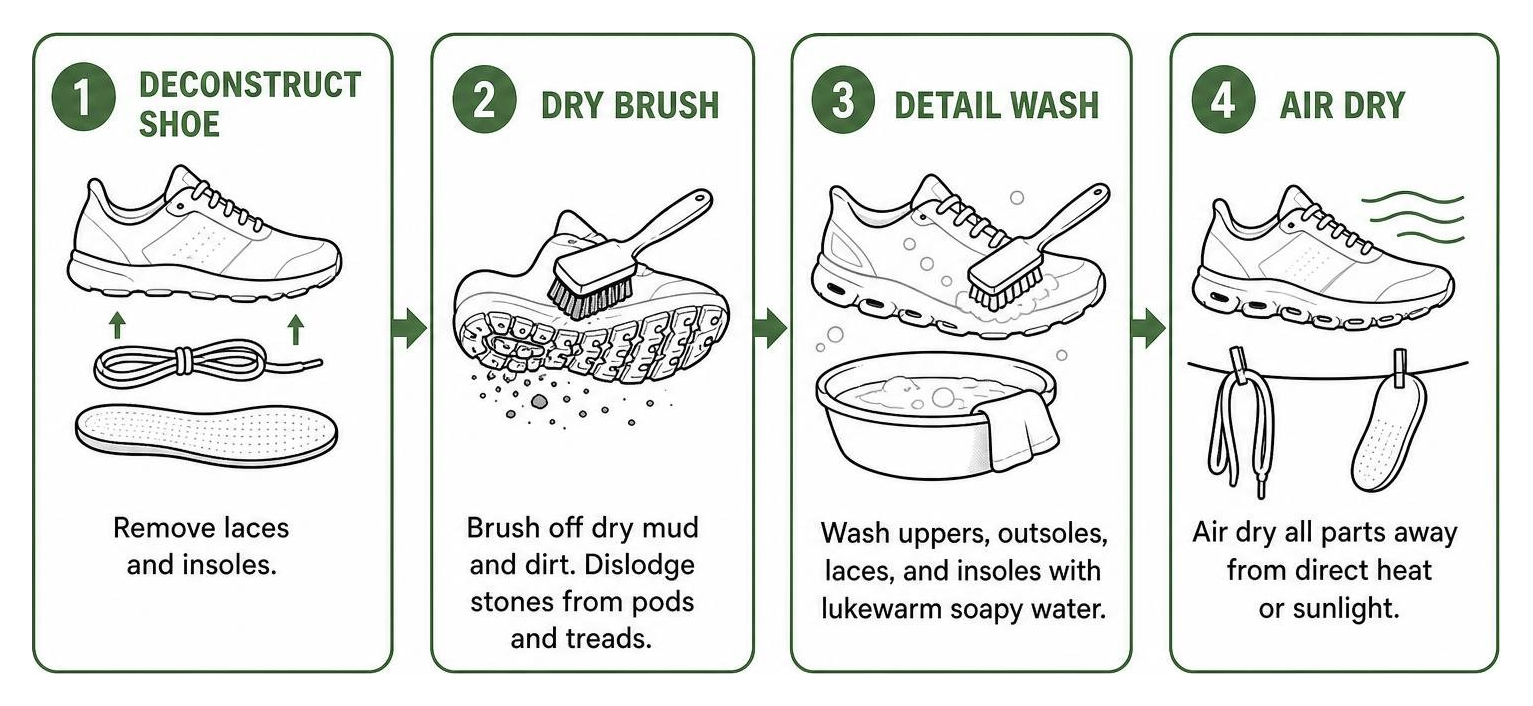
For cleaning On running shoes, skip the washing machine. Remove the laces and insoles, brush off dry dirt, then use a soft brush or cloth with lukewarm water and a small amount of mild soap. Clean the CloudTec pods and outsole gently, wipe away soap with a damp cloth, and let the shoes air dry at room temperature.
This low-water method helps protect the CloudTec cushioning, Helion foam, upper fabric, and adhesive bonds that can be harmed by machine agitation, soaking, or heat. After muddy trail runs, let thick mud dry first so you can tap and brush it off without working grit deeper into the mesh.
I’m Faisal S. Chughtai, a footwear specialist focused on comfort and performance, and I help runners make cleaning On running shoes simple without risking the support and cushioning they rely on. Below, you’ll find the safest way to refresh your sneakers, control odor, and know when cleaning is no longer enough.
Cleaning on running shoes terms you need:
- best way to clean sports shoes
- cleaning running shoes
- can running shoes be washed
Essential Rules for Cleaning on Running Shoes Without Ruining Cushioning
On running shoes are marvels of modern engineering. Between the patented CloudTec pods, responsive Helion superfoam, and the snappy Speedboard plate tucked inside the midsole, every component works in harmony to give you soft landings and explosive takeoffs. However, these specialized materials require thoughtful maintenance.
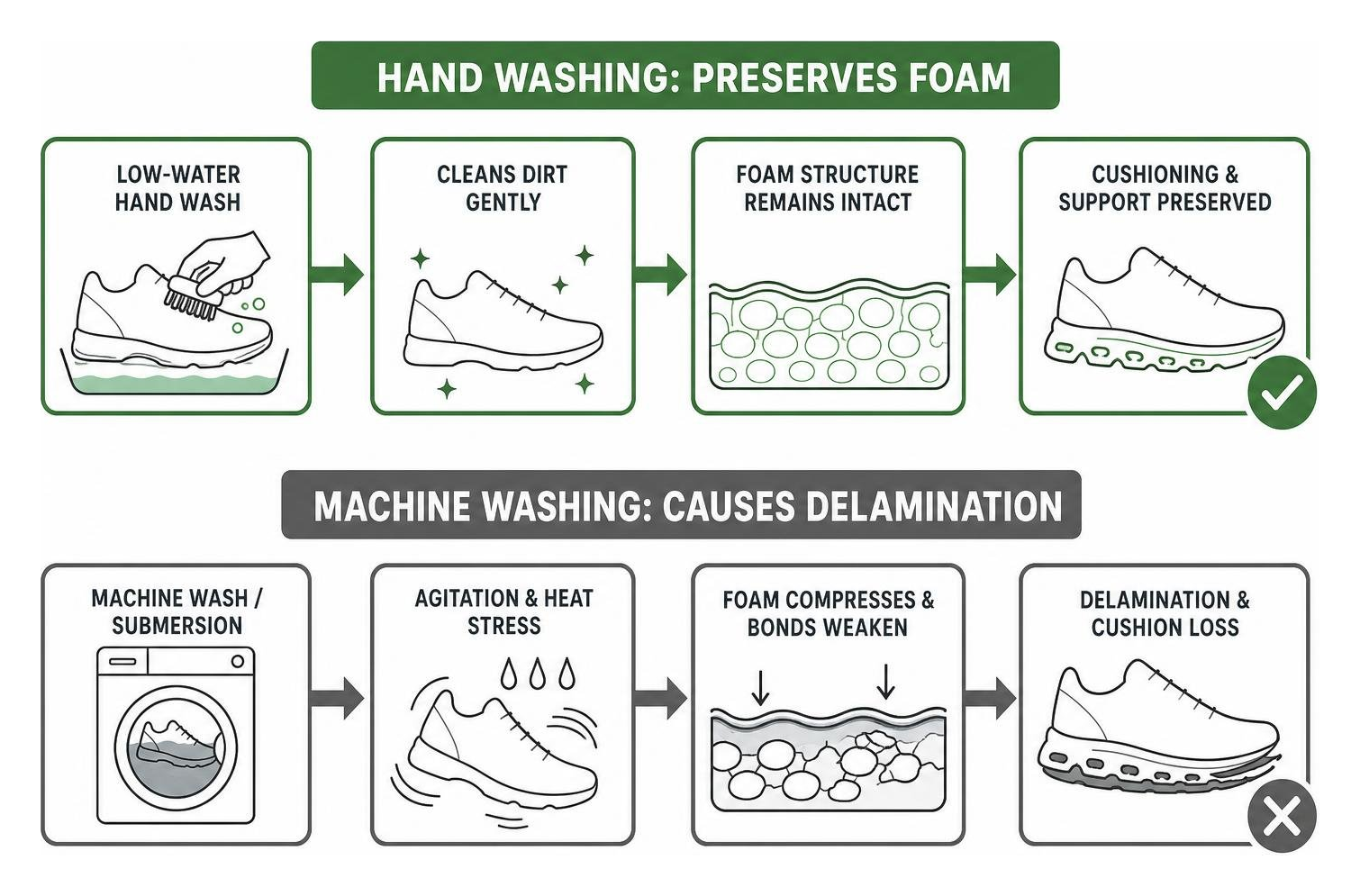
Tossing your trainers into a standard laundry cycle might seem like an easy fix, but our breakdown on Machine Washable or Not? The Ultimate Running Shoe Cleaning Guide highlights why mechanical agitation is a recipe for disaster. The heat and harsh friction break down delicate adhesives holding the multi-density sole together, crush hollow pods, and will almost certainly void the manufacturer warranty.
As noted in the ODs Designer Clothing On Running care guide, protecting the structural integrity of your footwear comes down to using manual, low-stress cleaning techniques that keep the cushioning intact.
The Risks of Washing Machines and Submersion
When you wash shoes in a machine, several points of failure occur at once:
- Adhesive Delamination: The glues bonding the Speedboard to the midsole and outsole cannot tolerate sustained water temperatures and high spin speeds.
- Foam Degradation: Helion superfoam and zero-gravity foams rely on micro-cellular structures. Intense mechanical tumbling compresses these air pockets prematurely, resulting in a dead, unresponsive ride.
- Pore Clogging: Fully submerging running shoes in soapy water pushes dirt particles deeper into technical mesh fibers and waterproof membranes instead of lifting them out.
If you are wondering How to Wash OC Sneakers Without Ruining the Tech, the golden rule is simple: treat your shoes to localized spot cleaning rather than soaking the entire build.
How Frequency and Terrain Dictate Shoe Maintenance
How often should you clean your sneakers? That depends heavily on where you put in your miles:
- Road Running: Pavement workouts kick up fine asphalt dust and road grime. A light wipe-down every 2 to 3 weeks prevents grit from acting like sandpaper against the upper mesh.
- Trail Running: Heavy trail mud packs into outsole lugs and hardens. Dried mud stiffens engineered fabrics, accelerating tears along natural foot flex zones. Trail shoes need attention after every muddy excursion.
- Treadmill & Gym Workouts: Sweat salts build up inside the heel collar and sockliner, causing abrasions and stubborn smells if not cleaned monthly.
According to advice gathered in The Best Way to Clean Running Shoes According to Reddit, establishing a consistent 5-minute post-run habit pays dividends. Furthermore, rotating between two pairs of shoes gives the midsole foam 24 to 48 hours to fully decompress and dry out naturally between workouts, extending overall gear life.
How to Hand Wash Your On Running Shoes: Step-by-Step
Manual washing is the safest, most effective way to restore your footwear. Follow our proven sequence to clean every component without compromising technical performance. If you want a visual walk-through, see our guide on Can You Wash On Clouds? The Step-by-Step Guide to Cleaning Your Sneakers.
Essential Supplies for Cleaning on Running Shoes Safely
Before getting started, assemble a gentle toolkit:
- Lukewarm water (never boiling or hot)
- Mild, eco-friendly liquid laundry detergent or dish soap
- Soft-bristled shoe brush or an old toothbrush
- Microfiber cloths or flannel towels
- Baking soda (for odor elimination)
- Toothpick or blunt skewer (for removing stones from pods)
- Scrunched plain paper towels or newspaper (for drying)
To pick the best cleaning agents for performance textiles, take a look at Scrub a Dub Dub: Our Top Picks for Best Sports Shoe Cleaner.
Cleaning CloudTec Pods, Outsoles, and Trail Mud
The open-cavity design of CloudTec soles makes them exceptional at shock absorption, but they can collect pebbles and trail mud.
- Let Mud Dry Completely: If your shoes are caked in trail muck, resist the urge to wash them immediately. Let the mud dry, then clap the outsoles together outside to shatter and drop the bulk of the dirt.
- Dislodge Trapped Stones: Use a toothpick or small blunt tool to pop out gravel wedged inside the central channel or between individual cloud pods.
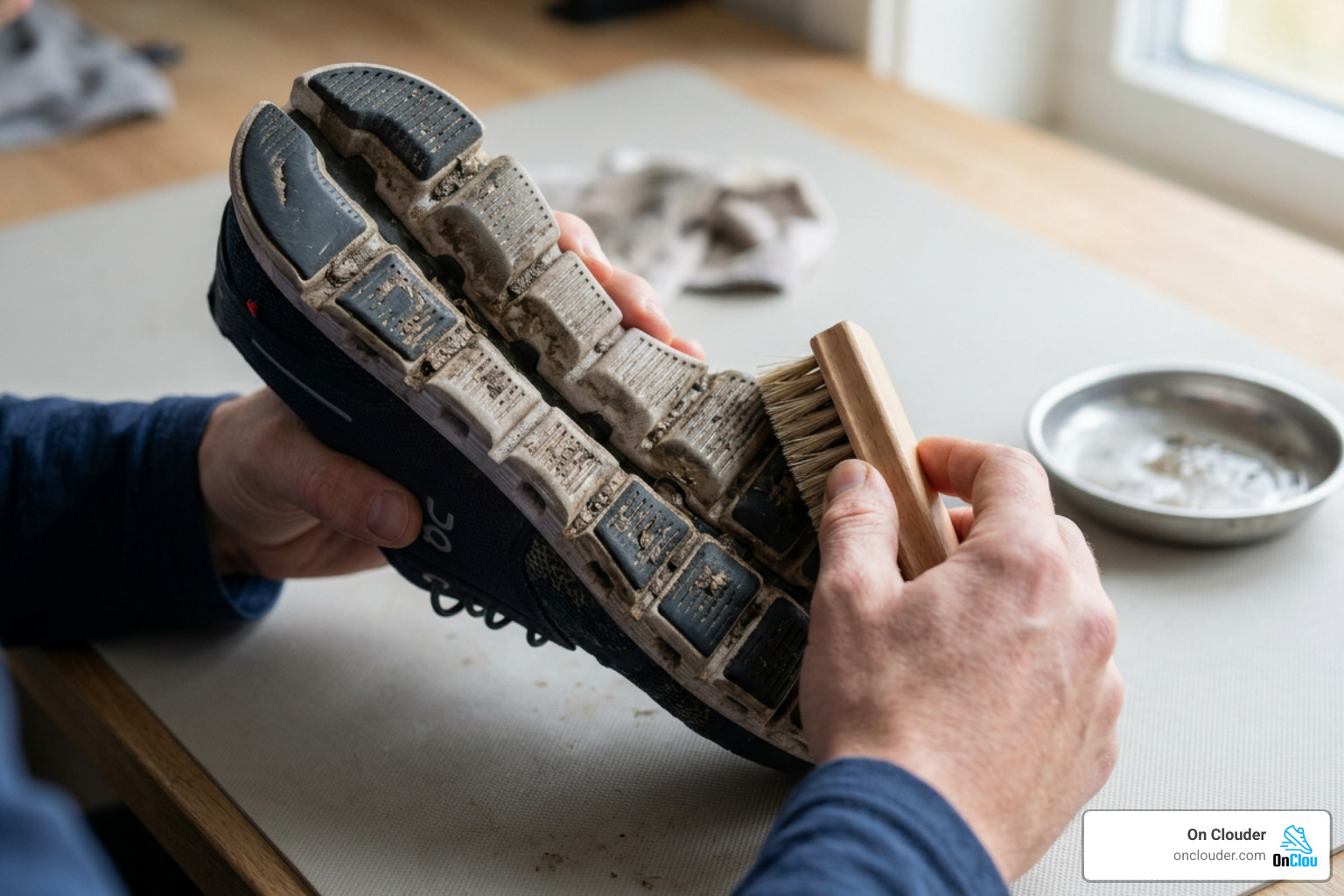
- Scrub the Outsole: Dip your soft brush into lukewarm soapy water. Scrub the rubber lugs and pod crevices using circular motions. For stubborn trail residue, standard REI footwear cleaning instructions recommend a slightly stiffer bristle on rubber outsoles while keeping soft bristles for everything else.
- Wipe Clean: Use a damp microfiber cloth to remove dirty suds from the foam. Avoid holding the sole directly under a high-pressure faucet.
Washing Insoles, Laces, and Deodorizing Sweaty Linings
Sweat and dead skin cells accumulate primarily inside the shoe, making component care essential:
- Remove Laces and Insoles: Always take these out before washing the uppers. Cleaning them separately ensures proper airflow and faster drying.
- Wash the Uppers: Dip a soft cloth into your soapy water solution and gently rub the mesh uppers. For detailed mesh care instructions, check How to Clean Mesh Sneakers: A Step-by-Step Guide.
- Clean the Laces: Submerge shoelaces in a small bowl of warm soapy water. Rub them between your fingers to lift grime, rinse thoroughly, and hang them to dry. For white laces with heavy discoloration, Nike shoe care advice suggests soaking them in a diluted solution of mild cleaner or gentle detergent.
- Scrub the Sockliner: Lightly scrub the removable insoles with a soapy sponge. Do not soak them completely, as water saturation can degrade the arch molding.
- Neutralize Bacteria: Sprinkle a thin layer of baking soda over the dry insoles to absorb lingering foot odor.
Advanced Care for Specific Models and Proper Drying Protocols
Different On Running models incorporate distinct upper materials ranging from ultra-dense engineered mesh to race-day mono-filaments. Adapting your cleaning routine to the specific shoe model prevents accidental fabric fraying or coating delamination.
| Model / Material Type | Recommended Cleaning Solution | Tool to Use | Water Exposure |
|---|---|---|---|
| Standard Engineered Mesh (e.g., Cloudsurfer, Cloudrunner) | Mild liquid detergent + warm water | Soft shoe brush or microfiber cloth | Damp cloth / light rinse |
| LightSpray Racing Uppers (e.g., Cloudboom Strike LS) | Plain lukewarm water only (No soap) | Ultra-soft microfiber cloth | Minimal damp wipe |
| Waterproof / GORE-TEX (e.g., Cloudventure WP) | Specialized technical footwear cleaner | Soft sponge | Light surface wipe + DWR refresh |
| Trail Outsoles with Heavy Lugs | Warm soapy water + baking soda paste | Stiff bristle brush (soles only) | Moderate water scrub |
Material-Specific Care: Cleaning on Running Shoes with LightSpray and Waterproof Uppers
Recent innovations like On’s LightSpray technology feature ultra-lightweight uppers constructed from a single continuous 1.5-kilometer thermoplastic filament sprayed by robotic arms in just 3 minutes. Weighing as little as 30 grams, these uppers are bonded directly to the midsole without any glue or stitching.
When cleaning LightSpray race uppers:
- Never use detergents, solvents, or stain removers. Chemicals can compromise the filament’s structural matrix.
- Use plain, room-temperature water on a soft microfiber cloth.
- Gently dab the surface rather than scrubbing aggressively.
For waterproof models equipped with breathable membranes or GORE-TEX linings:
- Avoid standard heavy detergents that leave behind surfactant residues, which clog microporous breathable vents.
- Wipe the exterior fabric gently with water or specialized technical fabric wash.
- Periodically reapply a durable water repellent (DWR) spray to the exterior mesh once dry to restore water beading.
Safe Air Drying Methods: What to Do and What to Avoid
Drying your running shoes correctly is just as important as how you wash them. Exposing technical footwear to high heat destroys structural adhesives, shrinks synthetic fabrics, and warps the midsole geometry.
Follow these safe drying rules:
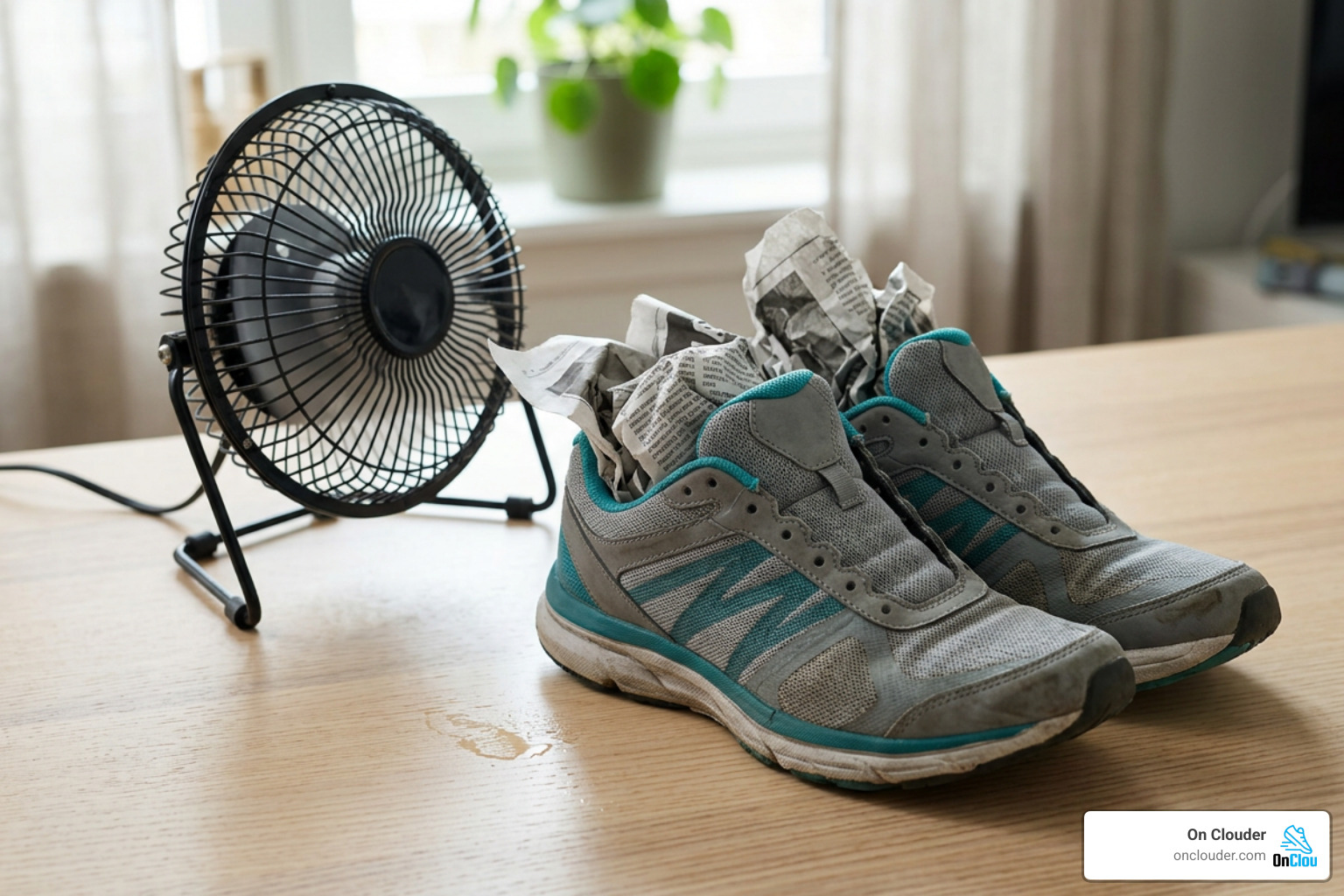
- The Newspaper Stuffing Technique: Scrunch up sheets of plain paper towels or dry newspaper and push them into the toe box. The paper absorbs interior moisture rapidly while preserving the shoe’s anatomical shape. Replace damp paper every 2 to 3 hours for the first 6 hours.
- Maximize Ambient Airflow: Place your shoes in a well-ventilated room near an open window or in front of an electric fan. Cool, circulating air speeds up evaporation without thermal stress.
- Dedicated Shoe Dryers: If you live in a wet climate, advanced tools like the Shoefresh Opod dry wet shoes in about 60 minutes using controlled low heat and airflow, as detailed in Shoefresh running shoe care.
- Never Use Direct Heat: Keep shoes far away from radiators, clothes dryers, ovens, or direct blazing sunlight. As outlined in the Runners Need running shoe care guide, direct heat weakens glue seams and causes the foam midsole to contract unevenly. Allow 24 to 48 hours for complete air drying.
Frequently Asked Questions About Washing On Cloud Shoes
How do I remove stubborn mud from On Cloud trail running shoes?
Let the mud dry completely first. Once dry, bang the outsoles together outside to dislodge the large clumps. Use a dry, stiff brush to clear debris packed into the CloudTec channels and outsole lugs. Finally, wipe down the upper mesh using a soft brush dipped in cool soapy water, then wipe with a damp cloth.
How can I get rid of bad foot odor in On running sneakers?
Shoe odor is caused by bacteria feeding on trapped sweat. Remove the insoles immediately after every run to let the shoe cavity breathe. To eliminate stubborn smells, dust the inside of the shoe and the footbed with baking soda, leave it overnight, and shake out the powder the next morning. You can also insert reusable activated charcoal bags between runs to pull out residual moisture.
When should I replace my On running shoes instead of cleaning them?
Road running shoes generally deliver optimal cushioning and structural support for 600 to 800 km (375 to 500 miles), while trail models typically last 500 to 700 km (310 to 435 miles) due to rugged ground abrasion.
If you notice horizontal compression wrinkles that do not bounce back across the Helion midsole foam, collapsed CloudTec pods, uneven outsole tread wear, or joint aches after regular runs, cleaning will not restore performance. It is time to retire the pair and grab a fresh set.
Conclusion
Taking care of your On running sneakers does not require aggressive chemicals or complicated equipment. By relying on a simple hand-cleaning routine, air drying at room temperature, and avoiding the washing machine, you protect the proprietary CloudTec pods, Helion foam, and Speedboard technology that power your daily miles.
For more comprehensive gear comparisons, performance breakdowns, and fit recommendations, explore our complete On Cloud shoe guide and keep every run feeling as light as day one.
